How Nevada Splits Elk Units Between Rifle Hunts
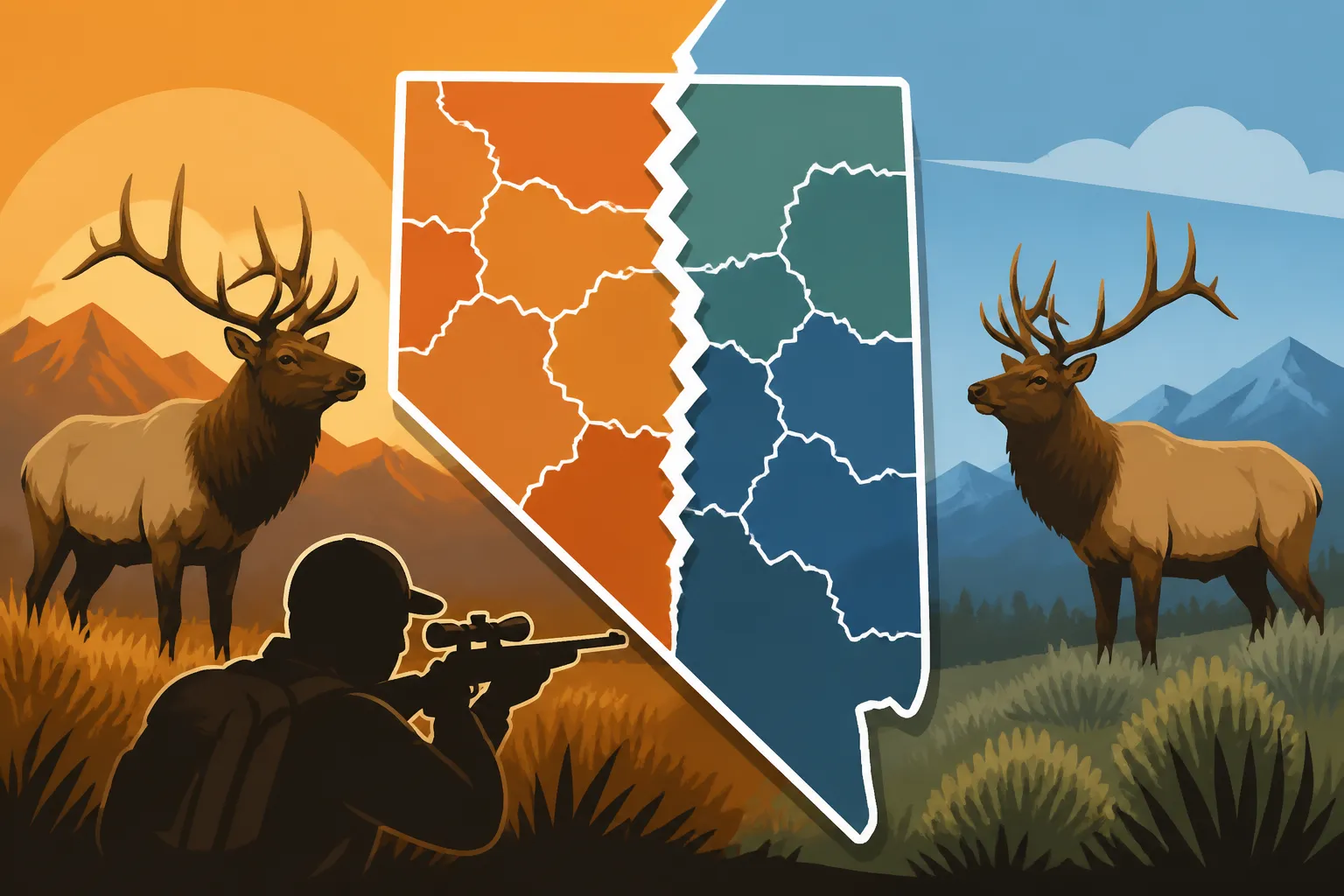
Navigating Nevada's elk hunting units can feel like trying to solve a Rubik's Cube while blindfolded, especially when you're trying to figure out how the Silver State divides its rifle seasons. Hunters often feel lost in a labyrinth of unit numbers, season codes, and dates that seem to overlap or contradict, making it incredibly tough to plan an application strategy. This comprehensive guide will demystify how Nevada splits its elk units for rifle hunts, providing a clear roadmap to understanding the system and making informed decisions for your next adventure.
Understanding Nevada's Unique Unit System for Elk
Nevada's approach to managing its elk resource is incredibly nuanced, and it's born out of necessity. Unlike states with vast, contiguous forests, Nevada is a land of isolated mountain ranges separated by expansive sagebrush basins. This unique topography means that elk populations aren't uniformly distributed, and neither are the hunting opportunities. The Nevada Department of Wildlife (NDOW) has developed a complex system of unit splits for rifle hunts to address this geographic reality, ensuring sustainable harvest and quality experiences. It's far more than just drawing lines on a map; it's a strategic framework designed to manage a precious and hard-won resource.
The Challenge of Geographic Diversity
Imagine trying to manage elk in a state where one mountain range might have lush, high-elevation alpine habitat, while just a few valleys over, elk are eking out a living in arid, desert conditions. That's the Nevada reality. The state's "basin and range" topography creates a mosaic of habitats, each supporting elk populations with varying densities, herd health, and migratory patterns. NDOW can't simply apply a blanket season across thousands of square miles because the elk in the Schell Creek Range behave differently than those in the Ruby Mountains, or even within different parts of the same vast Humboldt-Toiyabe National Forest. These environmental distinctions necessitate distinct hunting unit boundaries and season structures. The health of a herd in one isolated range could be booming, while another nearby might be struggling due to drought or habitat degradation. This hyper-local approach to unit management ensures that hunting pressure is appropriately distributed and aligns with the specific ecological conditions of each distinct elk population.
Why Elk Management Requires Specific Splits
Elk are magnificent animals, and their management in Nevada is a conservation success story. Decades ago, elk were virtually non-existent in the state. Through dedicated reintroduction efforts and careful management, Nevada's elk herds grew from nothing into a trophy draw, becoming one of the most coveted big game opportunities in the West. This success, however, brings its own set of challenges. With growing herds and increasing hunter demand, NDOW must meticulously manage harvest to maintain healthy populations, ensure balanced age structures, and sustain the state's reputation for trophy-class bulls. Specific unit splits for rifle hunts allow NDOW biologists to fine-tune harvest quotas, target specific age classes or sexes (like antlerless hunts), and prevent over-harvest in vulnerable areas, all while maximizing hunter opportunity where populations can support it. It's a delicate dance between conservation and opportunity, and the unit splits are the choreography.
Beyond Simple Boundaries: Hunt Codes and Season Types
When you delve into the Nevada hunting regulations, you'll quickly realize that a "unit" isn't just a geographical area; it's often a combination of a geographic boundary and a specific hunt code. This code dictates the weapon type, the season dates, and sometimes even the sex or age of the animal you can harvest. For instance, the same physical Unit 102 might host several distinct elk hunts: an early archery season, a short muzzleloader hunt, and then multiple rifle seasons spanning different dates. This creates incredible complexity but also immense flexibility in management. A unit might be "split" not by drawing new lines on a map, but by assigning different hunt codes that effectively create separate hunting opportunities within the same physical boundaries. This is especially relevant for rifle hunts, where pressure is highest and precision in management is critical. Understanding Reading a Nevada Hunt Unit Before You Apply is paramount to grasping this system.
The Logic Behind Splitting Elk Rifle Units
The reasoning behind Nevada's seemingly intricate system of splitting elk rifle units isn't arbitrary; it's rooted deeply in wildlife biology, hunter experience, and practical management goals. Each split, whether it's by dates, weapon types, or specific subunits, serves a distinct purpose, aiming to strike a balance that benefits both the elk and the hunters pursuing them. It's a testament to the comprehensive data collection and scientific approach NDOW employs to manage these majestic animals.
Managing Hunter Pressure and Opportunity
One of the primary drivers for splitting elk rifle units and their corresponding seasons is to manage hunter pressure effectively. Imagine if all elk rifle tags for an entire region were valid for the same two-week period. The sheer number of hunters in the field would lead to overcrowding, diminish the quality of the hunt, and potentially increase safety concerns. By offering multiple, staggered rifle seasons within units or across unit groupings, NDOW can spread hunters out over a longer timeframe and across different areas. This reduces the number of people in the field at any given moment, which can significantly improve the hunting experience, make elk less wary, and distribute the harvest more evenly. It also provides more total opportunities for hunters, even if individual season lengths are shorter. This strategic dispersal of hunters is crucial in maintaining the wild character of a hunt in Nevada's vast public lands.
Adapting to Elk Migration and Rut Timing
Elk are creatures of habit, and their movements are heavily influenced by environmental factors like forage availability, snowpack, and, critically, the rut. The timing of the rut can vary significantly between different mountain ranges and even within the same unit, influenced by elevation and local climate conditions. By creating distinct rifle hunt splits, NDOW can tailor seasons to coincide with specific elk behaviors. For example, an early rifle season might target elk still in their summer range, while a later season might coincide with the post-rut migration when bulls are more susceptible. Understanding When the Elk Rut Peaks in Nevada is a game-changer for timing your application. These strategic season placements allow hunters to target elk during different phases of their annual cycle, offering varied experiences and success rates. It's about putting hunters in the right place at the right time, based on the elk's natural rhythms.
Balancing Trophy Potential and Population Health
Nevada is renowned for its trophy elk, and maintaining this reputation while ensuring the overall health and sustainability of the herds is a balancing act. Unit splits play a vital role here. Some units or specific hunt codes might be designed as "trophy units" with very limited tags and later season dates, allowing bulls more time to mature. Other units might have more tags or antlerless opportunities to manage herd numbers, particularly in areas where populations are growing rapidly or impacting private lands. By segmenting the units and seasons, NDOW can fine-tune harvest pressure on different segments of the population. This targeted management ensures that a healthy proportion of mature bulls remains in the herd for future breeding and trophy potential, while also addressing areas where elk numbers might need to be reduced for ecological balance or conflict mitigation. This careful management is why Nevada Elk Herd Growth Over Time has been so successful.
Navigating Nevada's Elk Hunt Codes
The backbone of Nevada's elk management system for rifle hunts is its hunt code structure. At first glance, these alphanumeric combinations can seem like a secret language, but once you understand the logic, they become invaluable tools for deciphering hunting opportunities. Each code is a condensed piece of information, telling you not just where you can hunt, but when and with what. Mastering this language is essential for any serious Nevada elk applicant.
Deciphering the Unit Number and Season Designator
Every Nevada big game hunt is assigned a unique hunt code, which typically consists of a series of numbers and sometimes letters. The first part of the code usually refers to the geographic hunt unit or a combination of units. For instance, a common unit might be "101" or "161-163." Then, following the unit number, there will be a designator for the weapon type and season. For rifle elk hunts, you'll see specific season codes indicating general rifle, early rifle, late rifle, or other variations. NDOW publishes a comprehensive table each year detailing these codes, their corresponding units, and the exact dates they cover. It's not enough to know you drew "Unit 102"; you need to know you drew "Hunt Code 1021" for rifle, which signifies a specific period within that unit. This precision allows for incredibly granular management of the elk resource.
Multi-Unit Combinations and Their Implications
Sometimes, instead of a single unit, a hunt code will cover a combination of adjacent units, like "161-163" or "221-223." These multi-unit combinations are often established where elk populations move fluidly across traditional unit boundaries or where the habitat and elk behavior are very similar across an expanse of country. For rifle hunters, this means your tag is valid in a larger geographical area, potentially offering more space to hunt and reducing localized pressure. However, it also means that the overall hunter density for that specific hunt code might be spread across a wider landscape, making it crucial to understand the terrain and elk distribution across the entire combined area. When Nevada Elk Rifle Hunts Stretch From October Into December, these combined units can provide vast, challenging, and rewarding opportunities for those willing to scout thoroughly. Always consult the official regulations map to visualize these combined unit boundaries accurately.
Understanding Weapon Type Restrictions Within Units
While this guide focuses on rifle hunts, it's vital to remember that Nevada manages elk through a variety of weapon types, including archery and muzzleloader. The same physical unit might host all three, but with entirely separate hunt codes and season dates. This means that if you draw a rifle elk tag, you are strictly limited to using a rifle during your designated season. You cannot switch to a bow or muzzleloader, even if those seasons are open in the same unit at a different time. This compartmentalization is crucial for maintaining fair chase principles and managing harvest effectively. For example, Nevada Elk Muzzleloader Timing by Unit will be distinctly different from the rifle timings, even if they share the same geographic unit designation. Always double-check your specific hunt code to ensure you're using the correct weapon during the correct dates, preventing any costly mistakes in the field.
Key Factors Influencing Elk Unit Splits
The decisions behind how Nevada segments its elk units for rifle hunts are not arbitrary. They are the culmination of extensive biological research, population data, habitat analysis, and consideration of human factors like land access. Understanding these underlying influences provides a deeper appreciation for the system and can even help predict future changes in hunt structures. It's a complex equation with many variables.
Habitat Suitability and Carrying Capacity
At the core of any wildlife management decision is habitat. Elk thrive in areas that provide ample forage, water, cover, and security. Nevada's diverse landscapes offer varying degrees of all these necessities. Some mountain ranges boast rich aspen and conifer forests, while others are dominated by vast sagebrush and bitterbrush communities. NDOW biologists rigorously assess the habitat suitability and carrying capacity of each unit – essentially, how many elk the land can sustainably support. Units with higher quality habitat and greater carrying capacity may be able to sustain more tags, longer seasons, or more varied hunt splits. Conversely, units with marginal habitat or areas recovering from environmental impacts like drought or wildfire might have more restrictive seasons, fewer tags, or very specific antlerless hunts to control population growth. This direct link between habitat and hunt structure is fundamental.
Historic Elk Distribution and Herd Growth
As mentioned, elk were largely absent from Nevada for many years. The current elk distribution is a direct result of successful reintroduction programs and the subsequent natural expansion of herds. Understanding Where Nevada's First Elk Came From and how their populations have grown in different areas is critical to unit design. In units where elk populations are well-established and robust, NDOW might implement more flexible rifle season splits, offering a broader range of opportunities. In newer expansion areas, or where herds are still building, seasons might be more conservative, perhaps focusing on spike bulls or antlerless animals to encourage population growth and dispersal. The history of the elk in a given range deeply informs how hunting pressure is applied today, balancing harvest with the trajectory of herd growth and establishment.
Public Land Access and Private Land Considerations
Nevada is famously the most federally owned state in the lower 48, with vast expanses of BLM and National Forest lands. However, even with this abundance of public ground, access can be a critical factor in unit design. Some units might have excellent public access, allowing for widespread hunter distribution. Others might be "checkerboarded" with private land, or have significant private holdings that restrict access to key elk areas. NDOW must consider these access challenges when structuring units and seasons. For instance, a unit with limited public access to prime elk habitat might have fewer tags to prevent excessive pressure on the accessible areas. Conversely, a unit with significant private land where elk might be causing depredation could see specific antlerless hunts or partnership opportunities with landowners. The interaction between public access and private land often dictates where hunters can realistically pursue elk and thus influences the practical splitting of units. This is also why some outfitters specifically negotiate Private Ranch Access Across Nevada Valleys to secure quality hunting opportunities.
Common Patterns in Nevada Elk Rifle Unit Splits
While the specific hunt codes and dates change annually, certain patterns consistently emerge in how Nevada structures its elk rifle units. Recognizing these overarching strategies can help you make sense of the regulations and better anticipate the types of opportunities available. These patterns reflect NDOW's multi-faceted approach to managing the state's elk herds.
Early vs. Late Rifle Seasons
One of the most prominent ways Nevada splits its elk rifle units is by offering distinct early and late rifle seasons.
- Early Rifle Seasons: These hunts often take place in October. They can coincide with the tail end of the rut or just afterward, when bulls might still be somewhat vocal or active, but as things transition, they can become harder to find. Often, temperatures are milder, making packing out an animal a bit easier than the scorching early archery seasons, but still requiring careful meat care. These seasons might target elk in their higher-elevation summer range before significant snow pushes them down. The challenge here is often finding bulls that have gone into hiding after the main rut activity.
- Late Rifle Seasons: As their name implies, these seasons typically run from late October into November and even early December, often coinciding with colder weather and increasing snowpack. These hunts can be incredibly challenging due to harsh conditions but also highly rewarding. Elk are often concentrated on winter range, making them easier to locate, but also potentially more skittish due to colder temperatures and increased hunter presence. The strategy during late seasons often involves glassing vast areas to spot large groups of elk as they descend into lower elevations. For more information, check out Nevada Elk Rifle Hunts Stretch From October Into December. The weather becomes a primary factor in these hunts, demanding serious preparation for cold, wind, and snow.
Bull vs. Antlerless Opportunities
Another common split within Nevada's elk units is the distinction between bull (antlered) and antlerless (cow or calf) hunts.
- Bull Hunts: These are the highly coveted tags that most hunters dream of, offering the chance to pursue a trophy bull. They are typically much harder to draw and have very limited quotas. The dates for bull hunts are carefully chosen to align with periods when bulls are either in rut (if it's an early season) or in prime condition before winter (if it's a late season). NDOW manages these hunts to ensure a healthy age structure in the bull population, allowing a certain percentage of bulls to reach maturity.
- Antlerless Hunts: These hunts are a critical management tool for controlling herd numbers and maintaining a healthy cow-to-calf ratio. Antlerless tags are generally easier to draw than bull tags and can offer a more accessible entry point for hunters looking to fill their freezer. These hunts often occur later in the year, sometimes even extending into December, targeting cows on winter range or in areas where depredation issues might be present. They play a vital role in balancing the overall elk population with available habitat and reducing conflicts with landowners. NDOW's ability to offer specific antlerless hunts within designated units helps keep elk herds in check where necessary, while still providing quality bull hunting elsewhere.
General Units vs. Restricted Entry Units
Nevada's elk units can also be broadly categorized by their draw difficulty and management intensity, effectively creating "splits" in opportunity.
- General Units: While no Nevada elk tag is truly "general" in the sense of being easy to draw, some units are managed with slightly higher tag quotas or more varied season dates, making them relatively more accessible (though still very tough to draw) compared to the most premier trophy units. These units still offer excellent hunting, but perhaps the trophy potential isn't as consistently high as the most sought-after units. They might have a mix of early and late rifle seasons, or include combined units for broader coverage.
- Restricted Entry Units (Trophy Units): These are the units with extremely limited tags, often boasting a reputation for producing giant bulls. Units like 162, 111, or parts of the Ruby Mountains fall into this category. The draw odds for these units are astronomically low, requiring many years, or even decades, of accumulating How Nevada Squares Your Bonus Points Into Draw Chances. These units typically have very specific season dates, often designed to maximize the potential for mature bulls during the rut or post-rut. The focus here is intensely on quality over quantity, offering a truly once-in-a-lifetime experience for those fortunate enough to draw. Understanding What Makes Unit 162 a Trophy Elk Unit highlights why these units are so highly coveted.
Practical Tips for Researching Elk Units
Deciding which Nevada elk rifle unit to apply for requires significant research and strategic thinking. With the complex system of unit splits, hunt codes, and draw odds, it can feel overwhelming. Fortunately, there are several excellent resources and methods you can employ to make an informed decision, greatly increasing your chances of a successful application strategy.
Utilizing NDOW Resources and Online Tools
Your first and most authoritative source for information should always be the Nevada Department of Wildlife (NDOW) website. They publish the annual big game hunting regulations booklet, which is the legal document outlining all units, hunt codes, season dates, and quotas. This is not light reading; you'll want to pore over the tables and maps. Beyond the regulations, NDOW also provides:
- Hunt Unit Maps: These are crucial for visualizing the boundaries of single units and multi-unit combinations.
- Harvest Statistics: Detailed reports on past harvest success rates, animal densities, and even average antler measurements by unit can be found here. This data is invaluable for assessing a unit's potential.
- Big Game Status Reports: These documents offer insights into population trends, habitat conditions, and management objectives for various species, including elk.
Many hunters find it helpful to download these resources and keep them handy throughout the application period. The sheer volume of information can be intimidating, but it's all there to help you understand the full picture of any given unit.
Consulting Draw Odds and Harvest Statistics
After you've identified potential units, the next critical step is to dive deep into draw odds and historical harvest data. This is where tools from companies like GoHunt become incredibly powerful. GoHunt aggregates NDOW data and presents it in an easily digestible format, allowing you to see at a glance:
- Odds of Drawing: This is usually broken down by resident/nonresident, and by bonus point levels. This helps you gauge how many points you might need to realistically draw a specific hunt code.
- Success Rates: What percentage of hunters who drew a tag in that unit actually harvested an elk? This is a key indicator of a unit's huntability and elk presence.
- Trophy Quality: Many services, including GoHunt, provide historical data on the average antler size or age class of harvested bulls, giving you an idea of a unit's trophy potential.
Comparing draw odds with harvest statistics is essential. A unit might have great draw odds, but if the success rate is very low, it could indicate difficult terrain, sparse elk populations, or challenging hunting conditions. Conversely, a unit with incredibly tough draw odds but a very high success rate and trophy potential usually signals a blue-chip opportunity. Always look at the complete picture. The information provided by services like GoHunt can save countless hours of sifting through raw data, providing powerful insights for your application strategy.
E-Scouting and Boots-on-the-Ground Reconnaissance
No amount of online research can replace actually "seeing" the country. However, since most of us can't scout every potential unit in person, e-scouting has become an indispensable tool. Using satellite imagery, topographical maps, and public land ownership layers (many available through GoHunt's mapping services or other platforms like onX Hunt), you can:
- Identify Potential Elk Habitat: Look for water sources, north-facing slopes with good cover, feed areas, and remote pockets where elk might seek refuge.
- Assess Terrain Difficulty: Understand the elevation changes, ruggedness, and accessibility of different areas within a unit.
- Plan Access Routes: Locate roads, trails, and potential glassing points. Determine areas that might require a tough hike or even a pack string.
While e-scouting is powerful, if you do draw a tag, boots-on-the-ground reconnaissance is irreplaceable. Visiting your unit before the season opens, if possible, allows you to confirm e-scouting findings, identify fresh sign, understand thermal currents, and truly grasp the scale and challenges of the landscape. For units you are serious about applying for, even a single weekend trip can provide invaluable insights that no map can fully replicate. This hands-on knowledge is crucial for a successful E-Scouting a Nevada Unit Before the Season strategy and for a successful hunt.
Strategic Considerations for Your Elk Application
Applying for a Nevada elk tag is a serious endeavor, and your strategy should extend beyond simply picking a unit that sounds good. Given the high demand and the bonus point system, a thoughtful, long-term approach is often the most rewarding. Every decision, from your choice of unit to how you manage your bonus points, can impact your chances.
Prioritizing Units Based on Your Goals
Before you even look at a single hunt code, sit down and honestly assess your hunting goals. Are you solely focused on harvesting a record-book bull, no matter how long it takes to draw? Or are you content with any legal elk, prioritizing opportunity over a trophy?
- Trophy Focus: If a trophy bull is your absolute priority, you'll likely be looking at the most difficult-to-draw, restricted-entry units. This means you're committing to a long-term strategy of accumulating Nevada Squares Your Bonus Points Into Draw Chances and accepting that you might not draw for many years. You'll need to meticulously research historical trophy data and accept incredibly low odds.
- Opportunity Focus: If you're looking for a higher chance to draw an elk tag, even if it means a smaller bull or a cow, you'll want to focus on units with better draw odds, potentially general units, or those with dedicated antlerless seasons. These units might offer a more physically accessible hunt or simply a higher chance of drawing in the near future. This can be a great way to gain experience in Nevada elk hunting while building points for a future trophy hunt. There are often Two Rifle Elk Hunts in Nevada Units that offer different challenges and opportunities.
Your budget, physical conditioning, and available time for scouting and hunting should also factor into your decision. A physically demanding backcountry unit, even if it offers trophy potential, might not be the right choice if you're not prepared for the challenge.
Understanding Bonus Points and Draw Mechanics
Nevada uses a squared bonus point system, which heavily favors applicants with more points. Every year you apply and don't draw, you earn a bonus point. When you apply, your accumulated bonus points are squared, and that number represents your "chances" in the draw, in addition to one regular chance.
For example:
- 1 point = (1*1) + 1 = 2 chances
- 2 points = (2*2) + 1 = 5 chances
- 3 points = (3*3) + 1 = 10 chances
- 4 points = (4*4) + 1 = 17 chances
This system means that as you accumulate more points, your odds of drawing increase exponentially. This is why many hunters, especially nonresidents, will apply for point-only each year if they don't plan to hunt that season, ensuring they continue building their points for a future dream tag. Understanding How Nevada's Squared Bonus Point System Works is critical for any long-term applicant. While you can apply for multiple species, your bonus points are species-specific; elk points only apply to elk tags. Leveraging tools like GoHunt's draw odds calculators can help you project your chances at various point levels, aiding in unit selection.
The Nonresident Perspective on Unit Choices
Nonresident hunters face additional considerations when applying for Nevada elk tags. Not only are the tags more expensive – What a Nonresident Nevada Elk Tag Costs is a significant investment – but a smaller percentage of tags are allocated to nonresidents for most units. This means nonresident draw odds are generally much lower than resident odds, even with the same number of bonus points.
- Focus on High-Point Strategy: Nonresidents almost invariably need to commit to a long-term bonus point accumulation strategy if they hope to draw a premier bull tag.
- Consider Antlerless for Experience: Applying for antlerless tags, or "opportunity units," can be a viable strategy for nonresidents to get a tag sooner, gain experience in Nevada, and enjoy an elk hunt while continuing to build points for a trophy bull.
- Group Applications: Nonresidents can apply as a group, but the group's draw odds are based on the lowest number of points among its members. This means everyone in the group should have a similar point total.
Regardless of residency, careful research, a clear understanding of the draw mechanics, and a realistic assessment of your goals are the cornerstones of a successful Nevada elk application strategy.
Conclusion
Navigating the intricate system of how Nevada splits its elk units for rifle hunts can initially seem daunting, but by breaking down the logic behind the hunt codes, season dates, and unit boundaries, it becomes a manageable and even exciting challenge. NDOW's meticulous approach is designed to balance conservation with opportunity, ensuring that Nevada's prized elk herds remain healthy for generations to come while offering exceptional hunting experiences. By diligently researching regulations, leveraging draw odds, and understanding the factors that influence these splits, you can develop a strategic application plan that significantly increases your chances of drawing one of the most coveted elk tags in the West. Happy hunting!
Disclaimer
Please remember that hunting regulations, season dates, and unit boundaries can change annually. Always consult the official Nevada Department of Wildlife (NDOW) regulations booklet and website for the most current and accurate information before planning any hunt or submitting an application. This guide is for informational purposes only and should not be considered a substitute for official legal documents or expert advice from NDOW.