Physical Conditioning for a Chukar Hunt
Let's be real, the thought of chukar hunting in Nevada can send shivers down even a seasoned hunter's spine—and not just from the crisp mountain air. These elusive birds live in some of the most unforgiving, steep, and rocky terrain you'll ever encounter, turning a casual stroll into an absolute grind. This guide is all about helping you understand why chukar hunting is such a physical beast and, more importantly, how you can whip your body into shape to not just survive, but truly enjoy the challenge of chasing these incredible game birds across the Silver State.
Why Chukar Hunting Demands Peak Physical Fitness
If you've ever heard a chukar hunter describe their day, you've probably heard words like "brutal," "relentless," and "punishing." There's a reason for that. Chukar hunting isn't just walking; it's a constant battle against gravity, terrain, and the birds themselves.
The Relentless Terrain of Nevada's Chukar Country
Nevada's chukar habitat is defined by its dramatic elevation changes and often treacherous footing. We're talking about steep, broken hillsides covered in loose volcanic scree, sharp basalt rock, and thorny brush. There are very few flat spots, and even fewer discernible trails. Every step demands vigilance and strength. You’ll find yourself constantly climbing, descending, and traversing slopes that feel like they're trying to trip you up with every stride. This isn't flat-ground pheasant hunting where you just walk rows. This is an all-day vertical challenge that tests your leg strength, knee integrity, and ankle stability to their absolute limits. Imagine hiking up a set of stairs for hours on end, then trying to descend those same stairs while looking for a tiny, camouflaged bird, all while wearing a pack and carrying a shotgun. That's a taste of what you're up against.
This relentless terrain puts immense strain on your major muscle groups – your quads, hamstrings, glutes, and calves will be screaming. But it's not just about brute strength. You need incredible endurance to maintain that effort hour after hour, and superior balance to avoid falls on unstable ground. The descent can often be more physically taxing than the ascent, as your knees and ankles absorb shock and stabilize your body against gravity. Without proper conditioning, you're not only going to be miserable and exhausted, but you're also at a much higher risk of injury, from twisted ankles to strained muscles.
The "Run and Gun" Nature of Chukar Birds
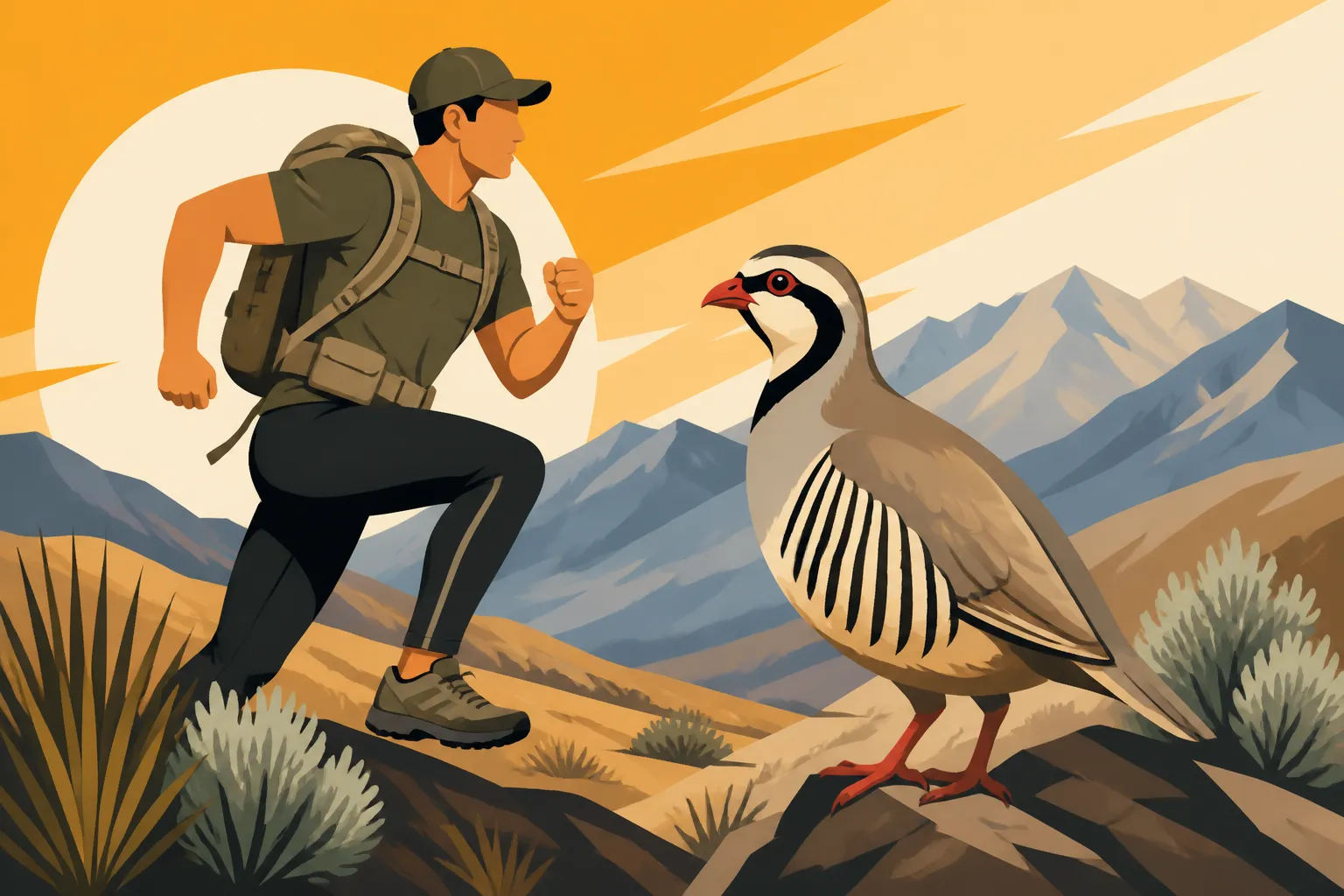
Chukar are famously known as "devil birds" for a reason. They don't just flush and fly a short distance; they often run uphill at incredible speeds before taking flight, or they'll fly downhill into a different canyon entirely, forcing you to chase. This means your hunt isn't a steady pace; it's a series of explosive bursts of energy followed by quick recoveries. You might be carefully picking your way through rocks, then suddenly need to sprint up a short incline to cut off a running covey or quickly get into position for a shot when they flush.
This "run and gun" style requires a specific type of fitness. You need anaerobic capacity for those short, intense sprints, and then the aerobic endurance to recover quickly and keep moving. It's like playing a sport that combines trail running, rock climbing, and bursts of high-intensity interval training, all at once. Your heart rate will spike, you'll be breathing hard, and then you'll need to calm down enough to focus on your dog and make a clean shot. Without the ability to perform these quick, demanding movements and then recover, you'll find yourself constantly behind the birds, missing opportunities, and feeling utterly defeated. It's a true test of both physical and mental agility, where quick reactions are just as important as lung capacity.
Carrying Weight in Arid Conditions
A typical chukar hunt involves carrying a significant amount of weight, and this burden is compounded by the arid, often hot conditions of Nevada's high desert. You'll be packing your shotgun, ammunition, a first-aid kit, emergency supplies, and perhaps most critically, a substantial amount of water. In August or early September, temperatures can still be quite high, making dehydration a serious threat. Even in cooler weather, the constant exertion on steep slopes requires consistent hydration. All this gear and water adds up, easily pushing your pack weight into the 20-30 pound range, if not more, especially for a full day out.
This sustained weight-carrying on uneven, steep terrain places incredible demands on your core, back, and shoulders, not just your legs. A weak core will lead to fatigue, poor posture, and increased risk of back pain. Your body will be working overtime to regulate its temperature, and without proper physical conditioning, this effort can quickly lead to exhaustion and even heat-related illnesses. Dehydration also saps strength and mental acuity, turning an already difficult hunt into a dangerous one. You'll often find yourself miles from your vehicle, navigating remote country where Water You Must Carry on a Desert Day Hunt is a crucial piece of knowledge. Knowing how to efficiently carry your load, while staying hydrated and pushing through the physical grind, is paramount to a successful and safe chukar hunt.
Building a Comprehensive Chukar Conditioning Program
So, how do you get ready for this unique challenge? You can't just hit the gym for a few weeks and expect to be ready. Chukar hunting requires a multi-faceted approach to fitness that builds endurance, strength, and mental grit.
Cardiovascular Endurance: The Engine of Your Hunt
Cardiovascular endurance is, without a doubt, the cornerstone of chukar hunting fitness. You need an engine that can run all day, through sustained climbs and sudden sprints, without redlining. Forget just jogging on flat pavement; your training needs to mimic the specific demands of the terrain. Start with steady-state cardio, focusing on activities that engage your leg muscles and elevate your heart rate for extended periods. Hiking, especially with a weighted pack, is your best friend here. Find the steepest hills or inclines you can access, and hit them regularly. Gradually increase your pack weight to simulate what you'll carry on the hunt.
Beyond long, steady hikes, incorporate interval training. Remember those sudden sprints after a flushing covey? High-intensity interval training (HIIT) will build that anaerobic capacity and quick recovery. Think short bursts of max effort – sprinting uphill for 30 seconds, then walking for 90 seconds, repeated for several rounds. Treadmills set at a steep incline, stair climbers, or even just repeated sprints up a local hill can all be effective. Aim for at least 3-5 cardio sessions a week, with a mix of steady-state and interval training. Don't forget to push yourself. The discomfort you feel in training is a fraction of what you'll experience on the actual hunt, and learning to push through it builds vital mental fortitude. When you're planning those long days of glassing for mule deer, the same endurance principles apply as when you're preparing for chukar. Preparing Physically for Long Glassing Days is a great resource to cross-reference.
Strength Training: Legs, Core, and Back for the Mountains
While cardio provides the engine, strength training builds the chassis and suspension system for your body to handle the mountains. Your legs are obviously crucial, but don't overlook your core and back, which stabilize your body and bear the weight of your pack. Focus on compound movements that work multiple muscle groups simultaneously, mimicking the functional movements of hunting.
Here’s what to focus on:
- Legs: Squats (goblet squats, front squats, back squats), lunges (walking lunges, reverse lunges), step-ups onto a box or bench, and deadlifts (conventional or Romanian) are excellent for building powerful quads, hamstrings, and glutes. Don't skip calf raises, as strong calves are vital for those steep ascents.
- Core: A strong core is your body's foundation. Incorporate planks (front and side), Russian twists, leg raises, and bird-dog exercises. These will improve your balance on uneven terrain and prevent lower back strain from carrying your pack.
- Back: Rows (dumbbell rows, bent-over rows) and pull-ups (or assisted pull-ups) will build the upper back strength needed to comfortably carry your pack all day.
- Ankle Stability: This is often overlooked but critical for navigating rocky chukar country. Exercises like single-leg balances, calf raises on an unstable surface (like a wobble board), or simply standing on one leg for extended periods will dramatically improve your resistance to twists and sprains.
Aim for 2-3 strength training sessions per week, allowing for adequate rest between sessions. Remember, consistency over intensity is key in the beginning. Gradually increase the weight or resistance as you get stronger.
Mental Toughness and Acclimatization
Chukar hunting is as much a mental game as it is a physical one. The sheer difficulty, the false hope, the constant uphill battle – it can wear you down. Building mental toughness is about pushing through discomfort in your training, understanding that feeling tired is normal, and developing the resilience to keep going when every fiber of your being wants to quit. One way to cultivate this is by consistently pushing yourself a little further than you think you can go during your cardio and strength workouts. Don't just stop when you're tired; stop when you can't do another rep or take another step.
If possible, try to acclimatize to conditions similar to what you'll face. If you live somewhere with hills, use them. Hike in warm weather to get your body used to Heat Management on an August Archery Hunt, and dress in layers to understand how your body reacts to temperature swings. Practice navigating uneven ground, even if it's just a local rocky trail. The more you expose yourself to simulated hunting conditions, the less shocked your body and mind will be on opening day. Utilizing digital tools like GoHunt to e-scout units and visualize the actual terrain profiles can also be a huge mental advantage, helping you understand precisely what you're signing up for before you even leave home. This preparation helps to set realistic expectations and builds confidence that you've done the work.
Practical Training Strategies and Gear Considerations
Beyond the specific exercises, there are practical strategies and gear choices that will significantly impact your physical readiness and overall hunting experience.
Hiking with Weight: The Most Direct Preparation
There's simply no substitute for hiking with a weighted pack over challenging terrain. This is the single most effective way to prepare your body for chukar hunting. Start small, maybe 10-15 pounds, and gradually increase both the weight and the duration of your hikes. Your goal should be to comfortably carry your anticipated hunting weight (including water and gear) for several hours over steep, uneven ground. Don't stick to paved paths or manicured trails; seek out rocky, off-trail environments that mimic chukar habitat. The more closely your training resembles the actual hunt, the better prepared you'll be.
As you get closer to the season, try to do a few "all-day" simulations. Pack everything you'd bring on a hunt, wear your boots and hunting clothes, and spend 6-8 hours on rough terrain. This isn't just about physical conditioning; it's about breaking in your boots, testing your layering system, and identifying any hotspots or discomforts with your gear long before you're miles deep in a canyon. A properly fitted pack is also crucial to distribute weight efficiently and prevent undue strain on your back and shoulders.
Nutrition and Hydration: Fueling Your Body for the Grind
Your body is a machine, and it needs the right fuel to perform. In the weeks leading up to your hunt, focus on a diet rich in lean proteins, complex carbohydrates, and healthy fats. Avoid processed foods, sugary drinks, and excessive alcohol, which can hinder recovery and energy levels. On the hunt itself, your nutrition and hydration strategy are paramount. Start your day well-hydrated and with a good breakfast that provides sustained energy.
During the hunt, consistent hydration is non-negotiable. Carry more water than you think you'll need, and consider bringing electrolyte packets to add to your water, especially on warmer days or if you're a heavy sweater. For fuel, pack easily digestible, high-energy snacks like trail mix, energy bars, dried fruit, jerky, or peanut butter sandwiches. These provide quick boosts and sustained energy without weighing you down or causing stomach upset. Eat small amounts frequently rather than trying to gorge during a brief break. Proper fuel will keep your energy levels stable, prevent bonking, and maintain mental clarity when fatigue sets in.
Rest and Recovery: Often Overlooked, Always Essential
Many hunters focus solely on pushing themselves, but rest and recovery are just as critical components of a successful conditioning program. Your muscles grow and repair themselves during rest, not during workouts. Ensure you're getting 7-9 hours of quality sleep every night. Incorporate active recovery days, like light walking or stretching, into your weekly routine. Foam rolling and dynamic stretching can help improve flexibility and reduce muscle soreness, preventing injuries.
Ignoring rest leads to overtraining, burnout, and a higher risk of injury, which could derail your hunt before it even begins. Listen to your body; if something feels like more than typical muscle soreness, take an extra rest day or consult a professional. Leading up to your hunt, make sure to taper your training, reducing intensity and volume in the final week or two. This allows your body to fully recover and be fresh for the arduous days ahead. If you're considering a guided hunt, services like BookYourHunt can connect you with outfitters who understand the physical demands and can build in appropriate rest periods or logistical support, ensuring you have the best chance at success while also safeguarding your well-being.
Sample Weekly Chukar Training Schedule
This table provides a generalized outline. Adjust intensity and duration based on your current fitness level and how close you are to your hunt. Always listen to your body.
| Day | Activity | Focus | Notes |
|---|---|---|---|
| Monday | Strength Training: Lower Body & Core | Squats, lunges, deadlifts, calf raises, planks, Russian twists. | 3-4 sets of 8-12 reps. Focus on proper form. |
| Tuesday | Cardio: Steady-State Hiking (Weighted) | 60-90 minutes, steep incline, 15-25 lb pack. | Find a challenging trail or use a treadmill with high incline. |
| Wednesday | Rest or Active Recovery | Light walk, stretching, foam rolling. | Essential for muscle repair and preventing burnout. |
| Thursday | Strength Training: Full Body & Ankle Prep | Step-ups, rows, pull-ups, single-leg balance, stability exercises. | Incorporate exercises for back, shoulders, and ankle stability. |
| Friday | Cardio: Interval Training | 30-45 minutes. Hill sprints (30s on, 90s off) or stair climber HIIT. | Build anaerobic capacity and quick recovery. |
| Saturday | Long Hike/Hunting Simulation | 2-4+ hours, steep, uneven terrain, full hunting pack weight. | Wear your hunting boots. Practice navigating off-trail. Increase duration as season approaches. |
| Sunday | Rest & Hydration | Prioritize sleep, hydrate, prepare for the week. | Critical for physical and mental recovery. |
Chukar hunting is a truly rewarding experience, offering some of the most challenging and exciting upland bird hunting available. But it's not a hunt you can walk into unprepared. By dedicating yourself to a comprehensive physical conditioning program that addresses the unique demands of Nevada's terrain and these incredible birds, you'll not only increase your chances of success but also ensure you can safely and fully enjoy every grueling step of the adventure.
Disclaimer
This article is for general informational purposes only and does not constitute professional advice. Laws, prices and regulations vary by location and change over time. Consult a qualified professional for guidance on your specific situation.