How Outfitters Split Time Between Clients
One of the biggest questions that comes up when hunters consider booking a guided trip, especially in a state like Nevada with its vast, challenging terrain, is how exactly an outfitter manages their time and attention across multiple clients. It's a valid concern, often leading to worries about getting lost in the shuffle or not receiving the personalized guidance you're paying for. This guide will meticulously break down the typical client-to-guide ratios, what they mean for your hunt, and how to set yourself up for the best possible experience.
Understanding Client-to-Guide Ratios
When you start looking into booking a guided hunt, you'll inevitably encounter terms like "1:1" or "2:1." These numbers aren't just jargon; they’re fundamental to understanding the level of attention and service you can expect from your guide. It's all about how many clients are assigned to a single guide, and each ratio carries its own set of implications for your experience in the field.
The One-on-One Experience
The 1:1 client-to-guide ratio is often considered the gold standard for a guided hunting trip, and it's certainly what many dream of. This means you, and only you, are the guide's sole focus throughout the hunt. Imagine a crisp Nevada morning, glassing a distant ridge for mule deer or elk, and your guide is entirely dedicated to your immediate needs, your comfort, and spotting game specifically for you. The communication is direct, decisions are made swiftly based on your capabilities and preferences, and the pace of the hunt is set entirely around you. If you need a moment to catch your breath on a steep climb or want to spend an extra hour glassing a promising basin, the guide is there to facilitate that. This personalized attention can be invaluable, especially for newer hunters learning the ropes or those targeting a specific trophy animal in challenging conditions. The downside, of course, is that this level of dedicated service usually comes with a higher price tag.
The Two-on-One Dynamic
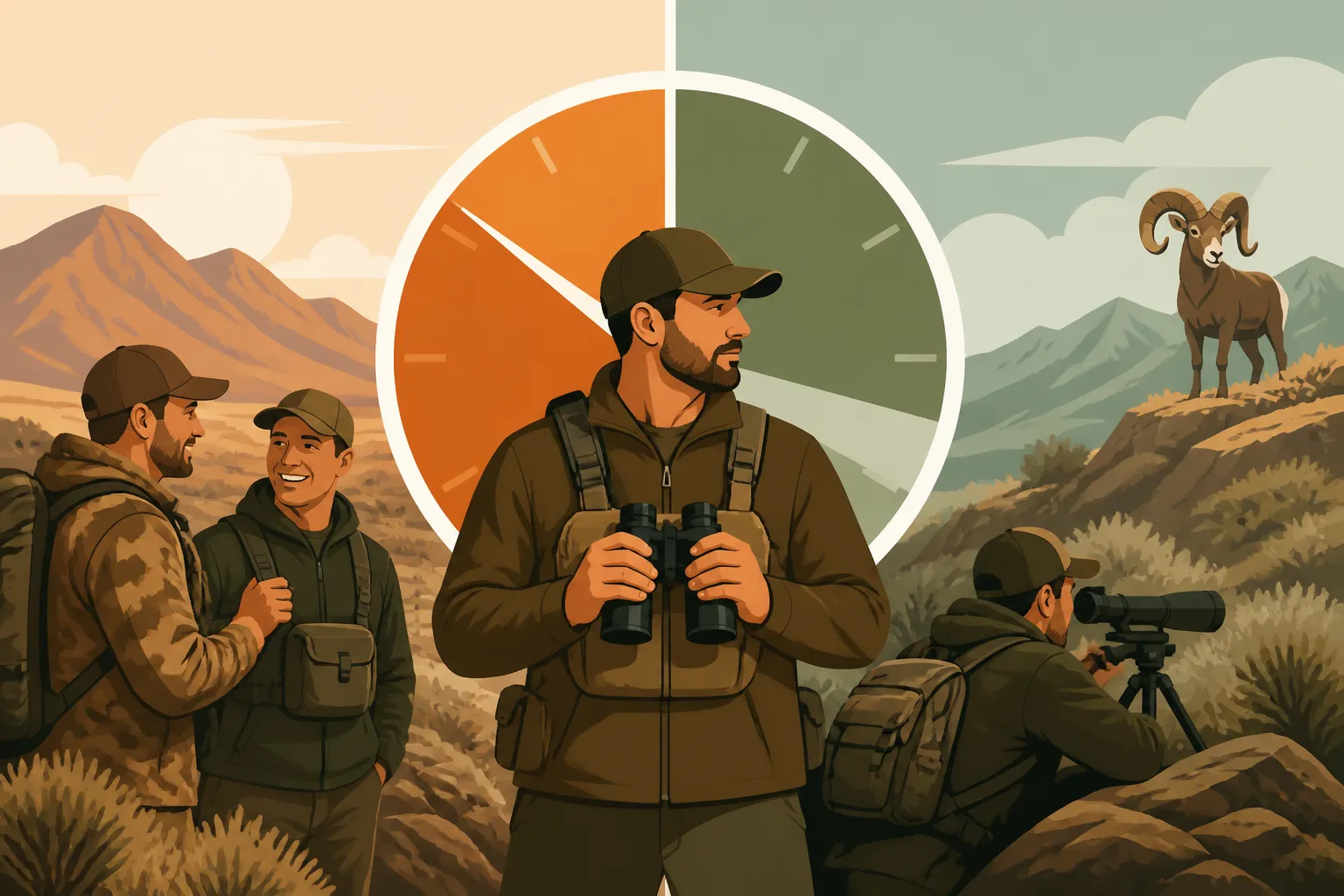
A 2:1 client-to-guide ratio is perhaps the most common setup for many guided hunts, striking a balance between cost and personalized service. In this scenario, two hunters share one guide. This can be an excellent option for a pair of hunting buddies, a parent and child, or even two solo hunters who are compatible and understand the dynamic. The guide's attention is now split between two individuals, which means decisions might take a little longer, and the pace will need to accommodate both hunters' physical abilities and preferences.
For instance, if one hunter spots an animal and the other needs to be repositioned, the guide is managing both movements simultaneously. The advantage here is often a more accessible price point compared to a 1:1 hunt. It also means you have a partner in the field, which can be great for camaraderie, sharing observations, and even helping to carry gear. However, it's crucial that both hunters understand and agree on the objectives and pace of the hunt beforehand. Misaligned expectations can lead to frustration, especially if one hunter is significantly faster, slower, more experienced, or has different trophy goals than the other. When considering this option, you might look into outfitters listed on platforms like BookYourHunt, which often detail their client-to-guide ratios and provide reviews from previous clients, giving you a better sense of how they manage groups.
Larger Group Hunts and Trade-offs
While less common for dedicated big game hunts targeting species like Nevada elk or bighorn sheep, larger group hunts (e.g., 3:1, 4:1, or even more) do exist, particularly for certain types of hunts like predator calling, bird hunting, or base-camp style hunts where hunters are somewhat self-sufficient or operate in different areas around a central camp. In these scenarios, the guide's role shifts more towards logistics management, general advice, and ensuring safety, rather than constant, direct field guidance for each individual.
The trade-off is often a significantly lower cost per hunter, making the experience more accessible. However, the personalized attention you receive will be minimal. You might find yourself in a scenario where the guide drops off multiple hunters at different locations, or the group moves as a single unit, with decisions made for the collective good rather than individual preferences. For experienced hunters who primarily seek logistical support, access to private land, or a social hunting experience, this can be a viable option. For a first-time hunter or someone with specific physical limitations, a larger group hunt might not provide the necessary support to ensure a successful or enjoyable outing. It's essential to clarify the exact nature of the guide's role and the group size if considering such an arrangement.
How Outfitters Allocate Resources
Beyond just the guide-to-client ratio on any given day, a reputable outfitter is constantly allocating resources—human, physical, and temporal—to ensure their clients have the best possible chance at success. This intricate dance involves extensive planning, communication, and adaptability, especially in a vast and unpredictable landscape like Nevada. Understanding this behind-the-scenes work can help you appreciate the value of a guided hunt.
Pre-Season Scouting and Planning
Long before you even arrive in Nevada, a good outfitter and their team are putting in countless hours of pre-season work. This isn't just a casual drive-through; it involves serious dedication. They're typically scouting their allocated units, often using tools like GoHunt to analyze draw odds and harvest statistics, and then putting boots on the ground to identify game patterns, water sources, and access points. They are literally mapping out potential hunting areas, noting where big bucks or bulls might be bedding, feeding, or traveling. This could mean miles of hiking, glassing for hours from a vantage point, and even setting up trail cameras (where legal) to pattern animals. E-Scouting a Nevada Unit Before the Season is a huge part of this, even for guides.
This extensive reconnaissance allows them to develop contingency plans for different weather conditions, game movements, or unexpected changes in the field. When you book a hunt, you're not just paying for the guide's time during your trip; you're investing in this months-long preparation that significantly increases your odds of encountering game. It’s a resource-intensive endeavor that requires a deep understanding of the local ecosystem and the animals that inhabit it.
In-Season Logistics and Support
Once the season is underway and clients start arriving, the outfitter's logistical machine kicks into high gear. This involves everything from ensuring camp is comfortable and well-stocked, to coordinating vehicle movements, to managing communication across multiple guiding teams. In Nevada’s expansive units, where cell service is often nonexistent, this might involve satellite phones, two-way radios, or even daily check-ins at designated locations to coordinate efforts and ensure safety. Carrying Extra Fuel and Water is not just for clients; it's a daily reality for guides moving across vast distances.
Outfitters often employ additional staff beyond the field guides, such as camp cooks, wranglers for horse-packing operations, or drivers for shuttle services. These support personnel free up the guides to focus solely on the hunting experience. Imagine a scenario where multiple clients are out in different areas of a unit. The outfitter needs to know where everyone is, what their progress is, and be ready to reallocate resources—like sending a fresh guide or a different vehicle—if a particular situation arises, such as a long pack-out or a change in weather. This intricate network ensures that each client receives the necessary support, even if their primary guide is busy with another hunter at a different location.
Guide Rotation and Specialty Roles
Some larger outfitting operations, especially those running multiple hunts concurrently or with varied terrain, might utilize guide rotation or assign guides to specialty roles. For instance, one guide might be an expert at Bugling Bulls in Nevada's Northern Mountains, while another excels at Glassing Nevada's Basin and Range for Mule Deer. Depending on the specific hunt you've booked and the conditions encountered, the outfitter might assign different guides to your group or rotate guides through different camps.
This isn't necessarily a sign of a fragmented experience; rather, it can be a strategic way to maximize expertise and ensure hunters are paired with the most suitable guide for the current situation. For example, if your primary guide has been on a strenuous pack-out, the outfitter might bring in a fresh guide for the morning hunt to maintain energy levels and effectiveness. Similarly, if your hunt takes you from high-elevation timber to open sagebrush flats, different guides with specialized knowledge of those micro-environments might step in. It's all about leveraging the strengths of the entire team to provide the best possible service, although it does mean your relationship with any single guide might be shorter. When Vetting a Nevada Outfitter Before You Send a Deposit, it's worth asking about their team structure and how guides are assigned.
Impact on Your Hunting Experience
The way an outfitter divides their time and resources directly impacts your hunting experience. It shapes everything from the level of personal attention you receive to the flexibility of the hunt and, ultimately, your perceived success. Understanding these impacts is key to choosing the right outfitter and setting appropriate expectations.
Personalized Attention vs. Team Effort
The most immediate impact of client-to-guide ratios is the degree of personalized attention you’ll receive. On a 1:1 hunt, your guide's entire focus is on your hunt. They’ll be attuned to your physical condition, your shooting ability, and your desires for the hunt. This allows for constant, detailed feedback and real-time adjustments based on your performance and the animals' behavior. You're essentially hiring a personal coach and scout all rolled into one. This is crucial when learning skills like Playing Thermals on a Rimrock Stalk or perfecting a long-range shot.
In a 2:1 or larger group setting, the attention naturally becomes more of a shared resource. The guide has to manage the movements, questions, and expectations of multiple people. While still highly professional, their focus might be broader, encompassing the group's collective progress rather than hyper-focusing on one individual. This isn't necessarily a negative, especially if you enjoy the camaraderie of a group. However, if you thrive on individual instruction or have specific needs, you might find yourself needing to be more proactive in communicating them to the guide. The emphasis shifts from an individual spotlight to a coordinated team effort, where everyone plays a role in the group's overall success.
Flexibility and Responsiveness in the Field
The flexibility of your hunt, and how quickly your guide can respond to changing circumstances, is another factor tied to client ratios. With a 1:1 guide, adaptability is at its peak. If you spot a trophy animal late in the day and need to make a quick, aggressive move, the guide can react instantly, assessing risks and opportunities based solely on your capabilities. If weather conditions suddenly shift or you're feeling unwell, plans can be altered without impacting other clients.
Conversely, with a 2:1 ratio, any decision to change strategy or location needs to consider both hunters. If one hunter is struggling physically, or if one is determined to chase a specific buck while the other wants to sit a waterhole, the guide must mediate and find a solution that works for everyone. This can sometimes lead to compromises that might not be ideal for either individual but are necessary for the group's cohesion. Larger group hunts will have even less individual flexibility, often operating on a more rigid schedule and plan, as coordinating multiple people in remote Nevada terrain is a significant challenge.
Opportunity and Success Rates
While success is never guaranteed in hunting, especially in challenging environments like Nevada, the client-to-guide ratio can certainly influence your opportunities and, by extension, potentially your success rate. A guide dedicated to one hunter can often cover more ground, spend more time glassing for a specific animal, and make more aggressive moves when an opportunity arises, simply because they don't have to manage another person's pace or preferences. This dedicated effort can lead to more sightings and better shot opportunities.
In a 2:1 scenario, the guide is still actively working for two hunters, meaning two sets of eyes in the field (the hunters' own) can be beneficial for spotting game. However, a shot opportunity might present itself to one hunter, while the other might not be in a position to capitalize. Guides will often try to manage these situations fairly, ensuring both hunters get comparable opportunities over the course of the hunt. However, the sheer volume of "dedicated guide hours" per hunter is lower. While reputable outfitters will strive to provide excellent opportunities for all their clients, the inherent nature of shared guiding time means that individual opportunities might not feel as constant or tailored as a 1:1 experience. You can often find Outfitter Success Rates in Nevada broken down by species, and sometimes even by client ratio, which can give you some insight.
Communicating Your Expectations
The key to a successful guided hunt, regardless of the client-to-guide ratio, lies in clear communication and setting realistic expectations from the outset. Don't assume anything; ask all your questions before you commit. This proactive approach will save you potential frustration and ensure you and your outfitter are on the same page.
Asking the Right Questions Before Booking
Before you put down a deposit, open a dialogue with the outfitter. This is your chance to gather crucial information. Don't be shy! Some essential questions to ask include:
- "What is your standard client-to-guide ratio for this specific hunt?"
- "If it's a 2:1 hunt, will I be paired with another hunter, or do I need to bring my own partner?"
- "How do you handle situations where hunters in a 2:1 group have different physical abilities or hunting goals?"
- "What is a typical day like in the field with my assigned guide?"
- "How many guides and support staff are typically in camp during the season?"
- "What kind of communication system do you use in the field, especially in areas without cell service?"
- "What happens if one hunter in a 2:1 group harvests an animal early – does the hunt continue for the other, or is the guide's attention then fully focused on the remaining hunter?"
These kinds of specific questions will not only clarify the operational details but also give you a sense of the outfitter's professionalism and willingness to communicate openly. Platforms like BookYourHunt often facilitate direct communication with outfitters, making it easier to get these questions answered upfront.
Reading the Contract Closely
Once you've had your conversations and feel good about an outfitter, the contract is your final layer of protection and clarity. It's tempting to skim over legal documents, but resist that urge! Read every clause, particularly those pertaining to client-to-guide ratios, services included (and excluded), cancellation policies, and refund terms. If anything in the contract contradicts what you discussed verbally, or if there's any ambiguity, get clarification in writing.
For example, a contract might state a 2:1 ratio, but the fine print could imply that under certain circumstances (like an early harvest by another hunter), the ratio could temporarily change. Understand what constitutes the "hunt" – is it strictly until an animal is harvested, or is it a set number of days regardless of success? Pay attention to any clauses about guide changes or adjustments to the hunt plan. Knowing these details beforehand, rather than being surprised in the field, is crucial for a smooth experience. This is especially true when it comes to the financial aspects and understanding What Outfitter Prices Leave Out.
Setting Realistic Expectations
Ultimately, no matter how skilled your guide or how favorable your client-to-guide ratio, hunting remains hunting. There are no guarantees. Wildlife is unpredictable, weather can turn on a dime, and even the most seasoned hunters can have off days. Setting realistic expectations for yourself and for the hunt is paramount. Understand that a guide’s job is to maximize your opportunities and provide a safe, enjoyable experience, not to guarantee a trophy animal.
Your role as a client is also important. Be honest about your physical conditioning—Preparing Physically for Long Glassing Days is critical in Nevada. Practice your shooting, be prepared for long days, and come with a positive attitude. Even in a 1:1 setting, you are part of the team. The more you communicate your needs, listen to your guide's advice, and put in the effort, the more rewarding your experience will be. Remember, the guide is there to help you hunt, not to hunt for you.
| Aspect | 1:1 Client-to-Guide Ratio | 2:1 Client-to-Guide Ratio | 3:1+ Client-to-Guide Ratio (Larger Groups) |
|---|---|---|---|
| Personal Attention | Maximum, guide's sole focus on you | Shared, guide manages needs of two hunters | Minimal, guide focuses on group logistics/general support |
| Pace & Flexibility | Highly adaptable, pace set by individual client | Moderate, pace balances two hunters; some compromises needed | Limited, pace set by group; less individual flexibility |
| Cost | Highest | Moderate | Lowest per hunter |
| Decision Making | Immediate, based on individual client's needs | Collaborative, balancing two clients' preferences | Centralized, decisions for collective group |
| Camaraderie | Primarily with guide | High, with guide and hunting partner | High, within the larger group |
| Opportunities | Optimized for individual, highest potential for specific stalk | Good, but opportunities might be shared or require coordination | Opportunities often more general or less targeted for individuals |
| Best For | First-time hunters, specific trophy goals, focused learning | Hunting partners, parent/child, balancing cost & attention | Experienced, self-sufficient hunters seeking logistical support/access |
Disclaimer
This article is for general informational purposes only and does not constitute professional advice. Laws, prices and regulations vary by location and change over time. Consult a qualified professional for guidance on your specific situation.