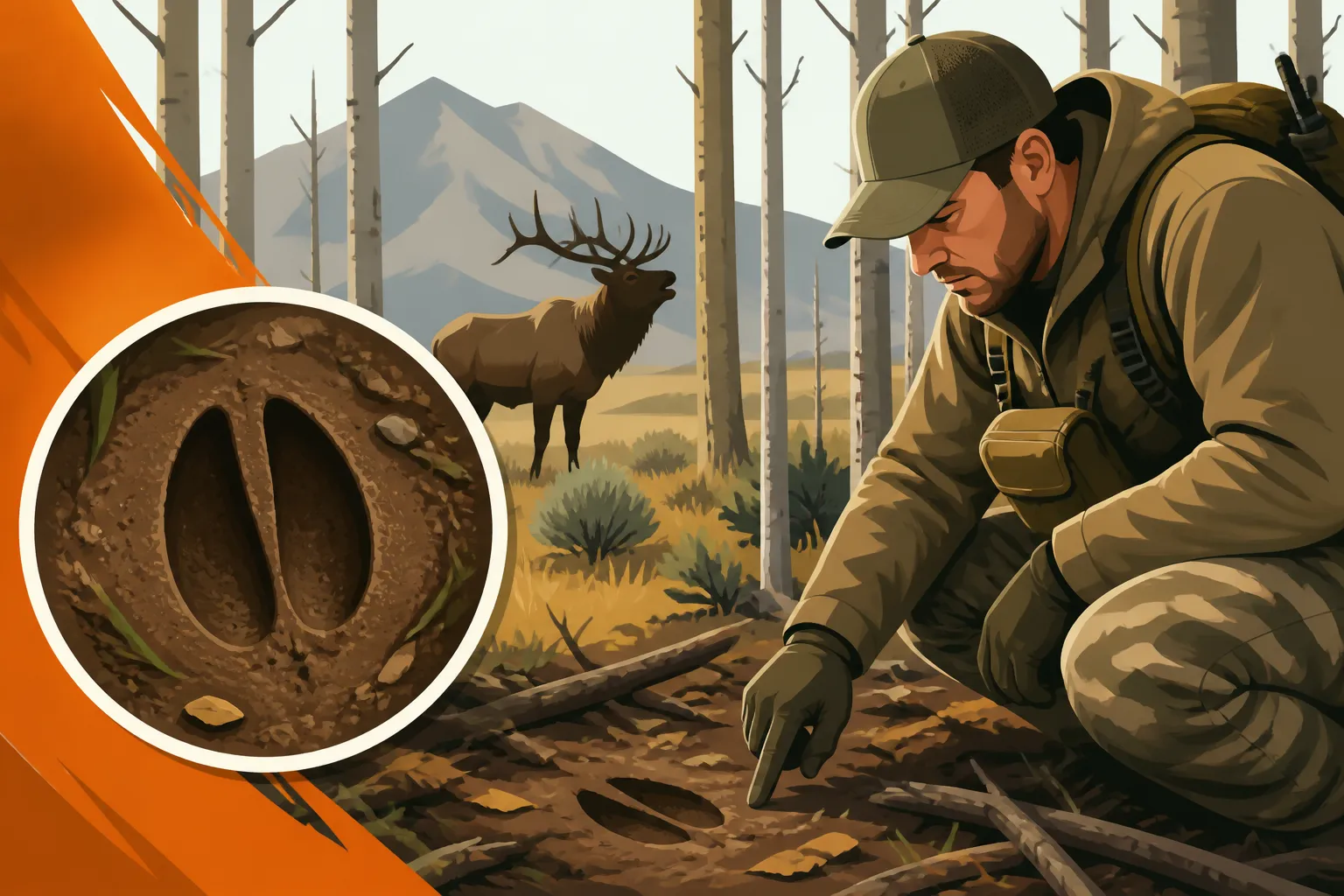
Reading Fresh Elk Sign in Thin Timber
Hunting elk in Nevada isn't always about spotting a herd in a vast, open basin. Sometimes, especially when you're targeting those elusive bulls that prefer a bit more cover, you find yourself picking through pockets of thin timber. This can be incredibly frustrating because the timber isn't dense enough to offer complete concealment, but it's just enough to make visual detection tough. Knowing how to read the fresh sign those elk leave behind in these patchy forest environments is absolutely critical to closing the distance and making your hunt a success. This guide will walk you through exactly what to look for, how to interpret it, and how to use that knowledge to put yourself in the best possible position.
The Nuance of Nevada's Thin Timber Elk Habitat
When most hunters think of elk country, they often picture dense, dark timber stands of the Rocky Mountains. But Nevada, true to its unique character, offers something a little different. Our timber isn't typically sprawling old-growth forests; it's often more sparse, broken, and exists in pockets. Understanding this distinction is key to effectively locating elk.
Why Nevada's Timber is Different
Imagine the difference between the thick, continuous conifer forests of Montana or Idaho and the scattered pinyon-juniper or aspen stands clinging to Nevada's mountain ranges. Here, "timber" might mean a north-facing slope with a few hundred acres of pines, or a stringer of aspens in a high canyon bottom. These areas, while providing crucial shade and security, aren't the impenetrable fortresses found elsewhere. This means elk aren't necessarily "hiding" in endless woods; they're utilizing these smaller, often isolated, timber pockets as strategic points within a larger, more open landscape.
The consequence of this unique habitat is that elk sign can be more concentrated around these timbered areas, or it might be a transition zone between the timber and the open sage flats where they feed. You might find heavier concentrations of tracks and droppings where elk enter and exit these patches, or where they bed down during the day. It’s not about tracking them through miles of dense forest; it's about identifying where they funnel into and out of these relatively small islands of cover. This often means your scouting, even in timbered areas, will still rely heavily on long-range glassing to spot these key transition zones and then moving in to investigate the sign. Knowing how to adapt your strategy to this particular environment is crucial, and it’s a skill that often sets successful Nevada elk hunters apart.
Understanding Elk Behavior in Open Timber
Elk are smart, adaptable creatures, and their behavior shifts dramatically based on the habitat they find themselves in. In Nevada's thinner timber, they use these areas primarily for security cover, especially for bedding during daylight hours, and as travel corridors between feeding grounds and water sources. North-facing slopes with timber are goldmines, offering cooler temperatures and deeper shade throughout the day, which is especially important during early season hunts when temperatures can still be scorching. These spots offer a crucial thermal advantage, making them prime bedding areas.
You’ll often find elk moving out of these timber pockets at dawn and dusk to feed in adjacent sagebrush flats or mountain meadows, then retreating back into the timber as the sun climbs higher. Travel routes within these timber patches might be subtle, but if you look closely, you'll see faint trails weaving through the trees, often leading towards water or more open feeding areas. They also use the timber to escape hunting pressure, holding tight in even sparse cover if they feel exposed. This means your approach needs to be stealthy, respecting the fact that they're likely present and highly alert within what might seem like a less secure environment to a human eye. Learning to anticipate these movements, by recognizing where they feed and where they bed, is a fundamental step in using fresh sign effectively.
Decoding Fresh Elk Sign: What to Look For
Finding elk sign is one thing; understanding how fresh it is and what it tells you about the animals' recent movements is quite another. In thin timber, where every clue counts, being able to accurately interpret these signs can be the difference between an empty pack frame and a successful harvest.
Tracks and Trails
Tracks are perhaps the most direct evidence of an animal's presence. In Nevada's often dry, rocky, or dusty terrain, finding clear, fresh tracks can be a challenge, but in the softer soils or shaded areas of thin timber, they become much more legible. Elk tracks are distinct: larger and more elongated than deer tracks, typically measuring 4-5 inches long for an adult, with a more splayed appearance in softer ground. The dewclaws will often show in softer conditions, especially when an elk is moving uphill or heavily laden.
When assessing freshness, look for sharp, well-defined edges on the tracks. If the edges are rounded, crumbly, or filled with fine dust or debris, the track is older. A truly fresh track will often have a slightly damp appearance in the bottom, or if it's very recent, you might even see a bit of mud or dust still adhering to the edges, kicked up by the animal's hoof. Check for small pebbles or leaves that have been dislodged and are still lying within the track – if they're still shiny or don't have dust accumulated on them, the track is very recent. Well-used game trails leading into and out of the timber, or connecting different timber pockets, are also critical. These trails will be packed down and might show a pattern of multiple tracks. The key is to find tracks on these trails that match the freshness criteria. A great resource for studying unit terrain and potential travel corridors is to use tools like those offered by GoHunt, which can help you identify these natural travel routes long before you set foot in the field.
Droppings and Urination Sites
Elk droppings, or scat, provide a wealth of information about an animal's presence and its diet. Adult elk typically produce cylindrical, pellet-like droppings, often slightly flattened or indented at one end. The size can range from about 3/4 to 1 1/4 inches long. The crucial factor for freshness is moisture and color. Fresh pellets will be dark, glossy, and moist, often clumped together if the elk has been feeding on green forage. As they dry, they become duller, harder, and may break apart more easily. Very old droppings will be faded, brittle, and might be covered in dust or spiderwebs. During periods of lush green feed, especially in spring and early summer, elk scat can be more amorphous and clumpy, resembling cow patties but smaller. In late season, when they're on drier browse, the pellets become distinct and firm.
Urination sites are also good indicators of freshness, though often harder to spot. Look for damp ground, especially in shaded areas, and a distinct musky odor. Fresh urine might still be glistening, or the ground might be noticeably darker and moist. Pay close attention to these signs around bedding areas or along established game trails, as they can tell you if an animal has recently passed through or spent time in a particular spot. This kind of detailed observation can really help you narrow down where elk are spending their time, even when you're Reading a Nevada Hunt Unit Before You Apply.
Rubs, Wallops, and Feeding Evidence
Beyond tracks and droppings, elk leave behind other powerful clues about their presence, especially during certain times of the year.
- Rubs: These are trees or saplings that bulls have rubbed their antlers against to strip velvet, mark territory, and strengthen their necks. Fresh rubs are unmistakable. They'll have shiny, peeled bark, often with sap still oozing from the wound. The wood underneath will be bright and fresh-looking, not dried out or discolored. The height and diameter of the rub give you an idea of the size of the bull. During the rut, you'll find these more frequently, and a cluster of fresh rubs indicates an active bull in the area. These are particularly exciting to find When the Elk Rut Peaks in Nevada is in full swing.
- Wallops (Wallows): These are muddy depressions where elk have rolled around to cool off, get rid of parasites, or during the rut, to scent mark. A fresh wallow will be wet, churned up, and often have a strong, musky odor from the bull's urine and body oils. You might even see fresh hair or mud still clinging to nearby vegetation. If a wallow is dry and crusty, it hasn't been used recently. These are often found near water sources or in damp, shaded areas within or near timber.
- Feeding Evidence: Elk are primarily grazers, but they will browse on shrubs and saplings, especially in the leaner months. Look for nipped-off twigs and branches, or torn grass. Elk, unlike deer who clip vegetation cleanly, tend to tear grass and twigs, leaving a more ragged edge. The freshness of the browse sign can be determined by the color of the cut, the presence of sap, or if the broken material is still pliable. Pay attention to the height of the browse line; elk are taller than deer, so their feeding evidence will be higher up on shrubs. Identifying these subtle differences can help you confirm it's elk, not deer, in the area, and whether they've been feeding recently.
Strategies for Locating Elk in Thin Timber
Finding fresh elk sign is just the first step. The real art lies in using that sign to strategically position yourself for a successful encounter. This requires not just knowing what to look for, but how to integrate that knowledge with the terrain, environmental conditions, and your hunting approach.
Combining Sign with Terrain Features
Nevada's landscape is a complex tapestry of basins and ranges, even in areas with timber. The most effective way to locate elk in thin timber is to combine physical sign with an understanding of the terrain. Elk, even in what might seem like random timber patches, will gravitate towards certain features for security, food, and water.
Start by studying your hunt unit map, ideally with a platform like GoHunt which allows you to overlay satellite imagery and topographical data. Look for:
- North-facing slopes: These are often cooler and hold more moisture, leading to denser vegetation and more appealing bedding areas, especially during warmer seasons.
- Drainages and saddlebacks: Natural travel corridors that elk will use to move between different areas of timber, feed, and water.
- Water sources: Springs, seeps, and even man-made guzzlers are magnets for elk, particularly in arid Nevada. Fresh sign around these areas indicates recent activity.
- Adjacent feeding areas: Timber often borders sagebrush flats or open meadows where elk will feed. Look for heavy trails connecting the two.
Once you find fresh sign, pinpoint its location on your map. Is it on a travel corridor? Near a potential bedding area? Does it lead towards a known water source? By triangulating these observations, you can start to form a picture of the elk's daily routine. For instance, if you find fresh tracks leading out of a timber patch on a north-facing slope and into a sage flat at dawn, you can infer that the elk are likely bedding in that timber and feeding in the flat. This allows you to plan an approach, perhaps for an evening hunt, knowing where they are likely headed. This kind of detailed e-scouting can save you countless miles on the ground.
Patience and Slow Movement
Thin timber can be deceiving. What looks like sparse cover to you might be just enough for an elk to feel secure and simply disappear. Because of this, patience and a slow, methodical approach are paramount. You can't just bust through these areas expecting to jump elk. Instead, treat thin timber like a chess game, moving deliberately and observing constantly.
Move slowly, taking only a few steps at a time, then stop and glass thoroughly. Use your binoculars to pick apart every shadow, every cluster of trees, every fallen log. Elk can melt into surprisingly little cover, especially if they are bedded down. Look for horizontal lines (an elk's back or belly) against the vertical lines of trees. Pay attention to subtle movements, an ear twitch, or a patch of hide. When you find fresh sign, slow down even further. This is where you transition from searching to stalking. Consider how you might Play Thermals on a Rimrock Stalk or even how to effectively stalk a mule deer; many of the same principles apply to elk in similar terrain. The goal is to spot the elk before they spot you, and in thin timber, this means maximizing your observation time and minimizing your movement and noise.
Reading the Wind and Thermals
In Nevada's open, often breezy environment, understanding wind direction and thermals is critical, perhaps even more so in thin timber where scent can swirl. Elk have an incredible sense of smell, and a misplaced gust of wind can ruin a hunt before it even begins.
- Wind: Always hunt with the wind in your favor, blowing your scent away from where you expect elk to be. In thin timber, wind can be unpredictable, swirling through canyons and over ridges. Carry a wind-checker bottle or a handful of milkweed seeds to constantly monitor its direction, especially as you approach an area with fresh sign.
- Thermals: These are air currents driven by temperature changes. In the morning, as the sun warms the ground, air rises (updrafts). In the evening, as the air cools, it sinks (downdrafts). This means in the morning, thermals will generally carry your scent uphill, and in the evening, downhill. If elk are bedding high on a ridge in timber, a morning hunt often means approaching from below, letting your scent rise above them. In the evening, if they're feeding in a valley, approaching from above, with your scent falling, is often the best bet.
Combine wind and thermals. If the prevailing wind is blowing cross-slope, but the morning thermal is rising, your scent might be carried uphill and then across. This requires constant vigilance and adjustment. Learning how to effectively Reading Wind on a Long Sage Stalk can be adapted to timbered areas as well. It's a complex dance, but mastering it significantly increases your chances of getting close to elk in their timbered sanctuaries.
Interpreting Freshness: Time is of the Essence
Knowing that elk are in an area is good. Knowing that they were there recently is gold. The ability to accurately interpret the freshness of elk sign can help you determine if you're hot on their heels or if you're chasing ghosts. This skill is honed over time, but there are some critical factors to consider.
The "Feel" Test for Tracks and Droppings
When you find what you believe to be fresh sign, don't just look at it; interact with it (carefully, of course).
- Tracks: Gently run your finger along the edge of a track. If the edges are still crisp and firm, and the soil feels moist (even slightly), it's likely very fresh. If the edges are crumbling easily, or the dirt feels bone dry and powdery, it's older. In soft ground, you might even feel the impression of the dewclaws still distinct. Pay attention to any debris within the track. If a leaf or a small twig has fallen into it and shows no signs of dust accumulation or weather, the track is recent.
- Droppings: This is where the "feel" test is most telling. Fresh elk pellets will be moist, soft, and often warm to the touch (within reason, use a stick or glove!). They might still have a slight sheen or stick together if you try to separate them. As they age, they dry out, become harder, duller in color, and will break apart easily when squeezed. The presence of insects, especially flies, on fresh scat is a strong indicator of very recent passage. If you find moist, dark, clumped droppings, you can be reasonably sure elk were in that exact spot within the last few hours, making it a prime area for a silent stalk or to set up for a call.
Seasonal Variations in Sign
Elk sign isn't static; it changes with the seasons, reflecting their diet, breeding cycle, and environmental conditions. Being aware of these variations helps you interpret what you're seeing.
- Spring/Summer: With lush green forage available, elk droppings will often be softer, clumpier, and darker. Rubs are non-existent as bulls are growing antlers. Feeding sign will be focused on fresh green shoots and grasses.
- Early Archery Season (August): This is often still warm, so water sources are critical. You'll find heavy traffic around springs and guzzlers, and wallows will be active. Tracks around water will be prime indicators of presence. Bulls might just be starting to rub velvet, so early, faint rubs could appear. Heat management is a real concern for hunters and animals alike during Nevada's August Archery Deer Window, and the same applies to elk.
- Rut (September/October): This is when bull sign explodes. Rubs will be everywhere, often in clusters, and incredibly fresh. Wallows will be heavily used and strong-smelling. Tracks of larger bulls will be more evident, and you might find areas of thrashed vegetation where bulls have sparred or raked the ground. Calling activity, like Bugling Bulls in Nevada's Northern Mountains, will also be a major indicator.
- Late Seasons (November/December): Droppings will be harder, more pelleted, reflecting a drier, browse-heavy diet. Rubs will be older, dried out, and less frequent. Tracks might be easier to spot in snow, but identifying freshness becomes about whether the snow in the track is melting or refreezing at the same rate as the surrounding snow. Elk will concentrate on south-facing slopes for warmth and remaining forage.
Knowing these seasonal shifts helps you filter out irrelevant old sign and focus on what truly indicates current activity.
Using GoHunt's Tools to Refine Your Search
Modern hunting is greatly enhanced by technology, and platforms like GoHunt provide invaluable tools for refining your search for elk sign, especially in diverse Nevada terrain.
You can utilize GoHunt's mapping features to:
- Identify potential bedding and feeding areas: Overlaying timber distribution with north-facing slopes, and then cross-referencing with open areas for feeding. This helps you mentally map out potential elk movements.
- Locate water sources: Pinpointing springs, seeps, and guzzlers on your map. This allows you to prioritize scouting efforts to areas around these critical resources, which are hotbeds for fresh sign.
- Analyze historical harvest data: While not direct sign, understanding where elk have been harvested in the past can guide you to productive units and even specific drainages. If a particular timber patch consistently produces, it's worth investigating for fresh sign.
- Mark and track sign: Use the app to digitally mark every piece of fresh sign you find—tracks, rubs, droppings. Over time, this creates a pattern on your map, revealing preferred travel routes, bedding zones, and feeding areas. This collective data helps you make informed decisions about where to spend your hunting hours and plan your stalks.
By leveraging these e-scouting tools, you can maximize your time in the field, moving from merely hoping to find sign, to strategically anticipating where the freshest, most valuable clues will be located. It’s an efficient way to break down massive landscapes into manageable, high-probability hunting zones.
Comparing Fresh vs. Old Elk Sign
To help summarize, here's a quick comparison of what to look for when judging the freshness of various types of elk sign. This table can be a handy reference in the field.
| Sign Type | Fresh Indication | Old Indication |
|---|---|---|
| Tracks | Sharp, crisp edges; moist soil; dislodged debris inside track; dewclaws often visible in soft ground. | Rounded, crumbling edges; dry, powdery soil; debris settled and dusty; faded or indistinct. |
| Droppings | Dark, glossy, moist; soft or pliable; often clumped; distinct odor; presence of flies. | Dull, faded, dry; hard and brittle; easily crumbles; no distinct odor; no insects. |
| Rubs | Bright, peeled bark; sap oozing; fresh wood exposed; distinct antler marks. | Dried out, discolored wood; bark edges weathered; no sap; faded marks. |
| Wallows | Wet, muddy, churned up; strong musky odor; fresh hair or mud on surrounding vegetation. | Dry, cracked mud; no odor; vegetation around it appears settled and clean. |
| Feeding | Freshly broken twigs/branches with green inner wood; pliable plant material; sap present. | Dried, brittle breaks; discolored plant material; no sap. |
The ability to consistently identify fresh elk sign in Nevada's varied timber environments is a skill that comes with practice and keen observation. It's about becoming a detective, piecing together clues to form a picture of an animal's recent activity. By combining this ground-level knowledge with strategic planning and a deep understanding of elk behavior, you significantly increase your odds of a successful hunt. Remember, every track, every rub, every pile of droppings tells a story—you just need to learn how to read it.
Disclaimer
The information provided in this guide is for informational purposes only and is not a substitute for official Nevada Department of Wildlife (NDOW) regulations. Hunting laws and regulations can change, and it is the hunter's responsibility to review and comply with all current federal, state, and local laws. Always consult the most recent NDOW hunting regulations pamphlet before heading into the field.