Two-Hunter Calling Setups That Actually Work
Trying to call in a big game animal solo can feel like playing a game of chess against a grandmaster with one hand tied behind your back. You're trying to communicate, pinpoint their location, move into position, and remain undetected all at once. It’s incredibly frustrating when you know there's an animal close, but you just can't get them to commit. This guide is all about giving you back that second hand, exploring how two hunters can work together to create effective calling setups, doubling your chances in the vast, often open, country of Nevada.
The Undeniable Advantage of a Two-Hunter Calling Team
Hunting in Nevada, especially for mule deer or elk, often means dealing with vast, open landscapes or dense, challenging pockets of cover. A solo hunter trying to call in an animal has to manage so many variables at once: calling, watching, setting up for a shot, and trying to predict the animal's approach. It’s a tall order. But bring in a second hunter, and suddenly, those complex variables can be divided, creating a much more dynamic and effective strategy. It's about leveraging two sets of eyes, two sets of ears, and two brains working in concert.
Why a Second Set of Eyes Changes Everything
When you're calling solo, the moment you stop calling to watch, you risk missing the animal's subtle movements or, worse, them spotting you. With a two-hunter setup, one person can be dedicated to calling, keeping the animal's attention, while the other is focused solely on spotting and getting into a shooting position. This division of labor is a game-changer. Imagine a bull elk bugling back vigorously; the caller can maintain that conversation, keeping the bull fixated on the source of the sound, while the shooter can slowly maneuver into a prime spot, using available cover. This coordinated effort dramatically reduces the chance of spooking the animal and increases the likelihood of a clean shot opportunity. It’s no longer a one-man show; it's a strategic ambush.
Overcoming Nevada's Challenging Terrain with a Partner
Nevada's diverse landscapes, from the thick pinyon-juniper patches to the wide-open sage flats and steep, rocky slopes, present unique challenges for calling setups. A single hunter might struggle to effectively call in an animal in, say, an aspen pocket where visibility is limited, or across a vast basin where distances are extreme. However, two hunters can adapt to these terrains much more effectively. One hunter can position themselves as the "shooter" in a strategic location that offers a clear shot lane, while the "caller" sets up further back or to the side, drawing the animal past the shooter. This tactic is especially effective in areas with broken terrain, using draws and rims to close distance without being seen. By splitting up, you essentially expand your sphere of influence and control over the hunting scenario. Understanding the terrain and how to use it for concealment is critical, and two heads are definitely better than one when it comes to planning that perfect approach. You can use tools like GoHunt's mapping features to e-scout a Nevada unit before the season, identifying key terrain features and potential ambush points.
Mastering the Dynamics of Caller and Shooter Roles
The success of any two-hunter calling setup hinges on clear communication and a deep understanding of each hunter's role. It’s not just about one person calling and another shooting; it’s about a dance, a coordinated effort where each movement and sound has a purpose. This requires practice, trust, and often, non-verbal cues developed over time.
The Art of the Caller's Position and Sound
The caller's job is arguably the most critical for initiating and sustaining the interaction. Their position needs to be strategic, often slightly behind or to the side of the shooter, giving the impression that the animal they are imitating is moving or is in a slightly different location. This subtle misdirection encourages the target animal to move past the shooter's position, looking for the source of the sound. When bugling against cow calling in September, the caller can use a variety of sounds to mimic a dominant bull, a challenging rival, or a receptive cow, depending on the desired reaction. The sounds need to be realistic and varied, reacting to the target animal's responses. For instance, if a bull is hanging up, a soft, pleading cow call might be just the ticket to draw him those last few yards. The caller also needs to be mindful of sound travel; in open country, sound carries far, but in timber, it can be muffled. They need to understand how locator bugles for finding bulls at dawn can establish initial contact, and then transition to more subtle calls as the animal closes in.
The Shooter's Silent Stalk and Ready Posture
While the caller is orchestrating the auditory illusion, the shooter's role is one of silent vigilance and preparedness. The shooter needs to move into a position that offers clear shooting lanes, excellent visibility of the likely approach routes, and maximum concealment. This often means using natural cover like sagebrush, a small rise, or a cluster of rocks. As the animal responds to the calls, the shooter must anticipate its movements, adjusting their position subtly to maintain an advantage. They need to be ready to draw a bow or raise a rifle at a moment's notice, without making any sudden movements that could give them away. Understanding how to play thermals on a rimrock stalk is crucial here, as is knowing how to use draws and rims to close distance if a slight adjustment is needed. Constant, quiet communication—often through hand signals or pre-arranged signals—between the caller and shooter is paramount to success, ensuring they are always on the same page regarding the animal's location and intended movement.
Effective Communication and Hand Signals
In the heat of the moment, verbal communication is often impossible without spooking the animal. This is where pre-established hand signals and non-verbal cues become invaluable. Before the hunt, discuss and practice a simple set of signals:
- Direction: Point with a flat hand to indicate the animal's location (e.g., "elk 1 o'clock").
- Distance: Use fingers to indicate approximate distance (e.g., "50 yards," "100 yards").
- Action: A thumbs-up might mean "keep calling," while a flat hand waved low could mean "stop calling." A closed fist might signal "animal spotted, be ready."
- Confirmation: A nod or quick tap on the leg to acknowledge a signal received.
It’s also crucial to have a designated plan for when to take the shot your guide calls, or in this case, when your calling partner signals the animal is in a shooting lane. This table provides a basic framework:
| Signal (Caller to Shooter) | Meaning (Shooter's Action) |
|---|---|
| Open Hand, Point | Animal approaching from this direction |
| Fingers (e.g., 5) | Animal is at this approximate distance (e.g., 50 yards) |
| Thumbs Up | Keep ready, animal is committed |
| Flat Hand, Waved Low | Hold, animal is looking, or needs to move |
| Closed Fist | Animal in shooting lane, prepare to shoot |
| Cupped Hand to Ear | Listen closely for animal sounds |
These signals need to be brief, clear, and practiced so they become second nature. There’s nothing worse than confusion when a trophy animal is twenty yards away. Also, a quick note on equipment: two-way radios can be useful for initial setup and long-range communication before the animal is close, but they should be turned off or used with extreme caution once the calling begins.
Situational Setups for Mule Deer and Elk
Nevada presents a myriad of environments, and a "one-size-fits-all" calling setup simply won't cut it. Adapting your two-hunter strategy to the specific terrain and species is crucial for consistent success. Whether you're chasing elk in the high country or mule deer on the vast sage flats, having a plan for different scenarios will set you apart.
Calling Elk in Timber and Open Edges
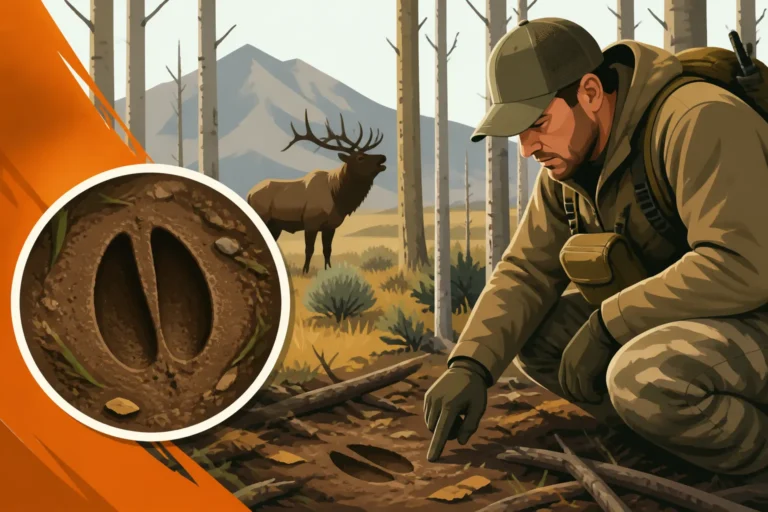
Elk hunting in Nevada can often involve a mix of thick timber, especially in areas like the Ruby Mountains, and more open edges where timber transitions to meadows or sagebrush. For a two-hunter setup in dense timber, the strategy focuses on close-quarters ambush. The caller might position themselves 40-70 yards behind the shooter, deep within the timber, mimicking a bull or a cow. The shooter needs to find a shooting lane, perhaps along a game trail or a slight opening, and remain absolutely still. The calls should be less aggressive initially, encouraging the bull to come investigate without immediately challenging. When reading fresh elk sign in thin timber, you can often predict their travel corridors, which helps immensely in setting up the shooter. If the bull comes in cautiously, the caller can use soft mews and chirps to keep him searching, drawing him past the shooter.
In open edges or areas where timber meets an open meadow, the setup changes. The caller might stay at the timber edge, or even slightly inside it, to project sound into the open area. The shooter would then position themselves further out in the open, using whatever sparse cover is available – a lone juniper, a large rock, or a slight depression. The caller’s goal is to draw the elk out of the timber and across the open area, where the shooter has better visibility and a longer shot opportunity. This is where understanding the timing a Nevada hunt around the rut can pay dividends, as elk are more responsive to calls during this period. The caller could use bolder bugles or a series of excited cow calls to entice a bull to expose himself. The key is to keep the bull’s attention focused on the caller’s position, allowing the shooter to go unnoticed as they prepare for the shot.
Decoying Mule Deer in Open Sage Country
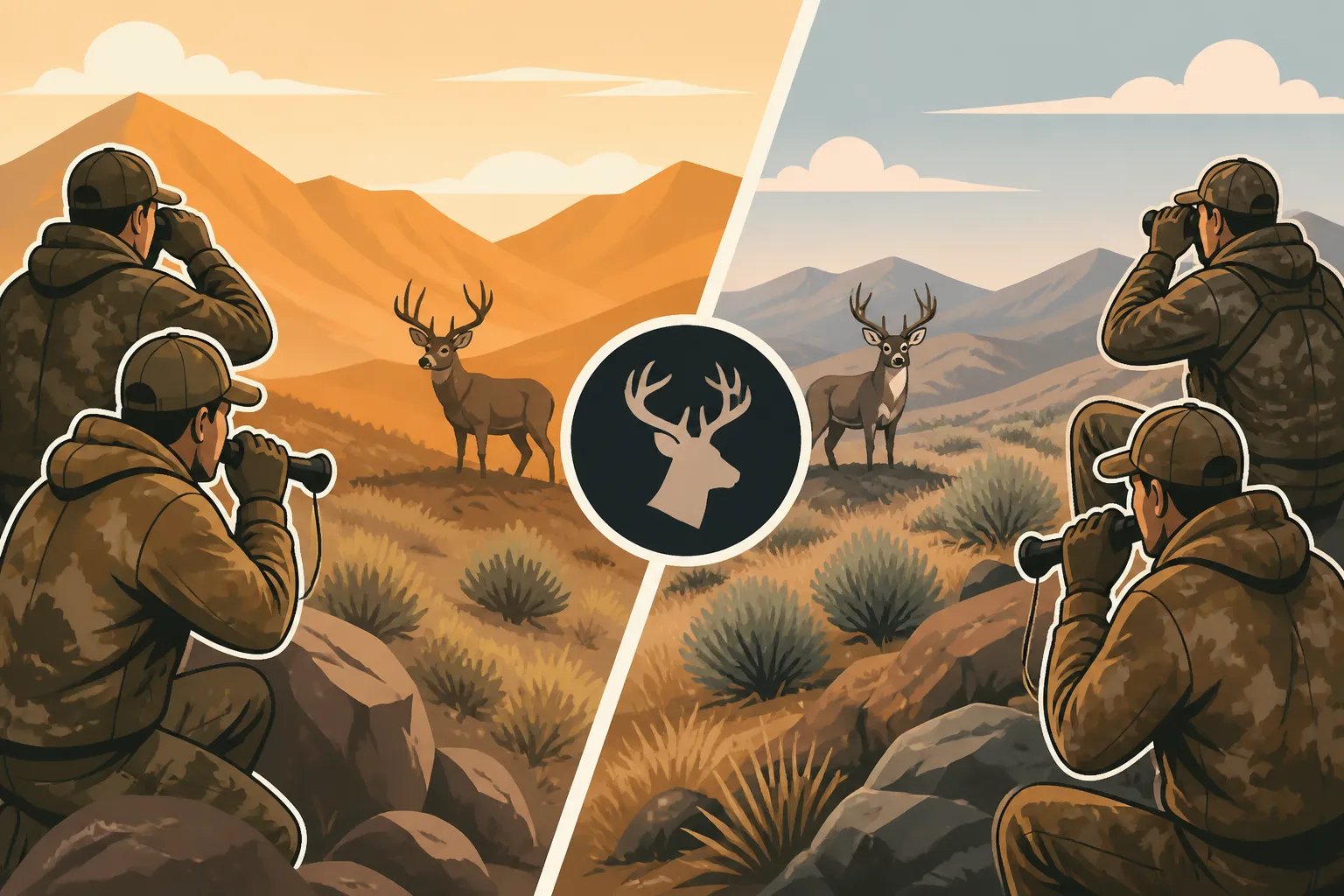
Mule deer in Nevada's basin and range country are notorious for their excellent eyesight and tendency to hang up at long distances. Direct calling can be tough, but a two-hunter setup combined with a decoy can be incredibly effective, especially during the rut. One hunter, the "caller/decoy carrier," deploys a realistic mule deer buck or doe decoy. This hunter positions themselves where they can be seen from a distance but also has some cover for concealment after setting up the decoy. The other hunter, the "shooter," sets up 100-200 yards away, concealed in a position that offers a clear shot if a buck commits to the decoy.
The decoy hunter can use soft grunts or doe bleats to pique a buck’s curiosity. The visual stimulus of the decoy, particularly a buck decoy, can often be the final push needed to bring a wary buck within range. Bucks, especially when the mule deer rut actually starts, are driven by territoriality and breeding instincts. As the buck approaches the decoy, the decoy hunter must remain still, letting the visual attraction do the work. The shooter, meanwhile, remains focused, waiting for the buck to present a clean shot. This strategy is particularly useful in wide-open areas where closing the last hundred yards on a pronghorn or a mule deer is incredibly challenging due to lack of cover. Tools like GoHunt's "filtering" feature can help pinpoint units with higher mule deer concentrations, making this strategy even more viable.
Ambushes in Thick Brush and Draws
Sometimes, Nevada's public land hunting throws you into thick, unforgiving brush or deep, winding draws. These areas can be frustrating for a solo hunter but offer incredible ambush opportunities for two. The strategy here often involves one hunter acting as a "pusher" or "driver" (not to be confused with a traditional deer drive), making subtle calls and moving slowly through the cover towards the other hunter, the "ambusher."
The ambusher sets up quietly at a choke point, a natural funnel, or along a distinct game trail where the deer or elk are likely to move. The pusher, often using quieter calls like soft grunts or short cow calls, slowly moves through the thick stuff, attempting to subtly influence the animal's direction of travel towards the ambusher. The key is not to spook the animal into a full-blown run, but to make them curious or uneasy enough to move deliberately. This can be particularly effective when hunting the post-rut migration for big bucks, as they might be less vocal but still susceptible to subtle nudges. The ambusher must be patient and ready, as the animal could appear silently and quickly from the dense cover. This setup leverages the natural tendency of game to navigate through the path of least resistance or investigate a sound, placing them right into the shooter's lap.
Essential Gear and Practice for Two-Hunter Success
Even the most well-planned two-hunter calling setup can fall apart without the right gear and, more importantly, consistent practice. Hunting in Nevada is tough, and your equipment needs to be reliable, and your communication seamless.
Optics and Rangefinding for Both Hunters
In the expansive terrain of Nevada, top-tier optics are non-negotiable for both the caller and the shooter. The shooter needs binoculars or a spotting scope for judging a mule deer buck at distance or assessing an elk's rack, along with a rangefinder to confirm shot distances. But the caller also benefits immensely from good optics. The caller needs to spot animals, gauge their reaction to calls, and provide critical feedback to the shooter. A reliable pair of binoculars, like a quality 10×42 or 12×50, is essential for the caller to observe the animal's body language—whether it’s coming in confidently, pausing nervously, or trying to circle downwind. GoHunt users often discuss their preferred optics for Nevada's long sightlines on their forums.
A rangefinder is equally important for both. The caller can range landmarks around the shooter’s position, giving precise distance markers to communicate to the shooter. This helps the shooter visualize the kill zone and mentally prepare for different shot distances as the animal approaches. Knowing your rifle zero distance for long sage shots is fundamental, and precise rangefinding helps connect those pieces. When hunting in groups, the ability to communicate exact distances without guessing removes a huge variable from the equation, especially when seconds count.
Effective Call Selection and Usage
The calls you choose and how you use them can make or break your setup. Both hunters, ideally, should carry a variety of calls. For elk, this means diaphragm calls, bugles, and external reed calls to mimic cows, calves, and bulls. Having a range allows the caller to adapt to the situation; a bull might respond better to a challenge bugle, while another might be drawn in by soft cow mews. For mule deer, soft grunts, snorts, wheezes, and doe bleats are the primary tools.
Practice is key. Don't just practice the calls themselves, but practice the sequence of calls you'll use in various scenarios. Learn when to be aggressive and when to be subtle. More importantly, practice calling while moving, or while remaining absolutely still, mimicking real-life hunting conditions. If the caller is drawing the animal, they need to sound convincing. This means not just sounding like an elk or deer, but sounding like an active elk or deer in a given situation. You can even practice two-person calling strategies at home, simulating how you'd communicate and what calls you'd use in response to an imaginary animal.
The Value of Pre-Season Practice and Scenarios
Before hitting the rugged Nevada backcountry, spend time practicing your two-hunter setups. This isn't just about calling; it's about the entire workflow.
- Role-Playing: Have one person act as the caller and the other as the shooter. Simulate an approaching animal, practicing movement, hand signals, and shot preparation.
- Terrain Simulation: Find local terrain that mimics what you’ll encounter in Nevada. Practice setting up in dense cover, open fields, or along ridgelines.
- Communication Drills: Work on your hand signals until they are intuitive. Practice giving and receiving direction and distance cues without speaking.
- Gear Familiarization: Ensure both hunters are comfortable with each other's gear, especially calls and optics. Know how to quickly deploy a bipod or shooting sticks on rocky ground.
Pre-season practice helps build the trust and understanding vital for success. It clarifies roles, anticipates potential issues, and sharpens reflexes. The more you practice these scenarios, the more confident and efficient you’ll be when a real trophy animal responds to your call, turning what could be a chaotic situation into a well-executed plan. This preparation, combined with solid e-scouting tools like those offered by GoHunt, ensures you're ready for anything the vast and beautiful Nevada landscape throws at you.
Disclaimer
Hunting is an inherently dangerous activity. This guide provides informational content only and does not endorse unsafe practices. Always prioritize safety, adhere to all local, state, and federal hunting regulations, and ensure you have the necessary licenses and permits. Be prepared for emergencies, carry appropriate safety gear, and hunt ethically and responsibly.