Muzzleloader Caliber Minimums for Elk
It can be incredibly frustrating to sift through all the hunting regulations, especially when you're preparing for a specific weapon like a muzzleloader for a sought-after species like Nevada elk. You've invested time, money, and dreams into drawing that tag, and the last thing you want is to be out in the field only to realize you're non-compliant because of a forgotten detail about your gear. This guide aims to cut through the confusion and give you a clear understanding of the muzzleloader caliber minimums for elk in Nevada, along with practical advice to ensure your hunt is both legal and ethical.
Understanding Nevada's Muzzleloader Regulations for Elk
Navigating the specific requirements for muzzleloaders in Nevada can feel like a maze, but it's crucial to get it right. These regulations aren't just arbitrary rules; they're designed to promote ethical hunting practices, ensure humane kills, and protect the health of the state's wildlife populations. For elk, in particular, the standards reflect the animal's size and resilience, demanding a capable firearm.
The Specific Caliber Minimums for Elk
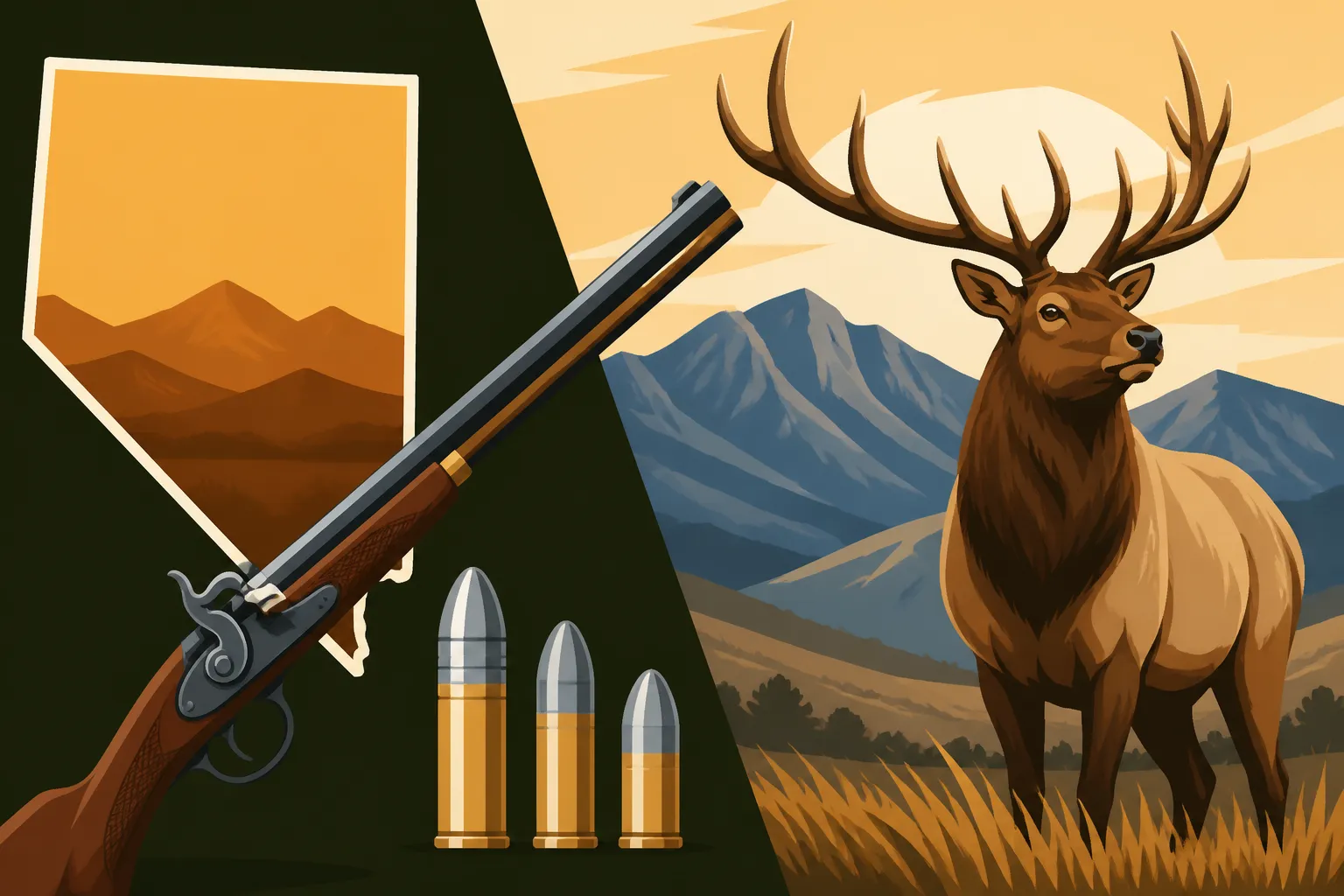
When it comes to pursuing elk with a muzzleloader in Nevada, the Nevada Department of Wildlife (NDOW) is very clear about the minimum caliber you must use. The regulations stipulate that any muzzleloading rifle used for big game, including elk, must be at least .45 caliber. This means if you're holding anything smaller than a .45, you're not legally equipped to harvest an elk.
Beyond just the caliber, there are often requirements around the projectile itself. Typically, this means using a single projectile, such as a lead bullet or an approved modern sabot-encased projectile. Shotgun slugs are not permitted for big game hunting with a muzzleloader. The goal here is to ensure sufficient kinetic energy and penetration to ethically harvest a large animal like an elk. A well-placed shot with a .45 caliber or larger, using an appropriate bullet, delivers the necessary punch.
Why These Regulations Exist
These minimum caliber rules aren't just bureaucratic red tape; they're fundamental to responsible hunting. Elk are robust animals, known for their incredible toughness and ability to cover ground even after a less-than-ideal shot. Using an underpowered firearm or an inadequate projectile greatly increases the risk of wounding an animal without recovering it, leading to unnecessary suffering and wasted game. The .45 caliber minimum for muzzleloaders for elk helps ensure that hunters are using equipment capable of delivering a humane, quick kill when the shot is placed correctly.
This ethical consideration extends to conservation efforts as well. Every animal wounded and lost diminishes the resource and goes against the principles of sound wildlife management. By setting clear standards, the state aims to uphold the integrity of the hunt and promote a culture of respect for the game animals. It’s about more than just filling a tag; it’s about doing it right.
Verifying Current Regulations
The hunting regulations can, and sometimes do, change from year to year. It's easy to assume that last year's rules are still valid, but that's a gamble you absolutely don't want to take with your tag. Always, and I mean always, consult the most current Nevada Big Game Seasons and Regulations guide published by the Nevada Department of Wildlife (NDOW) before you head afield. This is your primary, official source of truth.
While printed booklets are great, digital resources can be incredibly helpful for cross-referencing and staying updated. Platforms like GoHunt offer comprehensive unit profiles and often distill regulatory information, making it easier to digest. However, consider these as helpful tools, not replacements for the official NDOW documents. A quick double-check on the NDOW website can save you a world of trouble and ensure your muzzleloader setup is perfectly legal for your Nevada Elk Muzzleloader Timing by Unit hunt.
Choosing the Right Muzzleloader for Nevada Elk
Once you understand the minimum legal requirements, the real fun begins: choosing the best setup to give you the highest chance of success. Just meeting the minimum isn't always enough to maximize your effectiveness in the field, especially when you're hunting an animal as formidable as a Nevada elk.
Beyond the Minimum: Optimal Calibers for Elk
While a .45 caliber muzzleloader is the legal minimum, many experienced elk hunters will tell you that stepping up to a .50 caliber, or even a .54 caliber, offers a significant advantage. The larger bore diameter allows for heavier projectiles, which in turn carry more kinetic energy and offer deeper penetration, especially important when dealing with an elk's thick hide, heavy bone structure, and large body mass. A bigger slug simply creates a larger wound channel and is more forgiving if your shot placement isn't absolutely perfect under pressure.
When considering optimal calibers, think about the projectile's weight and construction. Heavy, bonded bullets or monolithic projectiles designed for deep penetration are paramount. Sabots that allow you to shoot smaller, aerodynamic rifle bullets through a larger bore can also be highly effective, offering better ballistics for longer shots that are often common in Nevada's open country. For more on this, you might find our discussion on Sabot Bullets in a Muzzleloader particularly insightful.
Muzzleloader Types and Their Suitability
The world of muzzleloaders has evolved considerably. You're generally looking at two main categories: traditional sidelock/flintlock or modern in-line rifles. For elk hunting, especially in Nevada's often challenging terrain and weather, in-line muzzleloaders tend to be the more popular and practical choice. They are known for their enhanced accuracy, often rivaling centerfire rifles at moderate distances, and their more reliable ignition systems, particularly in damp or windy conditions.
In-line muzzleloaders typically use 209 shotgun primers, which are hotter and more resistant to moisture than percussion caps, leading to fewer misfires. Their sealed breech designs also contribute to greater consistency. While traditional muzzleloaders offer a unique, historical hunting experience, their accuracy limitations and slower reloading times make them a less optimal choice for elk, where quick follow-up shots or precise long-range capability can sometimes be crucial. If you're wondering about modern enhancements, we've covered whether Can You Use a Scope on a Muzzleloader? in detail, which can dramatically improve accuracy for longer shots.
Powder and Projectile Combinations for Maximum Effectiveness
The right powder and projectile combination is just as critical as your muzzleloader's caliber. For powder, you'll generally choose between traditional black powder or one of the many black powder substitutes like Pyrodex, Triple Seven, or Blackhorn 209. Blackhorn 209, in particular, has gained a lot of favor among modern muzzleloader hunters due to its clean-burning properties and consistent velocities, often mimicking smokeless powder performance more closely.
When it comes to projectiles, the debate often centers around full-bore lead bullets, such as PowerBelts, versus sabots that hold a smaller, jacketed projectile. Full-bore bullets are simple, effective, and often very accurate, but sabots allow you to utilize high-performance rifle bullets (like Barnes Expanders or Hornady SSTs) that offer superior ballistic coefficients and controlled expansion, which can be a huge asset on elk. Matching the bullet weight and powder charge to your specific muzzleloader for accuracy and power is a process that requires diligent testing at the range. For those seeking maximum performance, this choice can elevate your muzzleloader from merely legal to truly formidable, perhaps even approaching the versatility of a Best All-Around Caliber for Open Country rifle.
Preparing for Your Nevada Muzzleloader Elk Hunt
Drawing a Nevada elk tag is a huge accomplishment, and a muzzleloader tag adds a unique challenge. Proper preparation can make or break your hunt, especially when you're dealing with the specific demands of a muzzleloader and the vast, rugged Nevada landscape.
Sighting In and Practice
This might sound obvious, but it bears repeating: you absolutely must spend significant time at the range with your muzzleloader. Unlike a centerfire rifle where you can shoot a box of ammo and be confident, muzzleloaders require more deliberate practice. Understand your rifle's capabilities and limitations. What's its effective range? How does the trajectory change with different powder charges or bullet weights? Where is your point of impact at 50, 100, and 150 yards? Many hunters consider a Rifle Zero Distance for Long Sage Shots vital, and the same principle applies to muzzleloaders, though often at shorter maximum effective ranges.
Practice shooting from various field positions: kneeling, sitting, and prone. Simulate real hunting scenarios, especially after walking or exerting yourself. Your heart will be pounding when that elk steps out, and you need to be able to execute a clean shot under pressure. Knowing your muzzleloader will perform exactly as you expect gives you confidence when it matters most. While you're preparing, a platform like GoHunt can provide crucial data about your chosen unit, helping you understand the terrain and typical shot distances you might encounter, which directly informs your practice regimen.
Field Considerations for Muzzleloader Hunters
Hunting with a muzzleloader introduces a few unique field considerations. First, weather is a major factor. Moisture can ruin your powder charge or prevent your primer from igniting. Always carry waterproof covers for your muzzle and breech, and consider sealing your primer with a small dab of clear nail polish or silicone. Wind also affects your shot more dramatically than with a centerfire, so understanding how to account for it is vital. Our article on Reading Wind on a Long Sage Stalk offers valuable insights that are directly applicable to muzzleloader hunting.
Second, reloading speed is a real concern. You get one shot, then a potentially lengthy reload process. This means your first shot needs to count, and you need to be prepared for the possibility of no second shot at all. Have your speedloader ready, pre-measured powder charges, and extra primers easily accessible. This is where patience and meticulous stalking to ensure a high-percentage first shot truly pay off, especially during the specific Which Nevada Units Open Elk Muzzleloader in September seasons.
Essential Gear Beyond the Firearm
Your muzzleloader is only one piece of the puzzle. You'll need a range of specialized gear to support it. This includes a robust cleaning kit (muzzleloaders get dirty, fast), a reliable loading tool, bullet starters, extra primers, and at least two or three pre-measured powder charges in speedloaders. A good quality optics setup is also non-negotiable in Nevada; a spotting scope and quality binoculars will be invaluable for glassing vast country and identifying elk without disturbing them.
Beyond the muzzleloader-specific items, don't forget general hunting essentials. Navigation tools like a GPS and paper maps (and knowing how to use them), plenty of water (even more than you think you need), appropriate layering clothing for Nevada's drastic temperature swings, a first-aid kit, and game processing supplies are all critical. Hunting elk in Nevada often means covering serious ground and being self-sufficient, so mentally and physically Preparing Physically for Long Glassing Days is a must.
Practical Strategies for Muzzleloader Elk Success
Hunting elk with a muzzleloader is a challenge that many hunters dream of. It demands patience, precision, and an intimate understanding of both your weapon and the animal you're pursuing. In Nevada's unique landscape, these skills are amplified.
Scouting and Unit Selection
Effective scouting is the bedrock of any successful Nevada elk hunt, but it's even more critical for muzzleloader hunters who typically operate within shorter effective ranges. Start your scouting long before the season by utilizing tools like GoHunt, which can provide detailed maps, harvest data, and historical information about specific units. This allows you to e-scout from home, identifying potential bedding areas, water sources, and travel corridors. Understanding how to really dig into Reading a Nevada Hunt Unit Before You Apply can give you an edge.
Once you've narrowed down potential areas, in-person scouting is paramount. Look for fresh elk sign – tracks, droppings, rubs, and wallows. Pay attention to terrain features that might funnel elk or provide advantageous stalking routes. Because your shot opportunities might be limited to closer ranges, knowing exactly where elk are likely to be, and how to get there undetected, is key. Think about how you'd apply techniques like Glassing Grids Across a Nevada Basin to pinpoint elk activity with your muzzleloader in mind.
Stalking and Shot Placement with a Muzzleloader
The true art of muzzleloader hunting lies in the stalk. You often need to get significantly closer to an elk than a rifle hunter might, pushing your stalking skills to their absolute limit. Every gust of wind, every change in terrain, and every crunch of a twig matters. You're aiming for a high-percentage shot within your muzzleloader's ethical range, which for many means inside 150 yards, ideally closer. This requires a meticulous approach, much like how a bowhunter works to close distance. Think about the strategies we discuss for How Far to Stalk a Bedded Mule Deer, and apply that same dedication to your elk hunt.
Once you've closed the distance, shot placement is non-negotiable. With a single-shot weapon, you must aim for the vital organs – the heart and lungs – for the quickest, most humane kill possible. Understand elk anatomy thoroughly. Take your time, control your breathing, and ensure you have a solid rest. Remember, there's no fast follow-up shot if you miss or wound the animal. This is where all your practice and preparation converge into one critical moment.
After the Shot: Tracking and Recovery
Even with a perfect shot, elk are tough animals. Tracking and recovery are often a part of the muzzleloader hunting experience. Pay close attention to exactly where the animal was standing when you shot, its reaction, and the direction it fled. Mark the spot with something visible. Wait at least 30 minutes, or longer if the shot felt marginal, before beginning your track. This allows the animal time to lie down and stiffen.
Follow the blood trail slowly and deliberately. Look for broken branches, overturned rocks, and tracks. In Nevada's rocky, sometimes sparse terrain, blood trails can be minimal, making every sign crucial. Having a good tracking dog (where legal) can be a tremendous asset. Once the animal is down, proper field dressing is essential, especially if the weather is warm. Swift processing helps preserve the meat, which is, after all, the ultimate goal of the hunt. You might find our tips on Field Dressing in August Heat useful, even if your season falls at a different time of year, as the principles of cooling meat quickly remain the same.
Muzzleloader Caliber Comparison for Nevada Elk
To help clarify the choices beyond the minimums, here's a quick comparison of common muzzleloader calibers suitable for Nevada elk. Remember, these are general guidelines, and individual rifle performance can vary.
| Caliber | Legal for Nevada Elk? | Common Projectile Weights (grains) | Typical Kinetic Energy (approx. @ 100 yds) | Advantages | Considerations |
|---|---|---|---|---|---|
| .45 Caliber | Yes (Minimum) | 200-300 | 1200-1800 ft-lbs | Legal, lighter recoil | Requires precise shot placement; lower energy for elk |
| .50 Caliber | Yes | 250-400+ | 1800-2500 ft-lbs | Excellent balance of power and recoil; widely available; good energy | Can be heavy to carry; practice needed for recoil |
| .54 Caliber | Yes | 350-500+ | 2000-3000+ ft-lbs | Maximum power and penetration for elk; large wound channel | Heavier recoil; heavier rifle; limited projectile options |
Note: Kinetic energy estimates are approximate and depend heavily on specific powder charges, bullet type, and barrel length.
Disclaimer
The information provided in this guide is for general informational purposes only and does not constitute legal advice. Hunting regulations can change frequently. It is the sole responsibility of the hunter to review and understand all current Nevada Department of Wildlife (NDOW) regulations and local laws before participating in any hunting activity. Always confirm specific requirements with official sources.