What Nevada Backroads Do to a Tire
You're out there, miles from pavement, on a two-track that feels more like a goat trail, and then it happens: that sickening thwump-thwump-thwump as your tire gives up the ghost. Nevada's vast, wild backcountry is absolutely unforgiving on vehicle tires, and dealing with a flat can quickly turn an exciting hunt into a stressful, even dangerous, ordeal. This guide is all about understanding why our tires suffer out here and how you can prepare to tackle those notorious Nevada backroads head-on, so a flat doesn't ruin your hard-earned time in the field.
The Relentless Assault of Nevada's Backroad Terrain
Let's be honest, calling some of the routes we take in Nevada "roads" is a generous exaggeration. They are often faint tracks carved by previous adventurers, sometimes maintained by a passing rancher or the occasional agency vehicle, but mostly left to the whims of weather and geology. These are not your average gravel roads; they are battlegrounds for tires, designed by nature to challenge every ounce of rubber and steel your rig rolls on.
One of the biggest culprits is the sheer variety and sharp nature of the rock. You'll encounter everything from jagged volcanic basalt, which breaks into sharp, knife-like shards, to hard, abrasive granite that grinds away at your tread. Then there's the omnipresent caliche, a concrete-like sedimentary rock that often forms razor-sharp edges and hidden obstacles just waiting to slice a sidewall. This isn't like driving on smooth dirt; it's like driving over a minefield of natural blades. Combine this with the fine, loose talc-like dust that gets into every crevice, and the coarse, sharp gravel that acts like tiny chisels, and you've got a recipe for tire destruction.
Beyond the rock itself, the topography of the Great Basin plays a huge role. Many backroads follow the contours of drainages, which become deep, rutted washouts after even a moderate rain. These ruts can violently twist and pinch a tire, forcing the sidewall against sharp edges or causing the bead to break free from the rim. Hidden rocks, exposed by erosion, lie in wait at the bottom of these troughs. Even seemingly flat sections can hide embedded rocks that protrude just enough to catch a tire in the wrong spot. You might think you're on a relatively safe stretch, only for an unexpected rock to come out of nowhere and deliver a death blow to your rubber. It's a constant, vigilant game of navigating hazards, and the terrain just keeps on giving.
Common Tire Failures You'll Face
When you're out chasing mule deer or elk in some remote Nevada unit, your tires are perhaps your most critical piece of equipment after your optics and rifle. But these aren't just things that roll; they're complex systems that can fail in a multitude of ways under the stress of Nevada's terrain. Understanding these common failures can help you recognize the warning signs and, ideally, prevent them.
Punctures from Sharp Objects
This is probably the most common and easily understood failure. Nevada's geology is incredibly diverse, and much of it breaks down into sharp, unforgiving fragments. Think about the basalt flows in certain units – they shatter into glass-like pieces when driven over, and those edges are perfectly capable of penetrating a tire's tread. It’s not just the big, obvious rocks you see; it’s the countless smaller, shingle-like pieces that embed themselves, eventually working their way through the rubber and plies. These often result in a slow leak, which can sometimes be plugged, but if the object is large or causes too much internal damage, it's a goner. Even desert plants can contribute; thorny branches and tough woody stems, especially when dry and stiff, can be surprisingly sharp and poke through less robust sidewalls.
Sidewall Damage and Pinch Flats
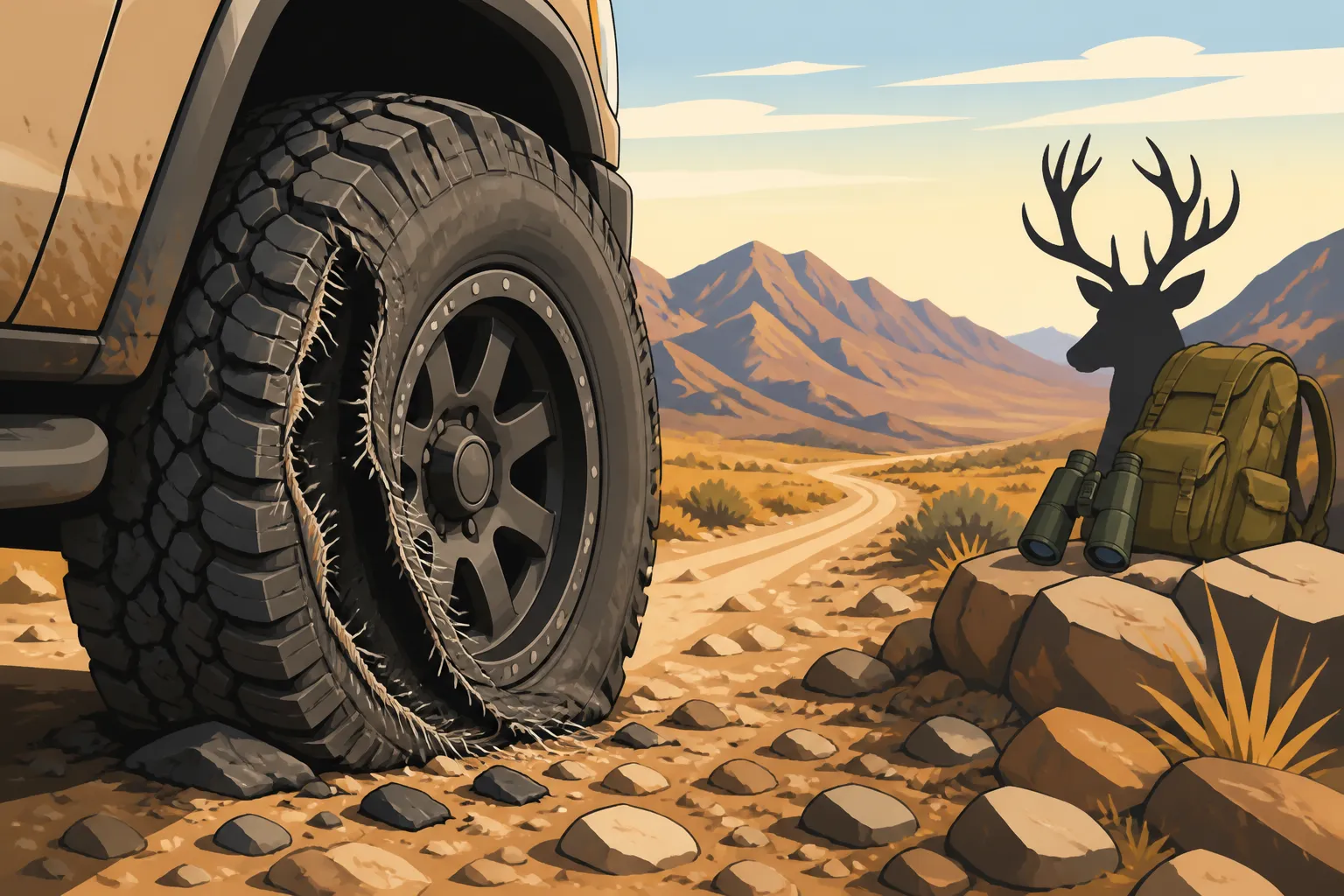
The sidewall of a tire is its most vulnerable area, and Nevada backroads specialize in attacking it. Imagine descending into a deep, rocky rut. The tire flexes and distorts, and as you try to climb out or navigate the obstacle, the weight of your vehicle can pinch the sidewall between the rim and a sharp rock. This creates a catastrophic "pinch flat" or a deep, irrecoverable cut. This type of damage is particularly nasty because sidewall cuts are almost impossible to repair reliably in the field. Another common scenario is simply scraping the sidewall against an embedded rock or a sharp, unforgiving edge of a washed-out road. Those constant abrasions, especially if your tire pressure is too low for the sharp impacts, can wear through the rubber and expose the cords, leading to a blowout.
Bead Leaks and Separations
The "bead" of a tire is the inner edge that seals against the wheel rim. On rough, rocky, or heavily rutted roads, especially if you've aired down your tires for better traction and ride comfort (which many experienced Nevada hunters do), the tire can flex so much that the bead separates from the rim. This causes an immediate and often complete loss of air. Re-seating a bead in the field without specialized equipment can be a monumental challenge, especially if the tire has been severely distorted or if there's dirt and debris caught between the bead and the rim. This problem is exacerbated when you're traversing side-slopes or hitting obstacles at an angle, applying uneven pressure to the tire.
Overheating and Blowouts
While less common than punctures or sidewall cuts, overheating can also lead to tire failure, particularly on long drives across open, corrugated sections of Nevada's terrain. Sustained high speeds on gravel roads, especially in the heat of August or September when many hunts kick off, can cause excessive heat buildup within the tire. This heat can degrade the rubber and the internal structure, making the tire more susceptible to failure. Add to this an overloaded vehicle, or tires that are already slightly underinflated, and the risk increases. The result can be a sudden, violent blowout, which is not only dangerous but can leave you stranded with a completely destroyed tire carcass. It’s a good reminder that even on seemingly "smooth" stretches of fast gravel, your tires are working harder than you think.
Preparing Your Vehicle and Tires for Nevada
Alright, so we've established that Nevada's backroads are basically out to get your tires. That's the reality. But that doesn't mean you have to surrender to fate. Proper preparation can drastically reduce your chances of a debilitating breakdown and keep your hunt on track. This isn't just about throwing a spare in the back; it's about a strategic approach to tire and vehicle readiness.
Smart Tire Choices and Pressures
Your tires are your first line of defense. For Nevada's challenging terrain, you absolutely need more than standard highway tires. Look for All-Terrain (A/T) or even Mud-Terrain (M/T) tires with strong, multi-ply sidewalls. These are designed to resist punctures and cuts far better than thinner street tires. The more plies, generally the tougher the sidewall. While M/T tires offer superior traction in mud and extreme rock, their aggressive tread can be louder and wear faster on pavement. A good quality A/T tire often strikes an excellent balance for mixed driving. Brands like BFGoodrich All-Terrain T/A KO2 or Toyo Open Country A/T are popular choices among those who frequent rough terrain for a reason.
Beyond the type of tire, managing your air pressure is paramount. Many hunters air down their tires when they leave the pavement. Dropping your pressure from, say, 35 psi to 20-25 psi, can significantly increase the tire's footprint, improving traction and providing a softer ride over washboards and rocks. Crucially, it also allows the tire to flex and conform around obstacles rather than taking direct, rigid impacts, which can reduce the chance of a puncture or a pinch flat. However, don't go too low! Extremely low pressure increases the risk of the tire bead separating from the rim and makes the sidewalls more vulnerable to tearing if they flex too much against a sharp rock. Invest in a good tire pressure gauge and a portable air compressor. You’ll use them constantly.
Redundant Spares and Comprehensive Repair Kits
A single spare tire isn't enough in Nevada. This isn't just a suggestion; it's practically a rule among seasoned backcountry travelers. You need at least one full-size, road-ready spare, ideally mounted externally or easily accessible. And honestly, seriously consider carrying a second spare. Yes, it takes up space, but two flats are not uncommon on an extended trip deep into a remote unit. A donut spare is absolutely useless out here – leave it at home.
Beyond spares, you need a robust tire repair kit. This should include:
- Heavy-duty tire plug kit: For punctures in the tread. Practice using it before you go.
- Tire patch kit: For more complex internal repairs, though usually requires removing the tire from the rim.
- Tire valve stem replacement kit: Valve stems can be damaged or leak.
- Large, heavy-duty jack: Your factory scissor jack might not cut it on uneven ground or with a lifted vehicle. A bottle jack or a Hi-Lift style jack is a far better investment.
- Tire levers and bead breaker: If you need to break the bead and patch a tire internally. This is advanced, but good to have if you’re truly remote.
- Portable air compressor: Essential for airing up after repairs or after airing down for rough sections. Ensure it's powerful enough for your tire size.
- Gloves and a tarp/ground cover: Makes working in dusty or muddy conditions much more tolerable.
Remember to regularly inspect your tires before and during your trip. Look for cuts, bulges, embedded rocks, or excessive wear. A small crack today can become a major blowout tomorrow.
Utilizing Technology for Better Navigation and Awareness
Modern mapping tools are invaluable for navigating Nevada's complex road networks and understanding the terrain ahead. onX Hunt and GoHunt are fantastic resources that allow you to scout potential routes from home. With these apps, you can identify old mining roads, faint two-tracks, and even areas that might be more susceptible to washouts or jagged rock. Looking at satellite imagery can give you a better idea of the road surface and surrounding terrain, helping you anticipate where you might need to air down or take extra caution.
Before you even leave your driveway, spend time using these tools to identify your primary access routes and a couple of alternate routes in case of road closures, washouts, or simply finding a section that's too rough for your vehicle. Pay attention to contour lines and elevation changes, as steep grades often mean more exposed rock and rougher driving. E-Scouting a Nevada Unit Before the Season isn't just about finding deer; it's about finding the best (or least bad) ways to get there.
On-the-Road Solutions and Emergency Preparedness
Even with the best preparation, a flat tire can still happen. It’s not a matter of if but when you spend enough time on Nevada’s Remote Road Conditions Across Nevada. When it does, your response and overall emergency preparedness can make all the difference between a minor inconvenience and a serious situation.
Handling a Flat in the Field
First and foremost, when you hear that telltale sound or feel the sudden pull, find the safest place to pull over. This might not be immediately possible if you're on a narrow ledge or steep incline. Take your time, get to a flat, stable spot if you can, and make sure your vehicle is secure before you even think about getting out. On uneven terrain, a Hi-Lift jack is often far more stable and effective than a small bottle jack. Always carry a sturdy base plate for your jack, especially if you're on soft dirt or gravel.
Once you’re safely stopped, assess the damage. If it's a tread puncture, a plug kit can often get you going. Clean the hole, ream it out, insert the plug, and then reinflate with your portable compressor. This is a temporary fix, but it can get you to a tire shop. If it's a sidewall cut or a complete bead separation that you can't re-seat, you're swapping tires. That’s where your redundant spares become lifesavers.
Remember that changing a tire in the Nevada sun can be brutal. Consider the Heat Management on an August Archery Hunt principle; stay hydrated, take breaks, and wear appropriate sun protection. You might be out there for a while, and you don’t want to suffer from heat exhaustion on top of a flat tire.
Communicating for Help and Being Self-Reliant
Cell phone service in much of Nevada’s backcountry is non-existent. You absolutely cannot rely on your cell phone to call for help. This is where devices like satellite messengers or satellite phones become essential. A satellite messenger, such as a Garmin InReach or a Zoleo, allows you to send and receive text messages and, critically, send an SOS signal to emergency services, even if you have no cell signal. They are a game-changer for safety in remote areas. Read up on Cell Coverage Across Nevada Hunt Units and Satellite Messenger Use in Remote Country to understand your options.
Beyond communication, true preparedness means being as self-reliant as possible. Every vehicle heading into Nevada’s hunting grounds should carry a basic survival kit:
- Plenty of water: More than you think you need. Consider at least a gallon per person per day, plus extra for emergencies. Carrying Extra Fuel and Water is not just about your vehicle.
- Non-perishable food: Energy bars, dried fruit, jerky.
- First-aid kit: Comprehensive, not just band-aids.
- Warm clothing and emergency shelter: Even in warmer months, nights can get cold. A sleeping bag, blanket, or emergency bivy sack is crucial.
- Flashlights or headlamps with extra batteries: You don't want to be changing a tire in the dark with just your phone.
- Maps and compass: Even if you rely on GPS, physical maps (like a BLM Surface Management Map, which you can learn to read via Reading a BLM Surface Management Map) don't run out of battery.
- Fire starter and basic tools: Multi-tool, knife, shovel.
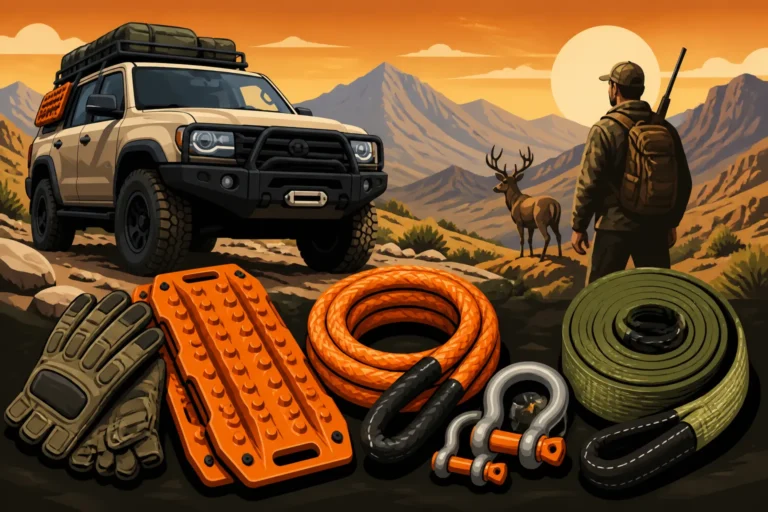
- Vehicle Recovery Gear for Nevada Roads: A tow strap, jumper cables, and perhaps a small shovel can be invaluable.
Being prepared to spend an unexpected night or even two stranded is not being pessimistic; it's being realistic. The vastness of Nevada means that help can be a long time coming, even with satellite communication. The more you can do for yourself, the safer you'll be.
| Tire Failure Type | Common Cause | Best Prevention | Field Repair Strategy |
|---|---|---|---|
| Tread Puncture | Sharp rocks, metal debris | Robust A/T or M/T tires, regular inspection | Heavy-duty plug kit, portable compressor, spare |
| Sidewall Cut/Tear | Pinching against rocks, deep ruts | Strong multi-ply sidewalls, careful driving, proper pressure for terrain | Often requires spare; limited field patch options |
| Bead Separation | Low pressure on rough terrain, angled impacts | Correct air pressure for conditions, slow driving | Re-seat bead with compressor/sealant, spare |
| Overheating/Blowout | High speed on rough roads, underinflation, overload | Proper tire pressure, avoid overloading, moderate speed on rough sections | Requires immediate spare replacement |
This planning extends beyond just tires. Think about fuel too; How Far Apart Nevada Fuel Stops Are means you need to carry extra fuel, especially if you're taking detours or facing unexpected delays. The effort you put into preparation before you leave home will pay dividends in peace of mind and, hopefully, a successful, uninterrupted hunt.
Disclaimer
This article is for general informational purposes only and does not constitute professional advice. Laws, prices and regulations vary by location and change over time. Consult a qualified professional for guidance on your specific situation.