Vehicle Recovery Gear for Nevada Roads
There’s nothing quite like the feeling of being miles down a rough, unmaintained dirt track in the vast Nevada backcountry, surrounded by nothing but sagebrush and mountains, and then… you hit it. Whether it's a hidden washout, a patch of surprisingly deep sand, or a slick, muddy section after an unexpected shower, the moment your tires lose traction and your rig sinks, that pit-in-your-stomach feeling can be truly awful. This guide is here to equip you with the knowledge and the right gear to confidently get yourself unstuck, keeping your hunting adventure on track and safe.
Why Nevada Roads Demand Specialized Recovery Gear
Nevada's public lands are an unparalleled treasure for hunters, offering vast expanses of opportunity. However, with that remoteness comes a unique set of challenges, especially when it comes to the roads that get you there. These aren't your paved highways, and often, they're not even well-graded county roads.
The Unpredictable Nature of Backroads
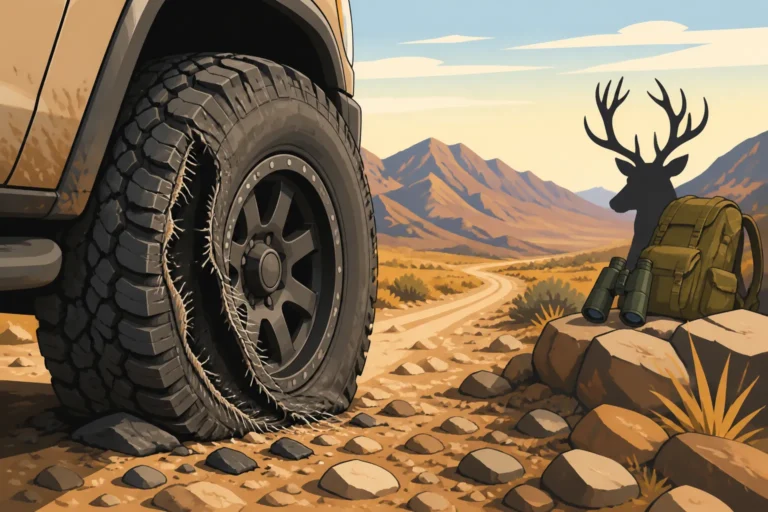
Driving in Nevada’s wild spaces means constantly navigating unpredictable terrain. A road that was dry and firm last week can become a bog after a quick thunderstorm. Dry washes, which are perfectly passable normally, can turn into deep, soft sand traps that swallow tires whole. Sharp volcanic rock and embedded boulders are common, just waiting to rip a sidewall or high-center your vehicle.
The sheer scale of Nevada's landscape means that many of these tracks see minimal maintenance, if any at all. Erosion can carve deep ruts, especially on hillsides. A simple dip can hide an unexpected rock shelf that slams into your undercarriage. Dust can be so thick that it obscures hidden obstacles, and the deceptive flatness of a valley can lull you into a false sense of security before you plunge into an unseen soft spot. Hunters often find themselves exploring these lesser-used routes to access prime hunting areas, but these are exactly the places where getting stuck is a real possibility, and help can be hours, or even a full day, away.
Common Scenarios That Get Hunters Stuck
It's rarely a dramatic rollover that strands you (though those certainly happen); more often, it's a gradual, frustrating loss of momentum. Imagine you’re trying to navigate a sandy two-track leading to a hidden spring you found on your onX Hunt map. One minute you're cruising, the next your tires are spinning, digging deeper and deeper into the soft sand until your frame is resting on the ground. Or perhaps you're crawling over a rocky section, carefully picking your line, when a basketball-sized rock you didn't see perfectly wedges itself under your differential, lifting your drive wheels off the ground.
Another classic Nevada trap is the muddy rut. After a rare rain, some of the clay-heavy soils turn into a greasy, tire-clogging mess. Your tires might grip for a while, but then you slip into a deep, existing rut, and the vehicle bottoms out. You’re now stuck with no forward or backward momentum, often with tires spinning uselessly. Even something as simple as a flat tire can become a major ordeal when you’re 50 miles from the nearest paved road, with no cell service to call for help. Understanding these common pitfalls helps reinforce why carrying the right gear isn't optional—it's essential.
Essential Vehicle Recovery Gear Every Nevada Hunter Should Carry
Being prepared isn't just about having the gear, it's about having the right gear and knowing how to use it. When you're facing down a sticky situation in the Nevada backcountry, these items are your best friends.
Traction Boards and Shovels
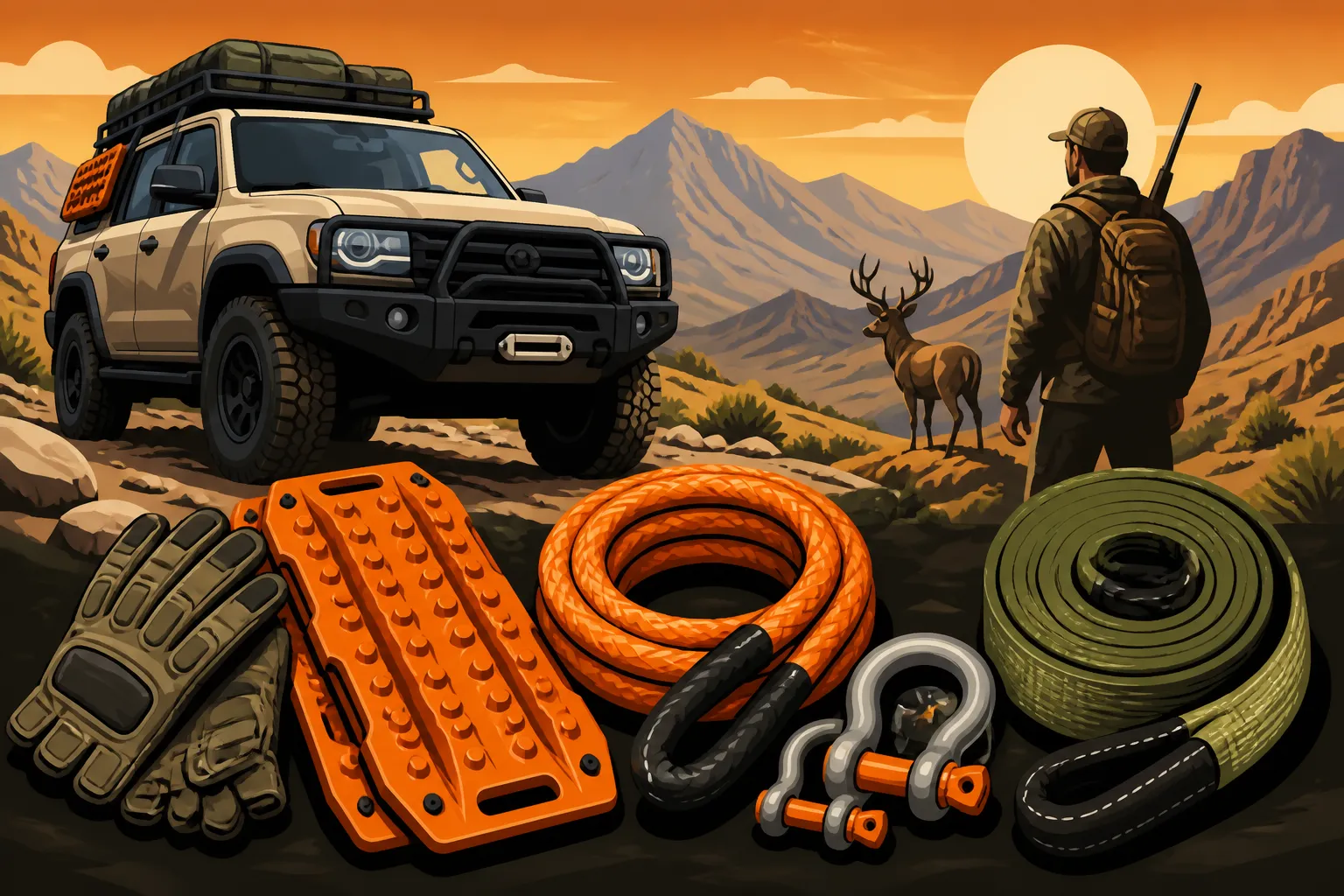
Traction boards, sometimes called recovery boards or sand ladders, are game-changers, especially in soft sand, mud, or even snow. These durable, often brightly colored, plastic boards have aggressive cleats that grip your tire tread and the ground, providing the traction needed to get moving again. Instead of spinning your tires and digging a deeper hole, you wedge these under your drive wheels, providing a solid surface for your tires to grab onto. It’s like creating your own temporary road. You might need one or two sets, depending on your vehicle and how deeply you’re buried.
Alongside traction boards, a sturdy shovel is non-negotiable. Before you even think about the boards, you’ll likely need to dig out the sand, mud, or rock from around your tires and under your vehicle's frame. A lightweight, collapsible shovel is convenient, but a full-sized, heavy-duty shovel can make a world of difference when you’re trying to move stubborn packed dirt or heavy, wet mud. This is often the first tool out of the vehicle and the one you’ll be most grateful for.
Winches, Straps, and Chains
For more serious recovery situations, a winch is the ultimate tool. Mounted to the front of your vehicle, a winch uses a powerful motor to reel in a steel cable or synthetic rope, pulling your vehicle out of trouble. Winches are rated by their pulling capacity, and generally, you want one with a capacity of at least 1.5 times your vehicle's Gross Vehicle Weight Rating (GVWR). A winch requires a solid anchor point, like a sturdy tree (using a tree saver strap to protect it) or another recovery vehicle.
Beyond the winch itself, you'll need recovery straps. A kinetic recovery rope (often called a snatch strap) is designed to stretch and then powerfully recoil, creating a "snatching" effect that can pull a stuck vehicle out with less shock to both vehicles. A tow strap is different; it has minimal stretch and is primarily for straight pulls or towing on a firm surface. Always carry a tree saver strap to protect anchor points, and a set of D-ring shackles (or soft shackles) to safely connect straps and ropes. Avoid using chains for snatch recoveries, as they can snap and become dangerous projectiles; save chains for tire traction in extreme mud or snow, not for dynamic pulls.
| Gear Item | Primary Use | Key Benefit | Safety Note |
|---|---|---|---|
| Traction Boards | Getting unstuck from sand, mud, snow | Creates instant traction for spinning tires | Place firmly under tires, clear path ahead |
| Shovel (Heavy-duty) | Digging out tires, clearing frame | Essential for clearing obstacles and creating space | Watch for sharp edges, maintain good posture |
| Winch | Heavy-duty self-recovery or vehicle-to-vehicle pull | Powers out of deep mud, inclines, or severe stucks | Use tree saver, inspect cable, stand clear of line |
| Kinetic Recovery Rope | Dynamic vehicle-to-vehicle recovery in mud/sand | Stores energy, smooth powerful pull | Maintain safe distance, never exceed rope rating |
| Tree Saver Strap | Protects trees used as winch anchor points | Prevents damage to environmental anchors | Wrap around thick trunk, avoid sharp bends |
| D-Ring Shackles | Securely connects recovery straps/ropes | Strong, reliable connection point | Ensure pins are tight, rated for load |
| Hi-Lift Jack | Lifting vehicle to place traction aids, tire changes | High lift range for off-road situations | Use on stable ground, avoid leaning on vehicle |
| Tire Repair Kit | Plugging punctures on the trail | Quick, temporary fix for flats | Wear gloves, ensure proper plug insertion |
| Air Compressor | Re-inflating tires after repair or airing down | Essential for adjusting tire pressure | Monitor pressure, don't overinflate |
| Satellite Messenger | Emergency communication when no cell service | Lifeline for calling for help, sending location | Test regularly, keep batteries charged |
Jacks and Tire Repair Kits
A flat tire is probably the most common mechanical issue you'll face on Remote Road Conditions Across Nevada. Beyond a spare tire, you need the right tools to change it. Your vehicle’s factory jack might be fine for a paved road, but in uneven, soft, or rocky terrain, it can be unstable and dangerous. A Hi-Lift jack (or similar off-road jack) offers a much greater lifting height and versatility. It can lift your vehicle from the bumper, rock sliders, or even the wheel, allowing you to quickly get a tire off the ground or lift the vehicle high enough to clear an obstacle. Just be aware, they require proper training and extreme caution to use safely.
Complementing your jack should be a comprehensive tire repair kit. This isn't just a can of sealant; it's a kit with plugs, reamers, and cement to permanently patch a puncture on the trail. You'll also need a portable air compressor that runs off your vehicle's battery. This is crucial for re-inflating a repaired tire, or for airing down your tires for better traction in sand or on sharp rocks, then airing them back up once you hit firmer ground. Carrying extra valve stems and a valve stem tool is also a smart move.
Communication and Navigation Tools
In the vastness of Nevada, cell service is often nonexistent. This isn’t just an inconvenience; it can be a matter of life and death if you’re seriously stuck or injured. A satellite messenger or communicator is an absolute must-have. Devices from brands like Garmin inReach or Zoleo allow you to send pre-programmed messages, custom texts, and, most importantly, an SOS signal with your exact GPS coordinates to emergency services, even when miles from civilization. Satellite Messenger Use in Remote Country is not a luxury, it's a necessity.
Beyond communication, robust navigation is paramount. While your phone's GPS is handy, it relies on downloaded maps or cell service. Dedicated GPS units are great, but modern mapping apps like onX Hunt and GoHunt on a tablet or smartphone, with downloaded offline maps, are incredibly powerful. They show you land ownership boundaries, roads, trails, water sources, and topography. This not only helps you plan your route to avoid potential trouble spots (like showing you when you’re approaching How Nevada Marks a Wilderness Study Boundary or other restricted areas) but also helps you relay your exact location if you do get stuck. Always carry traditional paper maps and a compass as a backup – batteries die, and electronics fail.
Learning to Use Your Recovery Gear Safely and Effectively
Having a garage full of fancy recovery gear is one thing; knowing how to safely and effectively use it under pressure is another entirely. The backcountry is no place for on-the-job training.
Practice Makes Perfect
The absolute worst time to learn how to operate your winch or deploy your traction boards is when you're already buried up to your axles, daylight is fading, and temperatures are dropping. That's a recipe for mistakes, injury, and increased frustration. Instead, take your vehicle and your gear to a safe, controlled environment – maybe a local dirt lot or a friend's private property – and practice. Get a feel for how your Hi-Lift jack operates, understanding its quirks and safety mechanisms. Experiment with your traction boards in some soft dirt. If you have a winch, practice hooking it up to a sturdy anchor point, tensioning the line, and reeling it in.
This hands-on experience builds muscle memory and confidence. You’ll learn how much effort it takes, how the equipment feels, and how your vehicle reacts. Consider doing this with a friend or hunting partner, as many recovery scenarios are much easier and safer with a second set of hands and eyes. The more comfortable you are with your gear before an emergency, the calmer and more effective you’ll be when you truly need it.
Assessing the Situation and Planning Your Recovery
When you find yourself stuck, the first, most critical step is to stop and assess the situation. Don't just blindly hit the throttle and spin your tires; that almost always makes things worse.
- Stop and Breathe: Take a moment to calm down. Panic is the enemy of good decision-making.
- Evaluate Your Vehicle: What’s stuck? Are the front tires, rear tires, or all four buried? Is the frame high-centered? Is anything damaged?
- Survey the Terrain: What's the ground like around your vehicle? Is it sand, mud, rock, or something else? Is there a slope? Which way is the path of least resistance?
- Identify Anchor Points: Look for sturdy trees, large rocks, or another vehicle that could serve as an anchor for your winch or recovery strap. If you don't have one, this immediately limits your options.
- Consider Your Gear: Which pieces of your recovery kit are best suited for this specific type of stuck? Do you have enough traction boards? Is your winch cable long enough?
- Plan Your Escape: Visualize the entire recovery process, step by step, before you start. Clear a path for the vehicle, determine where people should stand, and agree on hand signals if working with others. Sometimes, simply digging out around the tires and placing traction boards is all it takes. Other times, it's a multi-stage winch pull. Think it through.
Safety First
Recovery operations are inherently dangerous. Heavy vehicles, extreme forces, and potential for equipment failure mean that safety must be your absolute top priority.
- Clear the Area: Ensure bystanders, especially children or pets, are far from the recovery zone. Never allow anyone to stand near a tensioned winch line or recovery strap, as a broken line can whip violently and cause severe injury or death.
- Wear Gloves: Protect your hands from sharp cables, rough straps, and pinch points.
- Use a Winch Damper/Blanket: If using a winch, drape a heavy blanket or a purpose-made winch damper over the middle of the cable. If the cable breaks, the damper will help direct the energy downward, reducing its destructive potential.
- Inspect Gear: Always inspect your recovery gear (straps, ropes, shackles, cables) for damage or wear before and after use. Replace anything compromised.
- Chock Wheels: If working on an incline or dealing with a rolling vehicle, always chock the wheels that aren't being recovered to prevent unintended movement.
- Communicate Clearly: If working with another person, use clear hand signals or a radio to communicate. Never assume the other person knows what you’re doing.
These precautions, combined with your practice, can turn a dangerous situation into a manageable one.
Beyond the Gear: Mindset and Prevention on Nevada's Backcountry Roads
While having the right tools is critical, preventing a situation where you need them in the first place is always the best strategy. A good mindset and proactive planning go a long way in Nevada's challenging environment.
Proactive Driving and Route Planning
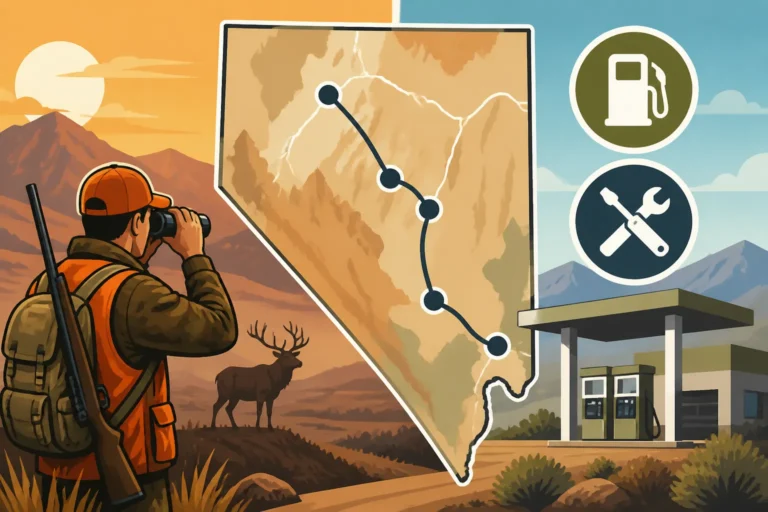
Before you even leave your driveway, meticulous route planning can save you a world of trouble. Use modern mapping applications like onX Hunt or GoHunt to scrutinize your intended route. Look for challenging sections, potential bottlenecks, and areas that might hold water or soft sand. Pay attention to topography and satellite imagery. A seemingly benign track on a paper map might reveal itself to be a deeply rutted, rocky mess on satellite view. Knowing the Reading a Nevada Unit Before You Apply and its terrain features will give you an edge.
Once on the road, slow down. Speed is often the enemy of traction and control on unpaved surfaces. Read the terrain ahead, anticipate dips, rocks, and soft spots. Drive defensively, avoiding sudden braking or accelerating. Understand your vehicle's capabilities and, more importantly, its limitations. A two-wheel-drive sedan isn't going to make it where a high-clearance 4×4 can go, and even a capable 4×4 has its limits in deep mud or steep, loose rock. Consider airing down your tires on rougher roads to improve traction and ride comfort, just remember to air back up when you hit the pavement. For longer trips, remember Carrying Extra Fuel on a Nevada Hunt is just as important as carrying water.
The Buddy System and Trip Planning
In the vastness of Nevada, there’s strength in numbers. Whenever possible, travel with a buddy vehicle. Two vehicles can often recover each other from situations that would leave a single vehicle stranded for days. If that’s not an option, ensure someone knows your detailed itinerary. Tell them exactly where you're going, your planned route, expected return time, and who to call if you don't check in. This simple step can drastically reduce the search and rescue time if something does go wrong.
Remember that Cell Coverage Across Nevada Hunt Units is sparse at best. Don't rely on your phone for emergencies. This is where your satellite messenger really proves its worth. Always pack enough supplies for an unexpected overnight stay or even longer – extra water, food, warm layers, and a first-aid kit. Thinking ahead, and assuming the worst-case scenario, helps ensure you’re prepared for whatever the desert throws at you.
Regular Vehicle Maintenance
Your vehicle is your lifeline in the backcountry. Neglecting maintenance is an invitation to disaster. Before any major hunting trip, perform thorough pre-trip checks. Inspect your tires, including the spare, for wear, damage, and proper inflation. Check all fluid levels (oil, coolant, brake fluid, power steering fluid) and top them off if necessary. Look for any loose hoses, belts, or wiring. Inspect your suspension components for any signs of damage or excessive wear.
Even something as simple as a battery nearing the end of its life can leave you stranded in the middle of nowhere. Carry basic tools for minor repairs, like a wrench set, screwdrivers, zip ties, and electrical tape. Knowing how to change a tire, jump-start a battery, or diagnose a simple issue can mean the difference between a quick fix and a long wait for help. Think about it: all the recovery gear in the world won't help if your engine won't even start. Proper Vehicle Prep for Remote Nevada Roads is your first line of defense against getting stuck.
Disclaimer
This article is for general informational purposes only and does not constitute professional advice. Laws, prices and regulations vary by location and change over time. Consult a qualified professional for guidance on your specific situation.