Carrying Extra Fuel and Water
One of the most common mistakes hunters make when heading into Nevada's vast, wild landscapes is underestimating the sheer distances and the scarcity of resources. You might be focused on glassing that distant ridge for a mule deer or tracking elk in the mountains, but forgetting to plan for your vehicle's fuel needs or your personal hydration can quickly turn a dream hunt into a desperate situation. This guide will walk you through the realities of Nevada's remote hunting areas and provide practical strategies for carrying the extra fuel and water necessary to stay safe and successful.
The Sheer Scale of Nevada's Remote Hunting Areas
Nevada isn't like hunting in many other states where a gas station or a small town is always just around the corner. Here, "around the corner" can easily mean a hundred miles of rough, washboarded dirt roads, with no cell service and no services in sight. This isn't just an inconvenience; it's a fundamental aspect of hunting in the Great Basin that demands respect and meticulous preparation.
Why Nevada's Vastness Demands Extra Preparation
Imagine you've drawn that coveted elk tag or a prime mule deer unit. You've looked at the map, and it seems like your hunting area is just an hour or two from the nearest town. What the map doesn't always convey is that those "roads" might be little more than two faint tracks winding through sagebrush, climbing steep passes, and crossing dry washes. Your vehicle, laden with gear, often operates in four-wheel drive, at low speeds, and sometimes in low range, all of which dramatically slash your fuel efficiency. A trip that might take an hour on pavement could easily consume half a tank of gas over a day on the backcountry roads.
Many hunters, especially those new to the state, are caught off guard by this. They fill up in the last town, thinking they have plenty, only to realize after a few days of bouncing around their unit that the fuel gauge is dipping far faster than anticipated. When you're 50 miles deep down a forgotten two-track, and the nearest known gas station is 80 miles in the opposite direction, the panic can set in fast. This is why understanding Remote Road Conditions Across Nevada is so vital, as these conditions directly impact your fuel burn.
Common Scenarios That Deplete Resources Faster Than Expected
It’s rarely a single, catastrophic event that leaves you stranded. More often, it’s a series of small, unforeseen circumstances that snowball. Perhaps the main access road you planned on taking is washed out, forcing a 40-mile detour over an even rougher route. Or maybe you get a flat tire that requires careful, slow driving on your spare for a long distance, rather than making it quickly back to a service station. Maybe your hunting partners decide to push further into a new area, adding unexpected mileage to your daily drives. Each of these situations, individually minor, can quickly eat into your fuel reserves and increase your time spent in the remote country, thus escalating your water needs.
The mental toll of realizing you're low on fuel or water, miles from anywhere, is immense. It shifts your focus from hunting to survival, creating stress and anxiety that no one wants on a hard-earned trip. Beyond the vehicle, consider the physical demands of Nevada hunting. You're often hiking miles over rough terrain, at elevation, in dry air. A small water bottle might suffice for a short stroll, but serious scouting or a day-long stalk demands significantly more. The frustration of running out of water on a scorching August afternoon, miles from your vehicle, is a feeling you absolutely want to avoid. The dry air alone can leave you parched even without extreme exertion, making Water You Must Carry on a Desert Day Hunt a crucial consideration for any outing, even a short one.
Planning Your Fuel Strategy for Nevada's Backcountry
When you're packing for a Nevada hunt, think of fuel as another piece of essential gear, not just something you get from a pump. Proactive planning is the key to avoiding a roadside predicament.
Calculating Your Vehicle's Fuel Needs for Off-Pavement Travel
The biggest mistake hunters make is estimating fuel consumption based on highway mileage. This is a recipe for disaster in Nevada's backcountry. When you're driving slowly, in four-wheel drive, possibly in low range, navigating steep grades, or just crawling over rocks and washboards, your vehicle's fuel economy plummets. A truck that gets 18-20 MPG on the highway might only get 8-10 MPG or even less when it’s loaded with gear and grinding through rough terrain.
To get a more realistic estimate, you need to factor in several things:
- Terrain Difficulty: Are you on relatively smooth dirt roads, or is it technical two-track with deep ruts and rocky sections? The harder the terrain, the more fuel you'll burn.
- Load Weight: Is your vehicle heavily loaded with camping gear, extra water, game bags, and other supplies? More weight means more fuel consumed.
- Speed: Backcountry roads rarely allow for sustained high speeds. Stop-and-go, slow crawling, and idling while scouting all impact efficiency.
- Four-Wheel Drive Use: Engaging 4×4, especially 4-low, uses significantly more fuel. Assume you’ll need it often.
A good rule of thumb is to take your vehicle's average highway MPG and cut it in half for conservative backcountry estimation. Then, add a significant buffer. If you calculate you'll need 20 gallons for your trip, plan to carry an extra 5-10 gallons in reliable containers. This buffer accounts for unexpected detours, getting stuck, or simply misjudging the actual distance. When Reading a Nevada Hunt Unit Before You Apply, pay close attention to the road networks and topographical features – they'll tell you a lot about how much fuel you'll really need.
Mapping Out Fuel Stops and Emergency Reserves
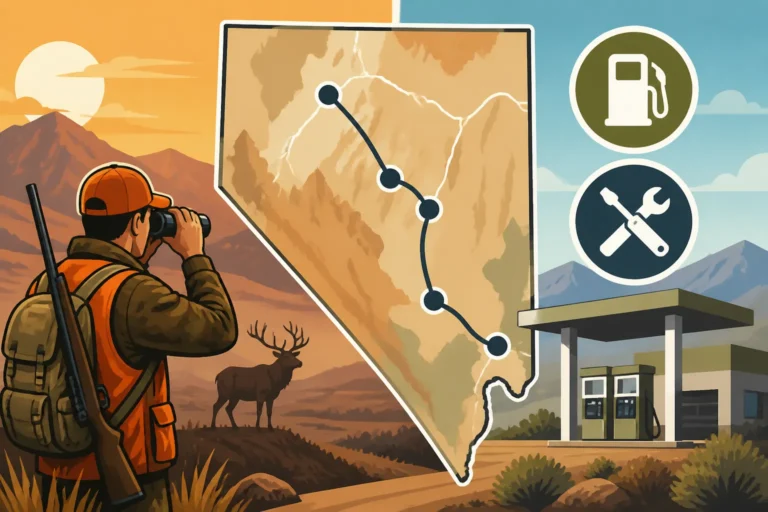
Modern mapping tools are invaluable for this. Before you even leave home, use a platform like onX Hunt or GoHunt to scout your unit. Look for towns with gas stations along your access routes or within a reasonable detour from your hunting area. Don't just assume a town has gas; cross-reference with other mapping services or even call ahead if you're truly concerned about a remote outpost. Remember, How Far Apart Nevada Fuel Stops Are can be extreme, sometimes over 100 miles between reliable services.
When using your mapping app, drop waypoints for all potential fuel stops. This allows you to quickly assess your options if your fuel gauge starts to look concerning. It's also wise to mark potential "fuel cache" locations if you plan on hunting a specific remote area for an extended period and can safely leave extra fuel along a main access road that you'll return to. Always secure these caches and be aware of any local regulations regarding storing fuel.
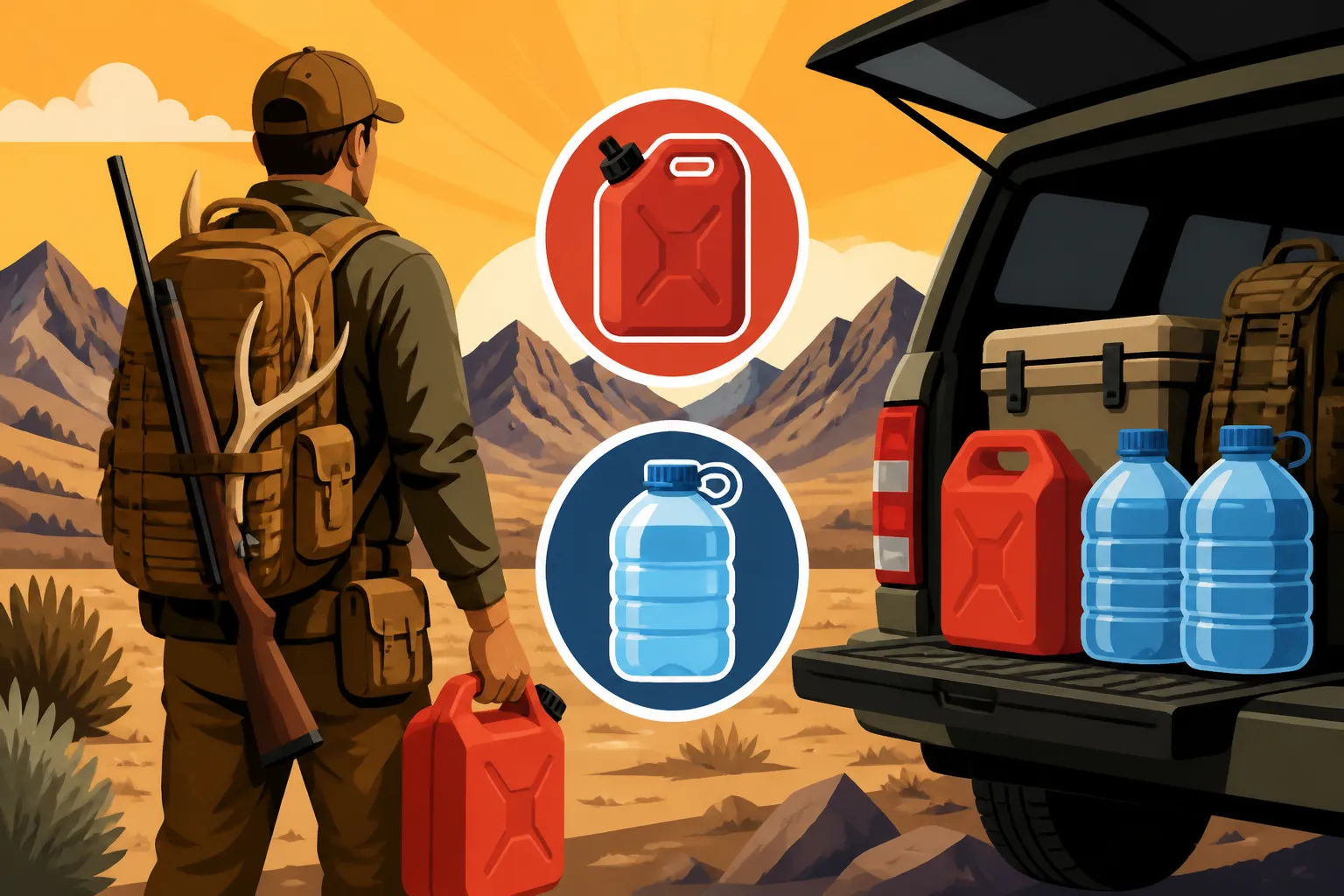
Carry at least two, preferably three, sturdy fuel containers, like Rotopax or military-grade jerry cans. Ensure they are properly secured in your vehicle, ideally on an exterior rack or in a truck bed, to minimize fumes inside the cab. Always transport them upright and ensure the caps are tightly sealed. It’s better to have a little too much than to be left empty in the vast silence of the Nevada desert. Consider the extra weight of these reserves in your Vehicle Prep for Remote Nevada Roads planning.
Staying Hydrated in Arid Nevada: Beyond the Water Bottle
Water is even more critical than fuel for your personal well-being. You can walk out if you run out of gas, but you can’t walk out indefinitely without water in the arid Nevada environment.
Assessing Daily Water Needs for Hunting in a Desert Environment
Nevada is a desert state, regardless of the season. Even in cooler fall months, the air is dry, and the sun can be intense. Hiking up and down steep terrain, often at elevation, causes you to sweat more than you realize. Combine that with the dry air constantly wicking moisture away, and you're in a prime situation for dehydration.
A common recommendation for active individuals is to drink at least a gallon of water per day, but in Nevada's hunting conditions, you should aim for more. For a strenuous day of hiking and glassing, two gallons per person per day isn't excessive, especially if you're also using water for cooking, cleaning, or a quick face wash. Children and those unaccustomed to dry climates will need even more.
Consider all your water needs:
- Drinking: The most obvious, but don't just carry enough for the hike. What if you get stuck overnight?
- Cooking: Rehydrating freeze-dried meals, making coffee or tea.
- Hygiene: Basic hand washing, brushing teeth.
- Emergency: What if someone gets injured and needs cooling or wound cleaning?
It's far better to haul extra water than to ration it. The moment you start feeling thirsty, you're already beginning to dehydrate. Make a habit of drinking regularly, even when you don't feel parched. This is especially true for August archery hunts when temperatures can be brutal; Heat Management on an August Archery Hunt is heavily reliant on constant hydration.
Safe Water Storage and Emergency Procurement
For vehicle-based camps, large water jugs (5-7 gallons) are your best friend. Many sporting goods stores sell robust, BPA-free containers. For day hunts, hydration bladders (2-3 liters) in your pack are ideal, allowing you to drink hands-free. Supplement these with extra water bottles in your vehicle.
When you're out hiking, carrying a reliable water filter or purification tablets is a smart backup. While natural water sources are scarce in much of Nevada, you might occasionally find a spring, a guzzler, or a small stream in certain mountain ranges. However, never rely on these as your primary water source. Even seemingly pristine water can harbor bacteria or parasites. Having a filter like a Sawyer Squeeze or a Katadyn BeFree, along with some purification tablets, gives you an emergency option if your primary supply runs out. Mapping potential Hunting Water in Nevada's Driest Country using tools like onX Hunt to identify springs and guzzlers is an excellent pre-hunt scouting task, but always confirm their reliability before you depend on them. Mapping Water Before an August Hunt becomes a mission-critical part of your planning.
A note on electrolytes: While water is paramount, supplementing with electrolyte packets can help your body absorb and retain fluids better, especially during hot, strenuous days.
Essential Gear for Fuel and Water Management
Having a strategy is one thing; having the right gear to execute it is another. Investing in quality fuel and water storage solutions is not just convenient, it's a safety imperative in Nevada.
Recommended Fuel Storage Solutions
Forget the flimsy plastic gas cans you use for your lawnmower. For backcountry vehicle travel, you need durable, leak-proof options designed for rough conditions.
- Jerry Cans: The classic military-style steel jerry cans (often 5-gallon capacity) are incredibly robust. Look for genuine steel cans with secure, leak-proof gaskets. They are heavy when full, so ensure you have a secure mounting solution.
- Rotopax Containers: These are popular for a reason. Rotopax are rotationally molded plastic containers that are extremely tough, designed to be mounted flat against a vehicle's exterior (like on a roof rack, tailgate, or spare tire carrier). They come in various sizes (typically 1, 2, 3, or 4 gallons) and colors, including red for fuel. Their modular design allows you to stack them or mix fuel with water containers.
- Transfer Pumps/Siphons: Don't forget a way to get the fuel from the container into your vehicle's tank. A small manual pump or a reliable siphon can save you a lot of grief and mess compared to trying to pour heavy, sloshing fuel cans.
Always ensure your fuel containers are properly vented and sealed, and never store them inside the passenger compartment due to fire risk and fume inhalation.
Hydration Systems and Emergency Water Filtration
For personal hydration while hiking, a good system is key to staying consistently hydrated without breaking stride.
- Hydration Bladders: A 2-3 liter hydration bladder that fits into your hunting pack is almost essential. Brands like CamelBak, Osprey, and Platypus make excellent, durable bladders with bite valves that allow for easy, continuous sipping.
- Nalgene Bottles: Tough, wide-mouth Nalgene bottles (32 oz or more) are great for carrying extra water, mixing electrolyte drinks, or using with water filters. Their durability is legendary.
- Water Filters/Purifiers: As a backup, a portable water filter is invaluable.
- Squeeze Filters (e.g., Sawyer Squeeze): Lightweight, easy to use, and remove bacteria and protozoa. You can filter directly into a bottle or hydration bladder.
- Pump Filters (e.g., Katadyn Hiker Pro): More robust, often with larger capacity, good for filtering larger volumes of water for a group.
- Gravity Filters: If you find a water source and set up a temporary camp, a gravity filter system can filter several liters at once.
- Purification Tablets/Drops: A lightweight, packable backup to a filter, effective against viruses as well (though less common in backcountry water).
- Electrolyte Mixes: Small packets of electrolyte powder or tablets are easy to carry and can make a huge difference in preventing cramps and fatigue, especially if you're sweating a lot.
Communication Devices for When Things Go Wrong
Even with meticulous planning, things can still go sideways. A mechanical breakdown, an unexpected injury, or simply running out of a critical resource like fuel or water can become a life-threatening emergency in Nevada's vast, unpopulated areas. Cell service is notoriously spotty, or completely non-existent, across most of Nevada's hunting units. Cell Coverage Across Nevada Hunt Units is almost always poor, making it unsafe to rely on your phone for emergencies.
This is where a satellite communication device becomes your most important piece of emergency gear.
- Satellite Messengers (e.g., Garmin InReach, Zoleo): These devices allow you to send and receive text messages virtually anywhere, even without cell service. More importantly, they feature an SOS button that connects you directly to a 24/7 emergency response center, which can dispatch help to your exact location. Being able to communicate that you're out of fuel, need a tow, or have a medical emergency can be the difference between a minor inconvenience and a dire situation.
- Satellite Phones: While more expensive and bulkier, a satellite phone offers full voice communication, which can be critical for complex situations or for coordinating with family.
Having one of these devices with you, charged and with an active subscription, provides immense peace of mind. It allows you to call for assistance with a vehicle recovery or even just let loved ones know you'll be late because of an unforeseen delay, without risking your safety to find a signal. When you're Preparing for Long Days in Open Terrain, a reliable communication device is just as important as your optics and rifle.
Remember, the goal in Nevada isn't just to hunt; it's to hunt safely and return home with incredible memories. By prioritizing fuel and water preparedness, you're setting yourself up for success and minimizing the inherent risks of exploring such magnificent, wild country.
| Resource Type | Why it's Critical in Nevada | Storage Considerations | Emergency Backup |
|---|---|---|---|
| Fuel | Vast distances, rough roads, sparse services, reduced MPG in 4WD conditions. | Durable, leak-proof jerry cans or Rotopax. Securely mount outside vehicle. Include transfer pump/siphon. | Detailed map of fuel stops, pre-scouted routes, and a "buddy plan" for extra fuel if needed. |
| Water | Arid climate, high exertion, dry air leads to rapid dehydration. Few natural sources. | Large camp jugs (5-7 gallons). Hydration bladders (2-3L) for day packs. Personal water bottles. | Portable water filter/purifier (e.g., Sawyer Squeeze) and purification tablets for emergency natural sources. Electrolyte mixes. |
Disclaimer
This article is for general informational purposes only and does not constitute professional advice. Laws, prices and regulations vary by location and change over time. Consult a qualified professional for guidance on your specific situation.