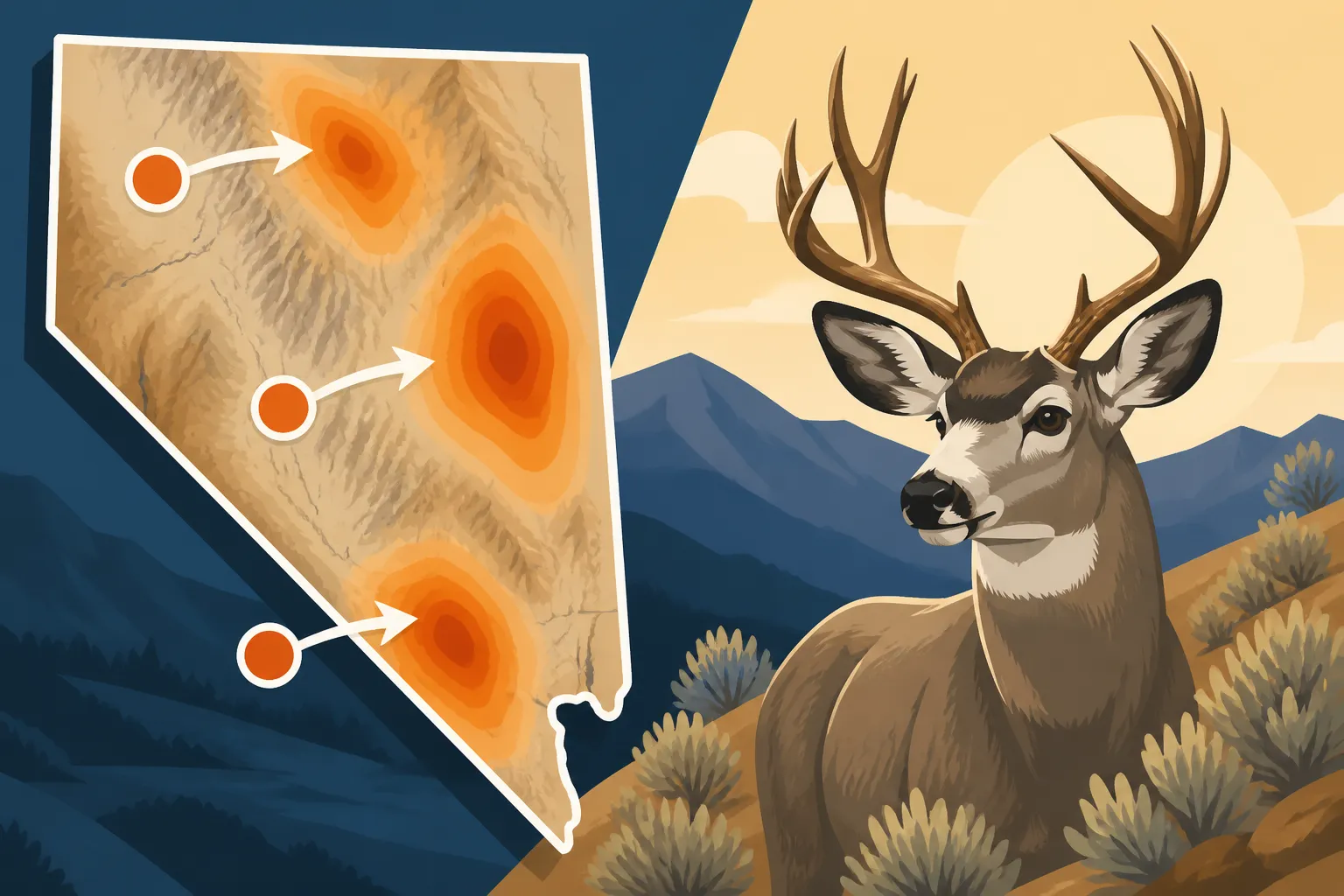
Where Nevada Mule Deer Concentrate
Finding mule deer in Nevada can feel like an impossible task. The state is vast, truly immense, with huge expanses of high desert sagebrush and towering, often isolated mountain ranges. It’s not like hunting in timbered states where you can track fresh sign through the pines. Here, the deer are spread out, and knowing where they tend to hold tight can make the difference between a frustrating week of staring at empty basins and a successful hunt. This guide is all about cutting through that vastness, helping you understand the specific habitats and patterns where Nevada mule deer concentrate, giving you a real edge in planning your next adventure.
Understanding Nevada's Mule Deer Habitat
Nevada's landscape is unique, a place of extremes where water is gold and cover is sparse. Mule deer here aren't just surviving; they're thriving in specific niches tailored to their needs. If you want to find them, you've got to think like them, understanding what draws them to one basin over another, what makes a specific ridge a magnet, or why a certain canyon becomes a haven. It's rarely about pure luck; it's about understanding the nuances of their home range.
The Sagebrush Sea and Its Importance
When most folks picture Nevada, they envision endless sagebrush, and they wouldn't be wrong. This "sagebrush sea" defines the state's ecosystem and, crucially, provides the primary habitat for mule deer. It's not just a bunch of brush; it's a complex, living system that offers forage, thermal cover, and escape routes. Big sagebrush, in particular, is a critical winter food source when other vegetation is scarce, and deer will move considerable distances to access it.
Within this sagebrush, you'll find different densities and varieties. Taller, denser stands along drainage bottoms or on north-facing slopes offer shade and security during the hotter parts of the day. Sparser, more open areas might be good for spotting deer from a distance, but the deer themselves prefer the thicker stuff where they feel less exposed. Understanding these subtle differences in the sagebrush topography and density is key to identifying potential bedding areas or travel corridors. Don't just see a sea of green-gray; learn to see the patterns within it.
Transition Zones and Aspen Pockets
While the sagebrush is foundational, mule deer often thrive in the transition zones where it meets other vegetation types. Think about where the sagebrush starts to give way to pinyon-juniper woodlands, or even more enticingly, where small pockets of aspen trees cling to a mountainside. These "transition zones" are biodiversity hotspots, offering a wider variety of forage, denser cover, and often more reliable water sources than the open sage flats.
Aspen pockets, though relatively rare and localized in Nevada, are absolute magnets for mule deer, especially during the archery and early rifle seasons. The soft leaves are a preferred browse, and the dense stands of white trunks offer incredible thermal and visual cover. Deer will bed down in these cool, sheltered spots, often providing excellent opportunities for a patient hunter. These pockets are typically found at higher elevations or in protected drainages where moisture lingers longer. Learning to spot these greener, lusher areas on a map, often denoted by darker green patches, is a vital e-scouting skill. They stand out like oases in the otherwise arid landscape.
Conifer Stands and Escape Cover
Higher up in Nevada's mountain ranges, as you gain elevation, the vegetation changes again, transitioning into pinyon-juniper woodlands and, in the highest reaches, scattered stands of ponderosa pine, white fir, or even limber pine. These conifer stands are invaluable to mule deer, providing essential escape cover from predators and hunters, as well as crucial thermal regulation. On hot days, the shade under a thick canopy is a welcome reprieve; on cold, windy days, the dense branches offer a buffer against the elements.
Often, you'll find deer bedding on north-facing slopes within these conifer stands, especially if there's a good vantage point to watch their backtrail. They use the topography and the trees to their advantage, making a stalk incredibly challenging. When you're Glassing Nevada's Basin and Range for Mule Deer, pay close attention to the fringes of these conifer patches, especially in the early morning and late evening, as deer move out to feed. During the middle of the day, assume they've tucked themselves into the densest cover available, using the trees and terrain to stay hidden and cool.
Key Regions and Unit Groupings for Mule Deer
Nevada's mule deer are not evenly distributed. Some areas consistently hold more deer, and often, bigger deer, due to a combination of habitat quality, forage availability, and historical management. Understanding these general geographic concentrations is the first step in narrowing down the vastness of the state. It’s about knowing which basins and mountain ranges typically yield better results and concentrating your research there.
Northern Nevada's Mule Deer Powerhouses
When you talk about mule deer in Nevada, many experienced hunters immediately think of the northern part of the state. Ranges like the Jarbidge, Independence, Santa Rosa, and Ruby Mountains are legendary for a reason. These areas, particularly units in the northeastern corner of Nevada, generally receive more precipitation than the central or southern regions, leading to better forage and more robust deer populations. The habitat here often includes larger expanses of aspen, mountain mahogany, and higher elevation conifer forests, interspersed with vast sagebrush plateaus.
Units like 031, 032, 033, and 034, which encompass parts of the Jarbidge and Independence Ranges, are perennial favorites in the draw, often requiring significant bonus points. These areas offer rugged terrain that provides excellent cover and wintering grounds, allowing deer to grow to impressive sizes. If you're looking for where Nevada mule deer concentrate, especially trophy-class animals, these northern units should be at the top of your research list. They are often part of the conversation when discussing Best Nevada Units for a Mature Mule Deer.
Eastern Nevada's Mountain Ranges
Moving south along the eastern side of the state, you'll encounter another string of significant mountain ranges that hold strong mule deer populations. The Schell Creek Range, Snake Range (home to Great Basin National Park), Egan Range, and Ruby Mountains extend like spines down eastern Nevada, forming crucial habitat islands in the desert. These ranges also tend to capture more moisture due to their elevation, supporting diverse vegetation.
Units in this region, such as those covering the Schell Creek or Snake Range, offer classic high-desert mule deer hunting. Think deep canyons, steep slopes, and plenty of pinyon-juniper and sagebrush. While the deer densities might not always match the northern extremes, these areas produce some truly impressive bucks, particularly if you're willing to put in the effort to get away from roads. The key here is often identifying isolated pockets of good feed and water that receive less pressure. Many hunters find these units attractive for their blend of quality animals and slightly less competitive draw odds compared to the northern giants.
Central Nevada's Isolated Island Ranges
Central Nevada presents a different kind of mule deer hunting experience. Here, the landscape is characterized by numerous "island ranges" — isolated mountain chains rising dramatically from vast, flat sagebrush valleys. These ranges include the Toiyabe, Monitor, Shoshone, and Diamond Mountains, among others. While often drier than their northern and eastern counterparts, these ranges still provide crucial habitat, and their isolation can sometimes lead to less hunting pressure in certain pockets.
Deer populations in central Nevada can fluctuate more dramatically with rainfall patterns, but during good years, these ranges can hold surprising numbers of quality bucks. The deer here are often incredibly resilient, adapted to harsher conditions. Success in these units often comes down to meticulous e-scouting and a keen understanding of localized water sources, as deer will not stray far from them. Consulting tools like GoHunt can help you analyze harvest data and draw odds for these specific unit groups, which are often combined due to their similar habitat characteristics, making them a unique challenge but a rewarding experience for the prepared hunter.
Elevation and Seasonal Movements of Mule Deer
Mule deer in Nevada are masters of adaptation, and much of their concentration is dictated by the seasons and the corresponding changes in elevation, forage, and weather. Understanding these patterns of migration and movement is paramount for hunting success, whether you're chasing an August archery buck or a late-season rifle deer. They aren't static animals; they're constantly on the move, chasing green-up in spring and retreating to shelter in winter.
Summer Ranges and High Country Forage
As the snow melts and temperatures rise, Nevada's mule deer herds push up into the higher elevations. Their summer ranges are typically found in the alpine and sub-alpine zones of the larger mountain ranges, where lush grasses, forbs, and browse are abundant. Think cool, north-facing slopes, dense stands of aspens, and scattered conifer patches that provide both food and relief from the summer sun. This is where bucks will grow their antlers, packing on weight in preparation for the upcoming rut and winter.
During the Nevada's August Archery Deer Season Opens the Year, many hunters focus their efforts in these high-country summer haunts. Deer are often in predictable patterns, feeding in open parks during the cooler parts of the day and bedding in dense timber or brushy draws as the sun gets high. Access can be challenging, often requiring strenuous hiking or pack horses to reach the most remote areas. However, the reward can be finding large bachelor groups of bucks enjoying the bounty of summer forage before the hunting pressure begins to scatter them.
The Rut and Migration Corridors
As autumn progresses, a dramatic shift occurs in mule deer behavior. The rut, or breeding season, typically kicks into high gear from late October through November, though exact timing can vary by unit and elevation. During this period, bucks become much more active, shedding their summer patterns in favor of searching for does. This is often when the biggest bucks are most vulnerable and visible, making the late rifle seasons highly sought after.
Crucially, the rut often coincides with the deer's migration from their high-elevation summer ranges to their lower-elevation wintering grounds. This creates distinct migration corridors, bottlenecks, and staging areas that can be incredibly productive for hunters. Identifying these corridors — often along ridgelines, through specific saddles, or across lower passes — is a critical component of successful late-season hunting. These are the periods when you might find Why Late Seasons Produce Bigger Bucks, as mature deer are on the move and less cautious. E-scouting platforms can help identify these potential routes, looking for natural funnels between summer and winter ranges.
Wintering Grounds and Lower Elevation Shelters
Once the snows arrive and the high country becomes inhospitable, mule deer retreat to their wintering grounds. These areas are typically found at lower elevations, often in extensive sagebrush flats, pinyon-juniper woodlands on south-facing slopes, or in sheltered canyon systems. The primary goal during winter is survival, and deer concentrate where forage, particularly bitterbrush and sagebrush, is still accessible, and where they can find protection from harsh winds and deep snow.
Knowing Where Mule Deer Winter in Sage Country is vital not just for ethical hunting practices (avoiding stressing wintering deer) but also for understanding the overall health and distribution of the herd. These winter ranges are critical habitat, and disturbance can have long-lasting effects. While most hunting seasons are closed by the time deer are fully concentrated on their winter ranges, understanding these areas helps inform future season planning and allows hunters to scout these lower elevations in the off-season for future spring and fall patterns.
| Season | Typical Elevation | Key Forage | Behavior | Hunter Focus |
|---|---|---|---|---|
| Summer | High Mountains | Lush forbs, grasses, aspen, mountain mahogany | Bucks in bachelor groups, feeding, growing antlers | High-country basins, north-facing slopes, water |
| Early Fall | Mid-High | Transitioning forage, some residual green-up | Deer moving lower, still somewhat scattered | Transition zones, benches below timberline |
| Late Fall | Mid-Low (Rut) | Sagebrush, pinyon-juniper, bitterbrush | Bucks chasing does, migrating to winter range | Migration corridors, traditional rutting areas |
| Winter | Low Valleys | Sagebrush, bitterbrush, exposed browse | Concentrated in sheltered areas, conserving energy | (Generally closed to hunting in Nevada) |
Water Sources and Their Impact on Deer Concentration
In an arid state like Nevada, water is arguably the most critical factor influencing where mule deer concentrate. Unlike more humid environments where water is abundant, here, a reliable water source can transform a barren landscape into a thriving wildlife hotspot. Deer, like all animals, need to drink, and during the long, dry spells that characterize much of the Great Basin, they will not stray far from a dependable supply.
Natural Springs and Seeps
Natural springs and seeps are lifelines for wildlife across Nevada. These are places where groundwater emerges at the surface, creating small oases of green vegetation in an otherwise dry environment. Deer are intimately familiar with these locations, often creating well-worn trails leading directly to them. A spring can be a significant draw, especially during the hotter months or in particularly dry units. Many of these springs are protected and enhanced by wildlife agencies, recognizing their vital role.
When you're Hunting Water in Nevada's Driest Country, focusing your efforts around known springs can be incredibly effective. Deer will often bed nearby, moving to and from the water source during the cooler parts of the day. E-scouting tools are invaluable for identifying these features on a topographic map. Look for areas with dense vegetation patches, even in seemingly dry country, as these often indicate the presence of subsurface moisture feeding a spring. A little research on historical maps or even talking to locals can reveal perennial springs versus those that dry up early in the season.
Man-Made Guzzlers and Developments
Beyond natural springs, Nevada's wildlife agencies, like the Nevada Department of Wildlife (NDOW), along with various conservation groups, have invested heavily in constructing "guzzlers." These are man-made watering devices, typically consisting of a rainwater collection apron that funnels water into a buried tank, from which animals can drink. Guzzlers are strategically placed in areas lacking natural water, effectively expanding the habitat available to deer and other wildlife.
These guzzlers act as magnets, concentrating deer, especially in units where water is scarce. While some guzzlers are very well known and receive significant hunting pressure, others are more remote and can be highly productive. Utilizing resources like GoHunt or NDOW's own maps, you can often locate these developments. Sitting near a well-placed guzzler, or scouting the trails leading to it, can be a highly effective tactic, particularly during warm early-season hunts. Remember, hunting near any water source requires patience and an understanding of legal distance requirements from such developments.
Understanding Drought's Influence
Nevada is no stranger to drought, and its long-term effects significantly impact where mule deer concentrate. During extended dry periods, natural springs can dry up, forage quality diminishes, and deer densities can decrease as animals struggle to find adequate resources. This means that historical deer concentrations might shift, and areas that were once productive could become less so.
Hunters need to be acutely aware of current drought conditions and how they might influence deer distribution. Public land managers and NDOW often release reports on range conditions and herd health, which can provide valuable insights. In drought years, deer will be even more tightly concentrated around the few remaining reliable water sources, and their overall movement might be reduced as they conserve energy. This makes careful water mapping even more critical and might necessitate focusing on the larger, more reliable springs and guzzlers rather than smaller, ephemeral seeps. How Drought Affects Great Basin Deer is a critical factor for any serious Nevada hunter to consider.
E-Scouting and Boots-on-the-Ground for Deer Locating
In a state as vast and open as Nevada, effective scouting is not just an advantage; it's a necessity. You simply cannot cover enough ground on foot to find deer by accident. A methodical approach combining modern e-scouting techniques with traditional boots-on-the-ground glassing and tracking will put you in the best position to find where Nevada mule deer concentrate. It's about working smarter, then working harder.
Utilizing Satellite Imagery for Initial Scouting
Before you ever set foot in a unit, you should be spending hours behind your computer screen, pouring over satellite imagery. Platforms like GoHunt's Insider and others that offer high-resolution satellite maps are invaluable for identifying potential deer habitat. Look for changes in vegetation density, north-facing slopes with darker timber, natural benches, saddles, and deep draws. These are all potential bedding areas, travel corridors, or escape routes.
Pay close attention to topography. Steep, broken country often provides excellent security cover. Identify potential water sources, even small ones, and look for game trails radiating from them. Map out glassing knobs – elevated points that offer expansive views of basins and slopes. You can also use satellite imagery to identify potential access roads and parking areas, as well as areas that might be too rugged or dense for efficient hunting. This initial e-scouting allows you to Reading a Nevada Hunt Unit Before You Apply and build a robust plan, saving you countless miles of walking in the wrong places.
In-Season Glassing Strategies
Once you're in the field, glassing is the name of the game in Nevada. Unlike dense timber hunting, you'll spend far more time looking through binoculars and spotting scopes than walking. Good optics are a non-negotiable item for Nevada mule deer hunting. The key is to find an elevated vantage point that allows you to systematically pick apart an entire mountain face or basin. Set up your spotting scope on a sturdy tripod, get comfortable, and be prepared to spend hours meticulously searching for a flicker of an ear, a patch of hide, or the tell-tale horizontal line of a deer in a vertical landscape.
Focus your glassing efforts on areas identified during your e-scouting: transition zones, shaded pockets, the edges of timber, and areas around water. Break down large landscapes into smaller grids, sweeping methodically from left to right, then dropping your field of view slightly and sweeping back from right to left. Pay extra attention during the first and last hours of daylight when deer are most active. This is where Why Glassing Beats Walking in Sage Country truly shines in Nevada's open terrain. Patience is your most valuable virtue here.
Reading Sign and Deer Behavior
While glassing covers large areas, don't forget the importance of reading sign on the ground. When you do find fresh tracks, rubs, or droppings, it tells you that deer are using that specific area. Pay attention to the size of tracks and droppings; larger ones indicate bigger animals. Fresh rubs on saplings or smaller trees are a clear sign that bucks are in the area and actively marking their territory. During the rut, these signs become even more pronounced.
Understanding deer behavior is also critical. Deer are creatures of habit. If you locate a deer in a particular type of cover or feeding in a specific area, chances are other deer will use similar locations. Learn to interpret their body language, how they move, and what makes them feel secure. For example, a mule deer often beds with its back to the wind, facing downhill to watch its backtrail. This knowledge allows you to predict their movements and plan your approach effectively. Don't just look for the deer; look for the evidence of their lives.
Historical Trends and Future Outlook for Nevada Mule Deer
Nevada's mule deer populations are dynamic, influenced by a complex interplay of environmental factors, predator management, and human activity. Understanding these broader trends provides context for where deer concentrate today and offers clues about where they might be found in the future. It’s not just about current conditions; it’s about the long game of conservation and habitat health.
Population Dynamics and Management Challenges
Mule deer populations across the Great Basin, including Nevada, have experienced fluctuations over the decades. Factors like drought, severe winters, habitat loss due to development, and disease can all impact herd numbers. NDOW biologists work tirelessly to monitor these populations through aerial surveys, harvest data analysis, and herd health assessments. Their goal is to manage for sustainable populations that provide hunting opportunities while ensuring the long-term health of the species.
One of the ongoing challenges is balancing herd objectives with public expectations and environmental realities. Predator management, particularly for mountain lions, is a continuous debate, as is the impact of wild horses on available forage. Mule Deer Population Trends Across the Great Basin show a mixed picture, with some units holding strong and others facing declines. Hunters play a crucial role by supporting conservation efforts, purchasing licenses, and advocating for sound wildlife management practices.
Habitat Restoration Efforts
Recognizing the importance of healthy habitat, numerous efforts are underway to restore and enhance mule deer ranges across Nevada. This includes projects focused on removing invasive species like cheatgrass, which can outcompete native forage and increase wildfire risk. Prescribed burns and mechanical treatments are sometimes used to rejuvenate decadent sagebrush stands, promoting new growth that is more palatable and nutritious for deer.
Water development projects, like the guzzlers discussed earlier, are also a form of habitat enhancement, effectively expanding the amount of usable range for deer. Conservation organizations, in partnership with NDOW and land management agencies, invest significant resources in these projects. By improving the quality and quantity of habitat, these efforts aim to increase deer carrying capacity and reduce the concentration of deer in limited areas, ultimately leading to healthier, more resilient herds.
How Drought Affects Great Basin Deer
It's impossible to discuss mule deer in Nevada without consistently circling back to drought. The Great Basin is inherently an arid environment, and periods of prolonged drought have profound effects on deer populations. Reduced rainfall means less forage, especially the succulent plants deer rely on for moisture and nutrition. It also leads to dried-up springs and guzzlers, forcing deer to travel farther for water or concentrate in increasingly smaller areas around dwindling resources.
Drought directly impacts fawn survival rates, as does struggle to produce enough milk and fawns are born into harsher conditions. Over time, successive dry years can lead to declines in overall herd numbers and a reduction in antler quality. This is why knowing How Drought Affects Great Basin Deer is crucial. As a hunter, this might mean choosing a unit with historically more reliable water sources or focusing on areas that have seen recent habitat improvements. It underscores the delicate balance of life in the desert and why every drop of water and every healthy patch of forage is so vital for mule deer concentration and survival.
Disclaimer
Please remember that hunting regulations, seasons, and unit boundaries are subject to change. Always consult the most current Nevada Department of Wildlife (NDOW) regulations before planning or undertaking any hunting activity. This information is for educational purposes and should not replace official sources.