Why Squaring Changes Nevada Draw Odds
Navigating the big game draw in Nevada can feel like trying to solve a puzzle with half the pieces missing, especially when you start hearing about "squared bonus points." It’s a system that truly sets Nevada apart, and if you don't understand how it works, you might be consistently overlooking some critical strategies for your application. This guide is going to meticulously break down Nevada's unique bonus point system, explaining exactly what "squaring" means and how it fundamentally shifts your draw odds compared to other states.
Understanding Nevada's Unique Bonus Point System
Before we dive into the math, it's essential to grasp the basic framework of Nevada's bonus point system. Unlike some states where a point simply gives you an extra entry, Nevada’s system is designed to reward loyalty and persistence in a much more significant way. It's not just about accumulating points; it's about how those points multiply your chances when the actual draw comes around.
The Foundation of the Draw: What Are Bonus Points?
In Nevada, bonus points are essentially a recognition of unsuccessful applications for specific big game species. When you apply for a deer, elk, antelope, or bighorn sheep tag and don't draw, you typically receive a bonus point for that species. These points are species-specific, meaning a deer point won't help you draw an elk tag, and vice-versa. You accumulate one point for each year you apply unsuccessfully for a given species, up to a maximum. The real beauty—or complexity, depending on your perspective—of the Nevada system is that these points don't just add up; they compound your chances exponentially.
Many hunters, especially those new to Nevada, find themselves scratching their heads when they see their application points tallied. They might have a few points and feel like their odds are still terribly low, not fully realizing the power these points wield. It’s also important to remember that Nevada Applications Run March 23 to May 13, so keeping track of your points and planning your application well in advance is paramount. The system is set up to reward long-term commitment, but understanding the mechanics is key to making that commitment pay off. You even have the option of Buying Nevada Points Without Applying to Hunt if you want to start building points without committing to a specific hunt unit application, a smart move for many long-term planners.
Combination License and Application Fees
Before you even think about accumulating bonus points or applying for a specific big game tag, there’s a foundational step many hunters, particularly non-residents, need to take: purchasing a Nevada Combination License. This license is not just a formality; it's a prerequisite for applying for any big game draw. Think of it as your entry ticket into the entire system. Without it, your application won't even be processed, and you certainly won't be accruing any bonus points.
Beyond the combination license, each species application carries its own fee. These fees vary by species, with elk typically being the most expensive due to the high demand and prestige associated with drawing an elk tag in Nevada. These fees are generally non-refundable, regardless of whether you draw a tag or not. It's a critical financial consideration, especially if you're applying for multiple species across several states. Understanding Nevada's Combination License Comes Before Any Tag is crucial because it ensures you're properly set up for the draw. The application fee structure is a barrier for some, but it funds wildlife management and conservation efforts across the state. Knowing the Nevada Application Fees Per Species helps you budget and prioritize your applications, ensuring you're not caught off guard by the total cost.
The Mathematical Magic: How Nevada Squares Your Bonus Points
This is where Nevada truly stands apart and where many hunters either get excited or completely lost. The concept of "squaring" your bonus points isn't just a quirky rule; it's a mathematical engine that dramatically amplifies your chances with each passing year you fail to draw. It turns a linear accumulation of points into an exponential advantage.
Deconstructing the "Squaring" Formula
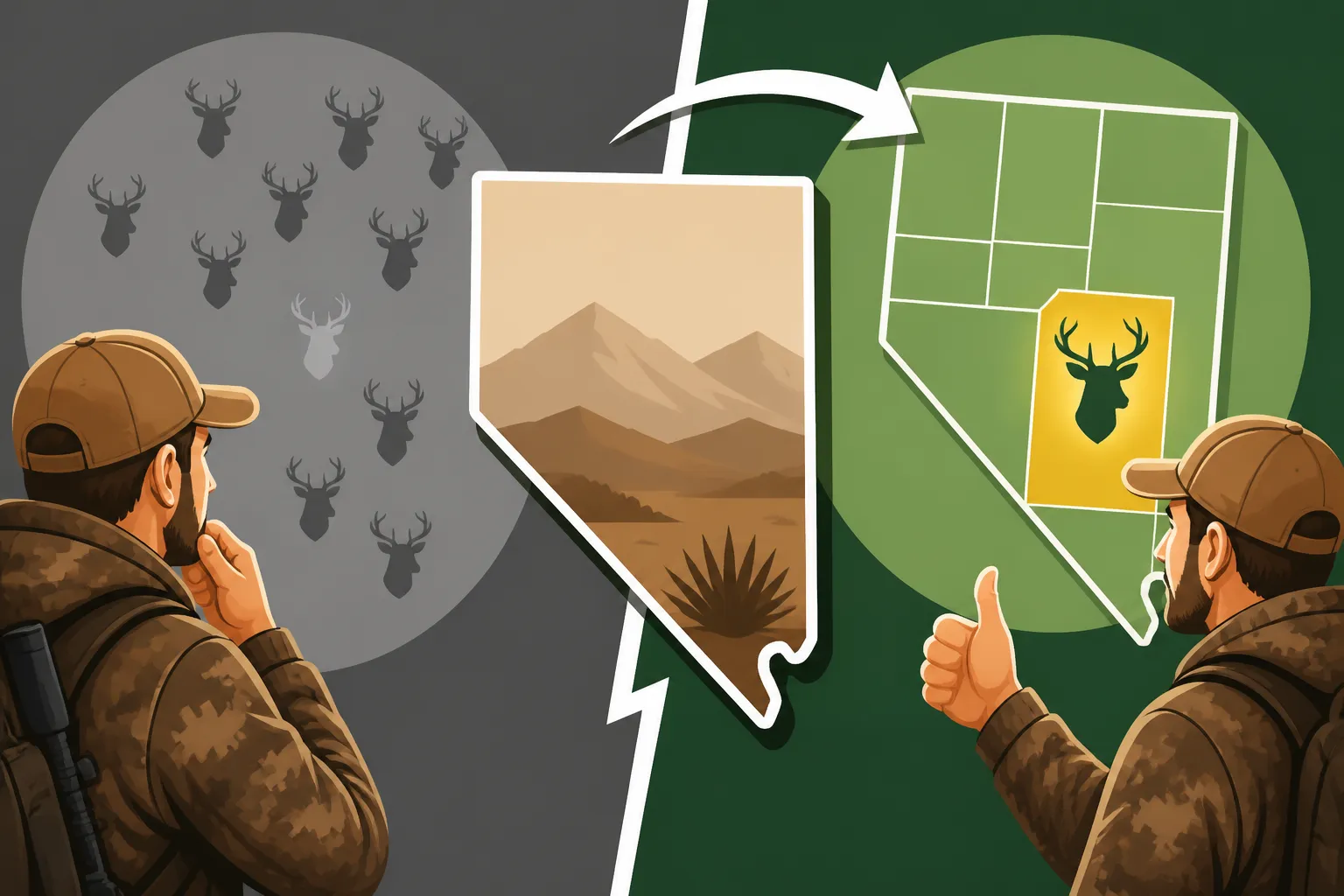
In Nevada's draw, your accumulated bonus points aren't just added to your name as individual entries. Instead, they are squared. The formula is actually (number of bonus points + 1) squared. So, if you have 0 points, you get (0+1)^2 = 1 entry into the draw. If you have 1 point, you get (1+1)^2 = 4 entries. With 2 points, you have (2+1)^2 = 9 entries. And so on. This mechanism means that the more points you have, the disproportionately higher your chances become compared to someone with fewer points.
Let's make this crystal clear. If a state simply gave you one extra "ticket" for each point, having 5 points would give you 5 more chances than someone with 0. In Nevada, with 5 points, you'd have (5+1)^2 = 36 chances. Someone with 0 points still only has 1 chance. That's a massive difference. This system creates a significant divide between new applicants and those who have been consistently applying for years. Understanding How Nevada's Squared Bonus Points Work is absolutely fundamental to strategizing your applications, especially for those highly coveted tags. It's not just a small bump; it's a significant boost that accelerates with every point.
Visualizing the Exponential Advantage
To truly grasp the impact, let's look at a quick comparison. Imagine a simple draw where one point equals one entry (linear system) versus Nevada's squared system:
| Bonus Points | Linear System Entries (Points + 1) | Nevada's Squared Entries ((Points + 1)^2) |
|---|---|---|
| 0 | 1 | 1 |
| 1 | 2 | 4 |
| 2 | 3 | 9 |
| 3 | 4 | 16 |
| 4 | 5 | 25 |
| 5 | 6 | 36 |
| 6 | 7 | 49 |
| 7 | 8 | 64 |
| 8 | 9 | 81 |
| 9 | 10 | 100 |
As you can see from the table, the gap widens dramatically the more points you accumulate. Someone with 9 points in a linear system has 10 chances (9 points + 1 for applying). In Nevada, that same hunter has a whopping 100 chances! This isn't just a minor tweak to the system; it's a complete overhaul of how odds are weighted, giving a truly powerful advantage to those with a long history of applying.
This exponential growth means that patience is more than just a virtue in Nevada; it's a strategic weapon. While new applicants might feel disheartened by the low odds, consistency builds a rapidly increasing advantage. This system is designed to reward longevity, making those hard-earned points feel far more valuable than in states with simpler point systems. It's why many hunters speak of What One Nevada Bonus Point Is Worth as a long-term investment rather than a yearly lottery ticket.
Practical Impact on Draw Odds and Strategy
The squaring of bonus points doesn't just look interesting on paper; it has very real, tangible effects on your draw odds and should fundamentally shape how you approach your Nevada applications. This system isn't just a mathematical curiosity; it's a driver of applicant behavior and hunt strategy.
The Accelerated Edge for High Point Holders
For hunters who have been accumulating points in Nevada for many years, the squared system provides an immense advantage. What How Many Chances Four Nevada Points Buy might surprise you, jumping from a mere 5 in a linear system to 25. This isn't just a slight edge; it's a massive boost that makes it significantly more likely for high-point holders to draw premium tags compared to those with fewer points. This is particularly noticeable for species like elk or bighorn sheep, where competition is fierce and the number of available tags is extremely limited.
This accelerated advantage means that if you're sitting on a pile of points, you have a much better shot at the limited, highly desirable units. It ensures that those who have invested years, and often a fair bit of money in application fees, are eventually rewarded. This can be a source of frustration for new applicants, as it means they are competing against individuals who, mathematically, have dozens or even hundreds of times their chances. However, it also means that once you start building those points, your own position in the draw rapidly improves, making the waiting game eventually pay off.
Strategic Implications for New Applicants
If you're just starting your journey in the Nevada draw, the squared point system can feel daunting. It often means facing very low odds for popular units, especially for trophy species, until you've accumulated a significant number of points yourself. The key for new applicants isn't to get discouraged, but to get strategic. One common approach is to apply for less popular units or tags that have slightly higher draw odds initially, even if they aren't your dream hunt. This allows you to continue building points for more desirable hunts down the road.
Another strategy is to focus on hunts that have a lower overall point requirement, or even antlerless tags if available, to get into the field and gain experience while simultaneously accruing points for those premier buck or bull tags. Resources like Checking Nevada Draw Odds Before You Apply are invaluable here, allowing you to realistically assess your chances for various units and make informed decisions. Don't go into the draw blind; understand where you stand and what options are truly viable. For those committed to the long game, even a few years of consistent applications can rapidly improve your standing.
Analyzing Draw Statistics and Adapting Your Approach
Understanding the raw mechanics of point squaring is one thing, but translating that into a practical application strategy requires a deep dive into draw statistics. Every year, after the draw, Nevada releases data that is gold for future planning.
Deciphering Draw Odds Reports
Once the draw results are out, the Nevada Department of Wildlife (NDOW) publishes detailed draw statistics. These reports show the number of applicants at each point level for every hunt unit, the number of tags issued, and the resulting draw odds. This is where you truly see the squared system in action. You'll observe that while there might be hundreds of applicants with 0 or 1 point, the vast majority of tags go to hunters with significantly more points.
When Reading Nevada Hunt Draw Statistics, pay close attention to the point levels of successful applicants for your desired units. This isn't just about looking at a simple percentage; it's about understanding how many "chances" those successful applicants had because of their squared points. Analyzing this data can reveal trends in specific units and help you understand the true cost in points for a given tag. Using tools like those offered by GoHunt, you can filter and sort this data, visualizing how draw odds change with each point level. This makes it far easier to compare different units and apply with a realistic expectation of success, guiding your strategy from year to year. Knowing Where Nevada Posts Its Draw Odds Tables is your first step to becoming an informed applicant.
Point Creep and Long-Term Planning
One inevitable consequence of a bonus point system, especially one that squares points, is "point creep." This refers to the gradual increase in the number of points required to draw a particular tag over time. As more hunters accumulate points, the lowest successful point total for a desirable tag tends to rise each year. This means a unit you might have drawn with 8 points five years ago might now require 10 or 11 points.
Point creep makes long-term planning absolutely critical. It means that simply accumulating points isn't enough; you need to anticipate the future trend of point requirements. This is where consistent application, even if you don't draw for several years, pays off. If you stop applying for a year, you don't gain a point, and you fall further behind. You need to understand What Happens to Nevada Points When You Draw – typically, they are purged for that species once you draw a tag, meaning you start over at zero. This resets your advantage and contributes to the cycle of point creep for others. Monitoring Nevada Tag Quota Changes Year to Year is also essential, as fluctuations in available tags can dramatically impact draw odds, even with the squared point system. GoHunt's historical data can be incredibly helpful here, allowing you to track point creep trends for specific units over many seasons.
Maximizing Your Chances in the Nevada Draw
Given the unique nature of Nevada's squared bonus point system, a well-thought-out strategy can significantly improve your odds over time. It's not about luck alone; it's about smart choices and consistent effort.
Unit Selection Strategies
Choosing the right unit for your application is perhaps the most critical decision you'll make in the Nevada draw. With the squared point system, you need to consider not just the quality of the unit but also the point totals required to draw it historically. Many hunters naturally gravitate towards the "trophy units" known for producing record-book animals. While these are certainly appealing, they often demand the highest point totals, meaning most applicants will be waiting many years, even with the squared advantage.
A smart strategy, especially for those with fewer points, involves balancing ambition with realism. Researching units with slightly lower demand but still offering quality hunting opportunities can be a wise move. This might mean exploring units adjacent to premier areas or those with more challenging access, which naturally reduces applicant numbers. Tools like GoHunt provide detailed unit breakdowns, including harvest statistics, public land percentages, and historical draw odds, making it easier to identify these hidden gems. Learning Reading a Nevada Hunt Unit Before You Apply involves looking beyond just a trophy potential; it's about understanding the entire profile of the unit, including its draw history. Similarly, Reading a Nevada Unit Boundary Before You Apply helps you understand the landscape and access challenges, which can also influence draw odds.
The Point-Only Option and Consistency
For many hunters, especially those with limited time or resources to hunt every year, the point-only option is a game-changer. This allows you to purchase a bonus point for a specific species without actually applying for a tag that year. It's a way to maintain and build your point total without the commitment of planning a hunt or potentially drawing a tag you can't use. This is particularly valuable when you know you can't hunt, or if you're accumulating points for a species with very long draw odds, like bighorn sheep, and don't want to "waste" an application on a low-chance year.
The absolute key to success in Nevada's squared bonus point system is consistency. Every year you apply (or buy a point) and don't draw, your advantage for the next year grows exponentially. Missing a year means not only losing out on a point but falling further behind those who continued to apply. Buying a Nevada Point-Only Application is an excellent way to ensure this consistency, even when life gets in the way of a full application. It's a simple, cost-effective method to keep your long-term goal alive. And, critically, understanding that Do Nevada Points Ever Expire? (they don't, unless you draw the tag) reaffirms the value of this long-term investment.
Disclaimer
Please remember that hunting regulations and draw systems can change. While I've done my best to provide the most current and accurate information, it is always your responsibility to verify all regulations with the Nevada Department of Wildlife (NDOW) before applying or heading into the field. This guide is for informational purposes only and should not be considered legal advice.