Anyone Born After 1959 Needs Nevada Hunter Education
It’s a frustrating moment when you’ve hunted for decades, perhaps in your home state, only to find out that you need to take a hunter education course just to buy a license in a new place like Nevada. Many seasoned hunters feel like it’s a bureaucratic hurdle, an unnecessary hoop to jump through when they already understand safety. But the reality is, Nevada, like many states, has a specific requirement that often catches people off guard: if you were born after 1959, you need to prove you’ve completed an approved hunter education course. This guide will walk you through everything you need to know about this mandate, why it exists, and how to easily comply.
Understanding Nevada's Hunter Education Mandate
The idea of hunter education isn't new, but the specific requirements can vary wildly from state to state, making it a bit of a headache for hunters who travel or are new to Nevada. The Silver State has clear rules designed to ensure a baseline of safety and ethical understanding for its hunting population, especially for those who weren't introduced to hunting under the same standards as previous generations.
The 1960 Birth Year Cutoff Explained
Nevada's requirement for hunter education hinges on a simple date: January 1, 1960. If you were born on or after this date, you are legally required to possess proof of hunter education completion to purchase any hunting license in Nevada. This applies to both residents and non-residents, and it doesn't matter if you're pursuing big game like mule deer or elk, or smaller species. There's no grandfathering clause for years of experience; the date is the date.
This specific birth year cutoff often causes a bit of a stir, especially for individuals who might be in their 50s or 60s and have been hunting their entire lives without incident. They’ve probably learned safety from parents or mentors in the field, honing their skills over decades. Suddenly, being told they need to sit through a course can feel like an insult to their experience. However, the intent behind this date wasn't to diminish anyone's expertise, but rather to standardize safety education for subsequent generations of hunters. It's about establishing a universal foundation, acknowledging that formal instruction became more widespread and accessible after this period.
The rule aims to ensure that everyone entering the hunting field in recent decades has received formal instruction on firearm safety, ethical hunting practices, wildlife identification, and state-specific regulations. It's a proactive measure, not a judgment on individual skill or knowledge. For hunters thinking about applying for a coveted Nevada Mule Deer Tag or trying their luck in the Nevada Elk Draw, this is one of the first boxes you'll need to check off your list, long before you start e-scouting units or researching draw odds.
Why Hunter Education Matters Today
Beyond simply meeting a legal obligation, hunter education serves a critical role in preserving hunting traditions and ensuring responsible participation. It's not just about handling a firearm safely, although that's certainly a huge part of it. These courses delve into ethical considerations, conservation principles, and the hunter's role in wildlife management. For many, it's an eye-opening experience that goes far beyond what they might have learned casually in the field.
Modern hunter education courses cover a wide array of topics crucial for today's hunter. This includes everything from proper firearm handling, storage, and transport to understanding legal shooting hours, blaze orange requirements, and even specific rules around Baiting and Trail Camera Rules in Nevada. They also teach essential outdoor skills like map reading, compass use, and basic first aid, which are incredibly important when you're out in Nevada's vast and often remote landscapes. These skills contribute directly to a safer and more successful hunting experience, reducing accidents and promoting responsible behavior in the field.
Furthermore, these courses instill a strong sense of hunting ethics, covering topics like fair chase, respect for wildlife, and responsible game retrieval. They reinforce that hunting is a privilege, not a right, and that hunters are frontline conservationists. By educating new and experienced hunters alike, the Nevada Department of Wildlife (NDOW) and other state agencies aim to ensure that hunting remains a safe, respected, and sustainable activity for future generations. It’s an investment in the future of our outdoor heritage, something that benefits all wildlife and land users, not just hunters.
Navigating Your Hunter Education Options in Nevada
Once you understand the requirement, the next step is figuring out the best way to fulfill it. Fortunately, Nevada offers flexible options that cater to different learning styles and schedules, ensuring that you can get certified without too much hassle. Whether you prefer the structure of a classroom or the convenience of online learning, there's a path for you.
Online vs. Classroom Courses: What's the Difference?
Nevada recognizes both traditional in-person classroom courses and approved online hunter education programs. Each has its own set of advantages and disadvantages, so choosing the right one often comes down to your personal preferences and availability.
Online Courses: The biggest draw of online hunter education is undoubtedly its flexibility. You can typically complete the coursework at your own pace, from the comfort of your home, whenever it fits your schedule. This is a massive benefit for busy adults who might struggle to commit to fixed classroom dates and times. Most online courses are engaging, using interactive modules, videos, and quizzes to teach the material. They cover all the same core topics as a classroom course, from firearm safety to wildlife identification and ethical hunting principles.
However, it’s crucial to ensure that any online course you choose is approved by the Nevada Department of Wildlife (NDOW). Not all online courses are created equal, and if you complete one that isn't recognized, you might find yourself back at square one. Reputable providers like Hunter-ed.com or IHEA-USA (International Hunter Education Association) usually offer state-specific courses that meet all requirements. Be aware that while the theory portion can be done online, many states, including Nevada, often require a practical field day component, which brings us to the next point.
Classroom Courses: For those who prefer a more traditional learning environment or who benefit from direct interaction with instructors and fellow students, classroom courses are an excellent choice. These courses are typically taught by certified NDOW instructors or volunteers, often over a weekend or a series of evenings. They provide a structured setting where you can ask questions in real-time, participate in discussions, and get hands-on experience with inert firearms.
The advantage here is the immediate feedback and the opportunity to build camaraderie with other hunters. Instructors can share their experiences, offer practical tips, and guide you through potentially complex topics. Some people find the discipline of a scheduled class more effective for learning. The main downside, of course, is the time commitment and the need to attend specific sessions. However, for many, the immersive experience and the direct instruction are invaluable. You can find schedules for upcoming classes on the NDOW website.
The Required Field Day Component
This is where things can get a little tricky and often causes confusion, especially for those opting for an online course. While the bulk of the theory can be learned online, Nevada generally requires a practical "field day" component for most online hunter education certifications. This isn't just a formality; it's a vital part of ensuring that hunters possess practical skills, not just theoretical knowledge.
The field day is designed to test your hands-on proficiency and your understanding of safe firearm handling in a practical setting. You'll typically be expected to demonstrate safe gun carries, how to cross obstacles with a firearm, safe loading and unloading procedures, and perhaps even participate in live-fire exercises on a range. This is where you put all that online learning into practice. Instructors will observe your technique, correct any unsafe habits, and ensure you can apply the principles taught in the course. It’s a chance to build confidence and muscle memory for critical safety practices.
For youth hunters, in particular, this field day is indispensable. It provides them with supervised access to firearms and a controlled environment to learn the nuances of shooting safely. Even for experienced adult hunters coming from another state, it’s a good refresher and ensures they are up to speed with Nevada’s specific expectations. Make sure to check the NDOW website for available field day dates and locations, as they can fill up quickly, especially during peak seasons. You’ll want to have this scheduled well in advance of applying for your tags, especially if you're trying for a specific Nevada Elk Muzzleloader Timing by Unit.
| Feature | Online Course | Classroom Course |
|---|---|---|
| Flexibility | High (self-paced, 24/7 access) | Low (fixed schedule and location) |
| Interaction | Limited (forums, email support) | High (direct with instructors/peers) |
| Hands-on | Theoretical (often requires separate field day) | Integrated (often includes practical exercises) |
| Timeframe | Varies (can be quick or stretched out) | Fixed (e.g., weekend, multiple evenings) |
| Cost | Typically paid (approx. $20-$40) | Often free or low cost (may have range fees) |
| Field Day | Often mandatory separate component | Often integrated or less stringent |
| Best For | Busy adults, self-starters | Youth, those seeking direct instruction |
Out-of-State Certifications and Reciprocity
One of the most common questions from non-resident hunters eyeing Nevada's incredible opportunities, whether it's Nevada's August Archery Deer Window or a late-season rifle hunt, is whether their hunter education certification from another state will be accepted. It's a valid concern, as nobody wants to go through the process again if they don't have to.
Does Nevada Accept Hunter Ed From Other States?
Good news! Nevada does accept hunter education certifications from other states, provided those states meet the minimum requirements set by the International Hunter Education Association (IHEA-USA). Most states in the U.S. and provinces in Canada adhere to these standards, so if you've completed an official hunter education course anywhere else, there's a very high chance Nevada will honor it. This reciprocity is a huge relief for traveling hunters, preventing them from having to duplicate their efforts.
To be absolutely sure your certification will be accepted, it’s always a good idea to check with the Nevada Department of Wildlife (NDOW) directly, or to review their regulations online. Generally, as long as your course was government-issued or sanctioned by another state’s wildlife agency, it should pass muster. What they're looking for is evidence that you've undergone a comprehensive program covering firearm safety, ethical hunting, and conservation, similar to what's taught in Nevada's own courses.
When applying for your Nevada hunting license, you’ll typically be asked to provide your hunter education certificate number and the state where it was issued. The system, or the license vendor, will usually have a way to verify this information. For example, if you’re utilizing a platform like GoHunt for e-scouting or draw odds research, while they provide immense value in planning, remember that the official verification of your hunter education will always lie with NDOW.
Proving Your Certification in the Field
It's one thing to have completed hunter education; it's another to have proof of it when you're out in the vast and rugged Nevada backcountry. Game wardens conducting checks will expect you to provide proof of your certification if you were born after 1959, just as they would expect you to provide your hunting license and tags. Not having it can lead to citations and significant frustration, potentially even ruining your hunt.
The most straightforward way to prove your certification is to carry your physical hunter education card. Many states issue a durable plastic card that fits easily in a wallet or hunting license holder. If you don't have a physical card, a clear, legible digital copy on your smartphone or a printed photocopy can often suffice. However, relying solely on a digital copy can be risky in areas with no cell service, which is common in much of Nevada’s remote terrain. A waterproof pouch for a physical copy, or even a laminated one, is a wise investment.
What if you've lost your hunter education card? Don't panic. Most state wildlife agencies have a process for replacing lost or damaged cards. You'll typically need to contact the agency in the state where you originally took the course. They can usually issue a replacement or provide an official document verifying your completion. It's always best to do this before you head out on your hunt. Planning ahead for something like this is just as important as knowing How Long the Muzzleloader Deer Window Runs or scouting for prime elk habitat. Having your ducks in a row ensures that a simple paperwork issue doesn't derail your hard-earned hunting opportunity.
Youth Hunter Education Requirements in Nevada
Introducing young people to hunting is one of the most rewarding aspects of our outdoor heritage, and Nevada has specific provisions to ensure that youth hunters are properly educated and supervised. These rules are in place not to hinder participation, but to cultivate a new generation of responsible and knowledgeable conservationists.
Minimum Age and Supervision Rules for Young Hunters
In Nevada, there isn't a strict minimum age to start hunter education, but there are age requirements to participate in specific hunts and to hunt unsupervised. Generally, children as young as 10 years old can enroll in a hunter education course. This early introduction is fantastic, as it gives them a solid foundation in safety and ethics long before they're ready to carry a firearm in the field.
When it comes to actually hunting big game, the rules typically require a junior hunter to be at least 12 years old. However, this is often paired with mandatory supervision. A youth hunter might be able to purchase a junior license and tag, but they will need to be accompanied by a licensed adult hunter who is at least 18 years old. This supervising adult is responsible for ensuring the youth hunter follows all safety regulations and ethical practices. The specific supervision requirements can vary based on the type of hunt and the age of the youth, so it's absolutely crucial to consult the current Nevada hunting regulations, which are usually detailed on the NDOW website. The goal is to provide a safe, mentored experience that builds skills and confidence, rather than just throwing a youngster into a challenging situation.
For instance, understanding Youth Hunting Requirements in Nevada is paramount for any parent or guardian planning a hunt with a child. These regulations dictate not just who can hunt, but also how they must be accompanied. This mentorship model is critical; it allows experienced hunters to pass on not just practical skills, but also the deep respect for wildlife and the land that defines responsible hunting.
Junior Hunter Education Pathways and Opportunities
Nevada actively encourages youth participation in hunting through dedicated programs and opportunities designed specifically for younger hunters. The hunter education courses themselves are often tailored to engage youth, using age-appropriate materials and hands-on activities. Many classroom courses see a significant number of young participants, and the instructors are usually adept at making the learning experience both educational and fun.
Beyond the basic certification, Nevada also offers special "junior only" hunts. These are specific tag categories or seasons that are exclusively available to youth hunters. These opportunities are invaluable, as they often have higher draw odds or occur during prime times, giving young hunters a better chance at success. For instance, there might be specific Junior Deer Hunt Timing in Nevada that provides a less pressured environment for kids to learn and harvest their first animal. These hunts are specifically designed to reduce competition and provide a positive initial hunting experience, which is crucial for fostering a lifelong interest in the sport.
Parents and mentors should actively seek out these opportunities and make sure their young hunters meet all the eligibility criteria, including completing hunter education. Organizations like the National Wild Turkey Federation (NWTF), Mule Deer Foundation, and Rocky Mountain Elk Foundation also often sponsor youth events and hunts in conjunction with NDOW, providing additional mentorship and resources. These pathways ensure that the next generation not only understands the mechanics of hunting but also the profound conservation legacy they are inheriting.
The Process: From Course to Certification
Embarking on your hunter education journey, especially for the first time, might seem like a daunting task. However, the process in Nevada is streamlined and designed to be as straightforward as possible. Knowing the steps ahead of time can alleviate a lot of the initial anxiety and help you plan effectively.
Registering for a Nevada Hunter Education Course
The first step is to register for an approved hunter education course. The most reliable place to start your search is the official Nevada Department of Wildlife (NDOW) website. They maintain a current list of available classroom courses, field day dates, and links to approved online providers. Look for the "Hunter Education" section on their site, and you’ll typically find all the information you need.
When you register, whether for an online module or an in-person class, you’ll generally need to provide some basic personal information: your full name, date of birth, address, and contact details. If you're registering a youth hunter, you'll need their information as well, and likely your own as a parent or guardian. There's often a small fee associated with online courses, usually ranging from $15-$40, which covers the cost of the online platform and administration. Classroom courses are sometimes free, or may have a nominal fee to cover materials or range time.
It's highly recommended to register well in advance, especially for field days or popular classroom courses, as spots can fill up quickly. This is particularly true in the months leading up to the big game application deadlines, such as When Nevada Big Game Applications Open in March. Don't wait until the last minute, or you might find yourself scrambling to complete the requirement and potentially missing out on applying for a desired tag. Early registration ensures you have ample time to complete all components before the season even begins.
What to Expect During the Course and Exam
Whether you choose the online route or a traditional classroom setting, the core content covered in a Nevada hunter education course is designed to be comprehensive. You'll delve into a variety of topics, all aimed at making you a safe, ethical, and knowledgeable hunter.
Key topics typically include:
- Firearm and Archery Safety: This is foundational. You'll learn the cardinal rules of firearm safety (treat every gun as loaded, never point at anything you don't intend to shoot, keep your finger off the trigger until ready to shoot, be sure of your target and what's beyond it), proper carrying techniques, loading/unloading, cleaning, and storage. For bowhunters, broadhead requirements and safe bow handling are also covered.
- Hunting Ethics and Laws: Understanding fair chase principles, respecting private property, and knowing the legal shooting hours and bag limits for various species are crucial. You'll learn about Legal Shooting Hours and Blaze Orange in Nevada, and why those rules are so important.
- Wildlife Identification and Conservation: Learning to identify different game species, understanding their habitats, and appreciating the role of hunters in conservation funding are vital. This section often covers basic wildlife biology and the principles of responsible wildlife management.
- Survival and First Aid: Given Nevada's vast and often remote terrain, basic outdoor survival skills, navigation (map and compass), and first aid are covered to prepare hunters for unexpected situations.
- State-Specific Regulations: While general principles apply everywhere, each state has its unique laws. You’ll learn about Nevada's specific regulations regarding licenses, tags, unit boundaries, and more.
At the end of the course, you'll be required to pass an exam. For online courses, this is usually an online multiple-choice test. For classroom courses, it will be a written exam administered by the instructor. The exam assesses your understanding of the material, particularly safety procedures and regulations. Don't stress too much about it; if you've paid attention throughout the course, you should be well-prepared to pass. Once you successfully complete the course and pass the exam (and any required field day), you'll receive your official hunter education certificate, making you eligible to purchase your Nevada hunting license.
Beyond Certification: Continuing Your Education
Completing your hunter education course is a significant achievement and a necessary step, but it's just the beginning of a lifelong journey of learning as a responsible hunter. The Nevada landscape is dynamic, regulations can change, and new challenges to wildlife and habitat constantly emerge. Staying informed and continuously improving your skills is what truly defines a dedicated outdoors person.
Legal Shooting Hours and Blaze Orange Requirements
While covered in your hunter education course, these two topics are so critical to safe and legal hunting that they bear repeating and regular review. Ignoring them can lead to serious consequences, both legally and ethically.
Legal Shooting Hours: Nevada, like every state, has specific legal shooting hours for big game. These hours are typically defined as a window around sunrise and sunset. For example, it might be half an hour before sunrise to half an hour after sunset. These times are set to provide animals with a period of reprieve and to promote ethical hunting, ensuring that shots are taken in adequate light conditions, minimizing the chance of misidentification or a poorly placed shot that leads to a lost animal. It's important to remember that these times shift throughout the season as the sunrise and sunset times change, so always consult the current regulations booklet. A good rule of thumb is to always have your phone or a small light to check the official sunrise/sunset times for your specific location. Trying to squeeze in a shot outside these hours is not only illegal but also fundamentally unethical. Remember that Do Shooting Hours Shift Through the Season? Yes, they absolutely do, so always double-check.
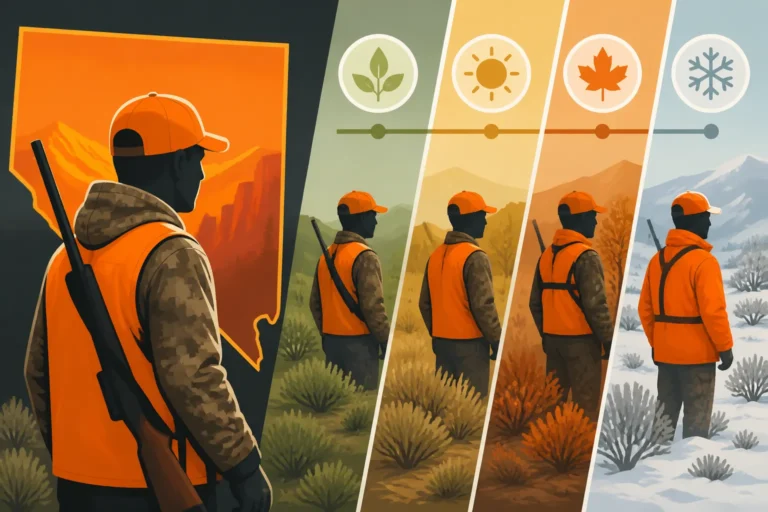
Blaze Orange Requirements: The use of blaze orange, or hunter orange, is a widely adopted safety measure designed to make hunters visible to each other in the field, especially during rifle seasons. Nevada has specific requirements for wearing blaze orange, which typically involve a minimum amount of material visible from 360 degrees. While archers often have more leeway with camouflage during archery seasons, once rifle seasons open, wearing blaze orange becomes mandatory for safety. This is critical in areas where multiple hunters might be pursuing game. It's not about being visible to the deer or elk – they likely see you anyway – but about being highly visible to other humans to prevent accidental shootings. Always consult the current regulations for the specific requirements for Blaze Orange Requirements Through the Season for your chosen weapon and season.
Understanding Nevada's Regulations and Ethics
The regulations booklet, often published annually by NDOW, is your bible in the field. It’s easy to skim through it once and assume you know it all, but regulations can and do change year to year. New rules might be introduced regarding certain species, unit boundaries, weapon types, or even how you can use technology while hunting. Platforms like GoHunt, for instance, are invaluable for staying on top of draw odds and unit information, but they also often provide links to official state regulations.
Always make it a habit to download or pick up the latest copy of the Nevada Big Game Seasons and Application Guide or the general hunting regulations before each hunting season. Pay close attention to any highlighted changes from the previous year. Topics like Baiting and Trail Camera Rules in Nevada are constantly evolving, and what was legal last year might not be this year. Staying informed means you’re not just compliant with the law, but you’re also practicing responsible stewardship.
Beyond the written law, a deep understanding of hunting ethics is paramount. Ethics often go beyond what's strictly legal and delve into what is considered morally right and respectful. This includes things like:
- Respect for the Animal: Ensuring a quick, humane harvest, and never wasting meat.
- Respect for the Landowner: Asking for permission to access private land and leaving no trace.
- Respect for Other Hunters and Public: Avoiding interference with other hunters, sharing public land responsibly.
- Conservation: Understanding your role in managing wildlife populations and habitats.
Even after you've completed hunter education, seek out opportunities for further learning. Attend local wildlife board meetings, read scientific studies on game populations, or participate in volunteer conservation projects. The more you know, the more effective and ethical a hunter you become.
Common Misconceptions and What to Avoid
Despite the clear rules, certain misunderstandings persist regarding hunter education requirements, often leading to frustration or, worse, legal issues in the field. Being aware of these common pitfalls can save you a lot of grief.
Overlooking the Requirement as an Experienced Hunter
Perhaps the most common misconception, and source of irritation, is the belief that decades of hunting experience should somehow exempt you from the hunter education requirement if you were born after 1959. "I've been hunting for 30 years!" is a refrain often heard, accompanied by a sigh of exasperation. While your experience is undoubtedly valuable and has likely instilled in you excellent fieldcraft and safety habits, it unfortunately doesn't override the state's legal mandate.
Nevada's law, like those in many other states, is clear: if your birthdate falls on or after January 1, 1960, you need proof of hunter education. Period. This rule applies uniformly, regardless of whether you're a lifelong resident hunter or a non-resident coming to chase a trophy Mule Deer Are the Reason Most Hunters Apply in Nevada. The intent is to establish a standardized baseline of knowledge and safety certification across the modern hunting population, ensuring consistency in education, even if experienced hunters feel it's redundant for them.
The consequences of overlooking this requirement can be severe. If a game warden checks your license and you can't provide valid proof of hunter education, you could face a citation, significant fines, and potentially even have your hunting license revoked or your hunt terminated. Imagine drawing a coveted tag after years of building points, only to have your hunt ended before it even really begins because of a missing piece of paper. It's a heartbreaking scenario, and one that's entirely avoidable by simply getting certified. So, swallow the pride, take the course, and ensure all your paperwork is in order before you even pack your boots.
Assuming Your Out-of-State Course is Automatically Valid
Another prevalent misconception, especially among non-residents, is the assumption that any hunter education course taken in any other state will automatically be accepted by Nevada without question. While Nevada does have broad reciprocity with other states that adhere to IHEA-USA standards, simply having "taken a course somewhere" isn't always enough. The key is proper verification and documentation.
The most critical step here is to ensure that your out-of-state certification is verifiable and that you can provide adequate proof. This means having your official hunter education card or a verifiable certificate number readily available. Don't wait until you're at the license vendor in Elko or Ely to discover that your old, faded paper certificate from 1985 is no longer readable or that your state's online database isn't easily accessible. The NDOW needs to be able to confirm that you have met the requirements.
It’s always a good practice to double-check with the NDOW or review their online regulations regarding acceptable forms of proof for out-of-state certifications. Some states might have unique identifiers or verification systems. While resources like GoHunt can provide general guidance on state regulations, it's always the official state wildlife agency that has the final say. If there’s any doubt, contact the NDOW well in advance of your trip. Waiting until the last minute can lead to unnecessary stress and potentially force you to take a last-minute online course and field day, which might not be feasible if you're traveling a long distance to hunt Chukar Is Nevada's Signature Upland Bird. A little proactive effort in verifying your certification goes a long way in ensuring a smooth and legal hunting experience in Nevada.
Disclaimer
The information provided in this guide is for general informational purposes only and is not intended as legal advice. Hunting regulations in Nevada are subject to change, and specific circumstances can vary. It is the sole responsibility of each hunter to consult the official Nevada Department of Wildlife (NDOW) regulations and contact the agency directly for the most current and accurate information before participating in any hunting activity. Failure to comply with all applicable laws and regulations may result in penalties.