Holding for Wind Across a Wide Basin
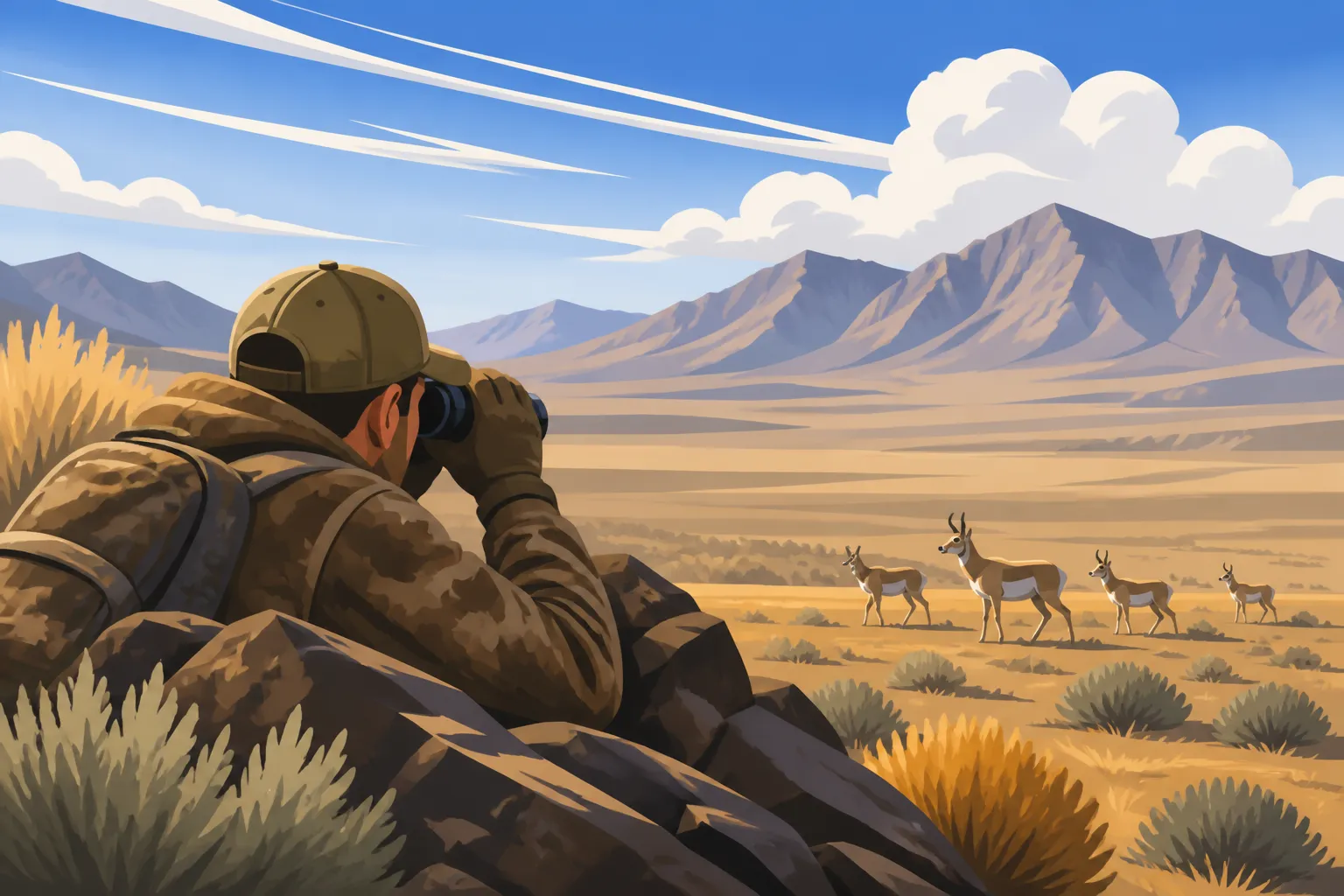
There's nothing quite as frustrating as finally putting the crosshairs on that dream mule deer across a vast Nevada basin, only for the wind to come swirling out of nowhere, making you second-guess your shot. Those long distances in open country amplify every gust, turning a confident hold into a wild guess and often leading to a missed opportunity. This guide will meticulously break down how to effectively read and compensate for wind when hunting across Nevada's expansive, often unforgiving landscapes, helping you make those crucial long-range shots count.
The Elusive Nature of Nevada's Basin Winds
Hunting in Nevada means accepting the wind as a constant companion, especially when you're glassing wide-open basins. It's not just a gentle breeze; it's often a swirling, unpredictable force that can make or break a shot. Understanding why it behaves the way it does is the first step in learning to master it.
The Unpredictable Nature of Basin Winds
Unlike hunting in dense timber where wind might be a steady, directional push, Nevada's vast, open basins present a completely different challenge. Picture a thermal rising off a sun-baked slope, creating an updraft. Now, imagine that same thermal hitting a ridge line, splitting and swirling, or running into a gust coming across a wide valley floor. These are not static conditions. What starts as a gentle crosswind near your position can be a quartering gale 500 yards away at your target.
The sheer scale of these basins, often miles wide, allows wind currents to develop, accelerate, and interact in complex ways. You might feel a light breeze on your cheek, yet see the sagebrush dancing violently a half-mile away. The wind isn't a single, uniform entity; it's a dynamic system influenced by every dip, rise, and temperature shift. This is why a thorough understanding and constant vigilance are paramount. Without it, even the most precise Rifle Zero Distance for Long Sage Shots becomes irrelevant if you can't account for the unseen force pushing your bullet.
How Thermals and Terrain Create Microclimates
Nevada's high desert environment is a master class in atmospheric physics. As the sun rises and heats the earth, especially the dark rocks and south-facing slopes, the air warms and begins to rise. This creates what we call "thermals." In the morning, you'll often feel an uphill draft as cooler, denser air from the valley floor replaces the rising warm air on the slopes. Conversely, in the evening, as the sun sets and the slopes cool, the air becomes heavier and flows downhill, creating a downhill draft.
These thermals are rarely straight-up or straight-down. They interact with the contours of the land, creating localized microclimates of wind. A deep canyon might funnel wind in one direction, while a nearby, wide-open flat might experience a completely different crosswind. A small knoll can deflect wind, creating a calm pocket on its leeward side, only for the bullet to re-enter a strong crosscurrent further downrange. It's like a complex river system, with eddies, currents, and rapids. Knowing this helps you predict, or at least anticipate, where these shifts might occur, which is a critical piece of the puzzle when you're trying to How Far to Stalk a Bedded Mule Deer or make a long-range shot.
Deciphering Wind Signals in Open Country
Since you can't just 'feel' the wind at the target, becoming a master at reading subtle cues in the environment is essential. It's an art developed through experience, but there are definite techniques you can employ.
Visual Cues for Wind Direction and Speed
The Great Basin is a giant, natural wind indicator. Learning to read it is about paying attention to every detail.
First and foremost, look at the vegetation. Sagebrush, even small sprigs, will bend and sway in the wind. Pay attention to the direction they're leaning and the intensity of their movement. Grasses, if present, are even more sensitive. Dust devils forming in the distance are clear indicators of swirling air currents and can tell you about vertical movement, not just horizontal. Trees, even sparse junipers, will show leaf movement. Pay close attention to the tops of trees, as they often indicate higher wind speeds that might not be felt at ground level.
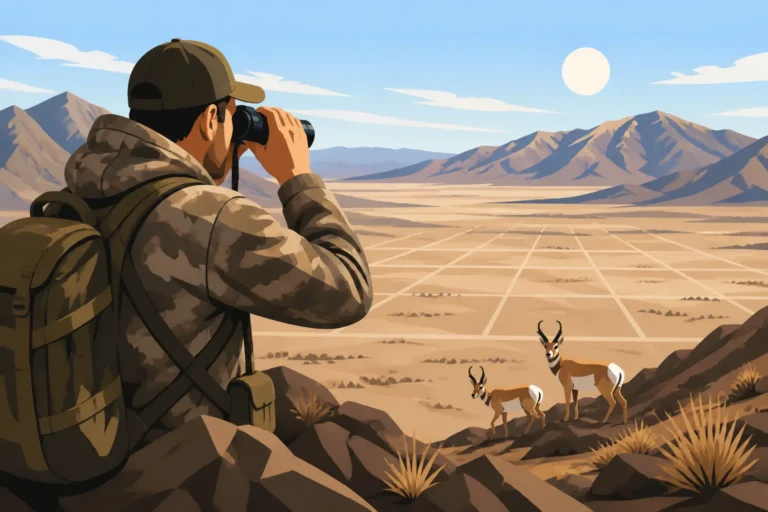
Another powerful indicator is the mirage. That wavy distortion you see through your scope or binoculars, especially over hot ground, is caused by varying air densities, which are often directly impacted by wind. A mirage that is "boiling" straight up indicates little crosswind. If the mirage is leaning to one side, or appears to be streaming rapidly across your field of view, it's a strong sign of horizontal wind movement. The speed and angle of this lean can give you a rough estimate of the wind's strength. This is particularly useful when you're deep into a Glassing Grids Across a Nevada Basin session, trying to decide if the conditions are right for a shot.
Finally, consider the animals themselves. Watch how the deer or elk are standing. Are their ears pinned back from a strong gust? Are they hunkered down? Are they moving with caution, using the wind to their advantage? Sometimes, a quick glance at their behavior can confirm what your other wind indicators are telling you.
Using Tools to Gauge Wind at Distance
While visual cues are invaluable, sometimes you need a more quantitative measure, especially for those longer shots. This is where a few simple tools become indispensable.
A good wind meter, or Kestrel, is your best friend. These devices can give you precise wind speed and direction at your shooting position. While it won't tell you exactly what's happening at 500 yards, it gives you a crucial baseline. When you combine this with your visual observations downrange, you can start to triangulate. Many modern ballistic calculators integrate directly with Kestrel devices, making live adjustments seamless.
Another old-school but effective method is using a small piece of flagging tape on your spotting scope or rifle barrel, or even a handful of very fine dust or dandelion seeds. Tossing these into the air at various points along your line of sight, if practical and ethical, can give you a snapshot of local wind direction and speed. For instance, if you're set up on a ridge, and the wind is hitting you from the left, but you notice your dust falling straight down 100 yards out before being picked up again at 300, it tells a story of varied conditions along your bullet's path.
Remember, technology like GoHunt's mapping and weather layers can help you plan for wind by analyzing terrain features and prevailing weather patterns during your E-Scouting a Nevada Unit Before the Season. However, in the moment, you'll still need to rely on direct observation and specialized tools to confirm real-time conditions.
Mastering Ballistic Adjustments for Wind Drift
Once you have a handle on the wind's behavior and intensity, the next crucial step is to translate that information into a precise adjustment for your shot. This is where ballistics come into play.
Estimating Wind Drift with Ballistic Calculators
Modern hunting rifles and ammunition are incredibly precise, but wind remains the biggest variable in long-range shooting. A ballistic calculator is no longer a luxury; it's a necessity for ethical long-range hunting in windy conditions. There are many excellent apps available, often for free or a small fee, that you can run on your smartphone. Brands like Hornady's 4DOF, Applied Ballistics, or even simpler ones built into rangefinders are incredibly useful.
To use them effectively, you need to input several key pieces of information:
- Bullet Data: Your specific bullet's ballistic coefficient (BC), weight, and muzzle velocity. This data is usually found on the ammunition box or the manufacturer's website.
- Environmental Data: Altitude, temperature, and humidity. Your Kestrel or even a basic weather app can provide these. For Nevada, remember that altitude can vary dramatically, and these factors significantly impact bullet flight.
- Range to Target: Measured precisely with a laser rangefinder.
- Wind Speed and Direction: This is the critical input. You'll need to estimate the average wind speed your bullet will encounter and the angle at which it's hitting your bullet. A full-value wind (90 degrees to your bullet's path) will cause maximum drift, while a quartering wind will cause less.
The calculator will then give you a holdover (elevation) and windage adjustment (left/right) in MOA (Minute of Angle) or Mils. It’s important to understand that these calculators provide a starting point. Your field observations of mirage and vegetation will help you refine that initial calculation. Many hunters use GoHunt's mapping features to understand terrain features that might funnel or block wind, informing their wind assessments before the shot.
A quick reference table can also be handy for common wind speeds at typical ranges:
| Wind Speed (MPH) | Direction | 300 Yards (Drift in Inches) | 500 Yards (Drift in Inches) | 700 Yards (Drift in Inches) |
|---|---|---|---|---|
| 5 | Full Value | 3.5 | 10.0 | 20.0 |
| 10 | Full Value | 7.0 | 20.0 | 40.0 |
| 15 | Full Value | 10.5 | 30.0 | 60.0 |
| 20 | Full Value | 14.0 | 40.0 | 80.0 |
| Note: These are approximations for a common .308 Winchester, 168gr bullet, sea level, 60°F. Your specific bullet and conditions will vary significantly. Always verify with your own ballistic data. |
Applying Holds and Kentucky Windage
Once you have your calculated adjustment, you have two primary ways to apply it: dialing your scope or using "Kentucky windage."
Dialing Your Scope: This is generally the most precise method, especially for longer shots. You physically adjust your scope's windage turret to shift your point of aim. If your calculator says 1.5 Mils left, you dial your turret 1.5 Mils left. This ensures your crosshairs remain centered on the target, reducing potential aiming errors. The downside is that it takes time, and in rapidly changing wind conditions, you might be constantly twisting turrets. This is why practicing your scope manipulation is crucial.
Kentucky Windage: This involves holding off the target without adjusting your scope's turrets. If the wind is blowing from left to right, you aim to the left of the animal, allowing the wind to push the bullet back into the vitals. This method is faster but relies heavily on your ability to estimate the correct amount of hold. Your scope's reticle, if it has hash marks or a Christmas tree pattern, can greatly assist this by providing precise aiming points for windage. For example, if your ballistic calculator tells you 1.5 Mils of drift, and your reticle has 0.5 Mil increments, you can aim 3 hash marks into the wind. This technique is often faster for follow-up shots or for conditions where the wind is shifting quickly, but it requires extensive practice to become proficient.
Regardless of your chosen method, a stable shooting platform is non-negotiable. Whether it's a solid bipod, Shooting Sticks or Bipod on Rocky Ground, or a backpack rest, eliminating shooter error is paramount to accurately assess wind impact.
Practice Makes Perfect: Drills for Windy Conditions
You can read all the articles and study all the tables, but nothing replaces live fire practice.
Start by shooting at known distances in varying wind conditions. Don't just shoot groups; focus on calling your shot and then observing where the bullet actually impacts. Use different wind speeds and angles. Set up a target at 300 yards with a full-value 10 mph crosswind. Take your shot, then adjust, and repeat. Try to shoot when the wind is gusty, calm, and everything in between.
A fantastic drill is to set up a series of targets at different distances in a wide basin. Engage them sequentially, reading the wind for each. Focus on consistency. Can you get consistent hits even when the wind shifts? Bring a friend and have them call out wind speed and direction changes while you're on the rifle. This simulates real-world hunting pressure.
Consider practicing with a Best All-Around Caliber for Open Country that you plan to hunt with. Different calibers and bullet weights will react differently to wind, so familiarity with your specific setup is key. Remember, the goal isn't just hitting the target, but understanding why your bullet went where it did, especially in relation to the wind. This deliberate practice builds confidence, which is vital when you have a trophy animal in your crosshairs with the wind blowing hard across a wide Nevada basin.
Gear and Tactics for Conquering the Gusts
Beyond understanding the science and putting in the practice, having the right gear and strategic approach can significantly improve your success rate in windy Nevada conditions.
Stable Shooting Platforms
In a place where a steady 15 mph wind can feel like a gale, a rock-solid shooting platform is your best defense against movement. A good bipod, like those from Harris or Atlas, affixed to your rifle, is almost a requirement for many Nevada hunters. When deployed, it provides two stable points of contact, leaving your body free to focus on natural point of aim and recoil management. However, a bipod alone isn't enough; you still need to load it correctly and ensure your rear support (a sandbag or backpack) is equally stable.
Even better, consider a tripod system for your rifle. Brands like Spartan Precision Equipment or Really Right Stuff offer robust tripod attachments that allow you to set up a remarkably steady platform, especially when combined with a sturdy rear bag or support. This can be a game-changer when you're perched on a windswept ridge or trying to get a steady aim across a vast valley where even the slightest wobble at your end translates to feet of deviation downrange. Remember, a heavy-duty tripod designed for spotting scopes can often double as a rock-solid rifle rest. It's an investment, but one that pays dividends when conditions are less than ideal. When you're Preparing Physically for Long Glassing Days, make sure your shooting setup is equally prepared to stay steady.
Bullet Selection for Wind Resistance
Not all bullets are created equal when it comes to resisting wind. This isn't about caliber alone, but more about the bullet's design and ballistic coefficient (BC). Generally, longer, heavier, and more aerodynamically efficient bullets with higher ballistic coefficients will drift less in the wind. These bullets shed velocity slower and maintain a more stable flight path.
For hunting in open, windy country like Nevada, consider premium hunting bullets that are designed for long-range performance. Examples include Hornady's ELD-X, Berger VLD Hunting, or Nosler AccuBond Long Range. These bullets often have boattails and polymer tips to enhance their BC. While they might cost a bit more, the reduced wind drift and improved accuracy at extended ranges are invaluable.
It’s worth noting that a lighter, faster bullet might seem appealing, but it often has a lower BC, meaning it will be pushed around more by the wind downrange. The extra speed out of the muzzle quickly diminishes, and the wind has more time to act on it over longer distances. So, when choosing your ammunition for your next Nevada hunt, prioritize bullet design and a high BC for its ability to cut through the wind and deliver consistent performance. This selection process is just as critical as your choice of optics for Optics Power for Nevada's Long Sightlines.
Disclaimer
Hunting is an inherently dangerous activity. This guide provides general information for educational purposes only and is not a substitute for professional instruction, local regulations, or personal responsibility. Always prioritize safety, understand and follow all Nevada Department of Wildlife (NDOW) regulations, and ensure you are proficient with your equipment before heading into the field. Conditions can change rapidly, and hunters must use their own judgment and experience to make safe and ethical decisions.