Preparing for Long Glassing Days
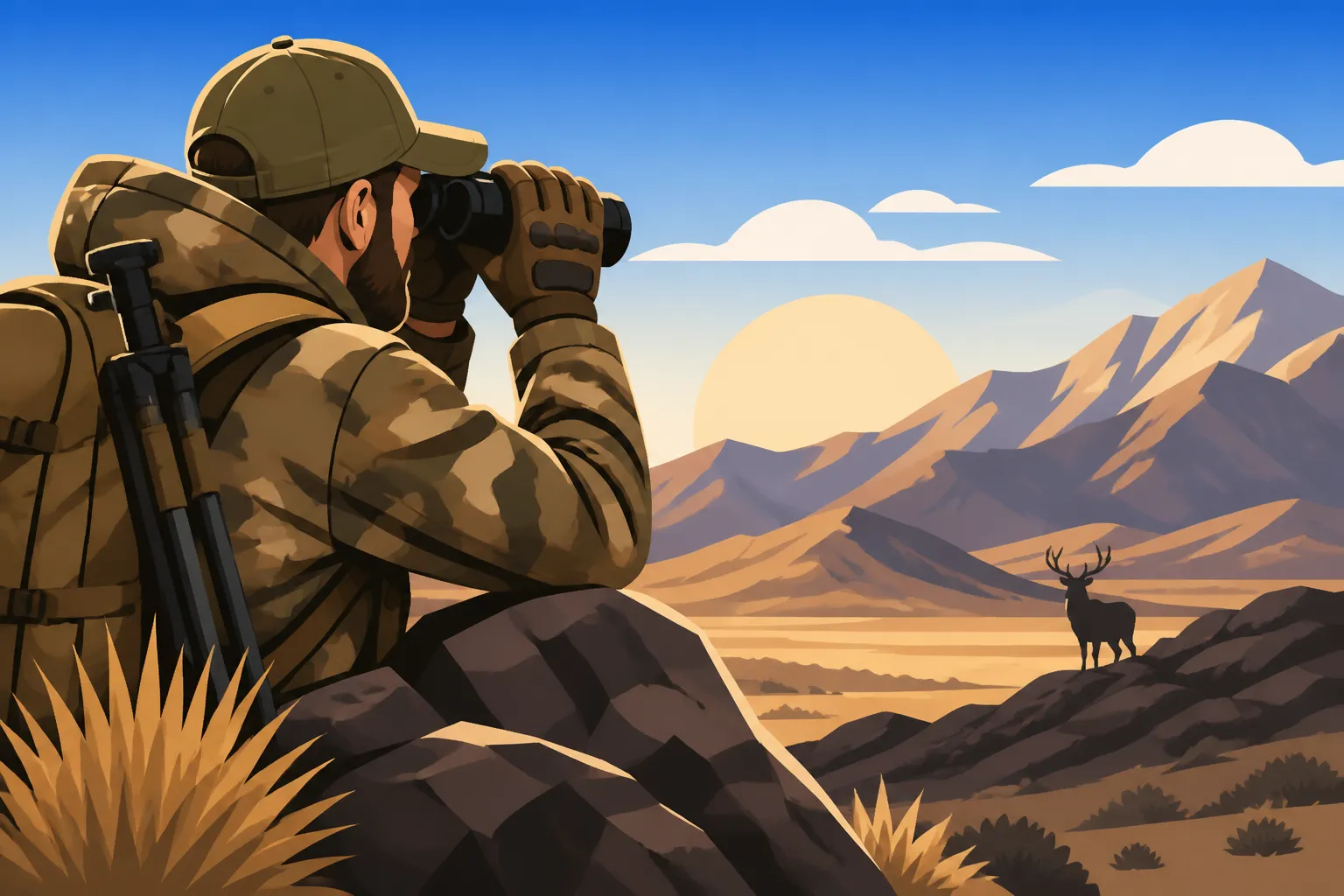
Hunting in Nevada is an experience unlike almost any other, and if you've ever spent a full day behind your binoculars, squinting into the heat waves of a distant basin, only to pack up at dusk without having spotted a single animal, you know the deep frustration. It's easy to feel defeated when your eyes ache and your back is stiff, yet the vast landscape remains stubbornly empty. This guide is all about turning those long, grueling glassing days into productive, even enjoyable, sessions by preparing your body, your mind, and your gear for the unique demands of hunting Nevada's expansive country.
The Reality of Nevada Glassing: More Than Just Looking
Let's be real: Nevada isn't a place where you just wander around and bump into game. The terrain is immense, often devoid of dense cover, and animals can be incredibly spread out. This means your eyes, and the optics you rely on, are your most important hunting tools. Ignoring this reality is a surefire way to burn energy, lose motivation, and ultimately, come home empty-handed.
Why Nevada Demands Extreme Glassing
When you picture hunting out West, you often imagine stalking through timber or following a game trail in dense brush. In Nevada, much of that imagery needs to be thrown out the window. We're talking about the Great Basin, where vast sagebrush flats stretch for miles, punctuated by jagged, rocky mountain ranges. Animals here, especially mule deer and elk, have adapted to this open environment. They might be bedded down in a tiny fold of a hillside three miles away, invisible to the naked eye, but easily picked up by a good spotting scope.
Trying to "still hunt" or walk your way through these huge units is usually an exercise in futility. You'll cover a fraction of the ground you could glass, expend ten times the energy, and likely push animals out of the country without ever seeing them. That's why successful hunters here dedicate so much time to being stationary, methodically searching the landscape. It's about conserving your own energy while maximizing your visual coverage, allowing you to find those dispersed animals before they even know you're there. You need to understand that Why Glassing Beats Walking in Sage Country is not just a philosophy, it's a fundamental strategy for success.
The Mental Marathon of Stillness
Sitting or lying perfectly still for hours on end, even with the most breathtaking views, can be incredibly taxing mentally. Boredom creeps in, doubt starts to whisper, and it's tempting to pack up and move when nothing appears. This mental game is often harder than the physical one. You have to maintain intense focus, sifting through hundreds of acres of terrain, looking for the flicker of an ear, a patch of hide, or an antler tine.
The frustration is real when you feel like you're missing something, or when other hunters are passing by, seemingly more active. But remember, they might be covering ground blindly while you're meticulously dissecting every potential hiding spot. Cultivating patience is paramount. You need to train your mind to stay engaged, to trust the process, and to celebrate the small victories, like identifying a distant juniper tree or finding a faint game trail, even if it's not yet the animal you're after. This mental fortitude is what separates those who find game from those who just spend time in the mountains.
Physical Preparation for the Glassing Grind
You might think that sitting down for hours doesn't require much physical prowess, but anyone who's done it knows otherwise. Long glassing sessions are physically demanding in their own subtle ways. They test your endurance, your flexibility, and your ability to maintain comfort in often uncomfortable positions.
Neck and Back Fortitude
Imagine spending six to eight hours hunched over a tripod, peering through a spotting scope, or lying prone with your binoculars fixed on a distant ridge. Your neck muscles will scream, your lower back will ache, and your shoulders will stiffen. This isn't just about discomfort; it directly impacts your ability to focus and your willingness to continue the search.
To combat this, regular core strength exercises, neck stretches, and back mobility routines are invaluable in the weeks leading up to your hunt. Even simple things like shoulder shrugs and gentle neck rotations can make a huge difference. When you're out in the field, actively seek out comfortable, stable positions. Use a backpack as a rest, a small pad to cushion your hips, or find a natural depression in the ground to support your body. Don't be afraid to change positions frequently, even if it's just shifting your weight slightly. A comfortable hunter is a patient hunter, and a patient hunter is a successful hunter.
Eye Health and Strain Management
Our eyes are incredible tools, but staring through optics for extended periods, especially under the harsh Nevada sun, can lead to significant eye strain and fatigue. This isn't just uncomfortable; it can reduce your ability to pick out subtle details, making you less effective as the day wears on.
Protecting your eyes is crucial. High-quality sunglasses are non-negotiable, not just for glare reduction but also for UV protection. Take regular eye breaks: look away from your optics, close your eyes for a few seconds, or focus on a closer object to let your eyes reset. Staying well-hydrated also plays a role in eye health; dehydration can contribute to dry, tired eyes. If you wear corrective lenses, make sure your prescriptions are up-to-date and your glasses are clean. Some hunters even find that using eye drops can help combat dryness caused by wind and sun. Remember, your eyes are your most valuable asset during these long days.
Sustained Energy for the Entire Day
While you're not hiking for miles during a glassing session, your body is still burning energy to maintain core temperature, muscle tension, and, most importantly, brain function. A dip in blood sugar or dehydration can quickly lead to a loss of focus, irritability, and a general decline in effectiveness. You need sustained energy to remain sharp.
Pack smart, nutrient-dense snacks that provide a steady release of energy rather than a quick sugar rush followed by a crash. Think nuts, dried fruit, jerky, energy bars, and sandwiches. Avoid sugary drinks and excessive caffeine. Hydration is even more critical. Carry ample water, perhaps more than you think you'll need, and consider adding electrolyte supplements to combat the dry desert air and exertion. A good rule of thumb is to drink water consistently throughout the day, even if you don't feel thirsty, to stay ahead of dehydration. Preparing for Water You Must Carry on a Desert Day Hunt is a critical component of staying fueled for long glassing days.
Essential Gear for Maximizing Glassing Efficiency
You can have the best eyes and the strongest neck in the world, but without the right gear, your glassing efforts will be severely hampered. The equipment you choose and how you set it up can literally make or break your hunt in Nevada.
Optics Selection and Setup
This is where the rubber meets the road. Your binoculars and spotting scope are your windows into the vastness of Nevada. For general scanning, high-quality 10x or 12x binoculars are often preferred. For dissecting distant hillsides and confirming what that tiny speck might be, a spotting scope with a magnification range from 20-60x or even 27-80x is indispensable. Don't skimp on quality here; clear, bright optics reduce eye strain and allow you to see more detail. Many hunters consult resources like GoHunt for their optics reviews and recommendations before making a significant purchase.
Equally important is a sturdy, stable tripod. A wobbly tripod will cause frustration and fatigue as you constantly fight to keep your image still. Invest in a good tripod and a fluid head that allows for smooth panning and tilting. Position your tripod so that your optics are at a comfortable height, whether you're sitting, kneeling, or lying down. This means ensuring you can spend hours behind the glass without straining your neck or back. Remember, Optics Power for Nevada's Long Sightlines is a crucial consideration when choosing your setup.
Ergonomics of Comfort: Chairs, Pads, and Rests
Comfort is not a luxury; it's a necessity for effective long-duration glassing. The more comfortable you are, the longer you can stay focused and still. A small, lightweight, portable hunting chair or a foldable foam pad can make a huge difference, especially if you're going to be sitting on cold, hard, or rocky ground. These items insulate you from the ground and provide crucial cushioning.
Additionally, consider using a shooting rest or a sturdy bipod even when glassing. While primarily for shooting, these can offer a stable rest for your binoculars, allowing you to relax your arms and shoulders, further reducing fatigue. Some hunters even carry a small, collapsible stool. The goal is to minimize discomfort and fidgeting, allowing you to remain motionless and attentive for extended periods.
Navigation and Communication Tools
While your focus is on finding game, don't forget the tools that ensure your safety and help you navigate the vastness once you do spot something. A reliable GPS device or a smartphone with detailed mapping applications (like those often reviewed by hunting platforms) is critical. These allow you to pinpoint your location, mark game sightings, and plan your approach route. E-Scouting a Nevada Unit Before the Season using these digital tools can give you a massive advantage before you even set foot in the field.
In remote Nevada units, cell service is often non-existent. A satellite messenger or satellite phone is a wise investment, providing a lifeline for emergencies and allowing you to check in with loved ones. A good rangefinder is also essential; once you spot an animal, knowing its exact distance is vital for planning your stalk and confirming ethical shot opportunities.
Strategic Glassing Techniques for Nevada's Landscape
Knowing how to look is just as important as having the right gear. Nevada's open country requires a systematic and patient approach to glassing. You can't just randomly scan the horizon and expect to find game consistently.
The Grid Glassing Method, Step by Step
This method is the backbone of effective glassing in open country. It's about breaking down the vast landscape into manageable, searchable chunks and systematically examining each one. Here’s how it typically works:
- Divide and Conquer: Mentally (or physically, if using a map) divide the area you're watching into smaller sections, almost like a grid. Pick a starting point, perhaps the closest ridge line or a prominent feature.
- Slow and Steady Scan: Begin by scanning the entirety of your chosen section with your binoculars or spotting scope, moving incredibly slowly. Don't just look for an animal; look for patterns that are out of place – a horizontal line in a vertical landscape, a patch of color that doesn't quite match the surroundings, a small dark spot against light rock.
- Overlap Your Fields of View: As you move your optics, ensure you're overlapping each successive field of view by about 20-30%. This prevents you from missing something that might have been on the edge of your previous scan.
- Zoom In and Out: Once you've done a broad scan of a section, zoom in with your spotting scope to scrutinize areas of interest: shaded pockets, draws, the edges of juniper patches, and any terrain feature that could offer cover or bedding. Remember, animals here thrive on using the slightest topographical advantage to remain unseen.
- Repeat and Patience: Work your way across your entire grid, then move to the next section. This process can take hours for a single hillside. The key is to be methodical and resist the urge to rush. Embrace the boredom, because it's in those long, patient moments that you often spot what others miss. Learning The Grid Glassing Method, Step by Step will transform your glassing success.
Timing Your Glassing for Success
Animals in Nevada are creatures of habit and opportunity, and their visibility often correlates directly with the time of day and prevailing conditions. Understanding this can significantly boost your odds of spotting game.
Early morning and late evening are almost always the most productive times. Best Time of Day to Glass a Basin often means being set up before first light, ready to catch animals moving from their nighttime feeding areas to their bedding grounds, or vice versa. The low, golden light of dawn and dusk creates longer shadows and can highlight animals that would otherwise blend in perfectly during the harsh midday sun. During these periods, animals are more active and less likely to be completely tucked away.
Midday, especially on sunny days, often sees animals bedded down in shaded areas or deep within cover, making them incredibly difficult to spot. However, don't dismiss midday entirely. After a cold front, a rain shower, or on overcast days, animals might move more throughout the day. It's also a good time to thoroughly re-glass areas you quickly scanned earlier, looking for animals that have simply shifted position or just stood up.
Understanding Animal Behavior from Afar
Spotting an animal from a distance is one thing; understanding what it's doing and where it's likely to go next is another. This comes with experience, but there are some universal cues you can learn to read.
When you spot something, observe it for a long time before making a move. Is it feeding, bedding, or moving purposefully? Elk might be bugling, giving away their location, so learning Bugle Timing in Nevada's Elk Country can be immensely helpful. If it's feeding, which direction is it generally headed? If it's bedded, what kind of cover is it using? Is it looking alert, or relaxed? These observations will inform your stalk plan. Pay attention to body language: a nervous flick of an ear, a sudden pause in feeding, or an animal looking intently in one direction can indicate the presence of predators, or perhaps other hunters. Learning to identify these subtle cues, even at extreme distances, can tell you a lot about the animal's current state and future intentions. You'll eventually learn how to accurately determine Deciding on a Buck Before He Moves by carefully observing these behaviors.
Beyond the Glass: What Happens Next
Spotting an animal is just the first step. The true challenge, and often the most rewarding part, comes next: planning and executing the approach.
Planning the Approach
Once you've spotted an animal and identified it as one you want to pursue, it's time to put your mapping and stalking skills to the test. Before you take a single step, mentally, or ideally, physically on your map, plan your route. Identify key terrain features you can use for cover. Can you use a ridgeline, a deep draw, or a stand of junipers to break up your silhouette and hide your movement? Remember, in Nevada, your silhouette against the sky is a dead giveaway. Using a small rise or Using a Rim to Break Your Silhouette can be the difference between getting close and being busted.
Crucially, consider the wind. Always, always, always approach with the wind in your face or quartering to you. Thermals often dictate wind direction, especially in mountainous terrain, with updrafts in the morning and downdrafts in the evening. Understanding Playing Thermals on a Rimrock Stalk is vital. Check and re-check the wind frequently using a wind checker. One wrong gust can send your scent directly to your target, ending your hunt prematurely. Also, consider the angle of the sun. You don't want to stalk directly into the setting sun, blinding yourself or casting a long, incriminating shadow.
When to Give Up (and When Not To)
This is perhaps one of the hardest lessons to learn in hunting: knowing when to persist and when to cut your losses and move on. You've spent hours glassing, found an animal, and now the stalk isn't going as planned. The wind swirls, the terrain is too open, or the animal simply moves into an unapproachable area.
There's a fine line between persistent effort and wasting valuable hunting time. Sometimes, the smart move is to back out quietly, mark the animal's last known location, and try again from a different angle later in the day, or even the next morning. It’s better to live to hunt another day than to blow a stalk and send an animal running miles out of the country. Set realistic expectations for each stalk. If the conditions are simply not right, or the animal is too wary, be disciplined enough to disengage.
However, don't give up too easily on a promising animal. If you've been working hard and truly believe the animal is still in the area, sometimes a strategic repositioning, a change in approach, or simply waiting out a tricky wind shift can pay off. This balance comes with experience, and often a bit of gut instinct. If the sheer effort of planning and executing a DIY hunt in Nevada feels overwhelming, and you're struggling to convert those long glassing days into successful stalks, consider looking into a guided experience. Websites like BookYourHunt can connect you with reputable outfitters who know the local units and can streamline your efforts.
| Activity Type | Time Performed | Physical Strain | Gear Focus | Mental Challenge |
|---|---|---|---|---|
| Glassing | Long periods | Neck, Back, Eyes, Core | High-quality Optics, Tripod, Comfort Aids | Patience, Focus, Discipline, Boredom Management |
| Stalking | Short bursts | Legs, Lungs, Agility, Balance | Footwear, Layered Clothing, Rangefinder | Stealth, Wind Reading, Terrain Navigation |
| Hiking to Glassing Spot | Moderate to Long | Legs, Lungs, Endurance | Backpack, Water, Navigation, Footwear | Motivation, Endurance, Route Finding |
| Packing Out | Moderate to Long | Full Body, Strength | Frame Pack, Game Bags, Water | Determination, Physical Limits, Safety |
Disclaimer
This article is for general informational purposes only and does not constitute professional advice. Laws, prices and regulations vary by location and change over time. Consult a qualified professional for guidance on your specific situation.