Deciding on a Buck Before He Moves
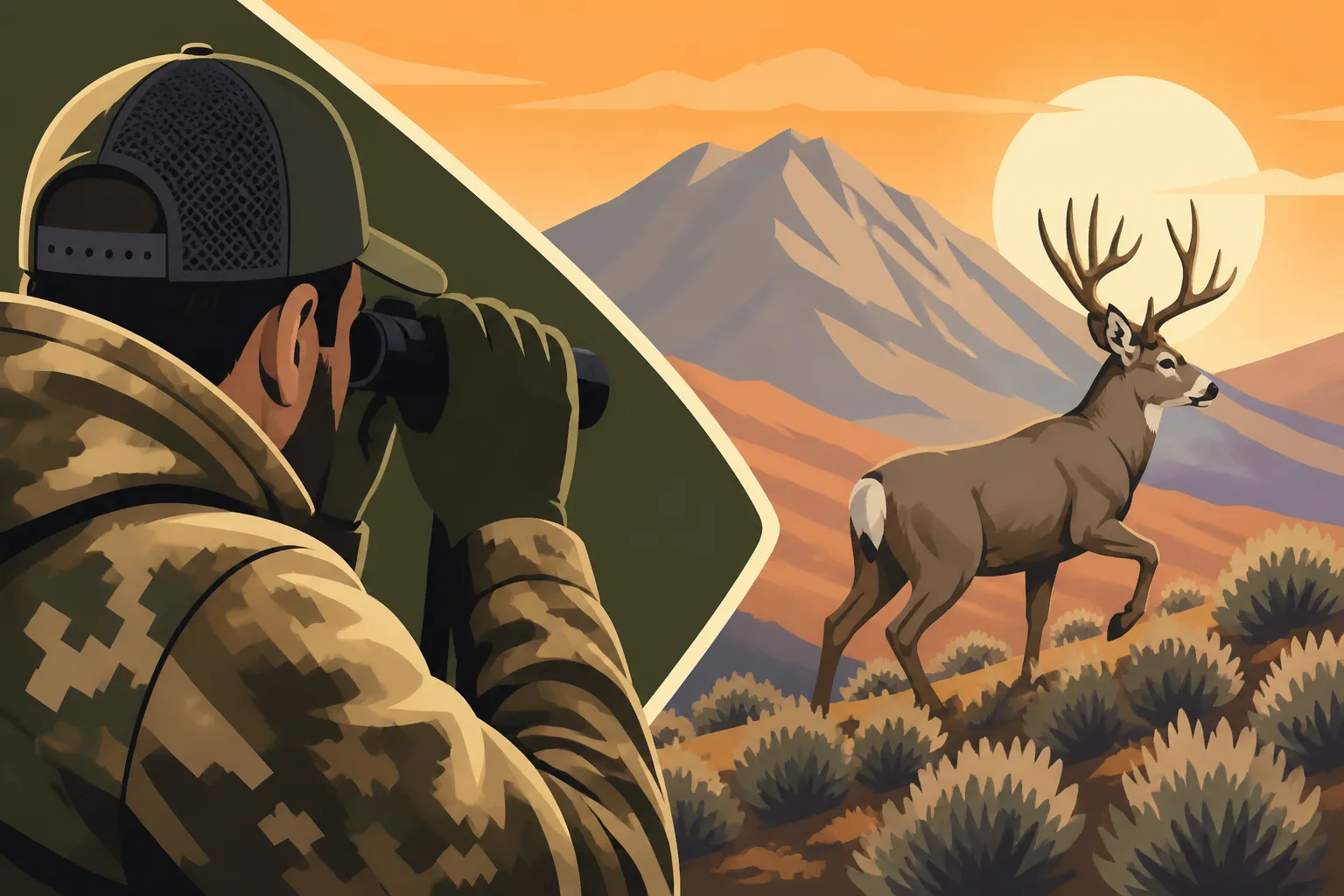
You've spent countless hours scouting, drawn that coveted tag, and now you're finally out in the vast, open country of Nevada. The sun is just kissing the peaks, and suddenly, there he is—a buck of a lifetime, but he's on the move, maybe even broadside for a split second before vanishing into the sage. That gut-wrenching moment of "do I shoot or do I hold out?" is a universal hunter's dilemma, amplified by Nevada's challenging terrain and often fleeting opportunities. This guide is all about equipping you with the framework to make that critical decision decisively, ethically, and without regret, before that buck disappears forever.
The Nevada Reality: Fleeting Opportunities and Tough Choices
Hunting mule deer in Nevada isn't like sitting in a treestand over a food plot back East. Here, the landscape is immense, the deer are often scattered, and when you finally spot a buck, he's usually a long way off and might not stick around. This unique environment creates a constant pressure cooker for decision-making.
Why Every Second Counts in the Basin and Range
In the high desert and rugged mountain ranges of Nevada, a mule deer buck can be here one moment and gone the next. They aren't lingering around dense cover; often, they're crossing open basins, feeding through sparse junipers, or following a rimrock before dropping out of sight into a wash. This means you rarely have the luxury of extended observation, especially if you're trying to close the distance. You might get a brief window, perhaps a minute or two, to assess the animal, decide if he's the one you're looking for, and then get into a shooting position. Hesitation often means missing the chance entirely, leaving you with nothing but the memory of a ghost. The sheer scale of the landscape means a buck spotted at a mile away might be in a different drainage within minutes, making recovery of a wounded animal incredibly difficult if you rush the shot.
The Vastness That Hides Giants
Nevada is truly a land of giants, not just in its wide-open spaces, but in the potential for trophy-class mule deer. However, these big bucks didn't get that way by being easy targets. They're masters of using the terrain to their advantage, disappearing behind a small rise, blending perfectly with the sage, or simply moving at a pace that keeps them just out of range. You might spend days Glassing Nevada's Basin and Range for Mule Deer, covering miles with your optics, before you turn up a mature buck. When that opportunity finally presents itself, the last thing you want is to be caught unprepared. The vastness also implies that once a buck moves out of sight, he could be anywhere, making an unhurried stalk or a second chance nearly impossible.
Pressure from Other Hunters
While Nevada offers an abundance of public land, certain units and popular areas can see significant hunting pressure, especially during rifle season. If you've spent days searching and finally locate a good buck, chances are, someone else might have him in their sights too, or at least be moving in the same general direction. This isn't to say you should feel rushed into making a poor decision, but it's an undeniable factor in the back of many hunters' minds. Knowing that another hunter could spook your target or claim the prize adds another layer of mental pressure to an already intense situation. This pressure can inadvertently influence your "shooter" criteria if you're desperate to fill a tag.
Pre-Hunt Homework: Building Your Decision-Making Framework
The best decisions in the field are almost always made before you ever step foot out of the truck. Laying a solid foundation through diligent research and honest self-assessment will pay dividends when that critical moment arrives.
E-Scouting and Unit Familiarity
Long before opening day, you should be deep into your e-scouting efforts. Tools like GoHunt provide invaluable resources for E-Scouting a Nevada Unit Before the Season, allowing you to pore over maps, analyze historical harvest data, and understand the terrain from the comfort of your home. This process is about more than just finding potential glassing knobs or water sources; it's about building an intimate knowledge of your unit. Understanding how the deer move through different drainages, where their typical bedding areas are, and what escape routes they favor will give you a significant advantage.
When you've done your homework, you'll feel more confident about where a buck is likely heading and how quickly you need to act. By knowing the lay of the land, you can anticipate his movements, which can sometimes buy you those crucial extra seconds to truly assess his rack. This knowledge also helps you understand the local herd dynamics and the typical quality of bucks available, which directly informs your "shooter" definition. You'll also learn to recognize the subtle changes in elevation and vegetation that can act as natural screens for a rapidly disappearing deer.
Understanding Mule Deer Age and Genetics
A true trophy buck in Nevada often means an older animal. While antler size is what most hunters focus on, understanding the age class of the deer you're seeing can help you identify a truly mature animal versus a younger buck with exceptional genetics. Spend time studying photos of mule deer from your unit or region. Look at body characteristics—deep chests, thick necks, and swaybacks often indicate an older buck. A young 3×3 might have impressive width but lack the mass and G-force tines of a truly mature 4×4 or larger.
Knowing what a mature buck looks like, not just in terms of antlers, but in overall body structure, will help you differentiate quickly. Some units are known for specific antler characteristics, perhaps wider bucks or those with deep forks. Websites like GoHunt often compile harvest data that can give insights into the average antler quality in a particular unit. This kind of research helps you set realistic expectations and refine your criteria for what constitutes a "shooter" for you. For example, some units might consistently produce high-scoring 4x4s, while others might be more prone to non-typical characteristics.
Defining Your "Shooter" Beforehand
This is perhaps the most critical piece of pre-hunt homework. Before you even pack your truck, sit down and honestly define what you're looking for. Is it a specific number of points? A certain width or mass? Are you after an old, gnarly buck regardless of score? Or is it simply a mature deer that offers a good, ethical shot opportunity? There's no right or wrong answer, but having that answer solidified in your mind will make all the difference when a buck steps out.
Write it down if you need to. Talk it over with your hunting partners. By defining your "shooter" criteria, you remove the emotional decision-making from the field and replace it with a pre-determined, rational framework. This doesn't mean you can't adjust if an absolute monster walks out and exceeds all expectations, but it prevents the agonizing internal debate when a borderline buck appears. This is also where you manage expectations based on your tag and the unit's known potential, perhaps by referencing data gathered through platforms like GoHunt.
Field Assessment: Breaking Down the Buck in Real-Time
Once you've spotted a buck, the real-time assessment begins. This is where your pre-hunt preparation meets the unpredictable reality of the field. You need a systematic approach to quickly evaluate the animal.
Antler Metrics: Width, Mass, and Tine Length
When a buck steps out, especially if he's moving, your eyes will naturally go to the antlers. But instead of a vague "is he big?", try to break it down into specific metrics:
- Width: How wide is he? Compare his main beams to his ear tips. If he's outside his ears, he's a wide buck. If he's just inside or even with, he's average. This is often the easiest metric to judge quickly, even if he's quartering.
- Mass: Look at the circumference of the antlers, particularly at the bases. Do they look thick and heavy? Are they carrying that mass up the main beams? Heavy mass often indicates an older, more mature buck.
- Tine Length: Are his tines long and symmetrical, or short and stubby? Pay attention to the G2s (second points) and G3s (third points) as these are often the primary scoring points.
Remember, you might only get a quick profile or a rear view. Focus on the most visible aspects and compare them against your pre-defined "shooter" criteria. Binoculars or a spotting scope with good Optics Power for Nevada's Long Sightlines are essential here. Take a few quick glances, try to get a mental snapshot, and then bring it all together. This kind of rapid assessment is crucial for Judging a Mule Deer Buck at Distance, especially in the vastness of the Great Basin.
Body Size and Age Indicators
While antlers are flashy, the buck's body can tell you just as much, if not more, about his maturity. A truly old buck will often have a deep, sagging belly, a thick, muscular neck (especially during the rut), and a blocky, powerful build. Younger bucks, even with decent antlers, tend to appear more streamlined, with a tighter gut and a more athletic build.
Table: Quick Buck Assessment in the Field
| Characteristic | Younger Buck (1.5-2.5 years) | Mid-Age Buck (3.5-4.5 years) | Mature Buck (5.5+ years) |
|---|---|---|---|
| Body Shape | Lean, athletic, tight stomach, longer legs, short neck | More filled out, muscle in neck/shoulders, flatter belly | Deep chest, thick, stocky neck, heavy shoulders, saggy belly, shorter legs appearance |
| Antler Mass | Usually slender bases, less mass throughout | Good mass, especially at bases, carries well | Heavy bases, significant mass, often gnarly and scarred |
| Antler Width | Often narrow, inside ear tips | Can be wide, often equal to or outside ear tips | Often wide, outside ear tips, can vary but generally impressive |
| Tine Length | Shorter G2/G3s, often fewer points | Good tine length, well-defined points | Long, prominent tines, deep forks, often multiple points |
| Behavior | Skittish, nervous, often with other young bucks | Confident, aware, may be solitary or with small groups | Dominant, calm, deliberate, often solitary or with does |
Combining body clues with antler observations paints a clearer picture. An impressive rack on a spindly body might indicate a younger deer with great genetics, while a more modest rack on an absolute tank of a body points to an older, seasoned veteran. In Nevada, where a buck can go from visibility to invisibility in seconds, mastering this quick holistic assessment is key. When you're Preparing Physically for Long Glassing Days, you're also training your eyes to pick up these subtle cues.
The "Feel" of the Moment: Gut Check and Confidence
Beyond the physical metrics, there's an intangible element: your gut feeling. Have you been Hunting the Post-Rut Migration for Big Bucks for days without seeing anything close to this? Is this the best buck you've seen all season? Does he ignite that primal spark that makes you want to seal the deal? This isn't about letting emotion override logic, but rather letting your overall experience and expectations weigh into the decision.
If you've done your homework and set your "shooter" criteria, this gut check should align. If he meets your criteria and you feel good about the shot opportunity, that confidence is paramount. Conversely, if you feel rushed, uncertain about his quality, or doubt your ability to make an ethical shot, it's a huge red flag. Never take a shot you're not confident in, especially in Nevada's vastness where a wounded animal can be incredibly difficult to recover. Your confidence in your rifle, your shooting ability, and your assessment of the buck will be the final puzzle piece in making your decision.
Making the Call: When to Seal the Deal or Let Him Walk
The moment of truth arrives when the buck presents a shot opportunity. This is where all your preparation culminates into a single, high-stakes decision.
Weighing Opportunity Against Desired Quality
This is the eternal struggle for many hunters. You've spotted a buck, he's within range, and he's good. But is he the one? If he meets your pre-defined "shooter" criteria, the decision should be clear: take the shot if it's ethical and safe. However, if he's borderline, or perhaps just below your ideal, you have to quickly weigh the current opportunity against the possibility of finding something better.
In Nevada, where opportunities can be few and far between, a "good enough" buck that presents a clear, ethical shot is often a wiser choice than holding out for a mythical giant that never materializes. Remember that hunting is about the experience, not just the score. If you've spent days Why Nevada Deer Hunting Is a Glassing Game and this is the best animal you've seen, and you're confident in your ability to make a clean kill, then that's a valid decision. Conversely, if you're early in your hunt and feel strongly that better opportunities exist, letting a borderline buck walk can pay off, but it's a gamble. Sometimes, you need to remember that How Far to Stalk a Bedded Mule Deer is a critical factor, and if you're already at range, the opportunity might be as good as it gets.
Executing a Clean and Ethical Harvest
Once the decision is made to take the shot, the focus immediately shifts to execution. This isn't part of the "deciding" phase, but it's the direct consequence of that decision, and its importance cannot be overstated. A clean, ethical kill is paramount.
Ensure you have a steady rest, whether it's shooting sticks, a bipod, or a solid pack. Take a deep breath, control your heart rate, and focus on your shot fundamentals. Aim for the vitals. If the buck is moving too quickly or the shot isn't clear, do not shoot. No buck is worth a questionable shot that risks wounding an animal. There will always be another opportunity, perhaps not on that specific buck, but on another. Your responsibility as a hunter is to make the quickest, most humane kill possible. Even after the shot, observe the animal carefully, and reload for a follow-up if needed.
The Regret of Not Taking the Shot
Let's be honest, every hunter has a story of "the one that got away." That buck you saw, deemed not quite big enough, and then never saw again. Or the one you hesitated on, and he slipped away into the vastness. It's a part of hunting, and it's how we learn. However, the goal of pre-hunt planning and a systematic field assessment is to minimize these moments of regret.
If you've clearly defined your "shooter," and a buck meets that criteria, and you have an ethical shot, take it. The regret of passing a buck that met your standards, only to come home empty-handed, often stings more than the regret of taking a good buck that wasn't a world-beater. Trust your process, trust your preparation, and trust your gut when it aligns with your logical framework. The exhilaration of a successful hunt, regardless of antler score, is a reward in itself. Learning advanced techniques like The Grid Glassing Method, Step by Step can also give you more opportunities, reducing the pressure to settle.
Disclaimer
Please remember that hunting regulations and seasons can change. Always consult the latest Nevada Department of Wildlife (NDOW) regulations before planning any hunt. This content is for informational purposes only and does not constitute legal advice or endorsement of any specific hunting practice.