Best All-Around Caliber for Open Country
The vast, stark beauty of Nevada's open country is a hunter's dream, yet it also presents a unique challenge: shot distances can often stretch beyond what many are accustomed to. It's frustrating to finally spot that trophy buck or bull after days of glassing, only to realize your setup might not be ideal for the 400-yard shot that presents itself. This guide will help you navigate the often-confusing world of rifle calibers, pinpointing the best all-around options that truly shine in the expansive, long-range scenarios common across the Silver State.
Understanding the Demands of Nevada's Open Country
Hunting in Nevada isn't like stalking timber in the Midwest or navigating dense forests elsewhere. Our landscape is defined by its wide-open basins, steep mountain ranges, and seemingly endless sagebrush flats. This unique environment places very specific demands on a hunting rifle and, by extension, your choice of caliber. It’s not just about hitting a target; it's about making a clean, ethical kill when conditions are rarely perfect.
The Long Shot Reality
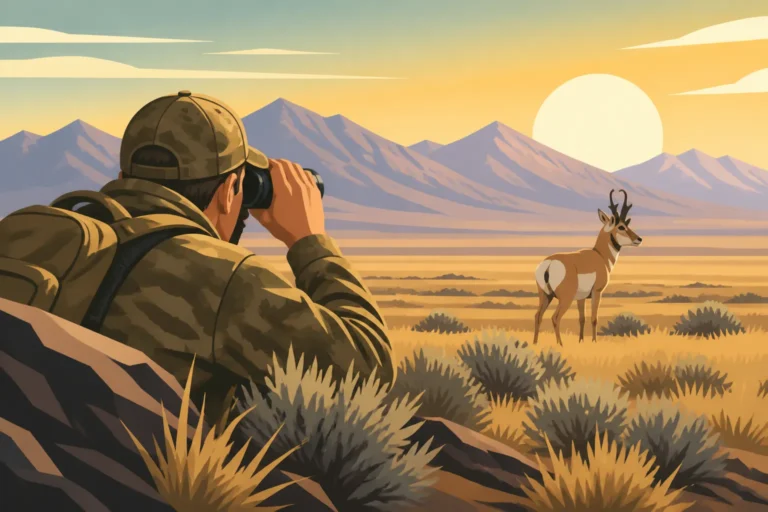
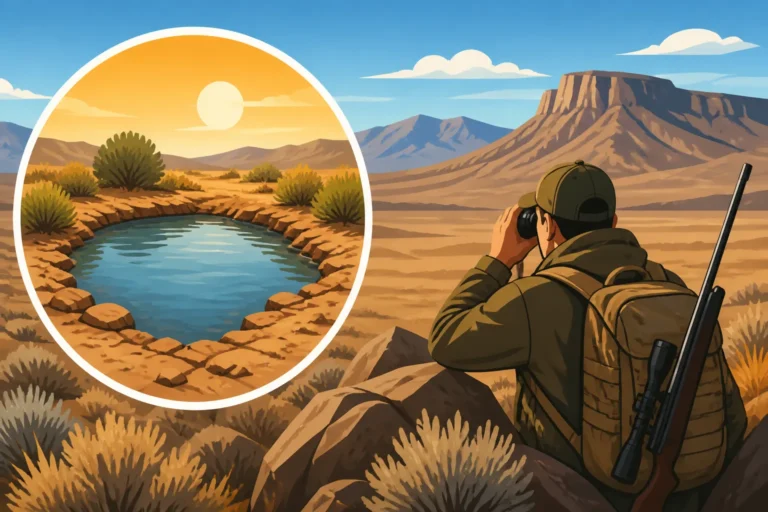
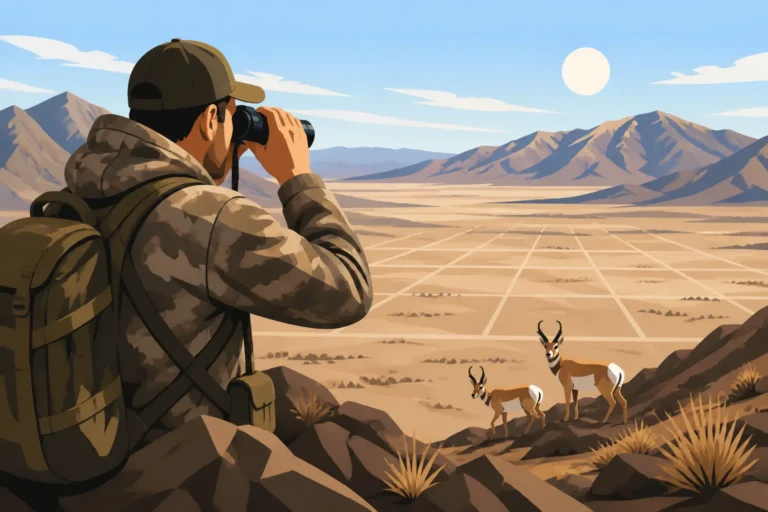
Let's be honest, those stunning vistas we love to photograph also mean that cover is often sparse, and animals frequently hold up on opposite ridges or in the middle of vast valleys. You might spend hours patiently Glassing Nevada's Basin and Range for Mule Deer, only for the animal to remain just out of what feels like comfortable range. This isn't a place where 100-yard shots are the norm, especially for mature, wary animals. Many successful hunts here involve shots stretching to 300, 400, or even 500 yards. This isn't to say every shot will be that far, but you need a cartridge and a rifle that are capable of performing ethically at those distances if the opportunity arises. The frustration comes when you've done everything else right – the scouting, the stalk, the wait – but your equipment limits your effective range. You need a caliber that delivers enough energy and maintains a flat trajectory to minimize guesswork and maximize impact at these extended distances.
Wind: The Unseen Variable
Beyond the distance itself, Nevada’s open country introduces another significant challenge: the wind. It’s often relentless, swirling, and surprisingly strong, even on what seems like a calm morning. A slight breeze at your shooting position can be a full-blown gale at the target, subtly pushing your bullet off course. This isn't just a minor adjustment; a 10 mph crosswind can easily push a bullet several inches off target at 300 yards, and significantly more at 500 yards, depending on the bullet's design and speed. Learning to compensate by Holding for Wind Across a Wide Basin is a crucial skill, but choosing a caliber and bullet combination that inherently resists wind drift reduces the margin for error. You want a bullet with a high ballistic coefficient (BC), which essentially means it's more aerodynamic and less affected by external forces like wind. Ignoring the wind in Nevada is a recipe for a missed shot or, worse, a wounded animal.
Diverse Game Species and Bullet Performance
Nevada offers a fantastic array of big game, from the relatively smaller pronghorn and mule deer to the much larger Rocky Mountain elk and even bighorn sheep. An "all-around" caliber needs to be versatile enough to ethically take down any of these animals, should you be lucky enough to draw a tag for multiple species over the years. A caliber that's perfect for a 150-pound pronghorn might be severely underpowered for a 700-pound bull elk, especially if you're attempting those longer shots. Conversely, an overly powerful magnum might be overkill for deer and antelope, leading to excessive meat damage and unnecessary recoil. The goal is a sweet spot – a caliber that can humanely harvest a wide range of game without being extreme in either direction. This means thinking about not just kinetic energy, but also bullet construction and its ability to expand reliably at different impact velocities, which change dramatically over long distances.
Key Characteristics of an "All-Around" Caliber for Nevada
When we talk about the "best all-around caliber" for Nevada, we're really talking about a delicate balance of features. There’s no single magic bullet, but rather a combination of ballistic performance, shooter comfort, and practical considerations that make a cartridge truly versatile and effective in this challenging environment.
Ballistic Performance and Energy Retention
At the heart of a good open-country caliber is its ballistic performance. This isn't just about how fast the bullet leaves the barrel (muzzle velocity), but how well it retains that speed and energy as it travels downrange. A bullet that drops significantly or loses too much energy by the time it reaches a distant animal drastically reduces your effective range. You're looking for a relatively flat trajectory that minimizes holdover estimations and enough kinetic energy to ensure a quick, clean kill. A good rule of thumb for ethical big game hunting is to have at least 1,000 foot-pounds (ft-lbs) of energy at impact for deer-sized game and 1,500 ft-lbs or more for elk-sized game. Many modern bullet designs, often with higher ballistic coefficients, excel at maintaining both speed and energy over longer distances, making them ideal for Nevada. Tools like the GoHunt app's ballistic calculator can be incredibly useful for comparing different cartridges and bullet types, helping you visualize their performance at various ranges in your specific hunting conditions.
Recoil Management for Follow-Up Shots
While raw power might seem appealing for long shots, excessive recoil can be a serious detriment. A flinch or poor shot execution caused by anticipating a heavy kick can negate all the ballistic advantages of a powerful cartridge. Furthermore, in some hunting scenarios, a quick, accurate follow-up shot might be necessary, and recovering from heavy recoil to get back on target quickly is incredibly difficult. For many hunters, especially newer ones or those with a smaller frame, manageable recoil leads to more consistent accuracy and greater confidence. Consider options that allow you to shoot comfortably during practice sessions – because consistent practice is what truly builds proficiency for those crucial in-field moments. Even for experienced shooters, less recoil means less fatigue during a long day of sighting in or during prolonged shooting sessions at the range, especially when you're dialing in your Rifle Zero Distance for Long Sage Shots.
Ammunition Availability and Cost
Practicality matters. What good is a phenomenal, hyper-efficient caliber if you can't find ammunition for it, or if each box costs an arm and a leg? In the real world of hunting, especially if you're traveling across the state or to remote areas, readily available and reasonably priced ammunition is a huge plus. You'll want to buy several boxes of the same lot number to practice extensively with your chosen load, and you don't want to break the bank doing it. Popular calibers often have a wider selection of bullet types and manufacturers, allowing you to fine-tune your load for specific game or preferences. This factor can often push hunters towards widely established cartridges rather than exotic, niche options, simply because of the ease of acquisition and long-term cost of ownership. Before you commit to a rifle, check the shelves at your local sporting goods store or online retailers to gauge the availability and price point of various ammunition options.
Top Caliber Contenders for Nevada's Open Spaces
Given the unique demands of Nevada’s terrain, certain calibers consistently rise to the top as excellent all-around choices. These aren’t just arbitrary selections; they represent a balance of power, trajectory, and practicality that hunters have come to rely on for various big game.
The Tried and True Classics: .270 Winchester and .30-06 Springfield
These two cartridges have been filling freezers and tag quotas for generations, and for good reason. They are workhorses, known for their reliability and widespread availability.
-
The .270 Winchester: Introduced in 1925, the .270 Winchester quickly gained a reputation as a flat-shooting deer and antelope cartridge. Pushing 130-grain bullets at over 3,000 feet per second (fps), it delivers a surprising amount of energy and maintains a very flat trajectory out to considerable distances. With modern, premium 140 or 150-grain bullets, it's perfectly capable of taking elk and bighorn sheep, especially with careful shot placement. Its recoil is very manageable for most shooters, allowing for quick follow-ups and extended practice sessions. It’s an excellent choice for a hunter primarily focused on deer and antelope, but who wants the capability to pursue elk occasionally. The .270 Winchester is a superb choice for Choosing a Rifle for Basin and Range Country because of its balance of speed and moderate recoil.
-
The .30-06 Springfield: The venerable .30-06, developed for military use in 1906, is arguably one of the most versatile cartridges ever created. It can handle bullet weights from 150 grains all the way up to 200+ grains, making it suitable for literally every big game animal in North America. For Nevada, a 165 or 180-grain bullet provides an excellent balance of flat trajectory and robust energy for mule deer, elk, and everything in between. While it doesn't shoot quite as flat as some of the newer, faster magnums, its inherent power ensures ethical kills at extended ranges, provided the shooter is competent. Recoil is a step up from the .270 but still manageable for most. The sheer variety of ammunition available, from basic soft points to advanced bonded or monolithic bullets, means you can always find a load perfectly suited for your needs.
Modern Precision Choices: 6.5 Creedmoor and .308 Winchester
In recent years, these cartridges have taken the hunting and shooting world by storm, largely due to their exceptional accuracy and manageability.
-
The 6.5 Creedmoor: Designed in 2007, the 6.5 Creedmoor was built from the ground up for long-range precision shooting with moderate recoil. It achieves this by launching aerodynamically efficient (high BC) 130-147 grain bullets at respectable velocities. While not a magnum, its low recoil, superb accuracy, and excellent wind-bucking capabilities make it an outstanding choice for deer and antelope in open country. It’s very capable for elk too, especially with good bullet selection and at reasonable distances (typically under 400-500 yards), but it requires careful shot placement due to its lighter bullet weight compared to heavier .30 caliber options. For hunters prioritizing low recoil, pinpoint accuracy, and excellent wind performance on deer and antelope, the 6.5 Creedmoor is hard to beat. Its popularity has made ammunition widely available and relatively affordable.
-
The .308 Winchester: A classic in its own right, the .308 Winchester is known for its compact size, inherent accuracy, and moderate recoil. It’s an incredibly efficient cartridge, capable of launching 150-180 grain bullets effectively out to 400-500 yards. While its trajectory isn't as flat as a magnum, or even a .270, its excellent accuracy and low recoil make it a favorite for many. For deer and antelope, it's more than sufficient, and with premium 180-grain bullets, it can certainly take elk. The .308 is often chosen for lighter, handier rifles, which can be a huge advantage when Preparing Physically for Long Glassing Days and trekking through Nevada's rugged terrain. Its widespread military and sporting use means ammunition is abundant and varied.
Magnum Powerhouses: 7mm Remington Magnum and .300 Winchester Magnum
When maximum power, flatter trajectory, and superior energy retention for larger game are paramount, magnum cartridges enter the conversation. These are the heavy hitters designed for long-range performance on big animals.
-
The 7mm Remington Magnum: Since its introduction in 1962, the 7mm Rem Mag has been a favorite for hunters pursuing everything from elk to moose. It launches 140-175 grain bullets at very high velocities, resulting in an incredibly flat trajectory and excellent energy retention. For Nevada, this means it excels on long-range deer, antelope, and particularly elk and bighorn sheep. It offers a significant step up in power and flat-shooting capability over the non-magnum cartridges, without the brutal recoil of some larger magnums. It's often considered a fantastic compromise between manageable recoil and magnum performance, offering a true all-around advantage. You’ll find that many experienced elk hunters in Nevada swear by the 7mm Rem Mag.
-
The .300 Winchester Magnum: If you want maximum reach and stopping power for any animal in Nevada, the .300 Win Mag is a top contender. It throws 180-200+ grain bullets with authority, delivering immense energy and a very flat trajectory. This cartridge is tailor-made for elk, moose, and large bears, but it's equally effective on deer and antelope at extreme ranges. The trade-off, however, is significant recoil, which can be a challenge for some shooters. If you can manage the recoil through proper technique, a good muzzle brake, or a heavier rifle, the .300 Win Mag offers unparalleled performance in open country. It truly shines when chasing big bulls where Why Late Seasons Produce Bigger Bucks also implies bigger bulls, and shots can be long and demanding. Ammunition is widely available, albeit usually at a higher price point than non-magnum options.
Making Your Final Caliber Decision
Choosing the "best all-around" caliber is a deeply personal decision. It’s not just about what numbers look good on paper, but what feels right in your hands and instills confidence when that moment of truth arrives.
Personal Comfort and Shooting Skill
This is perhaps the most critical factor. The most powerful, flat-shooting magnum in the world is useless if you can't shoot it accurately due to excessive recoil. Many hunters, myself included, have gone through phases where they chased velocity and power, only to realize that a caliber they can shoot comfortably and consistently outperforms a more potent one they flinch with. If you dread shooting your rifle at the range, you won't practice enough, and your skills will suffer. Choose a rifle in a caliber that allows you to confidently make precise shots, especially when you're under pressure in the field. This comfort also allows you to hone skills like understanding your rifle's capabilities using ballistic apps, such as those integrated within the GoHunt platform, truly preparing you for any scenario.
Bullet Selection is Paramount
Regardless of the cartridge you choose, the actual bullet you load into it is just as, if not more, important. A cheap, cup-and-core bullet will perform very differently than a premium bonded, monolithic, or partitioned bullet, especially at varying ranges and impact velocities. For open-country hunting in Nevada, where shots can be long, you need a bullet designed to perform reliably at lower impact velocities while still holding together and expanding properly at closer, higher-velocity impacts.
For instance, when hunting deer or antelope, a lighter, faster bullet might be fine. But for elk, you absolutely want a heavier, tougher bullet designed for deep penetration and controlled expansion. Brands like Barnes TTSX, Nosler AccuBond, Hornady ELD-X, and Federal Terminal Ascent are excellent choices that bridge the gap for a wide range of game and distances. Always match your bullet choice to the largest animal you plan to hunt with that rifle and practice with that specific ammunition.
Practice, Practice, Practice
No matter how inherently accurate or powerful your chosen caliber is, it's worth absolutely nothing without dedicated practice. You need to know your rifle intimately: how it shoots, its point of impact at various distances, how it performs in wind, and how you perform with it. Spend time at the range, not just shooting at 100 yards, but stretching it out to 200, 300, and even 500 yards if possible. Practice from field positions – kneeling, prone, using shooting sticks or a backpack – not just from a bench.
Understanding your rifle’s drop and drift at these distances is crucial, and it's best done through consistent range time and using a good ballistic calculator. You'll learn the practical implications of topics like Rifle Zero Distance for Long Sage Shots firsthand. Simulation and repetition build confidence, and confidence is your greatest asset when that trophy animal steps out across a wide basin. Consider taking a long-range shooting course to truly maximize your potential with your chosen setup. This continuous learning, perhaps by Reading a Nevada Hunt Unit Before You Apply and then practicing for the conditions, is what separates successful hunters from those who are left wishing they had more range time.
Caliber Comparison for Nevada Big Game
Here's a quick overview of some of the calibers discussed, keeping Nevada's open country in mind. Remember, actual performance varies greatly with bullet type, barrel length, and environmental conditions.
| Caliber | Common Bullet Weights (gr) | Avg. Muzzle Velocity (fps) | Effective Range (Deer/Elk) | Recoil Level | Key Advantages | Considerations |
|---|---|---|---|---|---|---|
| .270 Winchester | 130-150 | 2900-3100 | 500 yards / 400 yards | Moderate | Flat trajectory, widespread, manageable recoil | Limited heavy bullet options for very large game |
| .30-06 Springfield | 150-180 | 2700-2900 | 450 yards / 400 yards | Moderate | Versatile, abundant ammo, powerful for all game | Trajectory not as flat as magnums |
| 6.5 Creedmoor | 130-147 | 2700-2850 | 600 yards / 450 yards | Low | Excellent accuracy, low recoil, good wind bucking | Lighter bullets for elk require premium choices |
| .308 Winchester | 150-180 | 2600-2800 | 450 yards / 350 yards | Low-Moderate | Accurate, efficient, fits compact rifles | More bullet drop than faster calibers at long range |
| 7mm Rem. Magnum | 140-175 | 3000-3200 | 600 yards / 500 yards | Moderate-High | Very flat trajectory, excellent energy for all game | More recoil than non-magnums, louder |
| .300 Win. Magnum | 180-200+ | 2900-3100 | 600+ yards / 550+ yards | High | Maximum power, very flat, best for large game | Significant recoil, heavier rifles often needed |
Disclaimer
The information provided in this guide is for general informational purposes only and does not constitute professional advice. Hunting regulations and best practices can change, and individual conditions vary. Always consult the official Nevada Department of Wildlife (NDOW) regulations for the most current and accurate information. Safe hunting practices and firearm handling are paramount.