Best Time of Day to Glass a Basin
Standing in a vast Nevada basin, miles of sagebrush stretching out before you, it's easy to feel overwhelmed. Many hunters spend hours peering through binoculars, only to come up empty-handed, convinced there are no animals to be found. The truth is, finding game in this immense landscape isn't about looking harder, but about looking smarter, especially when it comes to the best time of day for glassing. This guide will walk you through the subtle nuances of light, temperature, and animal behavior to help you maximize your success when surveying those expansive western vistas.
Understanding the Rhythms of Nevada's Basins
Nevada's high desert environment is a land of extremes, and the animals that call it home have adapted their routines to thrive within its unique challenges. To effectively glass, you first need to understand why mule deer and elk move when they do, and how the landscape itself influences their daily patterns. It's not just random; there's a predictable rhythm to their lives that we can learn to exploit.
Why Animals Move When They Do
Imagine trying to navigate the vast, open spaces of Nevada yourself. Would you rather be out in the blazing midday sun, or during the cooler, dimmer hours of dawn and dusk? Exactly. Mule deer and elk operate on a similar logic, driven primarily by three critical factors: thermoregulation, feeding, and security.
During the scorching summer and early fall, particularly in units like those found in Southern Nevada, the midday sun can be relentless. Animals avoid this intense heat by seeking shade or bedding down in cooler microclimates. This means their most active periods, when they are up and moving, are concentrated around the transition times of day. They're trying to conserve energy and stay cool, much like you would if you were Heat Management on an August Archery Hunt. Similarly, their feeding habits are often tied to these cooler hours, as foraging in the open under a high sun can be both hot and expose them to predators.
Security is another massive driver. Wide open basins offer little cover, making animals vulnerable. Low light conditions, whether at dawn or dusk, provide a natural cloak, allowing them to move with greater confidence. They might utilize subtle terrain features like draws or the back sides of small hills for concealment during these times, but they're generally more exposed than when bedded deep in a juniper patch.
The Impact of Light and Temperature on Visibility
The angle and intensity of the sun play a huge role in what you can actually see through your optics. When the sun is high and bright, it creates harsh shadows and a lot of glare, making it incredibly difficult to pick out details, especially against the shimmering heat waves rising from the desert floor. This is particularly true when you're looking into the sun or across a wide, sun-drenched valley. That's Why Nevada Deer Hunting Is a Glassing Game is such a critical skill.
Conversely, during the "golden hours" of dawn and dusk, the light is softer, angled, and often casts long, defining shadows that can actually help reveal an animal's silhouette or movements. The cooler temperatures also mean less atmospheric distortion, providing clearer viewing conditions. As the sun rises, shade lines gradually recede, pushing animals deeper into cover. In the evening, as the sun dips, those shade lines expand, often pulling animals out of their midday bedding spots. Understanding this dance between light, temperature, and shade is fundamental to knowing when and where to focus your attention.
Reading the Terrain for Movement Patterns
The topography of a Nevada basin isn't just pretty scenery; it's a giant map of animal movement. Understanding how deer and elk use these features is key to effective glassing. They don't just wander aimlessly. They travel along predictable paths, seeking easy routes, food, and cover.
Look for natural travel corridors: the bottoms of wide, gentle draws, benches along a hillside, or even the slight depressions in an otherwise flat sagebrush sea. These offer a degree of concealment and easier movement than busting through thick sage. They also tend to bed on slopes that offer a good vantage point, allowing them to see potential threats approaching from below, while using a rim or a cluster of junipers for their own cover. Knowing how to read a Reading a Nevada Hunt Unit Before You Apply map before you even step foot in the field can give you a massive advantage, highlighting potential bedding areas, feeding zones, and the corridors connecting them. These are the places you'll want to focus your attention during those prime glassing windows.
The Golden Hours: Prime Time for Glassing Success
If you're serious about finding game in Nevada, you absolutely must prioritize the "golden hours." This isn't just some romantic notion; it's a strategic imperative dictated by animal behavior and the physics of light. Miss these windows, and you're dramatically reducing your odds of success.
Dawn's First Light: The Unveiling
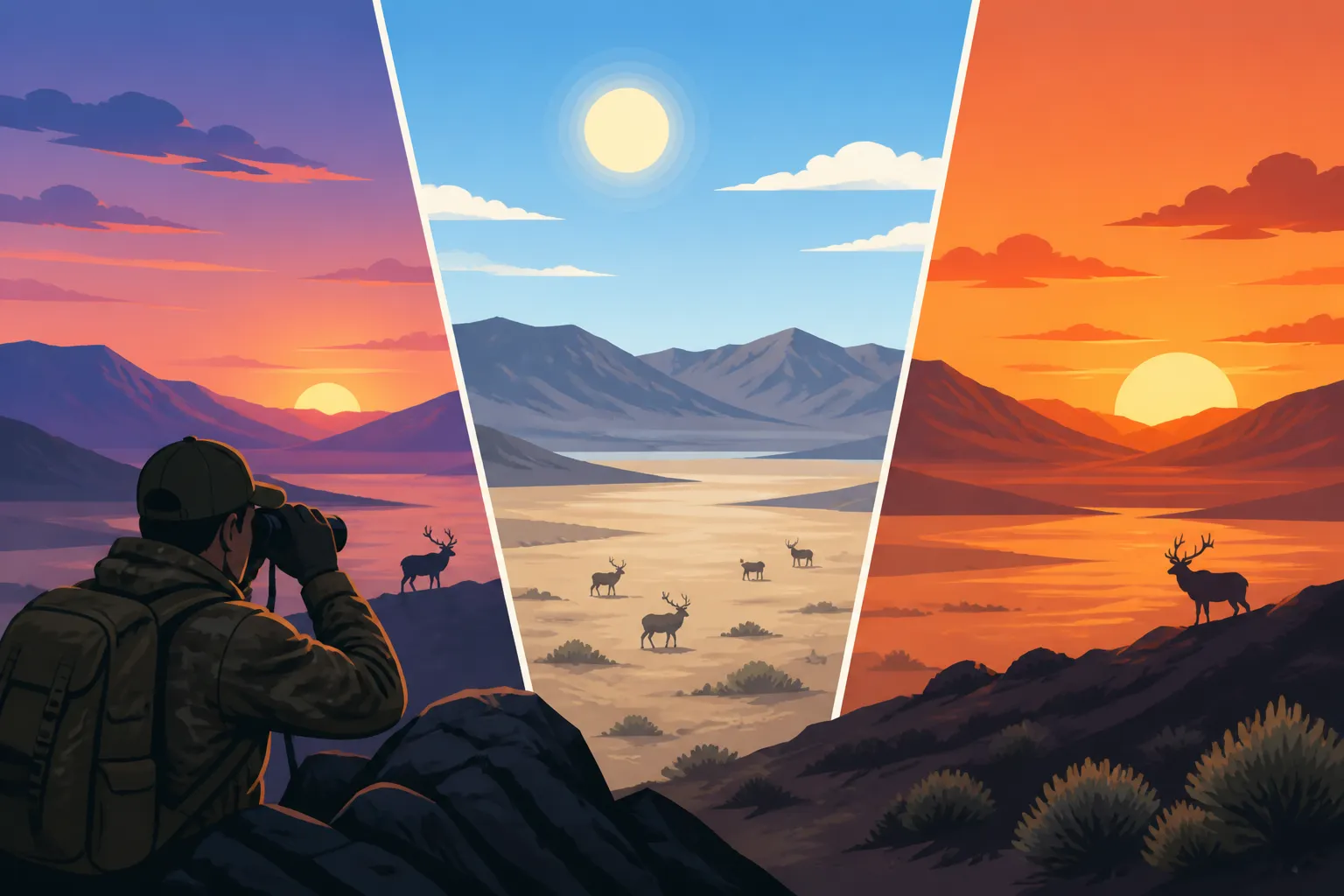
There's nothing quite like the crisp air and burgeoning light of dawn in the Nevada desert. This is arguably the most crucial time to be behind your glass. Animals, having fed and moved through the night, are often still up and about during the first hour or two of legal shooting light. They might be making their way back to a secluded bedding area after a night of foraging, or lingering in a feeding patch. The sun's low angle illuminates the landscape in a way that creates sharp contrasts, making a mule deer or elk stand out against the backdrop.
To capitalize on this, you need to be set up, organized, and ready to scan before the first hints of light appear. This means navigating to your vantage point in the dark, often with a headlamp, and having your Tripod Setup for Glassing From a Ridge ready to go. As soon as there's enough light to resolve shapes, start glassing. Focus on transitions: where sage meets juniper, the edges of draws, and any open pockets where animals might be moving. The goal is to catch them before they settle into their daytime beds, when they become incredibly difficult to spot.
The Evening Transition: A Second Chance
Just as crucial as dawn is the evening transition. As the sun begins its descent, temperatures cool, and shadows lengthen, animals that have been bedded down all day will start to stir. They'll stretch, maybe grab a quick bite, and then begin their dedicated movement towards their nighttime feeding grounds. This often happens in the hour or two leading up to legal shooting light ending.
The evening offers a mirror image of the morning, but with its own subtle differences. Animals might emerge from deeper cover, and their movement can sometimes feel a bit more relaxed as the pressure of the day subsides. Again, have your optics fixed on your chosen basin well before the prime time. Watch those north-facing slopes, the bottoms of draws, and any area with good feed. You might catch a glimpse of a mature bull stepping out from a thicket or a mule deer buck silhouetted against a ridge line. It's a brief window, but often incredibly productive for spotting game you might otherwise never see. This is the Best Time of Day to Glass a Basin and it demands your full attention.
Setting Up for Success During the Golden Hours
Effective glassing during these critical windows isn't just about showing up; it's about being prepared. A comfortable and stable setup is paramount. You'll be spending a lot of time behind your optics, and any discomfort or instability will lead to fatigue and missed details.
Invest in a quality tripod for your binoculars and spotting scope. Hand-holding optics, especially higher-power ones, for extended periods is a recipe for shaky images and eye strain. A good tripod allows you to lock onto a section of terrain and meticulously pick it apart. Secondly, consider a comfortable seat or pad. Sitting on cold, hard ground for an hour at dawn or dusk can quickly become distracting.
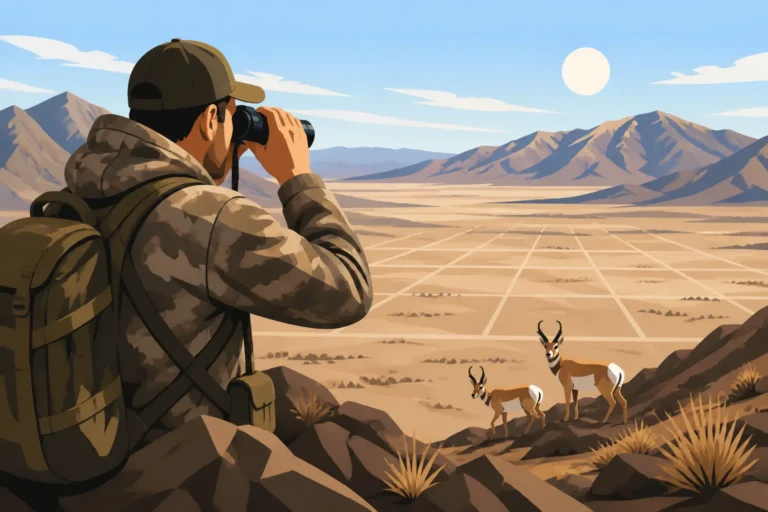
Finally, adopt a systematic approach to scanning. Don't just randomly sweep the landscape. Instead, divide the basin into manageable grids. Start at one end, scan horizontally, then drop down slightly and scan back the other way. This methodical process, sometimes referred to as The Grid Glassing Method, Step by Step, ensures you cover every inch of the terrain and don't skip over a bedded animal that might be barely visible. Patience is your most powerful tool during these times; let your eyes and the optics do the work.
Adapting Your Glassing Strategy for Midday and Challenging Conditions
While the golden hours are undoubtedly prime time, a Nevada hunt often stretches across the entire day. You can't just pack up your optics and wait for evening. Understanding how to adapt your glassing strategy for the midday sun, heat, or even unexpected weather changes can be the difference between heading home empty-handed and filling your tag.
Midday: The Challenge of the Heat
Midday in Nevada, especially during early seasons, is often characterized by intense heat and bright, harsh light. This is when animals typically go to ground, seeking the coolest, most secure bedding areas they can find. Trying to glass open hillsides or sage flats during these hours is usually a frustrating and unproductive endeavor. The shimmer of heat waves alone can make it impossible to discern anything at a distance.
So, what do you do? Change your focus. Instead of looking for animals moving, you're now looking for animals bedded. This means concentrating your efforts on areas that offer maximum relief from the sun. Look for north-facing slopes, especially those with some juniper, pinyon pine, or dense sagebrush. Animals will often bed just inside the shade line, or deep within a thicket, using the cover to disappear. Canyon bottoms with steep, shaded walls can also be productive. Think about those cool pockets you'd seek out yourself if you were Preparing for Long Glassing Days in the desert heat. Your goal isn't to see them moving, but to pick apart the cover, looking for an antler tip, a horizontal backline, or a patch of hide that doesn't quite match the surrounding vegetation. This is where high-quality Optics Power for Nevada's Long Sightlines really shines, allowing you to scrutinize every detail.
Utilizing Shaded Areas and Water Sources
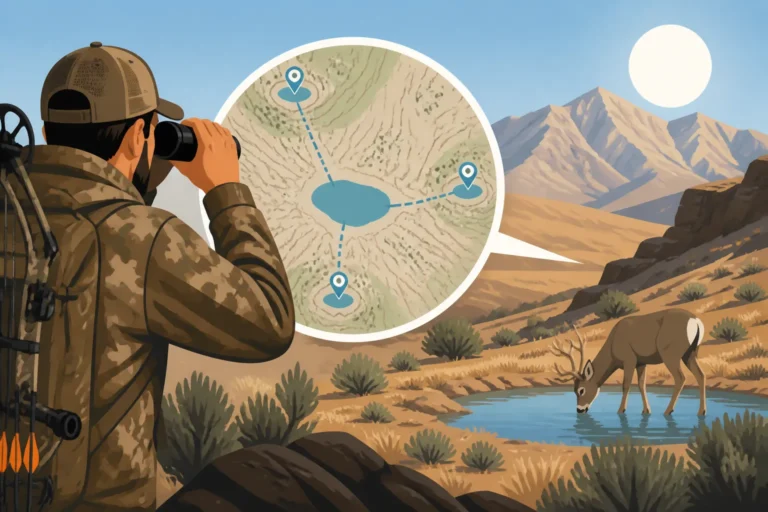
During the hotter parts of the day, water becomes an undeniable magnet for wildlife. If you're in an arid unit, even a small, isolated guzzler or spring can be a hotspot. Animals will often bed relatively close to water, or make a midday trip to drink, especially if it's exceptionally hot. Focusing your glassing efforts on these Hunting Water in Nevada's Driest Country locations, or the immediate shaded cover around them, can be highly effective. A quick scan of these crucial resources with your spotting scope can sometimes reveal what hours of scanning open country won't.
Mapping tools like GoHunt are invaluable here, allowing you to identify known water sources, springs, and even man-made guzzlers well before your hunt. By understanding where these life-sustaining spots are, you can predict animal congregation points and adjust your midday glassing strategy accordingly. Keep in mind that animals might approach water cautiously, lingering in cover before committing, so patience is still key.
The Role of Thermals and Wind
Wind and thermals are constantly at play in Nevada's mountainous and basin-and-range terrain, and understanding their dynamics is crucial, especially when animals are bedded. In the mornings, cold air drains down the slopes into the valleys. As the sun warms the ground, thermals begin to rise, carrying scent up the hillsides. In the evening, this process reverses.
Animals are acutely aware of these air currents. When bedded, they will almost always choose a spot where they can smell danger approaching from below while watching for threats from above. This means if you're glassing from below a slope, your scent might be carried directly to them by rising thermals during the day. Conversely, if you're above them, the downhill drain of evening thermals could give you away. While primarily a stalking consideration, knowing how these air currents flow can help you anticipate where an animal might bed to take advantage of them, guiding your midday glassing efforts. For instance, understanding Playing Thermals on a Rimrock Stalk is just as important for locating the animal as it is for the approach.
Essential Tools and Techniques for Effective Glassing
Glassing in Nevada is an art, but like any art, it requires the right tools and refined techniques. You can have the best intentions, but without the proper equipment and a systematic approach, you'll be fighting an uphill battle against the vastness and the elusive nature of the game.
Optics Selection and Setup
The foundation of effective glassing starts with your optics. For most hunters in Nevada, a good pair of 10x or 12x binoculars are indispensable for covering broad areas. However, for picking apart distant hillsides and confirming what those binoculars hint at, a quality spotting scope (typically 60-80mm objective, with 20-60x or 20-70x magnification) is a game-changer. Both should be mounted on a sturdy tripod. This stability is non-negotiable for long sessions.
When choosing optics, don't skimp. In a landscape where you're often looking miles, clarity and light-gathering capabilities are paramount. Brands like Zeiss, Swarovski, and Kowa are top-tier, but excellent options from Maven, Athlon, and Vortex also exist. Your tripod should be robust enough to hold your heaviest optic steady in a breeze. Remember, Optics Power for Nevada's Long Sightlines isn't just about magnification; it's about the ability to resolve detail at extreme distances.
Mastering the Grid Glassing Method
As mentioned earlier, systematic glassing is the key to not missing anything. The "grid glassing" method involves breaking down the landscape into smaller, manageable sections and meticulously scanning each one.
Here’s a simplified breakdown:
- Divide and Conquer: Choose a section of the basin you want to glass.
- Establish a Starting Point: Pick a landmark on the far left of your chosen section, perhaps a distinctive rock or juniper tree.
- Horizontal Scan: Slowly, deliberately, scan horizontally from left to right, covering every square inch. Don't rush. Pause at any anomaly.
- Drop and Return: Once you reach the right edge, drop your optics down slightly (just enough to overlap your previous scan) and scan back from right to left.
- Repeat: Continue this process, zig-zagging your way down the entire section until it's fully covered.
This method ensures thoroughness, prevents you from skipping areas, and trains your eye to pick up subtle details. It takes discipline, but it works. This is essentially the step-by-step process of The Grid Glassing Method, Step by Step, and it will serve you well in any expansive terrain.
Pre-Season E-Scouting and Planning
The work of effective glassing begins long before you set foot in the field. Modern mapping applications are incredible tools for pre-season scouting. Platforms like GoHunt allow you to pore over satellite imagery, topographical maps, and public land boundaries from the comfort of your home. You can identify potential glassing points, analyze terrain features, pinpoint water sources, and mark potential bedding and feeding areas.
Use these tools to "e-scout" your chosen Reading a Nevada Hunt Unit Before You Apply thoroughly. Look for subtle benches on steep hillsides, the heads of draws, pockets of dense cover, and any unique features that might attract game. This digital reconnaissance helps you identify where to focus your efforts once you're on the ground, making your actual glassing time far more efficient. Understanding E-Scouting a Nevada Unit Before the Season is a huge advantage for any serious Nevada hunter.
Physical Preparation and Patience
Glassing is often underestimated as a physically demanding activity, but anyone who has spent full days behind a spotting scope in the Nevada sun knows better. Hauling optics, tripods, water, and other gear to a good vantage point, often up steep, rocky slopes, requires a good level of physical fitness. Furthermore, the mental game of staying focused for hours on end, resisting the urge to walk when glassing is more productive, demands incredible patience.
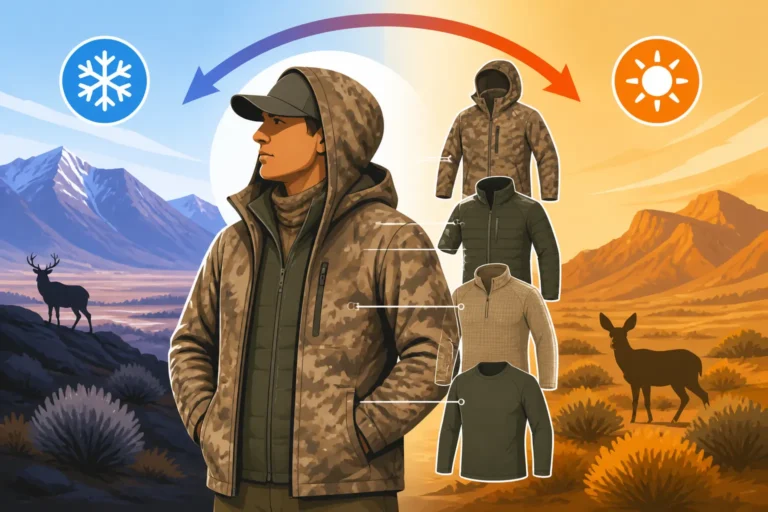
Ensure you're physically ready for the rigors of your hunt. This means more than just being able to walk; it means being able to sit comfortably and focus intently for long periods. Carry plenty of water, dress in layers for temperature swings, and stay fueled. Remember that Why Glassing Beats Walking in Sage Country for finding game in Nevada's vastness. It's a marathon, not a sprint, and patience will almost always be rewarded.
| Time of Day | Optimal Strategy | Target Areas | Key Considerations |
|---|---|---|---|
| Dawn | Active movement, animals heading to bed. | Open flats, ridge lines, transitions from feeding to bedding. | Be set up before first light; utilize low, angled light for silhouettes. |
| Morning (post-dawn) | Animals settling into beds, minimal movement. | North-facing slopes, dense cover, deep draws, juniper pockets. | Focus on picking apart cover for bedded animals; use spotting scope for detail. |
| Midday | Bedded animals, seeking deep shade or water. | Heavily shaded areas, deep canyons, around water sources/guzzlers. | Very challenging due to heat haze; extreme patience required, look for small details. |
| Afternoon (pre-dusk) | Animals starting to stir, cautious movement. | Edges of bedding areas, re-emerging into expanding shade lines. | Watch for animals standing up to stretch, or subtle movements. |
| Dusk | Active movement, animals heading to feeding grounds. | Open feeding areas, travel corridors, lower elevation benches. | Capitalize on receding light; often a last-chance opportunity. |
Disclaimer
Please be aware that hunting regulations and wildlife management practices in Nevada can change. Always consult the most current Nevada Department of Wildlife (NDOW) regulations and season guidelines before planning any hunting activity. This guide is for informational purposes only and should not replace official sources.