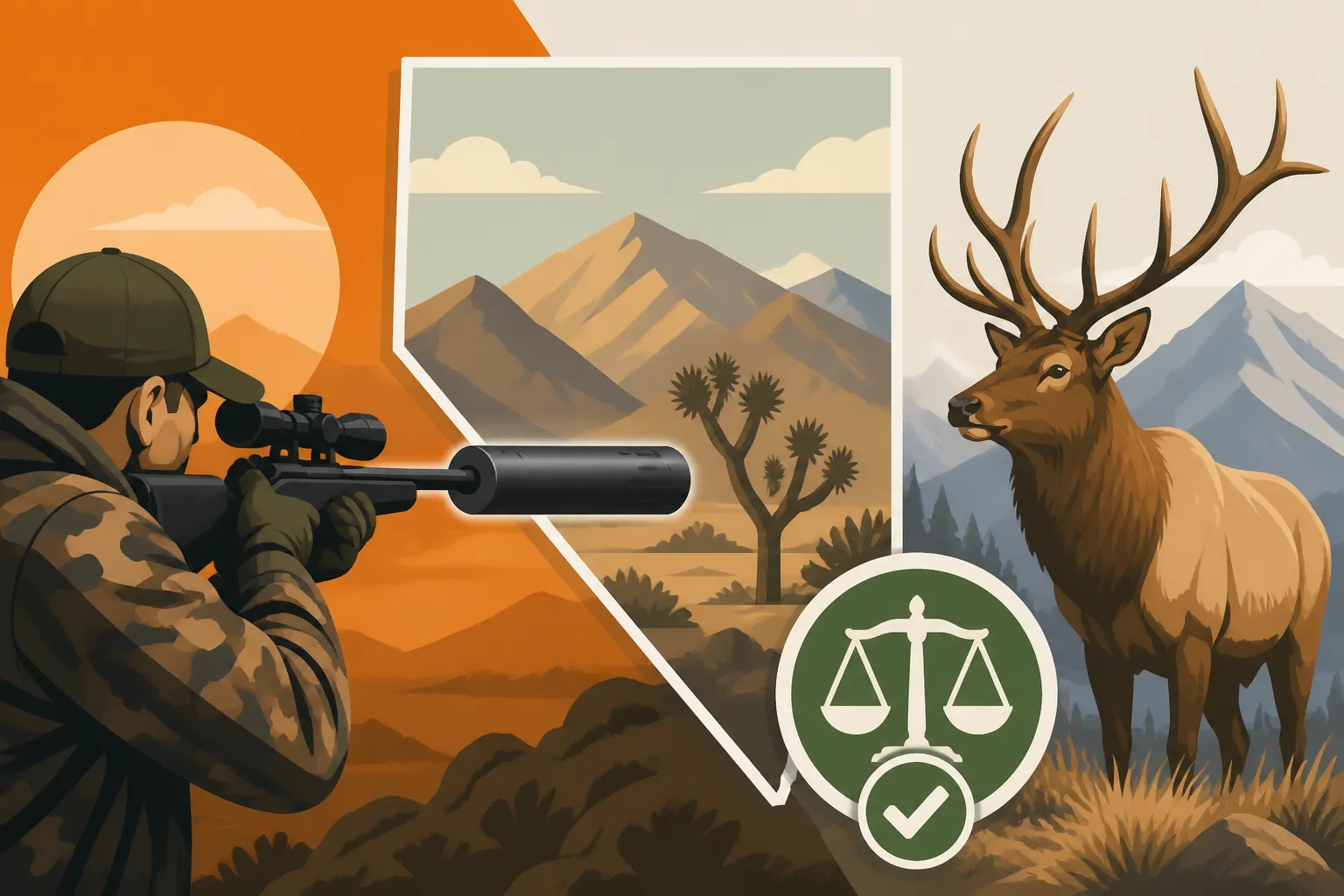
Suppressor Legality for Hunting Big Game
There's often a lot of confusion and misinformation swirling around the topic of firearm suppressors, especially when it comes to hunting big game. Many hunters, particularly those newer to the sport or unfamiliar with federal regulations, might assume they're illegal or too complicated to own. This guide is here to clear up those misconceptions, diving deep into the specifics of suppressor legality for hunting big game in Nevada, the benefits they offer, and what you need to know before heading into the field with one.
Understanding Nevada's Legal Landscape for Hunting with Suppressors
Let's cut right to the chase: yes, suppressors are legal for hunting big game in Nevada. This isn't a federal gray area, nor is it a state-specific ban for hunting. Nevada fully allows the use of legally owned suppressors on firearms for hunting purposes, aligning with a growing number of states across the country that recognize their benefits. However, simply knowing they're legal is just the first step. There's a comprehensive federal process involved in acquiring one, and understanding it is paramount.
State Law and NDOW Regulations on Suppressor Use
The Nevada Department of Wildlife (NDOW) regulations are quite clear on this. While they outline specific rules for calibers, magazine capacities, and even legal shooting hours for big game, you won't find any language prohibiting the use of sound suppressors. This is a significant point, as many states might have general legality but then restrict their use for hunting. Nevada embraces the responsible use of these devices. This means that if you've gone through the proper channels to legally own a suppressor, you are good to go for your next mule deer, elk, or pronghorn hunt. It's always a smart move to consult the most current NDOW hunting regulations booklet, which you can usually find on their website or at licensed vendors. These documents are comprehensive and cover everything from Legal Shooting Hours and Blaze Orange in Nevada to specific weapon requirements.
The lack of specific restriction by NDOW reflects a broader recognition of what suppressors actually do. They don't silence a firearm; they suppress or reduce the sound signature, often bringing it down to a hearing-safe level. This distinction is crucial and helps dispel the Hollywood-fueled myth of completely silent firearms. For hunters, this translates into a safer, more enjoyable, and arguably more ethical experience in the field.
The Federal Process: Navigating the NFA and ATF Requirements
While Nevada state law permits suppressor use for hunting, the actual ownership and transfer of a suppressor are governed by federal law, specifically the National Firearms Act (NFA) of 1934. This is where the process can seem daunting for newcomers, but it's entirely manageable if you follow the steps.
To legally acquire a suppressor, you must go through the Bureau of Alcohol, Tobacco, Firearms and Explosives (ATF). The process typically involves:
- Selection: Choose the suppressor that fits your needs. Many reputable manufacturers like SilencerCo, Dead Air Armament, and SureFire produce excellent hunting suppressors. Consider the caliber you'll be shooting and the overall length and weight.
- Purchase and Transfer: You'll purchase the suppressor through a licensed dealer (FFL) who also holds a Special Occupational Taxpayer (SOT) license. The suppressor is then registered in your name or to a legal entity like a trust.
- Application: You submit an application (Form 4) to the ATF, along with fingerprints, passport-style photos, and a one-time federal tax stamp fee of $200. This application details the suppressor, you as the applicant, and the transferring dealer.
- Waiting Period: This is often the most challenging part for hunters. The ATF process can take several months, sometimes even over a year, depending on current backlogs. This is why planning far ahead is crucial if you want a suppressor ready for a specific hunting season.
- Approval and Pickup: Once approved, the ATF sends an approved Form 4 back to your dealer, who can then transfer the suppressor to you.
Many hunters choose to acquire suppressors through a gun trust. A gun trust is a legal entity that can own NFA items, providing flexibility for multiple users (trustees) and simplifying future transfers. Whether you choose individual ownership or a trust, ensure all paperwork is meticulously filled out, as errors can cause significant delays. A resource like GoHunt often provides forums or articles where experienced hunters discuss their experiences with this process, offering valuable peer-to-peer advice.
Crucial Considerations for Responsible Suppressor Ownership
Owning a suppressor carries with it responsibilities beyond just the legal acquisition. Proper handling, storage, and maintenance are essential.
Firstly, always treat your suppressed firearm with the same safety protocols as any other firearm. The suppressor reduces sound, but the projectile is still just as dangerous. Secondly, secure storage is critical, especially given the NFA status of the item. It should be kept in a safe place, inaccessible to unauthorized individuals. This includes when you're traveling to and from your hunting grounds across Nevada's vast and often remote landscapes.
Maintenance is also key. Suppressors accumulate carbon and lead fouling, especially with extensive use. Regular cleaning, following the manufacturer's recommendations, will ensure its longevity and continued performance. A well-maintained suppressor will provide years of reliable service, helping you enjoy countless hunts without damaging your hearing or disturbing others. For those long drives to camp or during multiple days in the field, knowing how to properly care for your gear, including your suppressor, becomes as important as Vehicle Prep for Remote Nevada Roads.
The Tangible Benefits of Using a Suppressor for Big Game Hunting
Beyond legal compliance, hunters choose suppressors for a myriad of practical, ethical, and performance-enhancing reasons. It's not just about being "tacti-cool"; these devices offer genuine advantages that can significantly improve your hunting experience and safety.
Sound Mitigation: Protecting Hearing and Enhancing Field Dynamics
This is perhaps the most obvious and compelling reason for using a suppressor. The sound of a gunshot, particularly from a high-powered rifle like those often chosen for Best All-Around Caliber for Open Country, is incredibly loud – often exceeding 140 decibels, well above the threshold for immediate and permanent hearing damage. While ear protection is always recommended, in the heat of the moment during a hunt, hunters sometimes forget or cannot practically wear hearing protection while trying to hear subtle animal movements or communicate with partners.
A suppressor significantly reduces this sound, often bringing it down to approximately 125-135 decibels, making it hearing-safe for a shot or two without additional protection. This is a game-changer for long-term hearing health. Think about it: years of hunting without suppressors can lead to noticeable hearing loss, especially in the high-frequency range critical for conversation.
Moreover, the reduced sound signature also improves communication in the field. When hunting with a partner, especially in close quarters or if you're trying a Two-Hunter Calling Setups That Actually Work, a suppressed shot allows for immediate conversation about follow-up shots, animal movement, or safety concerns, without the ringing ears or disorientation caused by an unsuppressed muzzle blast. This can be especially critical when multiple animals are present, or when a follow-up shot is needed quickly.
Recoil Reduction and Improved Shooting Performance
Another often-overlooked benefit of suppressors is their effect on recoil. The weight and design of a suppressor effectively add mass to the end of the barrel, distributing recoil energy and pushing the rifle forward as gases escape, resulting in a noticeable reduction in felt recoil.
For hunters, this translates directly into improved accuracy and confidence. Less recoil means less flinching and allows the shooter to maintain better sight picture through the shot. This is incredibly valuable, particularly for long-range shooting across Nevada's open basins where Rifle Zero Distance for Long Sage Shots and precise shot placement are critical. When you can recover from the shot faster, you can also cycle the bolt and get back on target for a follow-up shot much more quickly, should it be necessary. This enhanced control and comfort can genuinely make a difference in ethical shot placement and overall success, especially when nerves are running high.
Environmental Impact and Hunter Etiquette
While less about personal gain, the reduced sound signature also plays a role in environmental impact and hunter etiquette. In areas with other hunters, or near non-hunting recreationalists (hikers, campers, etc.), the loud crack of an unsuppressed rifle can be startling and disruptive. A suppressed shot is far less intrusive.
This doesn't just apply to humans; wildlife also reacts differently. While the sound is still audible, it's less jarring. In situations where multiple animals are in a group, a suppressed shot might not spook the entire herd as dramatically as an unsuppressed one, potentially allowing for follow-up opportunities if legal and ethical. This consideration aligns with the broader principles of ethical hunting, which emphasize minimizing disturbance and showing respect for the environment and others who share the outdoors. Many online forums and platforms, like those often aggregated by GoHunt, discuss how subtle environmental impacts can influence the success of a hunt or even the overall perception of hunting by the non-hunting public.
Practical Steps and Advice for Hunters Considering a Suppressor
So, you're convinced and ready to dive into the world of suppressors for your Nevada hunts. Fantastic! But before you jump in, there are some practical steps and considerations to keep in mind to ensure a smooth acquisition and successful integration into your hunting routine.
Selecting the Right Suppressor for Your Hunting Rig
Choosing a suppressor isn't a one-size-fits-all decision. The market is full of options, each with its own benefits. Here’s what you should consider:
- Caliber Compatibility: Most suppressors are rated for a range of calibers. You'll want one that is compatible with your primary hunting rifle. Some suppressors are designed for specific calibers (e.g., .308, 6.5 Creedmoor), while others are "multi-cal" and can handle anything up to their maximum bore size. A good .30 caliber suppressor can often handle anything from .223 up to .300 Win Mag.
- Weight and Length: Remember, a suppressor adds weight and length to your barrel. For mountain hunting or long stalks across Nevada's Basin and Range Terrain Shapes Every Nevada Hunt, every ounce counts. Lighter, shorter suppressors are often preferred for hunting, though they might sacrifice a tiny bit of sound reduction compared to their larger counterparts.
- Mounting System: Suppressors either thread directly onto your barrel (direct thread) or use a quick-detach (QD) system with a muzzle device. Direct thread is often lighter and simpler, while QD allows for quick attachment/detachment and can serve as a muzzle brake when the suppressor isn't attached.
- Material and Durability: Hunting conditions in Nevada can be tough. Look for suppressors made from durable materials like titanium, Inconel, or hardened stainless steel that can withstand recoil, heat, and the occasional bump or scrape in the field.
- Serviceability: Some suppressors are user-serviceable, meaning you can disassemble and clean them yourself. Others are sealed units that require factory service. For hunting, user-serviceable might be a plus for long-term maintenance.
If you have multiple hunting rifles, consider if a single suppressor can serve all of them, or if you need dedicated cans. For example, a .30 caliber suppressor might be perfect for your deer rifle, but you'll need a different one for a .22LR small game rifle.
The Acquisition Timeline and What to Expect
As mentioned, the federal approval process is not quick. This is perhaps the biggest hurdle for hunters.
Table: Estimated ATF Form 4 Approval Times (Individual vs. Trust)
| Application Method | Current Estimated Wait Time | Key Factors Affecting Time |
|---|---|---|
| eForm 4 (Individual) | 90-180 Days (Can vary widely) | ATF Backlog, eForm system stability |
| eForm 4 (Trust) | 90-180 Days (Can vary widely) | ATF Backlog, eForm system stability |
| Paper Form 4 (Individual/Trust) | 270-365+ Days (Being phased out for eForms) | Manual processing, mail delays |
Note: These are estimates and can change frequently. Always check current ATF processing times for the most up-to-date information.
The takeaway here is clear: plan ahead, way ahead. If you want a suppressor for next year's Nevada elk rifle season, you should be starting the application process now. Many hunters get frustrated by these timelines, but understanding them upfront sets realistic expectations. Websites like the National Shooting Sports Foundation (NSSF) and forums often track current wait times, providing community-reported data that can be more granular than official estimates. This is where platforms like GoHunt can be invaluable for staying current on industry trends and user experiences.
Integrating Your Suppressor into Your Hunting Strategy
Once you finally have your suppressor in hand, it's not simply a matter of screwing it on and heading out. You need to integrate it into your shooting and hunting strategy.
First and foremost, re-zeroing your rifle is absolutely essential. Attaching a suppressor changes the harmonic vibrations of the barrel and adds weight to the muzzle, which will inevitably shift your point of impact. Do not assume your rifle will shoot the same with a suppressor as it does without. Take the time to visit the range, often making a special trip for Sighting In After a Long Drive to Camp, and confirm your zero at various distances. Many hunters find that the improved accuracy from reduced recoil makes this process easier.
Practice shooting with the suppressor attached, just as you would any other hunting setup. Get accustomed to the added length and weight. If you use a bipod or shooting sticks, practice deploying them with the suppressed rifle. Understand how it feels to maneuver through brush or sling the rifle with the added bulk. This familiarity builds confidence and ensures that when the moment of truth arrives on your hunt, you're not fumbling with an unfamiliar setup.
When scouting for Reading a Nevada Hunt Unit Before You Apply or planning your approach, consider the benefits of reduced sound. While you still want to be stealthy, a suppressed shot can give you a slight edge in not broadcasting your presence to every animal in the county. It's another tool in your hunting toolbox, allowing for a more nuanced approach to navigating the vast and challenging terrain of Nevada.
Disclaimer
The information provided in this article is for general informational purposes only and does not constitute legal advice. Firearm laws, including those pertaining to suppressors, are complex and subject to change. It is the responsibility of every individual to know and comply with all applicable federal, state, and local laws regarding firearm and suppressor ownership and use. Always consult with a qualified legal professional for advice on specific legal matters and refer to the official regulations published by the ATF and the Nevada Department of Wildlife (NDOW) for the most current and accurate information.