Trail Camera Rules on Nevada Public Land
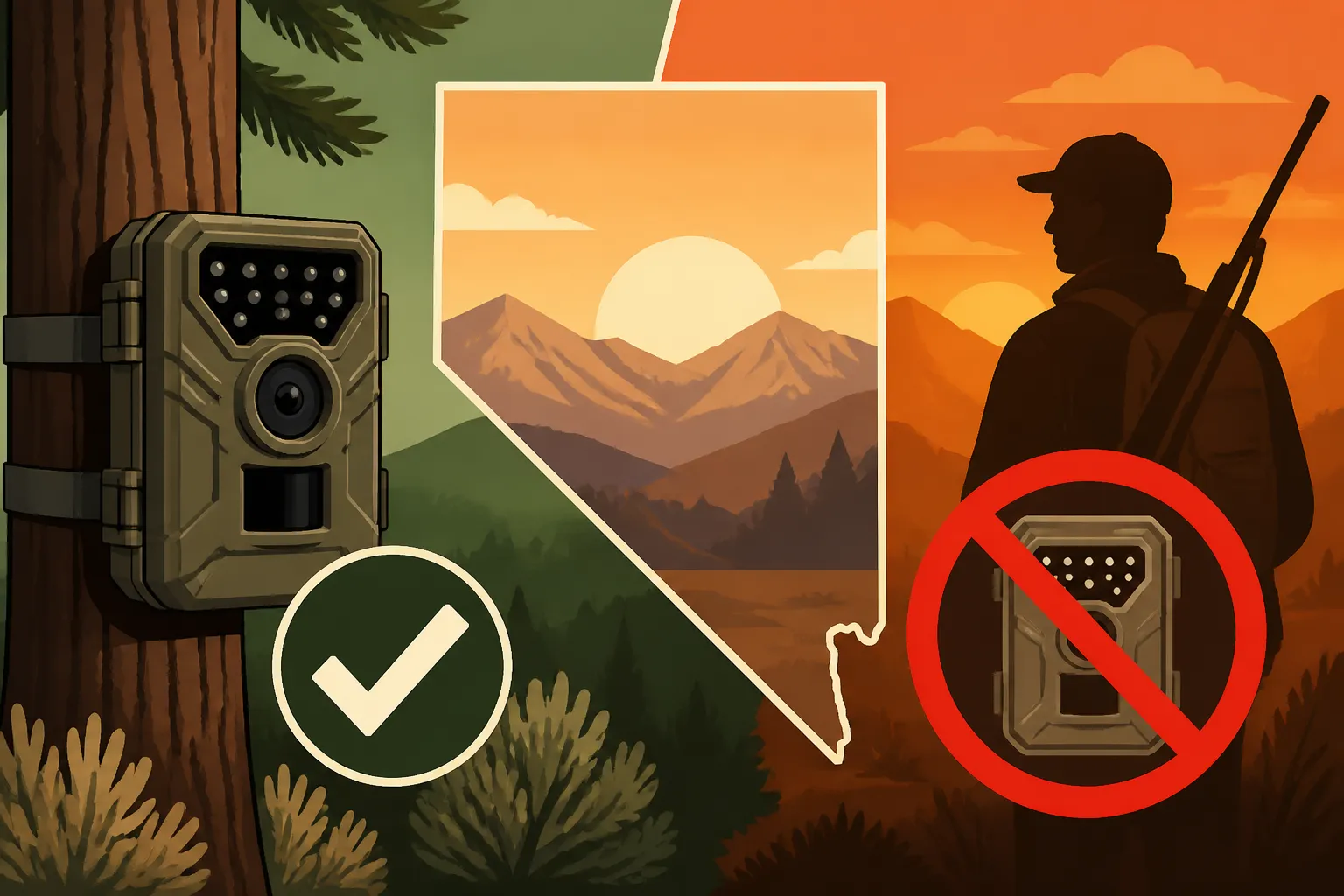
Navigating the vast, open spaces of Nevada for hunting is an incredible experience, but it comes with its own set of challenges, especially when you’re trying to use every tool at your disposal. One of the trickiest areas for many hunters is understanding the ever-evolving rules around trail cameras, particularly on public land. It’s easy to feel confused about what’s allowed and what’s not, potentially leading to unintentional violations. This comprehensive guide will meticulously break down Nevada's trail camera regulations on public land, helping you stay legal and ethical while improving your scouting efforts.
The Baseline: Nevada's General Trail Camera Regulations
Before we dive deep into the specific nuances of public land, it’s essential to grasp the foundational rules that govern trail camera use across the Silver State. Nevada's Department of Wildlife (NDOW) regulations are designed to ensure fair chase and prevent unfair advantages, and this often touches on how technology, like trail cameras, is employed. The core issue often revolves around the concept of "unattended" equipment and its potential for "baiting" or "harassment" of wildlife.
Defining "Unattended" and "Attended" Cameras
Nevada law, like that of many western states, places a significant emphasis on the distinction between an "attended" and "unattended" device. Generally speaking, an "unattended" device is one that is left in the field without continuous, direct human supervision. This is where most trail cameras fall. If you set up a camera and then leave the area, even for a few hours, it is considered unattended. This is a critical point because many regulations, especially concerning baiting, hinge on this definition. For instance, you can't leave bait out with an "unattended" trail camera, because that would be considered baiting and is strictly prohibited for big game. It's not just about the camera itself, but how it's used in conjunction with other activities.
An "attended" device, on the other hand, implies that you are physically present, typically within a reasonable distance to exert direct control or influence over the device and the immediate area. For a trail camera, this would mean you are sitting right there, observing the camera's view, almost as if you were glassing. Clearly, this isn't the primary purpose of a trail camera, which is designed to capture activity when you aren't there. The spirit of the law here is to prevent remote scouting that could give an unfair advantage or lead to unethical practices.
Private Land Versus Public Land: A Crucial Distinction
It’s absolutely vital to understand that the rules can vary significantly depending on whether you are on private land or public land. On private land, the landowner has much more leeway to dictate what is permissible. If you have explicit permission from a private landowner to place trail cameras, and their land isn't subject to specific federal or state easements or programs that restrict such use, you generally have fewer restrictions. However, even on private land, you must adhere to state laws regarding baiting and harassment of wildlife. For example, if the private land is leased for hunting or has specific wildlife conservation easements, there might be clauses about trail camera use. Always clarify with the landowner and, if unsure, with NDOW.
Public land, which constitutes a massive percentage of Nevada's landscape, is where most hunters run into the trickiest regulations. The vast majority of Nevada's hunting occurs on federal lands, primarily managed by the Bureau of Land Management (BLM) and the U.S. Forest Service (USFS). Each of these agencies, in conjunction with NDOW, can impose specific rules on top of the general state regulations. This means what's allowed on a private ranch in Elko County might be strictly forbidden on BLM acreage just a few miles away. Hunters need to be hyper-aware of these boundaries and associated rules. Many hunters use tools like GoHunt to pull up land ownership maps and confirm where they are scouting. This kind of diligent pre-hunt research, often called E-Scouting a Nevada Unit Before the Season, is critical to avoid accidental trespass or violations.
Navigating Public Lands: Specific Restrictions and Prohibitions
This is where the rubber meets the road for most Nevada hunters. Public lands are complex, with different designations carrying different rules. A camera placed innocently in one area could be a serious violation just across a boundary line.
Wilderness and Wilderness Study Areas: No-Go Zones
When it comes to remote scouting with trail cameras, Wilderness Areas and Wilderness Study Areas (WSAs) are absolute no-go zones. These areas are specifically designated to preserve their wild character, which means minimizing human impact and specifically prohibiting motorized equipment and "mechanical transport." A trail camera, even if battery-operated, is generally considered a mechanical device and its placement constitutes a prohibited activity. The intent is to keep these areas as untouched as possible, and that includes leaving no permanent or semi-permanent installations like cameras.
The rules for these areas are quite stringent. Even seemingly innocent actions, like leaving a camera, can result in fines and other penalties. The spirit of these designations is about self-reliance and minimizing technology. If you plan to hunt within or near these areas, make sure you know exactly where the boundaries lie. Using detailed mapping tools that show Wilderness Study Area Vehicle Limits and other relevant layers is crucial. There's no exception for "just checking on a buck" in these sensitive landscapes.
Bureau of Land Management (BLM) and National Forests: General Guidelines
Most big game hunting in Nevada occurs on BLM Ground Is Where Most Nevada Hunting Happens and National Forest lands, such as the Humboldt-Toiyabe National Forest. On these lands, the general statewide rule about trail cameras still applies, but there are important interpretations to consider. NDOW's regulations are very clear: you cannot use any "electronic device for locating or detecting wildlife," including trail cameras, in conjunction with bait. This is a crucial distinction from simply using a camera for scouting.
So, can you put up a trail camera on BLM or National Forest land? Yes, as long as it's not being used to aid in "baiting" or "harassment." This means you cannot place bait, feed, or attractants (scents that mimic feed, mineral blocks, etc.) near your camera for the purpose of luring animals for harvest or photographic opportunity. If you are simply monitoring a natural game trail, a water source, or a bedding area without any artificial attractants, then a trail camera is generally permissible. However, you are still responsible for ensuring the camera is placed legally and ethically, adhering to Leave No Trace principles. NDOW officers regularly patrol these public lands, and they are well-versed in differentiating between ethical scouting and illegal baiting practices. It's also important to remember that these are public lands, and other hunters will be using them. Ensure your camera isn't interfering with their experience.
State Wildlife Management Areas and Other Specific Designations
Nevada also has various State Wildlife Management Areas (WMAs) and other specific designations that might have their own unique rules. For example, some WMAs might have stricter regulations regarding unattended equipment or specific entry permits. Before placing any trail camera in a WMA, it is imperative to check the specific regulations for that particular area. These can usually be found on the NDOW website or by contacting the specific WMA office.
Furthermore, national parks (like Great Basin National Park) and national wildlife refuges (like Desert National Wildlife Refuge or Sheldon National Wildlife Refuge) often have outright prohibitions on hunting and related activities like trail camera placement. While some refuges may allow hunting, they often have highly specific rules that differ from general BLM or National Forest land. Never assume the rules are the same across all public land designations. A quick check of the regulations can save you a lot of headache and potential fines.
Beyond the Rules: Ethical Use and Practical Considerations
Legal compliance is just one part of the equation. As responsible hunters, we also adhere to an unspoken code of ethics that preserves the integrity of our sport and respects fellow outdoors enthusiasts.
Avoiding Interference with Other Hunters
Public land in Nevada is exactly that—public. This means you’re sharing it with other hunters, hikers, campers, and outdoor recreators. Placing a trail camera, even legally, can sometimes unintentionally interfere with another hunter's experience or scouting efforts. Imagine spending days Glassing Nevada's Basin and Range for Mule Deer in a remote basin, only to stumble upon someone else's trail camera. It can feel like an intrusion.
To avoid this, try to place cameras discreetly and out of obvious sightlines from main trails or prominent glassing knobs. Camouflage your cameras, not just to avoid theft, but to minimize their visual impact. If you're scouting a popular water hole, for instance, be mindful that others might be doing the same. It's generally good practice to place your camera in a way that doesn't scream "I'm scouting here!" to every passerby. This also applies to any markers or flagging you might use to find your camera later; keep them minimal or non-existent.
Minimizing Impact on Wildlife and Habitat
One of the core tenets of ethical hunting is to minimize our impact on the environment. While trail cameras themselves typically have a low footprint, their placement and frequent checking can disturb wildlife or sensitive habitats. Every time you visit a camera, you are leaving human scent and potentially altering the natural behavior of game. In arid Nevada, where water sources are vital, repeated visits to a camera set up at a spring could deter animals from using that crucial resource.
When selecting camera locations, consider the shortest, least impactful route to access them. Try to check cameras infrequently, perhaps once every week or two, to reduce disturbance. Think about battery life and memory card capacity so you don't have to visit as often. Tools like GoHunt can help you scout potential locations from home, reducing the need for excessive physical visits during sensitive times of the year. Also, always ensure your camera is secured to a tree or post without causing damage. Use straps, not nails or screws, to attach the device. Remember to retrieve your cameras promptly after the season, ensuring no "ghost equipment" is left behind to degrade or become litter.
Maximizing Your Scouting Success Ethically
Despite the restrictions, trail cameras can still be an incredibly valuable tool for Patterning a Buck in the Weeks Before Opener on public land in Nevada, especially when used ethically. They can help you identify travel corridors, understand daily movement patterns, and confirm the presence of target animals without you having to be physically present 24/7. This is particularly useful in units where game might be widely dispersed.
Focus your camera placement on natural pinch points, distinct terrain features, or subtle game trails away from obvious water sources during non-baiting periods. Look for areas with fresh sign, like tracks or rubs, indicating recent activity. Combine your trail camera intel with other scouting methods, such as detailed map analysis and boots-on-the-ground recon. Understanding Reading a Nevada Hunt Unit Before You Apply is fundamental, and then using cameras to confirm what your e-scouting suggested can be a game-changer. For example, knowing How Guzzlers Concentrate Desert Game can help you predict general areas of activity, and then a well-placed camera (away from the guzzler itself, to avoid disturbing animals) could confirm travel routes. Remember, the goal is to observe, not to attract.
Penalties and Enforcement: What Happens When Rules Are Broken
Nobody wants to face fines or lose their hunting privileges. Understanding the potential repercussions of violating trail camera rules is crucial for staying on the right side of the law.
Common Violations and Their Repercussions
The most common violation involving trail cameras on public land in Nevada revolves around baiting. As mentioned, placing bait (food, mineral licks, attractant scents) in conjunction with an unattended trail camera for big game is illegal. This isn't just a minor infraction; baiting can lead to significant fines, confiscation of equipment, and even loss of hunting privileges. NDOW takes baiting very seriously because it undermines the principle of fair chase.
Other violations might include placing cameras in prohibited areas like Wilderness or WSAs, or damaging public property during placement. While perhaps less severe than baiting, these can still result in fines and requirements to remove the equipment. It's also worth noting that tampering with another person's legally placed trail camera can lead to separate charges, potentially including theft or vandalism. Always keep your hands off other people's equipment.
Reporting Violations and NDOW's Role
If you observe what you believe to be a violation of Nevada's trail camera rules or any other hunting regulation, NDOW encourages you to report it. You can do this through their Operation Game Thief hotline. NDOW game wardens are the primary enforcement officers in the field. They are highly trained to investigate potential violations, distinguish between legitimate scouting and illegal activities, and gather evidence. They rely on reports from the public to help maintain ethical hunting standards and protect wildlife resources.
When reporting, try to provide as much detail as possible: the exact location, date and time, a description of the equipment, and any observed activities. This information helps wardens investigate effectively. Remember, their job is to ensure that everyone is playing by the rules, which ultimately benefits all responsible hunters in Nevada.
| Public Land Type | Trail Camera Allowed? (Unattended) | Restrictions | Key Considerations |
|---|---|---|---|
| Wilderness / WSA | No | Mechanical transport/devices prohibited. | Focus on traditional scouting only. |
| BLM Land | Yes (without bait) | Cannot be used in conjunction with bait/attractants. | Ethical placement, minimal disturbance, check local rules. |
| National Forest | Yes (without bait) | Cannot be used in conjunction with bait/attractants. | Ethical placement, minimal disturbance, check local rules. |
| State Wildlife Mgmt Areas | Check Specific Regulations | Varies by WMA; often stricter rules apply. | Contact WMA office, check NDOW website. |
| National Parks/Refuges | Generally No | Hunting often prohibited; specific rules apply where allowed. | Confirm all regulations before entering. |
Conclusion
Understanding and adhering to Nevada's trail camera rules, especially on public land, is not just about staying out of trouble—it's about being a responsible, ethical hunter. While the regulations can feel complex, the core principle is fairly straightforward: use your cameras for scouting natural animal movements, not for baiting or harassing wildlife, and always be mindful of where you place them. By combining smart tools like GoHunt for land ownership details, respecting designations like Wilderness Areas, and always prioritizing ethical conduct, you can continue to use trail cameras as an effective tool to enhance your Nevada hunting adventures. Remember, the vast, rugged beauty of Nevada demands our respect, both in the pursuit of game and in our use of modern technology.
Disclaimer
This article provides general information and guidance. Hunting regulations, including those pertaining to trail cameras, can change. It is the responsibility of every hunter to consult the most current Nevada Department of Wildlife (NDOW) regulations and any specific land management agency rules before engaging in hunting or scouting activities. Always verify information directly with NDOW to ensure compliance.