Rules on Hunting From a Vehicle
One of the trickiest parts of hunting out here in Nevada, especially when you're covering so much ground, is understanding exactly what you can and can't do with your vehicle. It's not just about staying on the right roads; it's about the law, ethics, and frankly, avoiding a hefty fine or losing your hunting privileges. This guide is going to break down the ins and outs of vehicle use for hunting in the Silver State, so you can focus on the hunt without worrying about violating regulations.
The Legal Framework of Vehicle Use in Nevada Hunting
Let's face it, Nevada is vast. It's not uncommon to cover hundreds of miles in a day just scouting or accessing a hunt unit. Because of this, vehicles are an indispensable tool for many of us. However, there are very clear lines drawn in the sand when it comes to how you can legally use a vehicle while hunting, and crossing those lines can have serious consequences. The state is serious about fair chase principles, and that means minimizing any advantage technology might give.
Understanding "Motorized Vehicle" Definitions
First things first, let's get clear on what the Nevada Department of Wildlife (NDOW) considers a "motorized vehicle" in the context of hunting regulations. It's pretty broad, and for good reason. This isn't just about your pickup truck. It includes any self-propelled device capable of being used for transportation on land, water, or in the air. So, think about your ATVs, UTVs, dirt bikes, electric bikes, even drones if they were used in direct support of hunting (though drone regulations are a whole other ball of wax).
The intent behind these broad definitions is to uphold the spirit of fair chase. Hunting is supposed to be a challenge, a pursuit where the animal has a reasonable chance. Using a motorized vehicle to directly pursue, harass, or gain an unfair advantage over game animals goes against this core principle. It's about ensuring a level playing field, where your skill, patience, and knowledge of the land are what make the difference, not the horsepower of your engine. This is why understanding the specific wording in the regulations is so critical; assumptions can lead to trouble.
The Strict Prohibition of Shooting From a Vehicle
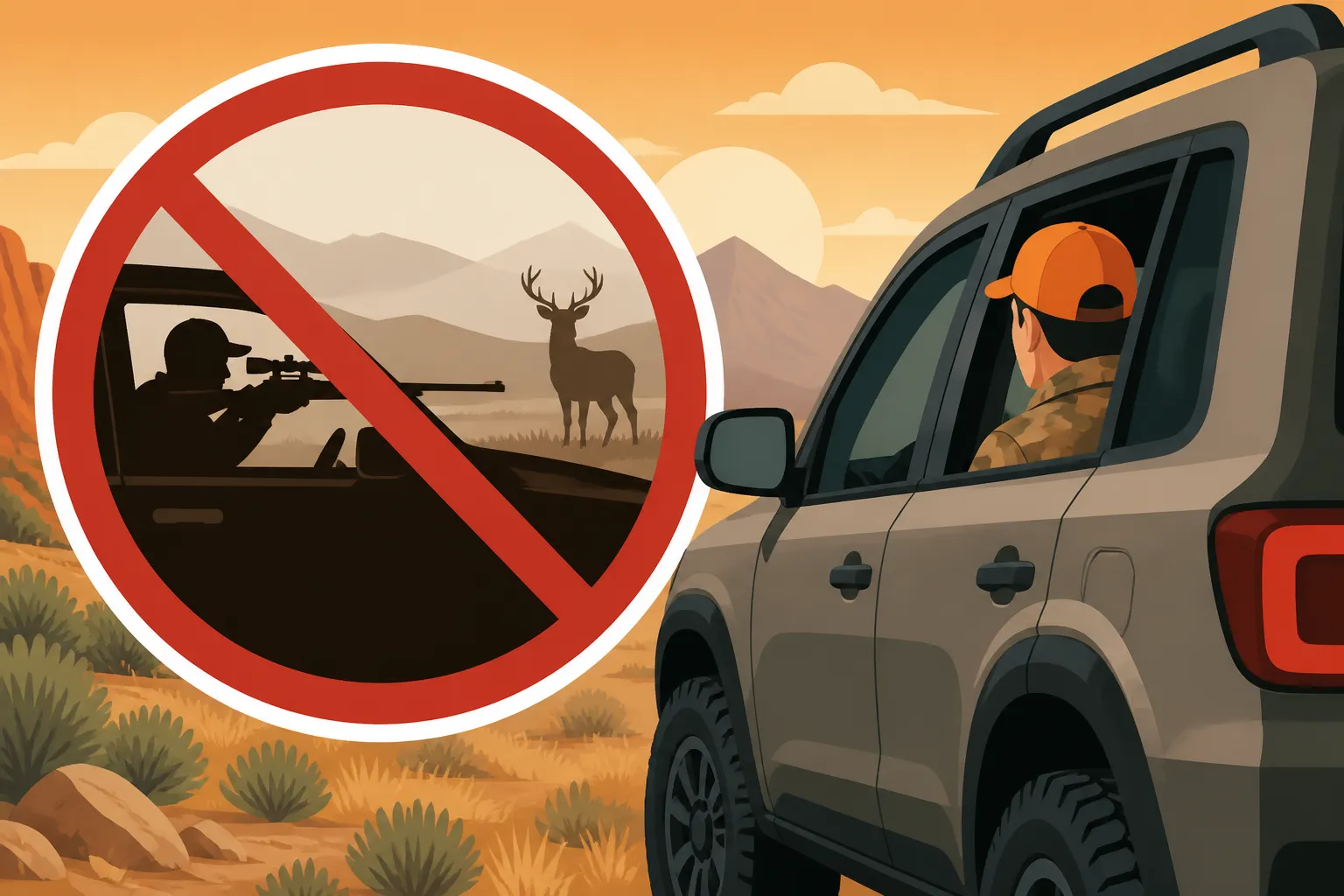
This is perhaps the most universally understood, yet sometimes misunderstood, rule: you cannot shoot from a motorized vehicle in Nevada. Period. This isn't just about sticking your rifle out the window; it extends to shooting across a vehicle as well. Imagine you're standing next to your truck, and the animal is on the other side. If your bullet path crosses any part of that vehicle, you're breaking the law. The only exception generally recognized for shooting from a vehicle relates to individuals with specific mobility-impaired hunting permits, which are granted under very strict conditions.
The dangers of shooting from or across a vehicle are manifold. There's the obvious safety concern for anyone in or near the vehicle, the potential for ricochets, and the ethical dilemma of using a vehicle as a rest or cover. Legally, the consequences can be severe. We're talking substantial fines, confiscation of your weapon, and potentially the revocation of your hunting license for a period of time, not just in Nevada but potentially in other states as well through interstate compacts. It's simply not worth the risk. Always exit your vehicle, move away from it, and ensure a clear, safe shot before taking aim.
Road vs. Off-Road Travel Rules
Navigating Nevada's vast public lands often involves a network of roads, some well-maintained, others barely more than two tracks. The distinction between a "road" and "off-road" travel is crucial. Generally, on Bureau of Land Management (BLM) and Forest Service lands, motorized travel is restricted to "existing roads and trails" or "designated routes." What constitutes an "existing road" can sometimes feel like a moving target, especially on older maps, but the intent is clear: don't create new tracks.
You absolutely need to be aware of Motorized Travel Rules on Nevada Public Land and respect them. This means staying on defined routes, even if they look like faint scars across the landscape. The rules are in place to prevent habitat degradation, soil erosion, and disturbance to wildlife. Furthermore, many areas, especially Wilderness Study Areas (WSAs), have even stricter rules. You might find yourself in an area with Wilderness Study Area Vehicle Limits where vehicles are prohibited entirely beyond designated trailheads. Always consult current maps from the managing agency (BLM, Forest Service) and use digital mapping tools like GoHunt to understand exact route designations and restrictions for your specific hunt unit before you ever leave home.
Practical Implications for Nevada Hunters
So, if you can't shoot from your vehicle and you have to stick to roads, what can you do with it? Quite a lot, actually, and strategically using your vehicle within the rules can significantly enhance your hunting experience in Nevada. It's all about using your rig as a tool for access and mobility, not as an extension of your weapon.
Using Vehicles for Scouting and Access
Your truck or ATV is your workhorse for getting into and around Nevada's expansive hunt units. You'll spend countless hours covering ground, driving hundreds of miles on dirt roads just to get to a vantage point or a new basin. This is perfectly legal and encouraged. Vehicles allow you to access remote trailheads, glassing points, and potential camping spots that would be otherwise unreachable, enabling you to expand your hunting opportunities significantly.
Before you head out, though, it's vital to do your homework. Use a good mapping application like GoHunt to plot your routes, identify existing roads, and mark potential access points. This E-Scouting a Nevada Unit Before the Season process is invaluable for understanding the terrain and legal access. You'll quickly learn that Remote Road Conditions Across Nevada can vary wildly, from graded gravel to rocky two-tracks that require high clearance and 4WD. Always ensure your Vehicle Prep for Remote Nevada Roads is up to par to prevent getting stranded far from help. Remember, your vehicle gets you to the hunting, but the actual hunting often begins when you step out of the cab.
Vehicle Use for Game Retrieval
This is one of those areas that often causes confusion and frustration, especially for hunters new to Nevada or public land hunting in general. You've harvested an animal, and it's a couple of miles off the road in some gnarly country. Your first thought might be, "Can I just drive in there to get it?" The answer, more often than not, is "no," or at least "not without very specific conditions." Generally, the rule about staying on existing or designated roads applies to retrieval as well. You cannot simply drive off-road to pick up your downed animal, even if it's "just a little ways."
There are a few key points to consider:
- Designated Routes Only: If there's an existing, open, designated road or trail that leads directly to or very near your animal, you may use it. But again, you cannot create a new one.
- No Off-Road Travel: Unless explicitly permitted by a specific regulation for a specific area (which is rare for big game retrieval), driving cross-country to retrieve an animal is illegal. This means that heroic, but often ill-advised, off-road excursion will not only damage habitat but also likely land you a citation.
- Wilderness Areas: In designated Wilderness Areas, all motorized vehicles are strictly prohibited. If you harvest an animal in a Wilderness Area, you will be Packing an Animal Out of Roadless Country on your back, with a game cart, or by pack animal. There are no exceptions here.
This reality often means hunters need to plan their hunts with retrieval in mind. A mature mule deer or elk is incredibly heavy, and getting it out of a remote canyon or across miles of sagebrush requires forethought and physical preparation. If your animal falls on private land, you need to navigate Retrieving Game From Private Land in Nevada separately with landowner permission. It’s hard work, but it’s part of the ethical responsibility we take on as hunters to retrieve game legally and respectfully.
Safe and Ethical Parking Practices
Beyond the actual driving, how and where you park your vehicle also falls under the umbrella of responsible vehicle use. Nevada's public lands are for everyone, and our presence shouldn't impede others or damage the environment. When you're out there hunting, you'll encounter other hunters, hikers, and off-road enthusiasts, and it’s important to be a good neighbor.
Always park completely off the main road or track. Don't block gates, access roads, or pull-outs. This ensures that other users can pass safely and emergency vehicles have clear access if needed. When you pull off a road, be mindful of the terrain. Avoid parking on sensitive vegetation or in areas prone to erosion. The goal is to leave as little trace as possible, minimizing your impact on the landscape. This includes not driving over brush or small trees to create a "better" parking spot. A little common sense and respect for the resource go a long way in maintaining a positive image for hunters and ensuring access for future generations.
Special Considerations and Exceptions
While the general rules are quite strict regarding vehicle use, there are a few nuances and specific situations that hunters should be aware of. These often involve special permits or apply to certain types of hunting activities that fall outside the typical big game season.
Disabled Hunter Permits
Nevada recognizes that not all hunters have the same physical capabilities, and provisions are made to ensure that hunting remains accessible to individuals with certain mobility impairments. NDOW offers special permits for eligible disabled hunters that may allow for some exceptions to the standard vehicle use rules. For instance, a mobility-impaired hunter might be granted permission to shoot from a stationary vehicle or to access certain areas typically closed to motorized travel.
However, these permits are not handed out lightly. They require a formal application process, documentation of the disability from a medical professional, and approval from NDOW. The conditions of the permit are usually very specific, outlining exactly what is allowed and where. If you or someone you know qualifies, it’s crucial to understand all the terms and carry the permit with you at all times during the hunt. This is a privilege, not a right, and it must be respected to maintain the program's integrity.
Spotlighting and Night Hunting
The rules surrounding vehicles and hunting become even more complex when you start talking about predator or varmint hunting, particularly at night. For big game, spotlighting (using artificial light to locate animals) and night hunting from a vehicle are unequivocally illegal. This falls under the definition of gaining an unfair advantage. However, for certain species like coyotes or other furbearers, the rules are different.
Nevada does permit Spotlighting Rules for Predator Hunting in some areas, and Is Night Hunting Legal for Coyotes Out West? is often met with a "yes," but with strict caveats. These activities usually require you to be completely off a public road, sometimes require a special permit, and are often restricted to specific counties or times of year. Even when legal, the rule against shooting from a vehicle often still applies; you usually must exit the vehicle to shoot. It is absolutely essential to check the specific, current regulations for the county and species you intend to hunt if you plan on spotlighting or night hunting, as these rules are highly variable and subject to change.
General Travel Ethics in Remote Country
Beyond the specific legalities, there's a strong ethical component to vehicle use in Nevada's remote landscapes. The vastness of the Great Basin can lull you into a false sense of solitude, but every action you take has an impact. Respecting the land, other users, and the wildlife should always be paramount. This means knowing your hunt unit, understanding how to read a Nevada Unit Boundary map, and being prepared for anything.
Part of this preparation involves practical considerations like being self-sufficient. Nevada's roads can be unforgiving, and services are few and far between. Knowing How Far Apart Nevada Fuel Stops Are and making sure you're always topped off is critical. It’s also wise to always be Carrying Extra Fuel on a Nevada Hunt, along with plenty of water, spare tires, and recovery gear. Don’t assume your cell phone will work; satellite communication is often a necessity. These aren't just good ideas; they're ethical responsibilities that prevent you from becoming a burden on search and rescue, or worse, leaving your broken-down vehicle as an eyesore in a pristine landscape. By adhering to these principles, you contribute to a sustainable and respected hunting culture.
Summary of Vehicle Use Rules in Nevada
To help keep things clear, here’s a quick overview of legal versus illegal vehicle use while hunting big game in Nevada. Always consult the official NDOW regulations for the most current and specific information.
| Action | Legal (Generally) | Illegal (Generally) | Notes |
|---|---|---|---|
| Driving on Roads/Trails | On established, open, designated routes | Off-road, creating new tracks, in closed areas | Check BLM/Forest Service maps; use GoHunt for route planning. |
| Shooting | Standing completely clear of the vehicle | From within, on, or across a motorized vehicle | Exception for approved mobility-impaired permits. |
| Scouting | Driving designated roads to access glassing points | Using a vehicle to harass or drive game | Use as a tool for access, not direct pursuit. |
| Game Retrieval | Driving designated roads to retrieve an animal | Off-road travel to retrieve an animal | Pack it out if no legal road access; no exceptions in Wilderness. |
| Spotlighting (Big Game) | N/A | Any use of artificial light to locate big game | Legal for certain predators/varmints under strict conditions; check regulations carefully. |
| Night Hunting (Big Game) | N/A | Hunting big game between civil twilight and sunrise | Legal for certain predators/varmints under strict conditions; check regulations carefully. |
| Parking | Off the road, not blocking access, on durable surfaces | Blocking roads/gates, on sensitive vegetation, in travel ways | Be considerate of other users and the environment. |
Disclaimer
The information provided in this guide is for general informational purposes only and does not constitute legal advice. Hunting regulations in Nevada are complex and subject to change. It is your sole responsibility to consult the current Nevada Department of Wildlife (NDOW) hunting regulations and any applicable federal land management agency rules before engaging in any hunting activities. Failure to do so may result in legal penalties.