Is Night Hunting Legal for Coyotes Out West?
There’s nothing quite like the vast, open expanse of the West under a star-strewn sky, and for many, the idea of pursuing cunning coyotes in that darkness holds a certain allure. However, the question of whether night hunting for coyotes is even legal is a common one, often shrouded in confusion due to varied state regulations and strict rules for big game. This guide will clarify Nevada's specific regulations regarding night hunting for coyotes, delve into the necessary gear, and highlight critical safety and ethical considerations to ensure you stay legal, safe, and responsible when heading out after dark.
Understanding Nevada's General Night Hunting Regulations
When most folks think about hunting, they picture daylight hours, and for good reason. General hunting regulations across the board, especially for big game like deer, elk, or bighorn sheep, almost universally prohibit hunting from thirty minutes after sunset to thirty minutes before sunrise. This isn't just an arbitrary rule; it's steeped in both ethical considerations and safety concerns. The challenge of positive target identification, the risk of misidentifying a protected species, or even mistaking another hunter for game, amplifies dramatically under the cloak of night.
Why the Confusion Around Night Hunting?
The confusion really kicks in because while those strict regulations apply to big game and most small game, predators like coyotes often fall into a different category. Many states, including Nevada, recognize coyotes as a species that can be hunted year-round, and sometimes, with fewer restrictions than traditional game animals. This is largely due to their prolific breeding rates, their impact on other wildlife populations, and, in some cases, their classification as nuisance animals by landowners. Because of this, it's easy for hunters, especially those new to Nevada or coming from states with different rules, to be unsure if the general "no night hunting" rule extends to coyotes. The dangers of hunting in low light are real, and regulations are often put in place to mitigate those risks, which is why understanding the nuances for specific species is so important.
Specific Regulations for Coyotes
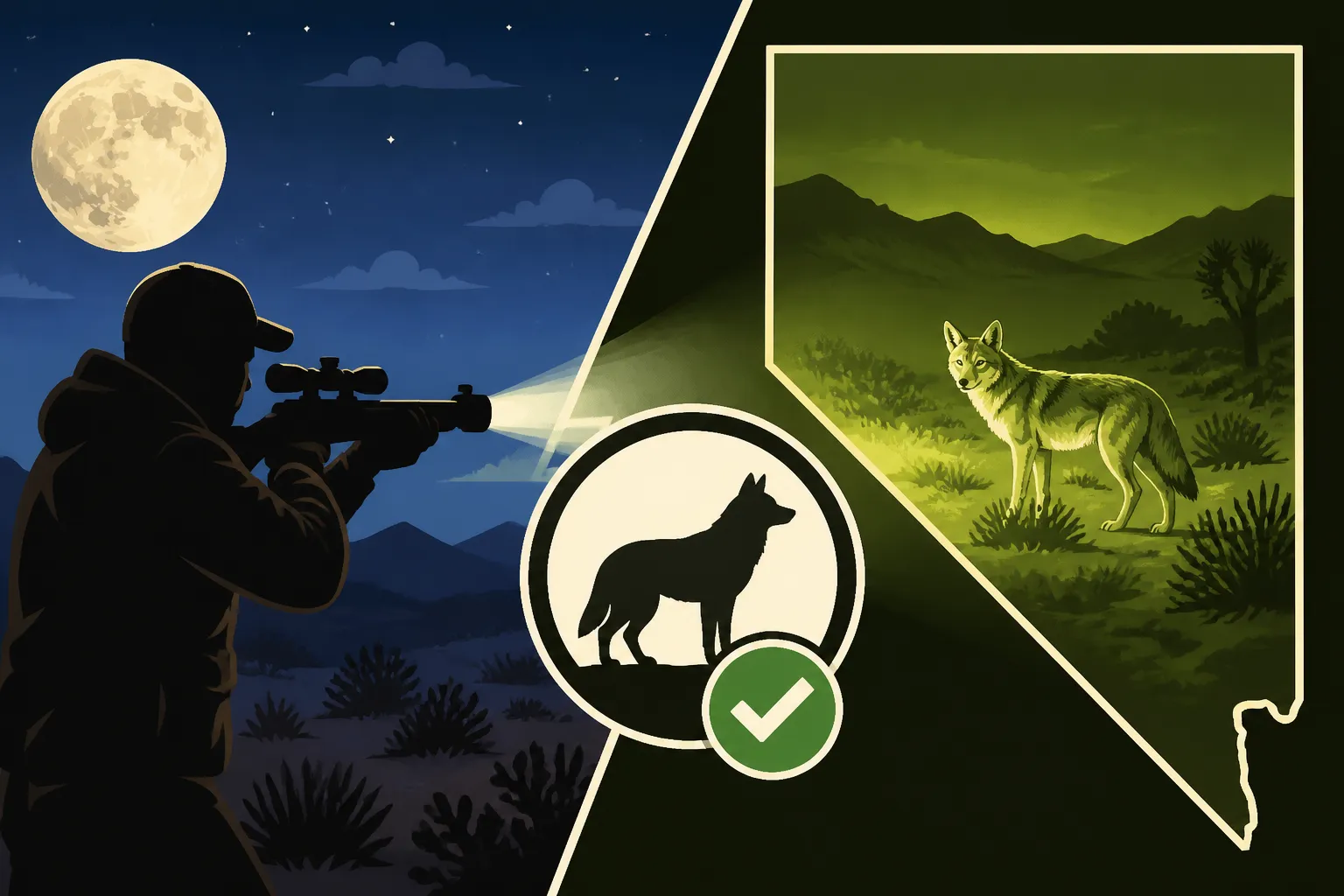
So, let's cut to the chase: yes, night hunting for coyotes is legal in Nevada, but with very specific conditions and limitations. This is a crucial distinction that many hunters are keen to understand. Nevada Revised Statute (NRS) 503.150 is the key piece of legislation here. It makes it clear that while it's generally unlawful to hunt wildlife with the aid of an artificial light, coyotes are explicitly listed as an exception.
This exception allows for the use of artificial lights, including spotlights, during nighttime hours specifically for hunting coyotes. The rationale behind this lies in wildlife management; coyotes are classified as predatory animals in Nevada, and their populations are often managed to protect livestock and other game species. Therefore, hunters are given more leeway to pursue them, even after dark. However, this doesn't mean it's a free-for-all. Hunters are still responsible for adhering to all other applicable laws, including those regarding land access, trespass, and safe firearm handling. It's not enough to simply know it's allowed; you need to know how it's allowed.
Equipment and Methods for Night Hunting Coyotes in Nevada
Stepping into the darkness to hunt coyotes requires more than just your typical daylight gear. The right equipment isn't just about efficiency; it's paramount for safety and legality. You're operating in an environment where your senses are diminished, and your tools need to compensate for that.
Legal Lighting and Night Vision Devices
This is where the rubber meets the road for night hunting coyotes in Nevada. Unlike big game, where using any artificial light to aid in hunting is strictly forbidden, Nevada allows the use of artificial lights for coyotes. This is a game-changer for night hunting.
- Spotlights and Headlamps: You can absolutely use a powerful spotlight or a headlamp to locate, identify, and shoot coyotes at night. Many hunters prefer red or green lights, as these colors are thought to be less alarming to coyotes and preserve your own night vision better than white light. Modern LED spotlights can throw a beam hundreds of yards, making target acquisition possible in Nevada's wide-open country. A good headlamp is also invaluable for moving around, setting up, or field dressing if you're successful.
- Night Vision and Thermal Optics: This is often a point of confusion, but yes, night vision and thermal imaging devices are legal for hunting coyotes in Nevada. These technologies allow you to detect heat signatures or amplify ambient light, giving you a distinct advantage in the dark. For anyone serious about ethical night hunting, especially in situations where positive identification is challenging with just a spotlight, thermal scopes or handheld thermal monoculars can be invaluable. They make it much easier to confirm that the animal in your sights is indeed a coyote and not, say, a domestic animal or a protected species. For deeper dives into what electronic aids are legal, check out resources like Electronic Calls for Predators and Varmint Hunting.
It's vital to remember that while these devices are legal for coyotes, using them to hunt big game or other protected species at night is a serious offense and carries heavy penalties. Always double-check the current regulations before you head out, as laws can change.
Electronic Calls and Other Gear
Beyond your vision enhancers, other gear plays a crucial role in a successful and safe night hunt.
- Electronic Calls: Absolutely essential for night coyote hunting, electronic calls are fully legal for predators in Nevada. These devices can mimic a vast array of sounds, from rabbit in distress to pup distress calls, drawing coyotes in close. Brands like Foxpro and Lucky Duck are popular choices among Western hunters. The ability to project sound hundreds of yards away can be particularly effective at night when coyotes are often on the move and more responsive to calls. Using a remote control, you can place the caller some distance from your position, redirecting the coyote's attention away from your hiding spot.
- Firearms and Ammunition: While there aren't specific caliber restrictions for coyotes as there are for big game, choosing the right firearm and ammunition is important. Many hunters opt for flat-shooting calibers like .223 Rem, .22-250 Rem, or even .204 Ruger, which offer minimal recoil and excellent accuracy for precise shots. Shotguns with buckshot can also be effective in thick cover or at closer ranges. The key is to use ammunition that provides humane kills and to know your weapon's capabilities in low light.
- Safety Equipment: This category is non-negotiable. A first-aid kit, fully charged communication devices (and a satellite messenger if you're in remote areas without cell service, which is common in Nevada), extra batteries for all your electronics, and appropriate layered clothing for temperature swings are critical. Cell Coverage Across Nevada Hunt Units is often spotty, so don't rely solely on your phone. Hunting with a partner, while not always required, significantly enhances safety, especially when you're dealing with the added challenges of darkness. Knowing Vehicle Prep for Remote Nevada Roads is also a must, as you'll often be on rough, unmaintained routes.
| Equipment Type | Legality for Night Coyote Hunting in Nevada | Notes |
|---|---|---|
| Spotlights/Headlamps | Legal | Essential for target identification and illumination. Red/green lights often preferred. |
| Night Vision Devices | Legal | Devices that amplify ambient light. |
| Thermal Optics | Legal | Devices that detect heat signatures. Excellent for identification at distance. |
| Electronic Calls | Legal | Used to mimic prey or coyote sounds to attract animals. |
| Silencers/Suppressors | Legal (with proper tax stamp) | Reduces noise, helps with follow-up shots, and is respectful of surrounding areas. |
| Lasers | Generally Prohibited | Most states prohibit weapon-mounted lasers for hunting. Always check current NDOW regulations. |
| Drones | Prohibited for scouting/hunting | Illegal to use for locating game or aiding in a hunt. |
Note: Always verify current Nevada Department of Wildlife (NDOW) regulations as laws can change.
Safety and Ethical Considerations for Hunting Coyotes at Night
Night hunting, even for a species like coyotes, amplifies the inherent risks of hunting. It's a different game than daytime hunting, demanding an even higher degree of vigilance, preparation, and ethical judgment. The vastness and ruggedness of Nevada's landscape add another layer of challenge.
Identifying Your Target and Backstop
This is, without a doubt, the most critical aspect of safe night hunting. In the dark, every shadow can play tricks on your eyes, and distant shapes become ambiguous blobs.
- Positive Identification is Paramount: You must be 100% certain of your target. A coyote can easily be mistaken for a domestic dog, especially at a distance or in fleeting light. Even with night vision or thermal optics, confirming species identity requires experience and careful observation. Never take a shot at an animal you cannot definitively identify as a coyote. This is not only a legal requirement but a fundamental ethical one. Misidentification can lead to tragic accidents or the unlawful killing of protected wildlife or domestic animals.
- Knowing Your Backstop: In daylight, identifying a safe backstop (the terrain behind your target that will safely stop a bullet) is second nature for experienced hunters. At night, it becomes significantly harder. Nevada's terrain often features rolling hills, rocks, and wide-open flats, but a bullet can travel for miles. You need to know the topography of your hunting area intimately from daylight scouting. Are there roads, houses, or livestock operations beyond your target? Never shoot into the unknown. A strong spotlight can help illuminate potential hazards, but ultimately, pre-scouting the area, understanding the terrain, and only taking shots when you have a clear, safe backstop are vital. This is why tools like E-Scouting a Nevada Unit Before the Season and Reading a Land Ownership Layer Correctly are so crucial. Knowing the lay of the land will dictate your shot selection.
Respecting Private Property and Public Access
Nevada is a patchwork of public and private lands, and these boundaries don't disappear in the dark. Misunderstanding where you are can quickly lead to legal trouble, especially when you're operating with lights and firearms at night.
- Know Your Boundaries: Before you ever set foot out after dark, you need to have a crystal-clear understanding of property lines. Utilize mapping apps like GoHunt or onX Hunt to precisely identify public and private land boundaries. Crossing onto private land, even inadvertently, constitutes trespass, which is a serious offense. This is even more sensitive at night when homeowners might be more alert to unusual activity. Always respect posted signs and closed gates. Refer to our guide on Motorized Travel Rules on Nevada Public Land to understand vehicle access.
- Proximity to Dwellings: Even if you're on public land, shooting too close to a dwelling is dangerous and often illegal. There are typically setback regulations, varying by county or municipality, dictating how close you can discharge a firearm to an occupied structure. Be mindful of noise, too. Even if legal, constant calling and shooting at night near residential areas can be disruptive and lead to complaints, potentially impacting future hunting opportunities. If you're planning a hunt near areas where Private Ranch Ground Along Nevada Valleys might be, ensure you are well aware of property lines and potential trespass issues.
Planning Your Nevada Night Coyote Hunt
A successful and safe night hunt for coyotes isn't a spontaneous endeavor. It's the culmination of careful planning, thorough scouting, and preparing for the unique challenges the darkness and Nevada's environment present.
E-Scouting and On-the-Ground Preparation
The groundwork you lay before ever turning on your headlamp is arguably more important than the hunt itself.
- Digital Reconnaissance: Before you even leave your house, leverage modern e-scouting tools. Platforms like GoHunt and onX Hunt allow you to pore over satellite imagery, topo maps, and land ownership layers. Look for likely coyote travel corridors such as washes, drainages, and ridge lines. Identify potential setup locations that offer good visibility and a safe backstop, but also concealment for yourself. Pay attention to water sources as well; while not always a primary factor for coyotes, they can be indicators of overall wildlife activity. Understanding Hunting Water in Nevada's Driest Country can provide insights into general game movement patterns. Identify access roads and potential parking areas. Remember, you'll be navigating this in the dark, so knowing it intimately beforehand is crucial.
- Daylight Scouting is Non-Negotiable: After your digital deep dive, you absolutely must visit the area during daylight hours. This allows you to verify what you saw on the map. Walk the routes you plan to take, identify hidden obstacles (like fences, washes, or sharp rocks) that would be invisible at night, and confirm your setup locations. Look for coyote sign – tracks, scat, and active dens. Understand the wind patterns during the day and anticipate how they might shift at night. Determine your shooting lanes and confirm there are no houses, roads, or other structures beyond your safe shooting zones. This is also a good time to confirm public land boundaries if you haven't already with a GPS device. For more on preparing for the vast terrain, consider reading about Preparing Physically for Long Glassing Days – it applies to night hunts too!
Weather, Gear, and Partner Considerations
Nevada's desert environment is beautiful but unforgiving, and nighttime conditions can change dramatically.
- Weather Watch: Even in summer, desert nights can get surprisingly cold, and in winter, they can be brutally frigid. Always check the forecast and prepare for the lowest predicted temperature, plus a buffer. Wind can pick up quickly, impacting sound, scent, and your comfort. Layering for Basin and Range Temperature Swings is a vital strategy. Rain, while less common, can turn dirt roads into impassable muddy messes. Plan your trip around favorable weather windows.
- Essential Gear Check: Beyond your rifle, ammunition, and optics, create a checklist. Extra batteries for everything (lights, calls, thermal, night vision) are paramount. Bring plenty of water and snacks. A multi-tool, a small shovel (for burying offal or getting unstuck), and a bright, visible marker (like reflective tape) for your vehicle or path can be lifesavers. A quality first-aid kit is always necessary. If you're going far off the beaten path, consider a satellite communication device; Satellite Messenger Use in Remote Country is a smart safety measure when cell service is unreliable.
- The Buddy System: While solo hunting has its appeal, for night hunting, having a partner vastly improves safety and efficiency. A second set of eyes, an extra light, another person to help pack out an animal, and someone to share the experience with can make all the difference. Discuss your plans in detail, assign roles (e.g., caller, spotter, shooter), and establish clear communication signals before you even leave the truck. Two hunters working together can often be more effective in spotting and calling in coyotes, and in an emergency, two heads are always better than one.
Disclaimer
Please remember that hunting regulations can change. It is always the hunter's responsibility to consult the most current Nevada Department of Wildlife (NDOW) regulations and local ordinances before engaging in any hunting activity. This guide is for informational purposes only and should not be considered legal advice.