Packing a Buck Out of Roadless Country
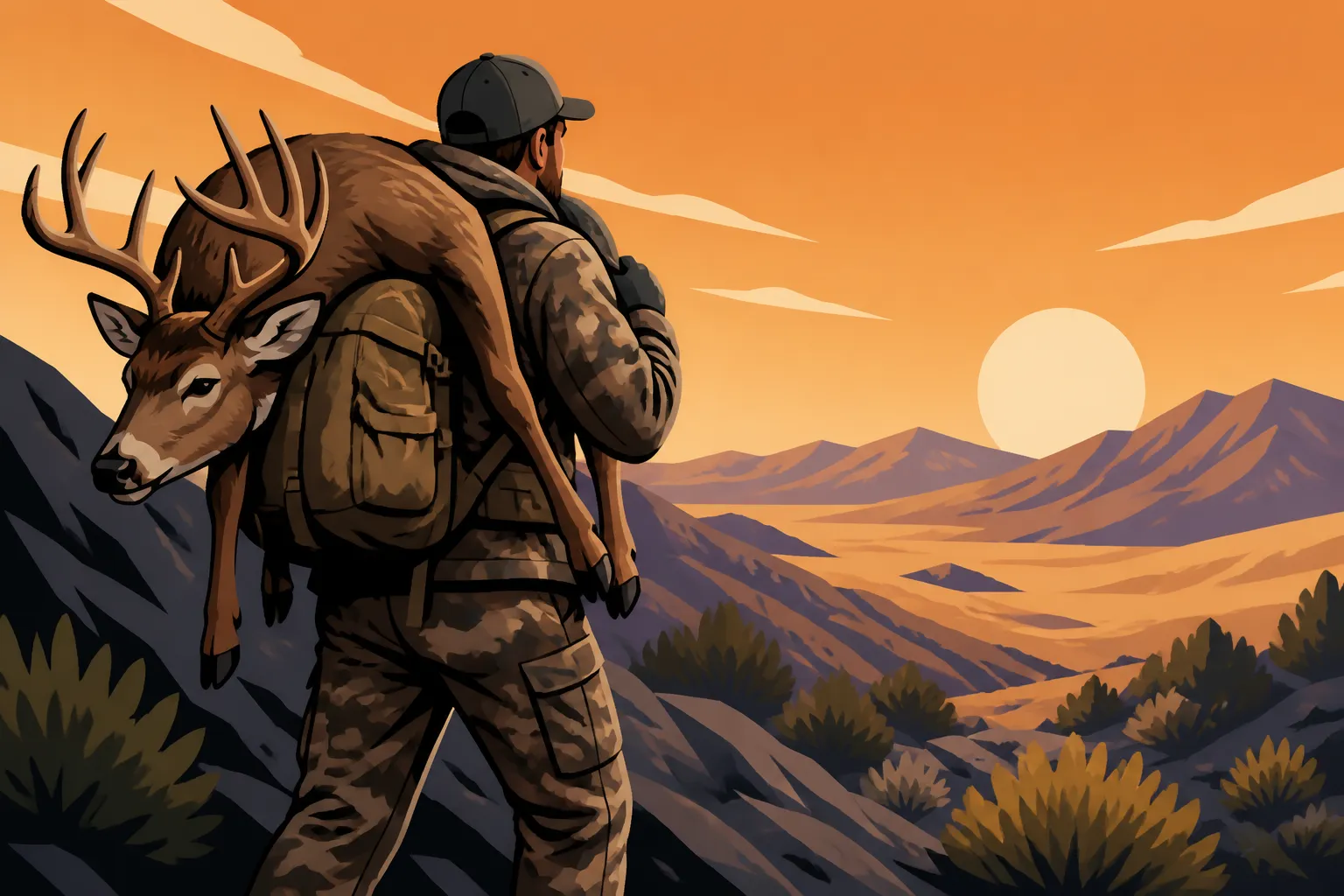
Hitting the ground after a successful shot on a Nevada buck is an incredible feeling, but for many hunters, the real work—and often the biggest challenge—begins right then. Hauling a deer out of Nevada's vast, rugged, and often roadless backcountry can be an absolute beast of a task. It's not just about distance; it's about navigating steep canyons, boulder fields, and dense sagebrush, all while carrying a heavy, awkward load, often under a scorching desert sun. This guide is here to walk you through the realities, the preparation, and the strategies for successfully packing your hard-earned buck out of the Silver State's remote wilderness.
Understanding Nevada's Roadless Backcountry Challenges
Nevada isn't like hunting other states where a downed animal might be a short drag to a logging road. Here, "roadless" truly means roadless, and it comes with a unique set of difficulties that can turn a triumphant harvest into a grueling ordeal if you're not prepared.
The Reality of Great Basin Terrain
Imagine yourself standing on a ridgetop, having just made a perfect shot on a mule deer across a canyon. Now, consider the journey to that animal, and then the return trip. Nevada's Great Basin terrain is characterized by incredibly steep, rocky mountain ranges separated by expansive, flat desert valleys. When you're in the mountains, you're dealing with sharp volcanic rock that chews up boots and knees, loose scree slopes that make footing treacherous, and dense juniper or pinyon pine thickets that hide every obstacle. Descents can be brutal, and ascents even worse when loaded down. There are no smooth paths or well-maintained trails in many of these areas, just a wild, untamed landscape that demands respect. Often, what looks like a short distance on a map, especially one from GoHunt, can translate into hours of physically demanding travel across unforgiving ground.
Physical Demands and Mental Grit
Packing out a deer, especially a large muley, is arguably the most physically demanding aspect of an entire hunt. It requires significant stamina, muscular endurance, and a strong dose of mental toughness. You're not just walking; you're often climbing, scrambling, and navigating with 80-100+ pounds on your back, over uneven terrain. This isn't just a workout; it's an extreme test of your physical conditioning. If you haven't been actively Preparing Physically for Long Glassing Days and packing practice loads, you'll feel it in every muscle. Add in the high desert temperatures, particularly during early seasons like Nevada's August archery deer window, and the risk of dehydration and heat exhaustion becomes very real. Your body will scream at you, but your mental resolve is what will get you through, one careful step at a time. It’s a marathon, not a sprint, and every ounce of preparation pays dividends.
Essential Gear and Pre-Hunt Planning for Pack-Out Success
Success in the Nevada backcountry is less about luck and more about meticulous planning and having the right tools for the job. This is especially true when anticipating the inevitable pack-out.
The Right Pack and Hauling Equipment
Your hunting pack is arguably the most critical piece of equipment for packing out a buck. A small daypack won't cut it. You need a dedicated meat-hauling system, typically an external frame pack or a robust internal frame pack designed for heavy loads. Look for a pack with a strong, stiff frame, a comfortable and adjustable hip belt that transfers weight to your legs, and ample compression straps to secure the load. Brands like Kifaru, Mystery Ranch, and Stone Glacier are popular for their durability and load-carrying capabilities.
An ideal system allows you to separate the meat from your gear, keeping things clean and preventing contamination. Many hunting packs feature a load shelf or a dedicated meat compartment that sits between the main bag and the frame. This keeps the heaviest part of the load close to your back for better balance and comfort. Don't skimp on quality here; a cheap pack will lead to misery, potential injury, and possible damage to your hard-earned meat. Investing in a good pack is an investment in your ability to retrieve your harvest safely and efficiently. Remember, you might be hiking for hours, potentially in the dark, and a poorly fitting or overloaded pack can turn a long walk into a dangerous crawl.
Navigation, Communication, and Emergency Supplies
Before you even leave your truck, you should have a solid plan for how you'll get your buck out. This starts with detailed navigation. Modern GPS devices, dedicated handheld units like those from Garmin, or mapping apps like onX Hunt on your smartphone, are indispensable. With apps like onX, you can download offline maps, mark your vehicle's location, the kill site, and potential routes. Familiarize yourself with how Using onX Layers for Nevada Public Land can show you not just public vs. private boundaries, but also topographical features that might aid or hinder your pack-out. It’s crucial to understand Motorized Travel Rules on Nevada Public Land and know exactly where vehicles are permitted to avoid a costly violation or a longer pack than anticipated.
Beyond navigation, reliable communication is non-negotiable in Nevada's remote units where cell service is non-existent. A satellite messenger, like a Garmin inReach or Zoleo, allows you to send and receive text messages and, most importantly, hit an SOS button in an emergency. This can be a lifesaver if you or a hunting partner sustains an injury far from help. Additionally, always carry a comprehensive first-aid kit, a headlamp with extra batteries, a knife sharpening tool, a water filter or purification tablets, and enough Water You Must Carry on a Desert Day Hunt to sustain you for longer than you anticipate. Remember, an unforeseen injury or unexpected weather can double your time in the field.
Field Dressing and Meat Care in Remote Conditions
Once your buck is down, the clock starts ticking. Proper field dressing and meat care are paramount, especially in Nevada's often warm climate, to ensure you bring home high-quality table fare.
Quick and Clean Field Dressing
The moment your deer is down, the priority shifts to cooling the meat as rapidly as possible. This means getting the hide off and the internal organs out. While many hunters are familiar with the traditional gutting method, the "gutless method" has gained popularity, especially for animals killed deep in the backcountry or in steep terrain. This method involves quartering the animal and removing the meat from the bone without opening the body cavity, which can be cleaner and more efficient for a solo hunter.
No matter your chosen method, speed is critical. Work quickly and cleanly. Get the guts out, or get the quarters separated, and ensure as much air as possible gets to the exposed meat. This helps dissipate body heat, which is the primary enemy of venison quality. For those early season hunts, remember the specific challenges of Field Dressing in August Heat where ambient temperatures can be well over 90 degrees, demanding even faster action. Having sharp knives and a small bone saw will make the process much smoother and reduce the time spent exposed to potential contamination.
Cooling and Protecting Your Harvest
After field dressing, the next critical step is cooling and protecting the meat. In roadless country, you likely don't have immediate access to a cooler full of ice. Your best bet is to get the quarters into breathable game bags immediately. These bags protect the meat from flies, dirt, and debris while allowing air to circulate, which is essential for cooling.
Find the deepest, densest shade available, ideally in a north-facing canyon or under a thick stand of juniper. Hang the game bags from a tree limb or elevate them off the ground to promote airflow around all sides of the meat. If you've quartered the animal, spread the quarters out as much as possible to maximize surface area for cooling. You might even place them on cool rocks, if available, but avoid direct contact with warm ground. If it's still quite warm, periodically wiping the meat with a clean cloth soaked in water can help with evaporative cooling, though this must be done carefully to avoid introducing moisture that could promote bacterial growth. The goal is to get the core temperature of the meat down as quickly as you can before you start Getting Meat Cooled on an Early Season Hunt with actual ice at your vehicle.
Effective Strategies for Packing Out Your Deer
Once your buck is field-dressed and cooling, it's time to strategize the actual pack-out. This involves decisions about how to divide the animal and how to manage the load.
Quartering vs. Whole Animal
For a large mule deer in Nevada's roadless country, packing out the entire animal in one trip is almost always unrealistic, if not impossible. The weight of a mature mule deer can easily exceed 200 pounds live weight, translating to well over 100 pounds of meat, hide, and bone after field dressing. Attempting to haul this in one go, especially solo, over rugged terrain is a recipe for exhaustion, injury, or worse.
The most common and practical strategy is to quarter the animal. This involves breaking the deer down into four quarters (two front legs, two hind legs), the backstraps, tenderloins, neck meat, and sometimes the rib meat. For a truly remote kill, many hunters will go a step further and bone out all the meat, removing it from the bone entirely. This significantly reduces weight by eliminating non-essential bone. Each quarter, depending on the size of the deer, can weigh 30-50 pounds. This allows you to distribute the load over multiple trips if necessary, or across multiple hunters. The gutless method naturally leads to this quartering and boning process, making it highly efficient for backcountry retrieval. This method ensures you only carry the meat and cape, minimizing the bulk and weight.
The Buddy System and Load Management
Hunting with a partner or a group dramatically eases the burden of a pack-out. What might be an impossible solo job becomes manageable with two or three people. With a buddy, you can divide the quarters, each taking a manageable load. For example, one person might take two quarters and the hide, while the other takes the remaining two quarters and the head/antlers. If you're fortunate enough to have more help, you can even make one trip with all the meat and antlers.
Even with a partner, load management is key. Aim for loads that are heavy but still allow you to move safely and efficiently. Typically, 60-80 pounds is a good target for a fit hunter in rugged terrain. Use your pack's compression straps to cinch the meat tight to the frame, preventing it from shifting around as you move. A load that swings and sways will quickly throw you off balance and wear you out. Take frequent, short breaks to rehydrate, check your footing, and adjust your pack. Remember, there's no rush that justifies risking injury or losing meat. Slowly and steadily wins the race when Packing a Buck Out of Roadless Country. Utilizing mapping tools like those offered by GoHunt to scout for the easiest, albeit perhaps longest, route to your vehicle before you even start loading can save you immense effort and prevent getting stuck in impassable terrain.
Overcoming Unexpected Challenges and Ensuring Safety
Even the most well-planned pack-out can throw curveballs. Anticipating these, and having strategies to overcome them, is crucial for success and safety.
Weather Extremes and Dehydration
Nevada's weather can be notoriously unpredictable, especially in the mountains. A beautiful sunny morning can quickly turn into a raging thunderstorm with hail, lightning, and plummeting temperatures. Conversely, heat waves can persist, turning the simple act of walking into a battle against the sun. Always pack for a range of conditions, even if the forecast looks clear. Layering is your friend, allowing you to adapt to temperature swings throughout the day.
Dehydration is a constant threat in the arid Nevada environment. You'll be sweating profusely with a heavy pack, even on cooler days. Carry more water than you think you need, and actively replenish your electrolytes. A personal water filter or purification tablets are wise additions to your pack, allowing you to safely drink from natural sources if you find them, but never rely on finding water. For those hot August hunts, Snake Awareness on an August Archery Hunt is also paramount, as rattlesnakes are active and can pose a significant danger in lower elevations.
Navigation Errors and Mechanical Failures
Getting lost with a heavy pack in the vastness of Nevada can quickly turn a challenging situation into a dangerous one. Always pay attention to your surroundings, even when focused on the task at hand. Regularly check your GPS or map to confirm your position and intended route. The fatigue of packing can lead to mistakes, so double-check your navigation frequently. Knowing how to read a physical map and compass, even in the age of GPS, is a critical backup skill.
Mechanical failures are another concern. This could be anything from a broken pack strap rendering your hauling system useless to a vehicle breakdown miles from the nearest paved road. Always carry basic repair items for your pack (duct tape, zip ties, extra buckles). For your vehicle, ensure it's been properly prepared for Vehicle Prep for Remote Nevada Roads and carry extra fuel, a spare tire, tire repair kit, and tools. Having a satellite messenger, as mentioned earlier, is vital for calling for assistance if your vehicle breaks down and you have no cell service.
Wildlife Encounters and Terrain Hazards
While rare, encounters with larger predators like mountain lions or black bears can occur, especially if you're carrying fresh meat. Be aware of your surroundings, make noise, and carry bear spray if you're in known bear country (primarily western Nevada). More common are terrain hazards: loose rock, steep drops, hidden holes, and sharp vegetation. Choosing Boots for Sharp Volcanic Rock is key; you need footwear with excellent ankle support and a stiff sole to protect your feet and provide traction. Take your time, test your footing, and use trekking poles for added stability, especially on descents with a heavy load. Rushing through difficult terrain with a heavy pack is asking for an accident.
| Packing Method | Description | Pros | Cons | Ideal Scenario |
|---|---|---|---|---|
| Whole Animal | Dragging or carrying the entire gutted deer. | Less cutting/field dressing initially. | Extremely heavy, awkward, difficult in rough terrain. | Small deer, very short distance to vehicle, flat ground. |
| Quartered | Breaking the deer into 4 main quarters, plus backstraps, tenderloins, head/cape. | Distributes weight, allows multiple trips or hunters. Easier to cool. | Requires more field dressing time, multiple trips might be needed. | Medium to large deer, moderate distance, 1-2 hunters. |
| Boned-Out | Removing all meat from the bone, leaving only meat, cape, and head/antlers. | Lightest per trip, most compact. Maximizes pack space. | Most time-consuming field dressing, requires skill. | Large deer/elk, long distances, hot weather, 1-2 hunters. |
Disclaimer
The information provided in this guide is for general informational purposes only and does not constitute professional advice. Hunting in Nevada's backcountry can be dangerous, and conditions can change rapidly. Always consult the latest Nevada Department of Wildlife (NDOW) regulations, secure proper licenses and tags, and prioritize safety above all else. Proper preparation, physical conditioning, and skill are essential for a successful and safe hunting experience.