Best Nevada Units for a Mature Mule Deer
For many of us who dream of a successful Nevada mule deer hunt, the ultimate goal isn't just any deer – it's often a mature, heavy-antlered buck that has outsmarted countless hunters and endured the harsh desert elements. Finding these wise old deer requires a deep understanding of Nevada's diverse landscapes and knowing which units consistently offer the best opportunities for that once-in-a-lifetime encounter. This guide will walk you through the characteristics, strategies, and considerations for targeting mature mule deer across the Silver State.
Understanding Nevada's Mule Deer Landscape and Trophy Potential
Hunting mule deer in Nevada is a unique challenge, unlike many other states. Our vast, open country demands a particular approach, and for those focused on mature bucks, it adds an extra layer of complexity and reward.
The Lure of a Mature Nevada Buck
There's something truly special about a mature mule deer buck. These aren't your average yearlings or even two-and-a-half-year-olds; these are the survivors, the ones who have lived through multiple hunting seasons, dodged predators, and thrived in some of the most unforgiving terrain imaginable. Their antlers often tell a story of age and dominance, reflecting years of good nutrition and successful evasion. The allure isn't just the antler size itself, but the challenge of outwitting an animal that has proven its resilience and intelligence. It's a testament to a hunter's skill, patience, and dedication when you finally connect with one of these magnificent animals.
However, pursuing a mature buck often means accepting that you might not fill your tag every year. These deer are often solitary outside of the rut, hold tight in thick cover during daylight hours, and move with an uncanny sense of caution. They know the escape routes, the hidden pockets, and exactly how to disappear into the vastness of the sagebrush or the canyons at a moment's notice. It’s a pursuit that often teaches more about the deer and the landscape than about simply pulling a trigger.
General Characteristics of Top Units
When we talk about "top units" for mature mule deer in Nevada, we're generally looking at areas that combine specific characteristics. These units often feature vast expanses of relatively undisturbed habitat, often with rugged terrain that provides sanctuary from human pressure. Think high-elevation basins, remote mountain ranges, and deep canyons that are difficult to access. Good forage quality, fed by consistent moisture, is crucial for antler development, so units with healthy sagebrush, bitterbrush, and mountain mahogany stands are often prime candidates.
Another defining characteristic is lower hunting pressure, which usually translates to very tough draw odds. Units that have historically low tag quotas ensure that fewer hunters are in the field, allowing bucks more time to age and grow. These units might not boast the highest density of deer, but they tend to have a higher ratio of older-age-class bucks. Hunters who are willing to put in the time and energy to scout extensively and accept the slim chances of drawing a tag are often the ones who find success in these units.
The Role of E-Scouting and Data Resources
In today's hunting world, especially for a challenging state like Nevada, e-scouting has become absolutely indispensable for pinpointing potential hotspots for mature bucks. Gone are the days of relying solely on paper maps and word-of-mouth. Modern tools allow you to virtually explore entire hunt units from the comfort of your home. You can analyze terrain features, identify potential bedding areas, locate critical water sources, and map out access points and potential travel corridors.
Many dedicated hunters rely on tools like GoHunt to sift through years of draw odds, harvest data, and population statistics. These platforms provide valuable insights into which units consistently produce larger animals, how many tags are typically issued, and what the success rates have been for different weapon types. Using these resources, you can begin to discern patterns in mature buck distribution, identify areas that might hold less pressure, and strategize your application choices. Remember, the more you understand the unit before you even set foot in it, the better prepared you'll be to maximize your precious hunting days. To really get a leg up, learning to use these digital tools to their fullest for activities like E-Scouting a Nevada Unit Before the Season can be a game-changer.
Key Factors Influencing Mature Buck Presence
Understanding the environmental and biological factors that contribute to a mule deer buck reaching maturity and expressing impressive antler growth is crucial for any hunter hoping to pursue them in Nevada.
Habitat Quality and Winter Range
A mature mule deer buck doesn't just appear out of thin air; he's a product of his environment. Superior habitat quality is paramount, offering a consistent supply of nutritious forage and ample cover to evade predators and harsh weather. Nevada's high desert and mountain ranges, when healthy, provide a mosaic of sagebrush, bitterbrush, mountain mahogany, and various forbs that contribute directly to body condition and antler growth. Bucks in areas with access to diverse and nutrient-rich vegetation during the spring and summer are more likely to pack on the pounds and grow those impressive racks.
Crucially, the quality of a unit's winter range can be the single most defining factor in how many bucks survive to maturity. Harsh winters with deep snow or prolonged drought can decimate deer populations, especially younger animals. Units with accessible, low-elevation wintering grounds that offer protection from severe storms and a reliable food source are vital for ensuring bucks make it through the toughest months. These areas allow bucks to recover from the rut and maintain their health, which is directly tied to their potential antler growth in subsequent years. Without good winter range, even units with excellent summer habitat will struggle to consistently produce mature animals.
Pressure, Access, and Remoteness
One of the biggest contributors to a buck's ability to reach maturity is simply not being harvested. This often boils down to hunting pressure and the level of remoteness within a unit. Units with extensive road systems and easy access tend to see more hunters, leading to higher harvest rates on younger bucks. Conversely, areas that require significant effort to reach—whether that's long hikes into roadless country, difficult four-wheel-drive trails, or pack-in operations—often hold older, wiser bucks simply because fewer people are willing or able to penetrate their sanctuaries.
This is where understanding the lay of the land becomes paramount. When you're Reading a Nevada Hunt Unit Before You Apply, pay close attention to the designated Wilderness Study Areas or other backcountry zones. These remote havens offer the security and lack of disturbance that mature bucks need to thrive. They learn quickly where humans rarely venture and will often retreat to these areas as soon as hunting season begins. While these remote sections might demand more physical exertion and planning, they significantly increase your odds of finding a buck that has had the opportunity to grow old and large.
Water Sources and Concentration Points
In arid Nevada, water is life, and this holds especially true for big game. Reliable water sources act as magnets, drawing deer from miles around, particularly during the dry periods of late summer and early fall. For a mature buck, knowing where to find water efficiently is a critical survival skill, and these locations often become predictable points of congregation and travel. Identifying natural springs, guzzlers, and even ephemeral potholes on your maps can be a game-changer when scouting a unit. You can learn more about how crucial these are in Hunting Water in Nevada's Driest Country.
Mature bucks will often establish routines around these water sources, moving from bedding areas to feed and water, often under the cover of darkness or during the very early and late hours of the day. Setting up a vantage point overlooking a secluded water hole or a primary travel corridor leading to one can be a highly effective strategy. While you won't want to hunt directly over a guzzler, understanding their locations and how they influence deer movement patterns is key. Observing these areas from a distance with good optics can reveal not only the presence of mature bucks but also their habits and preferred routes, giving you a significant advantage in planning your stalk.
Specific Unit Characteristics for Mature Bucks
While I can't name specific unit numbers that are "the best" as this information can change rapidly, I can describe the consistent characteristics that define units known for producing mature mule deer in Nevada.
Units Known for Consistent Trophy Production
The units that consistently produce mature mule deer bucks in Nevada often share a few common traits. Firstly, they usually have extremely low tag quotas, meaning only a handful of hunters draw a tag each year. This limited pressure allows bucks to age naturally, giving them multiple seasons to grow impressive antlers. These are typically the hardest tags to draw, requiring many years of accumulated bonus points. Secondly, these units often encompass vast, rugged, and roadless terrain, providing ample sanctuary where mature bucks can retreat and avoid human disturbance. Think of units with significant wilderness areas, deep canyons, or high mountain plateaus that are physically demanding to access.
Thirdly, these units generally boast superior habitat. They might have a good mix of high-quality forage, dense cover for bedding, and reliable water sources spread throughout the landscape. This combination supports healthy deer populations and allows bucks to achieve their full genetic potential. While the overall deer density might not be the highest, the percentage of older-age-class bucks is notably higher. Hunters who pursue these units understand that success isn't guaranteed, even with a tag, but the potential for encountering a truly exceptional animal is significantly enhanced.
Balancing Draw Odds with Trophy Potential
The harsh reality of hunting Nevada is that the units with the highest trophy potential almost always have the worst draw odds. This creates a challenging dilemma for applicants: do you apply for the coveted, low-odds unit with the hope of a monster, or do you play it safer for a unit where you have a better chance of drawing any deer tag? For those focused specifically on mature bucks, the choice is often to endure the long wait, accumulating bonus points year after year. Understanding How Nevada's Squared Bonus Point System Works is crucial here, as it significantly favors those with more points, giving them exponential increases in draw chances over time.
It's a delicate balance. Some hunters might dedicate their primary application choice to a top-tier unit, then use their second or third choices for units that offer slightly better odds but still hold potential for a quality buck. Platforms like GoHunt are invaluable for researching these odds, allowing you to make informed decisions based on historical data. Remember, waiting for that "perfect" tag might mean years without hunting, but for many, the chance at a truly mature mule deer is worth the patience. It's a long-term strategy that requires commitment but can pay off spectacularly.
Understanding Unit Boundaries and Terrain
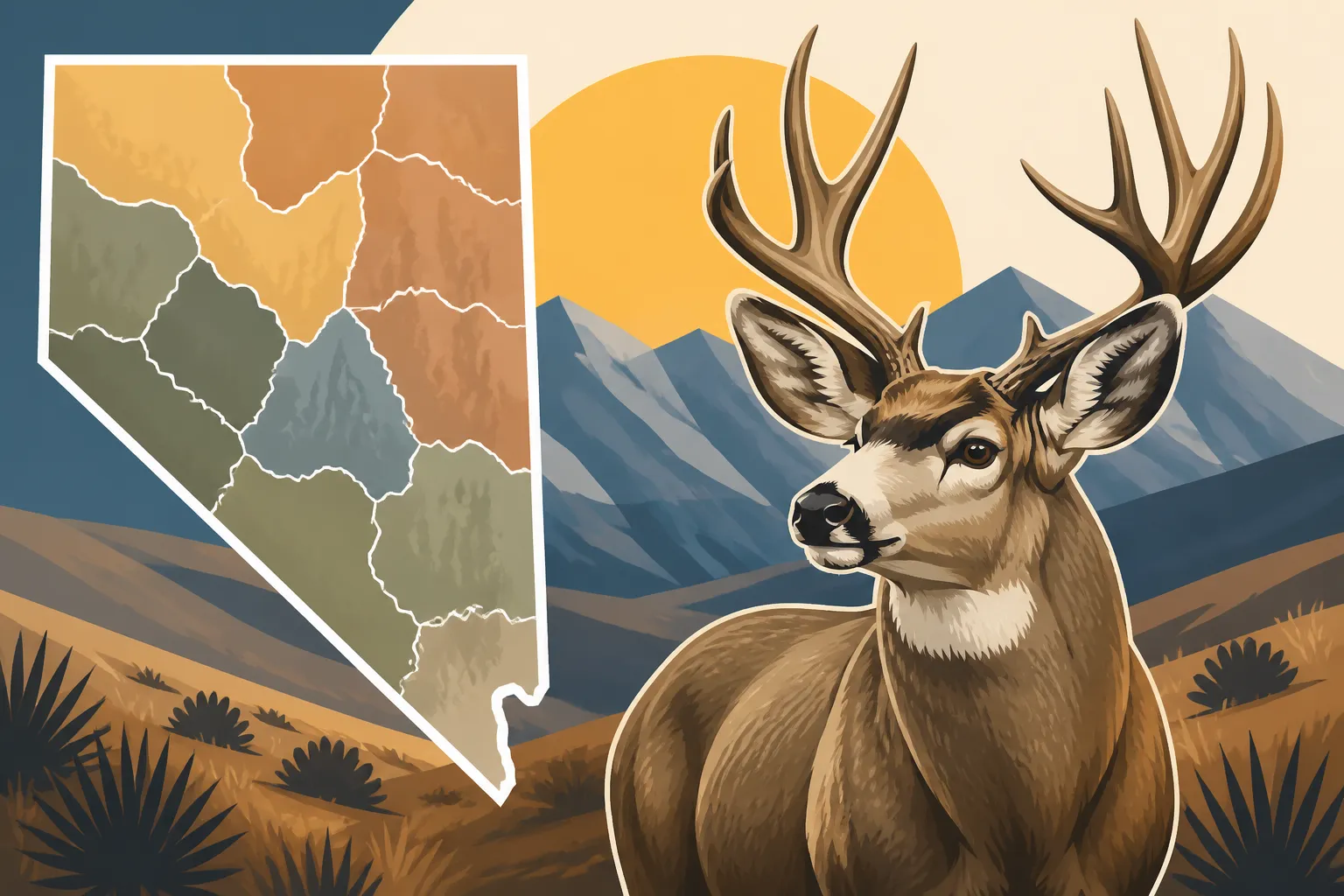
Before you even think about applying for a unit, a thorough understanding of its boundaries and the terrain within them is non-negotiable. Nevada's hunt units can be massive, covering hundreds or even thousands of square miles, and their boundaries are not always intuitive. Knowing How Nevada Numbers Its Hunt Units and how to properly read a detailed map is the first step. You need to be able to identify where one unit ends and another begins, especially when dealing with complex unit groups. Mistakes here can lead to hunting in the wrong unit, which has severe consequences.
Beyond the administrative boundaries, studying the topography is critical for mature bucks. Look for areas with steep, broken country, rimrock, and dense pockets of cover that are difficult for hunters to navigate. These features create natural refuges. Also, identify potential travel corridors between feeding and bedding areas, especially those that offer concealment. Bucks will often use draws, drainages, or the backside of ridges to move undetected. Overlaying public land data is also important, as private land can influence access and deer movement. Familiarize yourself with how to use various mapping tools to effectively analyze the terrain and develop a preliminary plan for your hunt. Being able to Read a Nevada Unit Boundary Map accurately is one of the most fundamental skills for any Nevada hunter.
Strategies for Hunting Mature Mule Deer in Nevada's Best Units
Once you've secured that coveted tag for a promising unit, the real work begins. Hunting a mature mule deer in Nevada is often less about luck and more about strategy, patience, and physical readiness.
Glassing as the Primary Tactic
If there's one strategy that defines successful mule deer hunting in Nevada, it's glassing. The vast, open nature of the Basin and Range country makes spot-and-stalk the most effective method, and that all starts with quality optics and hours spent behind them. Trying to cover ground on foot in many of these units is akin to looking for a needle in a haystack; you'll burn energy and potentially spook deer without ever knowing they were there. Instead, find a high vantage point that allows you to survey vast expanses of terrain. Use a good tripod, a high-power spotting scope, and quality binoculars.
Patience is key. Don't just scan; grid the landscape methodically, picking apart every patch of sagebrush, every shadow, and every rimrock cliff face. Bucks, especially mature ones, are masters of camouflage and will often bed in plain sight, melting into the landscape. Spend 15-30 minutes on one small section before moving your optics slightly. Look for horizontal lines, ears, or glimpses of antler tines that break up the natural vertical and rounded forms of the terrain. Early mornings and late evenings are prime times, but don't discount mid-day, as bucks will often shift in their beds or stand to stretch. For a deeper dive, check out Glassing Nevada's Basin and Range for Mule Deer.
Timing Your Hunt for Rut or Migration
The timing of your hunt within the season can dramatically influence your chances of finding a mature buck. Nevada's seasons are carefully structured, and knowing when different phases of the deer's annual cycle occur can give you an edge. Early archery seasons, often in August, can be challenging due to heat, but bucks are typically in velvet and often concentrated near reliable water sources. The pre-rut and rut periods, typically occurring in November, offer a unique opportunity. During the rut, mature bucks are more active, less cautious, and focused on does, making them more visible and vulnerable. Knowing When the Mule Deer Rut Actually Starts in your specific unit can help you plan for this brief but exciting window.
Late rifle seasons, often held in November or early December, can also be highly productive, especially in units that experience significant snowfall. These conditions can trigger migration, pushing deer from high country to lower, more accessible winter ranges. During this migration, bucks often move in larger groups and are more exposed as they travel. While the weather can be brutal, the reward of encountering a mature buck that has concentrated due to weather can be immense. Each season offers its own set of challenges and opportunities, and understanding these dynamics is crucial for success. You can learn more about late season strategies in Why Late Seasons Produce Bigger Bucks.
Physical Preparation and Mental Toughness
Hunting mature mule deer in Nevada's best units is not for the faint of heart. These hunts are physically and mentally demanding, often requiring long days of hiking at elevation, navigating rugged terrain, and enduring extreme weather conditions. Physical preparation is paramount. You need to be able to climb steep hills, carry heavy packs, and potentially pack out an animal from miles deep in the backcountry. Incorporate cardiovascular training, strength training, and endurance hikes with a loaded pack into your routine well before the season. Check out Preparing Physically for Long Glassing Days for some valuable tips.
Beyond the physical, mental toughness is just as important. You will likely face long stretches without seeing a legal buck, endure uncomfortable weather, and experience moments of doubt. The ability to stay positive, remain focused, and persist through setbacks is what separates successful hunters from those who give up. This means having the patience to sit behind optics for hours, the discipline to pass on smaller bucks while waiting for a mature one, and the resilience to keep pushing when your body is tired. A mature Nevada mule deer buck is earned, not given, and it will test you in every way possible.
Comparing Nevada Hunt Unit Characteristics for Mature Bucks
Understanding the general differences between units that tend to produce trophy animals versus those that offer more general hunting opportunities can help frame your application strategy.
| Characteristic | Trophy-Potential Unit (for Mature Bucks) | General-Opportunity Unit |
|---|---|---|
| Tag Quotas | Extremely low, often single-digit numbers | Moderate to high, allowing for more successful draws |
| Draw Odds | Very poor, often requiring many years of bonus points | Better, with some units allowing for regular draws |
| Terrain & Access | Highly rugged, remote, extensive roadless areas, difficult access | Mix of accessible and rugged, more roads and easier entry |
| Habitat Quality | Diverse and consistently high-quality forage, dense cover | Variable, may have less consistent forage or more open areas |
| Hunting Pressure | Very low, due to limited tags and difficult access | Moderate to high, especially on opening weekends |
| Deer Density | May not be highest overall, but high percentage of mature bucks | Generally higher overall deer density, but fewer mature bucks |
| Physical Demand | Very High (long hikes, pack-ins, high elevation) | Moderate (can be physically demanding, but often less extreme) |
| Antler Growth Potential | Excellent, due to age structure and habitat | Good, but mature bucks are harder to find and harvest |
Disclaimer
This article is for general informational purposes only and does not constitute professional advice. Laws, prices and regulations vary by location and change over time. Consult a qualified professional for guidance on your specific situation.