Best Chukar Country in Northern Nevada
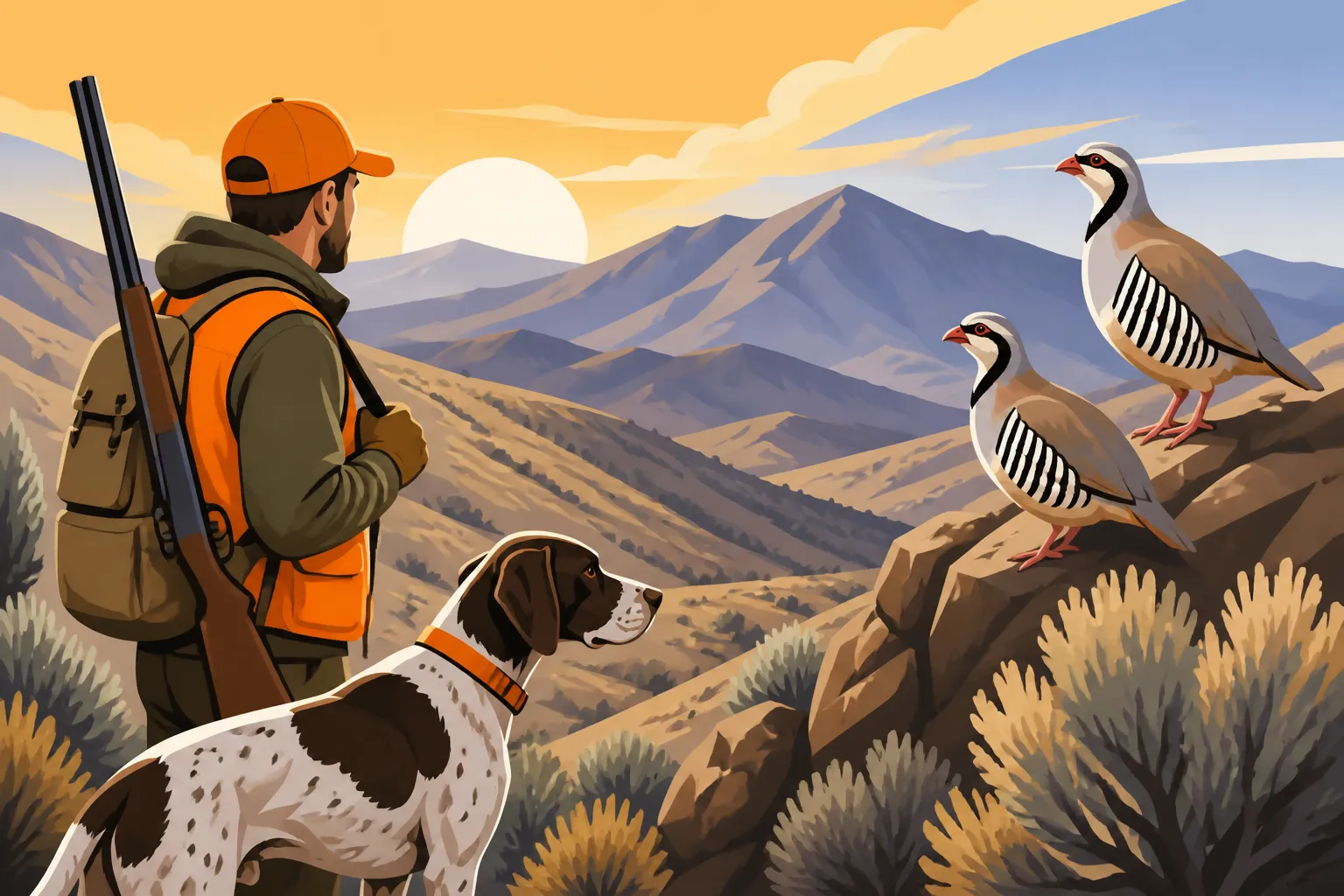
Finding chukar in Northern Nevada can feel like chasing ghosts through a rocky obstacle course. These birds are legendary for their ability to blend into the landscape and test every ounce of your physical and mental fortitude. This guide is here to help you peel back the layers of frustration, understand the specific terrain and conditions these wily birds call home, and point you towards some of Northern Nevada's most promising chukar country, so you can spend less time guessing and more time hunting.
The Chukar Life: Understanding Their Preferred Habitat in Northern Nevada
Before we can even talk about the "best" country for chukar, we need to talk about what makes any country good for them. Chukar aren't just any bird; they are creatures of habit, fiercely adapted to some of the harshest, rockiest, and driest landscapes Nevada has to offer. Trying to find them without understanding their specific needs is like looking for a needle in a thousand haystacks – you'll just end up tired and frustrated.
Elevation, Aspect, and Terrain that Holds Birds
When you're looking at a map or even driving through Northern Nevada, you'll notice a lot of sagebrush and wide-open spaces. But chukar aren't necessarily in the middle of those open flats. Instead, they gravitate towards the steep, rocky slopes of the mountain ranges, typically at elevations ranging from about 4,000 feet up to 8,000 feet, sometimes even higher. It's that broken, rugged terrain that offers them escape cover from predators like raptors and coyotes, and the scattered vegetation they rely on for food. We're talking about talus slopes, rimrock, and hillsides choked with cheatgrass, wild mustard, and bunchgrasses – perfect for them to peck around in.
The aspect of a slope can also play a huge role, especially early in the season or during colder spells. South-facing slopes tend to warm up faster in the morning sun, melting any overnight frost or snow and making forage more accessible. These slopes also offer a bit more shelter from biting winds. Conversely, during the scorching early season, north-facing slopes might hold a little more moisture and offer shade, drawing birds to cooler pockets. Understanding this subtle difference in aspect can be key to patterning birds as the season progresses. Forget flat ground; think steep, think broken, think volcanic rock. That's where you'll find them. It's physically demanding hunting, which is why we often say Why Chukar Hunting Is So Physically Hard.
Critical Water Sources and Their Proximity
Chukar are desert birds, and like all desert dwellers, water is life. While they can go for extended periods without free-standing water, they do need to drink, especially as the season warms up or after a particularly dry spell. This makes springs, guzzlers, and even temporary seeps absolutely magnetic to chukar. You might find birds miles from what looks like obvious water, but a keen eye on your map for subtle blue lines or a little green patch can make all the difference. These birds will travel quite a distance in the mornings and evenings to get a drink, often flying down from higher roosting areas.
Identifying these water sources through e-scouting before your hunt is absolutely paramount. Look for drainages that show even a hint of moisture, marked springs, or designated wildlife guzzlers on your maps. Using satellite imagery, you can often spot greener vegetation that indicates subsurface water, even if it's not explicitly labeled. Many hunters use tools like GoHunt to analyze terrain and potential water sources. The birds will often roost near these water sources or fly down to them at predictable times of day, offering you a precious window of opportunity. It's no secret that Hunting Water in Nevada's Driest Country is a tactic that works for many species, and chukar are no exception.
Preferred Vegetation and Food Sources
Beyond the rocks and water, chukar are highly dependent on specific vegetation for their diet. Cheatgrass is a double-edged sword: while it fuels catastrophic wildfires in Nevada, it's also a primary food source for chukar. They love to eat the seeds from cheatgrass, wild mustard, filaree, and various bunchgrasses. The key is finding areas where these plants are abundant, offering a consistent food supply.
Good chukar country often features a mosaic of these plants interspersed with sagebrush and bitterbrush. The sage and bitterbrush provide some cover from aerial predators, while the grasses offer sustenance. A dense monoculture of a single plant isn't usually as productive as a varied landscape. When scouting, look for those transitions between different plant communities, especially where the rocky slopes meet more open, but still broken, ground. This mix provides both food and security, which is exactly what a chukar family needs to thrive.
Top Chukar Hunting Regions in Northern Nevada
Northern Nevada is a vast and wild place, and saying "Northern Nevada" is like saying "the ocean" – it's big, but where specifically? For chukar hunters, certain mountain ranges and geographical areas have earned a reputation for consistently holding birds, year after year. These are the places where the habitat requirements we just discussed come together in ideal combinations.
The Humboldt-Toiyabe National Forest Mountains
While vast swaths of Nevada are BLM land, don't overlook the mountain ranges within the Humboldt-Toiyabe National Forest. These areas, particularly in the central and eastern parts of Northern Nevada, often offer some of the highest elevations and steepest, most rugged terrain. Think of ranges like the Santa Rosas, the Rubies, and even parts of the Toiyabes themselves. These mountains frequently provide excellent chukar habitat, especially after a winter with good snowpack and a spring with timely rains. The higher elevations mean these areas can be cooler earlier in the season, and they often hold scattered pockets of aspens or pines at their highest points, transitioning down into the rocky, sage-choked slopes chukar adore.
Access can sometimes be more defined in these areas, with established forest service roads, though many of them are still rough and require a high-clearance vehicle. The sheer size of these ranges means you can often find unpressured birds if you're willing to hike away from the main roads. When planning a hunt here, e-scouting tools are fantastic for identifying potential drainages, ridgelines, and promising rock formations. Remember, Choosing Boots for Sharp Volcanic Rock is essential here, as the terrain will punish poor footwear.
Basin and Range Country: Where Deserts Meet Mountains
Nevada is famously defined by its "Basin and Range" topography, a series of parallel north-south running mountain ranges separated by flat, arid valleys. This is classic chukar country. The chukar will be found on the slopes of those ranges, rarely out in the dead-flat basins. Look for the transition zone where the alluvial fans meet the steeper, rockier mountain flanks. Ranges like the East Humboldts, the Battle Mountains, the Sonoma Range, and countless others across Elko, Eureka, and Humboldt counties offer prime chukar habitat.
These areas are often dominated by BLM land, which means vast tracts of public ground. The challenge here is less about finding land and more about finding the right land – the specific slopes, aspects, and water sources that are actively holding birds. Hunters often use methods like Glassing Grids Across a Nevada Basin to systematically pick apart these slopes from a distance, looking for telltale signs of movement or flocks. It's often a game of optics and patience before the real work of climbing begins. The openness of this country means that long-distance glassing is your best friend before you commit to a brutal climb.
| Northern Nevada Chukar Hunting Regions | Typical Elevation (feet) | Terrain Characteristics | General Access Notes |
|---|---|---|---|
| Santa Rosa Range (Humboldt-Toiyabe NF) | 5,000 – 9,000+ | Steep, volcanic rock, rimrock, sagebrush, limited pines/aspens | Forest roads, often rough; requires high-clearance |
| Ruby Mountains (Humboldt-Toiyabe NF) | 6,000 – 10,000+ | Very steep, granite, talus, heavy sage/cheatgrass lower down | Some maintained roads, wilderness areas restrict vehicles |
| East Humboldt Range (BLM/NF) | 5,500 – 9,500+ | Broken rock, cheatgrass, bitterbrush, good water sources | Mix of BLM two-tracks and forest roads |
| Sonoma Range (BLM) | 4,500 – 7,500 | Volcanic flows, sharp rock, extensive cheatgrass hillsides | Mostly BLM two-tracks, can be remote and rough |
| Battle Mountains (BLM) | 4,000 – 7,000 | Varied volcanic and sedimentary rock, lower elevation foothills | Extensive BLM road network, but still rough in spots |
Remote, Lesser-Known Ranges
Beyond the well-known hotspots, Northern Nevada holds countless smaller, isolated mountain ranges that can be absolutely phenomenal for chukar. These are the places that often require more effort to reach, deeper exploration, and a willingness to embrace solitude. They might not show up on every hunting forum's "best units" list, but precisely because of that, they can offer incredible experiences with less pressure. Think of ranges north of Winnemucca, east of Lovelock, or even some of the more obscure corners of Elko County.
The key to finding these gems is through meticulous e-scouting and a willingness to simply explore. Look for ranges with similar characteristics to the major chukar strongholds – steep, broken, rocky terrain with good south-facing slopes and identifiable water sources. Sometimes, a quick stop at a local general store or gas station in a small town can yield valuable, albeit vague, information. Just remember to be respectful and don't expect anyone to give away their secret spots! The advantage of these smaller ranges is that if you find birds, you might have them all to yourself. This is where truly E-Scouting a Nevada Unit Before the Season pays off in spades.
Strategic Scouting for Northern Nevada Chukar
You've got the general idea of what chukar country looks like and some regions to focus on. Now, how do you translate that into boots-on-the-ground success? Strategic scouting, both from your computer and in the field, is the bridge between theory and a full game bag.
E-Scouting from Your Computer
Modern technology has revolutionized how we prepare for hunts. Before you ever leave your driveway, you can zoom in on potential chukar habitat using online mapping tools. Look for the following indicators:
- Contour Lines: Identify steep, broken terrain. Chukar don't like gentle slopes. Look for tightly packed contour lines indicating steepness, and irregular contours showing broken ground and drainages.
- Aspect: Use the sun angle tools to identify south-facing slopes, especially important during colder periods.
- Water Sources: Pinpoint springs, guzzlers, and even ephemeral drainages. Zoom in on satellite imagery to look for greener vegetation indicating water.
- Access Roads: Plan your approach. Are there two-track roads that get you close to the base of the slopes, or will you need to hike in a long way? Be mindful of private property boundaries, often clearly marked on these digital maps. Many hunters find tools like GoHunt invaluable for visualizing these aspects.
- Historical Data: While not directly showing where the chukar are today, reviewing historical harvest data for specific units can give you a general idea of past productivity, helping you narrow down regions worth focusing on. Knowing How Rainfall Drives Chukar Numbers can also help you interpret historical data against current conditions.
This digital reconnaissance helps you eliminate unproductive areas and focus your precious field time on the highest-probability spots. It's about working smarter, not just harder.
Field Reconnaissance and Pre-Season Glassing
There's no substitute for getting your eyes on the ground, even if it's just a few weeks before the season opens. Drive the access roads you identified during e-scouting. Note the conditions of the roads – are they passable with your vehicle? Is there fresh sign of other hunters? Then, pick a vantage point and start glassing. This is where good optics are critical. Optics Power for Nevada's Long Sightlines is not just for big game; it's essential for spotting chukar.
Glass ridgelines, the bottoms of cliffs, and around any water sources you identified. Chukar often give away their presence with their distinctive call – a sharp "chuck-chuck-chukar!" Listen for it, especially in the early mornings and late evenings. You might not see flocks, but hearing their calls is a strong indicator they're in the area. Pay attention to droppings, feathers, and dust baths. These subtle signs tell you not just that birds are present, but that they are actively using that specific piece of ground. If you find a few feathers near a rimrock, that's a good spot to check on opening day.
Reading Chukar Sign on the Ground
Once you're actually walking the slopes, you need to become a detective. Chukar sign includes:
- Droppings: Small, dark, and often tubular droppings are a clear indicator. Fresh droppings mean recent activity.
- Feathers: Look for feathers, especially around roosting areas or feeding spots. A small pile of feathers might indicate a predator kill, but scattered feathers are just a sign of regular use.
- Dust Baths: Chukar love to take dust baths, especially in sandy or fine-dirt patches. These shallow depressions, often with feathers or droppings nearby, are a sure sign.
- Tracks: While harder to spot on rocky ground, chukar leave small, three-toed tracks. Look for them around water sources or softer soil.
Combine these ground signs with your overall understanding of the habitat. If you find fresh sign in a prime location – steep, rocky, with good food and water nearby – you've likely found your chukar. Remember, these birds don't sit still, so fresh sign is always more valuable than old. Learning to read these clues quickly can save you a lot of wasted hiking and put you on birds more efficiently.
Factors Influencing Chukar Populations Year to Year
Chukar hunting in Northern Nevada is never a sure thing. These populations can fluctuate wildly, primarily due to environmental factors. Understanding these dynamics can help set realistic expectations and guide you to potentially more productive areas.
The Critical Role of Rainfall and Snowpack
For chukar, much like many other upland species in the arid West, rainfall is king. Specifically, winter snowpack and spring rains are incredibly important. Good snowpack ensures that soil moisture is retained into the spring, allowing crucial early season forage to grow. Adequate spring rains then ensure a flush of insect life (a vital protein source for growing chicks) and continued growth of seed-producing plants like cheatgrass and wild mustard.
A dry winter followed by a bone-dry spring usually spells disaster for chukar reproduction and chick survival. Fewer chicks mean fewer birds in the fall. Conversely, a wet winter and a mild, moist spring can lead to a boom year, with strong chick survival and robust adult populations. This is why you'll often hear veteran chukar hunters talking about the "rain year" or the "drought year." While you can't control the weather, you can certainly factor it into your hunt planning. Use resources like the Natural Resources Conservation Service (NRCS) SNOTEL data (for snowpack) and local weather reports to get a feel for the preceding year's conditions. This knowledge can also inform your decisions about Reading Water Sources Before an August Hunt, if you're targeting other species, but it applies to chukar too.
Winter Severity and Its Impact
Beyond just moisture, the severity of the winter itself can heavily influence chukar numbers. While chukar are tough, extremely harsh winters with prolonged periods of deep snow and bitter cold can take a toll. Deep snow can bury essential food sources, making it impossible for birds to feed. Sustained cold can also increase energy demands, leading to starvation, especially for juvenile birds who haven't built up sufficient fat reserves.
However, chukar are remarkably resilient. They'll often move to lower, south-facing slopes during periods of heavy snow, where the sun helps clear patches of ground. Their preference for steep, rocky habitat also gives them an advantage, as these areas often shed snow faster than flatter terrain. A mild winter, combined with good moisture, generally bodes well for chukar populations. It means birds go into the spring breeding season in better condition, leading to higher reproductive success.
Predator Presence and Management
Like all ground-nesting birds, chukar chicks and eggs are vulnerable to a wide array of predators, including coyotes, foxes, ravens, and various raptors. While predator populations are a natural part of the ecosystem, abnormally high numbers of certain predators in a given year, especially coinciding with the nesting season, can impact chick survival.
Nevada's wildlife agencies manage predator populations through various programs, but these efforts are generally aimed at maintaining ecological balance rather than directly boosting chukar numbers in specific localized areas for hunting. As a hunter, you might notice areas with a high density of predator sign (coyote scat, raptor nests) during your scouting, which could indicate a tougher go for chukar in that immediate vicinity. However, chukar are smart and utilize their steep, broken habitat to evade many ground predators, so a healthy population of predators doesn't always mean no chukar. It just adds another layer to their already challenging existence in the high desert.
Disclaimer
This article is for general informational purposes only and does not constitute professional advice. Laws, prices and regulations vary by location and change over time. Consult a qualified professional for guidance on your specific situation.