Bugling Against Cow Calling in September
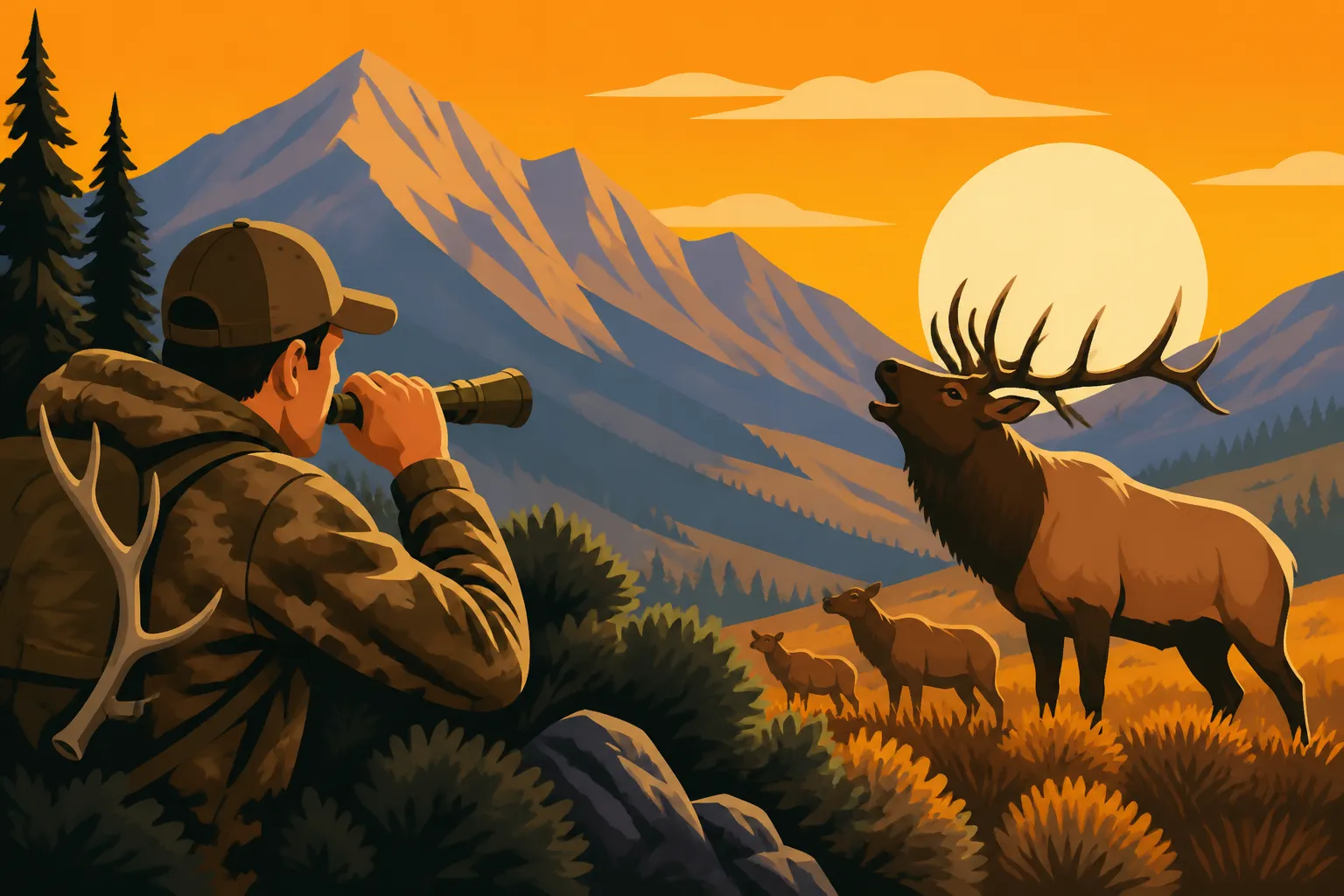
There's nothing quite like the sound of an elk bugle ripping through the crisp Nevada September air. It’s the sound that fuels a hunter's dreams, but also the cause of endless head-scratching when you're out there, trying to figure out if you should go all-out with a challenge bugle or whisper sweet nothings with a subtle cow call. Many of us stand frozen, second-guessing our every move, wondering if we're sending the right message. This guide is all about cutting through that confusion, helping you master the art of knowing when to bugle and when to cow call during Nevada's September elk rut.
Understanding September Elk Behavior in Nevada
The early fall in Nevada, especially September, is a dynamic time for elk. It’s when the high-country basins and timber fringes come alive with the sounds and sights of the rut. But what works one day, or even one hour, might not work the next, and it all comes down to understanding the nuances of how these magnificent animals behave.
The Nuances of Early vs. Peak Rut Activity
When September first rolls around, you might be dealing with what we call the "pre-rut." Bulls are starting to feel frisky, but they might not be in full-blown breeding mode yet. They're gathering cows, establishing dominance, and testing each other, but the full-on, aggressive, no-holds-barred bugle fest isn't quite at its peak. During this time, a strong, dominant bugle from a hunter might actually intimidate a bull who isn't ready to fully commit to a fight, sending him packing.
As the month progresses, typically into the second and third weeks, the rut often intensifies. This is when the estrous cows are more receptive, and the herd bulls are working overtime to keep their harems together. Satellite bulls, those younger or less dominant males, are constantly trying to cut in. This "peak rut" period is when you'll likely see the most aggressive behavior and hear the most vocalizations. Understanding When the Elk Rut Peaks in Nevada is crucial for timing your tactics. The shift from pre-rut to peak rut often dictates whether a bugle is an invitation to fight or an empty threat.
Reading Elk Sign and Activity Levels
You can't just walk into a unit and start calling blindly. Successful elk hunting in Nevada, especially during the rut, demands that you become a keen observer. Start by looking for fresh sign: wallows where bulls have rolled, rubbing trees with fresh bark peeled away, and heavily used trails. The fresher the sign, the hotter the area. A wallow that’s still wet and muddy, with fresh tracks around it, tells you elk are active and in the mood. Similarly, rubs with sap still oozing indicate recent activity.
Pay attention to sound, too. Are you hearing distant bugles? Are cows chirping? Listening can often tell you more about the mood of the elk than any visual sign alone. If the woods are silent, aggressive calling might be premature. If you’re hearing sporadic bugles or soft mews, it’s a sign that the elk are in the area but perhaps not fully engaged in a vocal battle. Think of it like reading the room at a party – sometimes you need to ease in, sometimes you can jump straight into the conversation. Scouting with tools like GoHunt's mapping features to identify potential wallows, bedding areas, and travel corridors can give you a significant advantage before you even step foot in the unit, helping you identify areas where Reading Fresh Elk Sign in Thin Timber will be most productive.
The Art of the Bugle in September
The bugle is the quintessential elk call, the sound that defines the rut for many hunters. But it’s not a one-size-fits-all tool. There’s a time and place for every kind of bugle, and knowing the difference can turn a bust into a boom.
When to Use Aggressive Bugles
Aggressive bugles are those loud, throaty, challenging calls that signal a bull’s dominance and readiness to fight. These are best used when you've already located a bull and believe he's either a herd bull protecting his cows or a satellite bull looking to challenge. The scenario often plays out like this: you hear a bull bugle, and you respond with an equally strong, confident bugle. This can provoke a direct confrontation, causing the bull to charge in, eager to defend his territory or harem.
However, there's a significant risk. If the bull is smaller or less dominant, an aggressive bugle can scare him off. If he's a very dominant bull, he might circle downwind, trying to catch your scent before committing. You're essentially throwing down the gauntlet, so you better be ready for what comes next. Aggressive bugling is often a high-risk, high-reward strategy. It’s best reserved for the peak rut, when bulls are already feeling their oats and are less likely to back down from a challenge.
Locator Bugles for Finding Bulls at Dawn
One of the most effective uses of a bugle, especially early in the morning or late in the evening, is as a locator call. A locator bugle isn't meant to be aggressive or challenging; it's a soft, inquisitive call designed to get a bull to reveal his position without feeling threatened. Think of it as knocking on the door to see if anyone's home.
You'll often hear a locator bugle used at first light, piercing the stillness of the dawn. The technique is simple: let out a moderately loud bugle, not overly aggressive, and then just listen. Silence is your best friend here. Don't call again for several minutes. A bull in the area will often respond with a bugle of his own, telling you exactly where he is. This is especially useful in vast, open country where Glassing Grids Across a Nevada Basin can be combined with calling. Once you pinpoint a general area, you can then move closer, assess the situation, and decide on your next calling strategy. This initial locator bugle can be the key to unlocking a silent morning. You can find more specific advice on Locator Bugles for Finding Bulls at Dawn in our other resources.
Interpreting Bugle Responses
Understanding what a bull's bugle means is just as important as knowing when to make your own. A bull's bugle can communicate a lot, from his mood to his perceived dominance.
- Loud, close, immediate response: This often indicates an aggressive, dominant bull who is either close by or actively approaching. He's accepted your challenge and is coming to investigate or fight.
- Weak, distant, or hesitant response: This could mean a satellite bull, a younger bull, or one who isn't feeling particularly confident. He might be curious but isn't likely to charge in. He might be trying to locate you before making a move.
- Silence after your bugle, but then a distant cow call: This is a tricky one. The bull might have heard you, but instead of bugling back, he's trying to lure you in with his cows. He might be wary or attempting to size you up.
- Bugle followed by raking trees: He's fired up! This bull is demonstrating his strength and frustration, rubbing his antlers on trees to show dominance. He's likely headed your way.
Listening intently to the subtle variations in their calls – the intensity, the length, the growls, and chirps mixed in – will give you invaluable clues about the elk's mindset and help you adjust your strategy on the fly.
The Subtle Power of Cow Calling
While bugles grab attention, cow calls are often the secret weapon that brings a wary bull into range. They speak to a bull's primal urge to breed and his need to gather and protect his harem.
When to Employ Cow Calls and Chirps
Cow calls are generally more versatile and less risky than aggressive bugles. They excel in situations where a bull is wary, silent, or has been spooked. If you've been bugling without success, or if you suspect elk are in the area but not vocalizing, a series of soft cow mews and chirps can be incredibly effective.
Think of it this way: a bull hears a lone cow call, and his instinct is to investigate, hoping to find a receptive female. This is especially true for satellite bulls who are constantly looking for an opportunity to break away a cow from a dominant bull's harem. Even a dominant bull might respond to cow calls if he thinks one of his cows is wandering off or if he wants to gather more females. A soft estrus mew can be particularly enticing during the peak of the rut, mimicking a cow ready to breed.
Mimicking Herd Dynamics with Cow Calls
Effective cow calling isn't just about making a single "moo." It’s about creating a realistic scenario that makes a bull believe there’s a small group of cows, or even a lone, lost cow, in his vicinity. This often involves a sequence of different calls:
- Estrus Mews: These are longer, more drawn-out mews that signify a cow in heat. Use these sparingly, but they can be incredibly potent.
- Chirps and Barks: Shorter, sharper sounds that cows make to communicate with calves or each other. These can suggest a content, grazing group of elk.
- Lost Cow Calls: A slightly more urgent, plaintive mew that suggests a cow separated from the herd. This can sometimes trigger a protective response from a herd bull or an opportunistic response from a satellite.
Varying the pitch, volume, and rhythm of your calls can make them sound more natural. Don't be afraid to mix in some soft foraging sounds, like rustling leaves with your foot, to complete the illusion. By listening to real elk vocalizations (there are many great resources online and in apps like GoHunt), you can refine your technique to sound less like a human with a reed and more like a genuine elk.
Combining Cow Calls with Light Bugles
Sometimes, a bull needs a little extra nudge. This is where combining cow calls with light, non-aggressive bugles can be incredibly effective. Imagine a scenario: you’re making soft cow mews, trying to lure in a bull, but he's hanging up, just out of sight, maybe 150-200 yards away. He's interested, but cautious.
At this point, you might throw in a soft, inquisitive bugle – almost like a lost, younger bull or a bull that just wants to confirm the location of the cows. This can sometimes seal the deal, giving the wary bull the confidence or the competitive spark he needs to commit and come into range. It simulates a natural interaction between a small bull and cows, making the scenario more believable. This hybrid approach is a subtle art, but when executed correctly, it can be deadly. It also plays into the tactics discussed in Bugling Against Cow Calling in September.
Integrating Calling with Stalking and Setup
Calling is only half the battle. Your physical setup, how you approach, and how you position yourself relative to the elk you're calling to, are equally critical for success. You can make the most realistic calls in the world, but if the wind swirls or you get busted on your approach, it’s all for naught.
Positioning Yourself for Success
Before you even make your first call, assess your surroundings. What’s the wind doing? Elk have an incredible sense of smell, and a swirling wind will ruin your hunt faster than anything. Always try to approach and call with the wind in your favor, blowing from the elk to you. This might mean taking a much longer, circuitous route, but it’s almost always worth it. Understanding Reading Wind on a Long Sage Stalk is paramount, even for elk.
Terrain is your friend. Use draws, ridges, thick timber, or even scattered juniper to break up your silhouette and provide cover. You want to be able to move quietly and unseen, getting into a good calling and shooting position. Ideally, you want to set up in a spot where you have good visibility in the direction you expect the elk to approach, with clear shooting lanes. If you're calling aggressively, be prepared for a bull to come in quickly and directly. If you're using subtle cow calls, he might come in slowly and cautiously, circling to get a look or a sniff.
Two-Hunter Calling Setups That Actually Work
For many hunters, especially those going after elk, a two-person team can dramatically increase success rates. One person acts as the primary caller, while the other positions themselves as the shooter. This setup leverages the elk's natural curiosity and caution against them. You can learn more about these strategies in Two-Hunter Calling Setups That Actually Work.
Here’s how it typically works:
- The Caller: Positions themselves 50-100 yards behind the shooter, off to one side, or elevated if terrain allows. Their job is to draw the bull's attention away from the shooter and towards themselves. When the bull comes in, he's often looking for the source of the calls (the caller) and presents a broadside shot to the concealed shooter.
- The Shooter: Takes a position with good cover and clear shooting lanes, ready to take a shot when the bull is drawn past their position. Their focus is solely on being ready, silent, and concealed.
This strategy effectively puts the bull between a rock and a hard place. He hears the calls, comes to investigate, but his focus is on the caller, not the silently waiting shooter. It's an advanced tactic but incredibly effective in the right conditions. This strategic separation can also be applied to other species, like knowing How Far to Stalk a Bedded Mule Deer and positioning your partner.
Here’s a quick overview of when to lean on different calling tactics:
| Calling Strategy | When to Use It | Pros | Cons | Ideal Elk Mood |
|---|---|---|---|---|
| Aggressive Bugle | Peak rut, direct challenge to a known bull, when bulls are vocal. | Can draw in dominant bulls quickly for a confrontation. | Can intimidate smaller bulls; large bulls may circle downwind. | Highly aggressive, territorial, seeking confrontation. |
| Locator Bugle | First light/last light, when trying to locate silent elk in vast areas. | Reveals bull's location without immediate commitment. | May not get a response if elk are pressured or silent. | Curious, responsive, but not overly aggressive yet. |
| Soft Cow Mews/Chirps | Wary or silent bulls, early rut, luring in satellite bulls. | Less intimidating, appeals to breeding instinct, versatile. | May not be enough to draw in dominant, focused herd bulls. | Cautious, curious, seeking company or breeding opportunities. |
| Estrus Mews | Peak rut, targeting herd bulls or very interested satellites. | Highly enticing to bulls in breeding mode. | Use too often and it loses impact; can be unrealistic if overdone. | Desperate for breeding, highly motivated. |
| Hybrid (Cow + Light Bugle) | Bull is hanging up, needs a bit more encouragement to commit. | Offers a realistic social scenario, can break a stalemate. | Requires good timing and understanding of bull's hesitation. | Interested but wary, needs a confidence boost to approach. |
Muzzleloader Hunts and Calling Timing
It's worth noting that September in Nevada often aligns with When Nevada Elk Muzzleloader Hunts Run. While the equipment changes, the calling strategies remain much the same. However, muzzleloader hunting adds an extra layer of challenge due to the limited range and single-shot nature of the weapon. This means your calling and stalking need to be even more precise, aiming to bring that bull into much closer ranges.
When hunting with a muzzleloader, your calling setup becomes even more critical. You'll need to focus on drawing the elk to within 100-150 yards, or even closer depending on your comfort and accuracy with your specific rifle. This often means leaning more heavily on the subtle, enticing cow calls, or using a two-hunter setup where the caller draws the bull past the shooter at a very close distance. The margin for error is significantly smaller, so every decision about when to call, how to call, and where to position yourself carries more weight. E-Scouting a Nevada Unit Before the Season using mapping tools like GoHunt to identify natural funnels and clearings can be incredibly beneficial for muzzleloader hunters, ensuring you pick the right spots where close-range shots are feasible.
Final Thoughts on September Calling
Navigating the world of elk calling in September in Nevada is a journey of trial and error, but one that’s incredibly rewarding. Don't be afraid to experiment. Start subtle, gauge the elk's reaction, and then adjust your strategy. Remember, every elk, every situation, and every day is different. One day, a screaming bugle might bring a bull charging in; the next, a soft string of cow mews might be the only thing that works.
The key is observation, patience, and a willingness to adapt. Listen to the elk, read the sign, and use your calls to tell a convincing story. Whether you're trying to locate a bull at dawn, challenge a herd bull, or entice a satellite with sweet cow talk, understanding the nuances of each call will drastically improve your chances of success in Nevada's stunning elk country. Always prepare physically for long days in open terrain, and keep that wind in your favor.
Disclaimer
Hunting is an inherently dangerous activity. Always follow all local, state, and federal laws and regulations. Ensure you have the proper licenses and tags, understand legal shooting hours and blaze orange requirements, and prioritize safety above all else. This guide provides information for educational purposes only and is not a substitute for professional instruction or adherence to official hunting regulations.