Where California Bighorn Live in Nevada
For many hunters, the thought of pursuing bighorn sheep in Nevada evokes images of towering desert rams, but the state is also home to another, equally magnificent subspecies: the California Bighorn. Figuring out exactly where these elusive animals roam within Nevada's vast and rugged landscapes can feel like an overwhelming puzzle, especially with so much ground to cover. This guide aims to demystify their habitat, offering a clear and detailed look at the specific mountain ranges and ecological factors that define the world of Nevada's California Bighorn sheep.
Distinctive California Bighorn Traits and History in Nevada
Before diving into where to find them, it’s helpful to understand what makes California Bighorn sheep unique and how they came to thrive in Nevada. They are a resilient species, perfectly adapted to harsh, mountainous environments, but their journey in the state has been one of both decline and remarkable recovery.
What Sets Them Apart Physically
California Bighorn (Ovis canadensis californiana) are often confused with their desert bighorn cousins, but they possess subtle yet distinct characteristics. Generally, they tend to be a bit smaller in body size than Rocky Mountain Bighorn sheep, but often larger and with heavier horns than desert bighorns. Their coats are typically a lighter, often yellowish-brown to grayish-brown, and they usually have a noticeably smaller white rump patch compared to Rocky Mountain Bighorns. The rams grow impressive, curling horns that can form a tight spiral, often heavier and more massive than those found on desert bighorn. Field judging a bighorn ram, especially when trying to differentiate subspecies at a distance, requires a keen eye and familiarity with these nuanced differences.
Their hooves are another marvel of adaptation. They are cloven and have a hard outer rim with a softer, rubbery inner pad, providing incredible traction on steep, rocky terrain. This allows them to navigate cliffs and ledges with an agility that defies belief, making them incredibly difficult for predators—and hunters—to access in their preferred high-elevation environments. Understanding these physical adaptations helps you anticipate the kind of terrain they will inhabit.
Their Journey Back to Nevada's Ranges
Like many big game species in the American West, California Bighorn populations faced severe declines in the late 19th and early 20th centuries due to unregulated hunting, habitat loss, and disease. For a time, they were even considered extirpated from Nevada. However, dedicated conservation efforts, primarily through trap-and-transplant programs, began to re-establish them in suitable habitats. These programs involve capturing sheep from healthy populations and relocating them to historical or new ranges, carefully selected for their potential to support a thriving herd. This reintroduction has been a significant success story, allowing hunters a chance at a true trophy of the American West.
These successful transplants, often funded in part by tag sales and conservation groups, have helped expand their range and solidify their presence in several key mountain ranges. Learning about the history of these herds, including the specific reintroduction efforts in various units, can sometimes offer clues as to where densities might be higher. Knowing How Nevada Transplants Sheep Between Ranges can provide valuable insight into the state's long-term management strategies.
Primary Habitats of Nevada's California Bighorn
Nevada's landscape is a mosaic of arid basins and sky-island mountain ranges, and the California Bighorn have found their niche in some of the most rugged and remote northern and eastern reaches of the state. These are not easy places to access, which often contributes to the quality of the hunting experience.
Northern Nevada's Rugged Strongholds
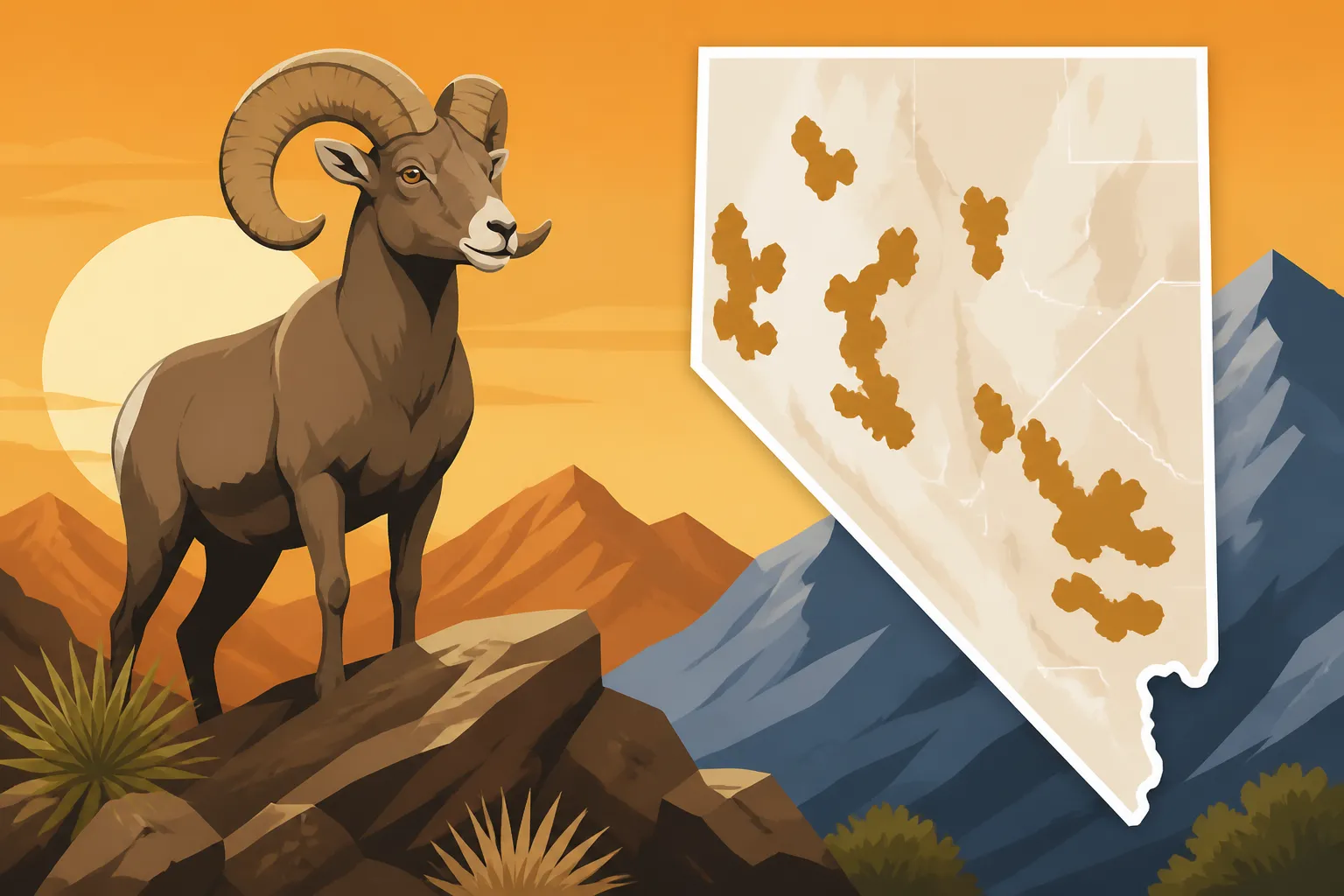
When we talk about California Bighorn in Nevada, our minds immediately turn to the northern part of the state. This region, characterized by expansive sagebrush flats giving way to abrupt, steep mountain ranges, provides the ideal mix of forage and escape terrain. Key areas include the Santa Rosa Range in Humboldt County, which is perhaps one of the most well-known strongholds for this subspecies. The Jarbidge Wilderness, straddling the Nevada-Idaho border, also hosts a healthy population, offering an incredibly remote and physically demanding hunt. These areas are characterized by deep canyons, high peaks, and extensive basalt flows, creating perfect bighorn country.
Other notable mountain systems in Northern Nevada that support California Bighorn include parts of the Pine Forest Range and certain isolated peaks within the Black Rock Desert country. These ranges often rise dramatically from the surrounding valleys, creating distinct ecological zones where the sheep thrive at higher elevations, especially during the warmer months. These are not places you just stumble upon; serious scouting and preparation are required. Utilizing advanced mapping tools from platforms like GoHunt can be instrumental in identifying potential areas before you ever set foot on the ground.
The Importance of Specific Mountain Ranges
It’s not just "Northern Nevada" generally; it’s about specific, isolated mountain ranges that act as islands of suitable habitat. The very nature of these discontinuous ranges is what contributes to the genetic diversity and distinct populations of bighorn. Below is a table highlighting some of the prominent ranges and characteristics relevant to California Bighorn.
| Mountain Range / Region | General Location | Typical Elevation (Sheep Habitat) | Terrain Characteristics | Accessibility Notes |
|---|---|---|---|---|
| Santa Rosa Range | Northern Humboldt County | 6,000 – 9,000+ feet | Steep, rocky canyons; basalt cliffs; mixed sagebrush/timber | Access via primitive dirt roads; can be very remote. |
| Jarbidge Wilderness | Northeastern Elko County | 7,000 – 10,000+ feet | High alpine peaks; deep, rugged canyons; limited roads | Extremely remote; often requires backpacking or pack animals; seasonal road closures. |
| Pine Forest Range | Northwestern Humboldt County | 6,000 – 9,000 feet | Rocky slopes; juniper and mountain mahogany; hidden basins | Primitive road access; some areas require serious hiking. |
| Black Rock Range (parts) | North-central Nevada | 5,000 – 7,000 feet | Isolated volcanic peaks; very arid; challenging access | Very remote, often requiring 4×4; extremely dry conditions. |
These ranges are critical because they offer the necessary combination of steep escape terrain from predators, varied forage, and access to water. Understanding the specific topography and vegetation of these "sheep islands" is paramount for anyone hoping to draw a tag and successfully hunt this subspecies. Detailed research into individual unit maps is crucial, and resources like GoHunt often have historical draw data and unit breakdowns that can inform your choices.
Understanding California Bighorn Behavior and Ecology
Knowing the general areas where California Bighorn reside is one thing, but understanding how they utilize that habitat throughout the year is key to finding them. Their survival hinges on their ability to adapt to extreme conditions, from scorching summer heat to heavy winter snows.
Preferred Terrain and Forage
California Bighorn are truly creatures of the steep. They gravitate towards rugged, broken country that offers immediate access to vertical escape routes. This means you'll typically find them on south-facing slopes in winter, basking in the sun and melting snow, and on north-facing slopes in summer for shade and cooler temperatures. They thrive in areas with rocky outcrops, ledges, and steep canyons, always keeping an eye on potential threats. Their diet is primarily grasses and forbs, but they are also browsers, readily consuming shrubs like sagebrush, bitterbrush, and mountain mahogany, particularly when green-up is scarce. This adaptability in diet allows them to persist in areas that might seem barren to the casual observer.
It's not uncommon to find them grazing at lower elevations in the early morning or late evening, especially when conditions are cool and calm, before retreating to the security of higher, rougher ground during the heat of the day. This diurnal pattern, coupled with their preference for elevation, is something any hunter must consider when planning a stalk or even a glassing session. Being able to read the terrain and identify these key features—escape cover, forage, and potential bedding areas—is vital.
Water, Weather, and Seasonal Movements
Water is often the lifeblood of bighorn sheep populations in arid environments. While California Bighorns are incredibly efficient at conserving water, they still need reliable sources. This could be anything from a hidden spring high in a canyon, a snow patch that persists into late spring, or even water developments and guzzlers built for wildlife. In the driest parts of their range, a reliable water source can be a magnet for sheep, especially during hot summer months. Understanding How Guzzlers Concentrate Desert Game is crucial for spotting these patterns.
Their seasonal movements are largely dictated by weather and the availability of forage and water. During the intense Nevada winters, deep snow can push them to lower, more accessible slopes where forage is easier to reach and winds keep the snow from piling up. As spring arrives, they follow the green-up, ascending to higher elevations as new growth emerges. The rut, typically occurring in the fall, can see rams moving extensively to find ewes, making them more visible but also more unpredictable. When the Elk Rut Peaks in Nevada might not directly apply, but understanding rut timing for any species is critical for maximizing hunting opportunities. E-scouting tools are excellent for mapping out water sources and potential bedding areas, even before you physically visit the unit.
Scouting and Locating California Bighorn
Successfully locating California Bighorn sheep often feels like looking for a needle in a haystack, but with the right tools and approach, you can significantly increase your odds. It's a game of patience, high-quality optics, and meticulous planning.
Utilizing Topographic Maps and Satellite Imagery
Before you ever lace up your boots, your most powerful scouting tool is often sitting right on your computer screen. Detailed topographic maps and satellite imagery, especially those offered through services like GoHunt, are indispensable for e-scouting bighorn country. You're looking for areas that scream "sheep habitat"—steep, broken country with prominent rock formations, narrow canyons, and benches. Pay close attention to changes in elevation, the steepness of slopes, and the presence of drainages. Look for natural barriers that might funnel sheep movement or provide natural travel corridors.
Use the terrain analysis features often found in mapping applications to identify high-percentage areas: south-facing slopes for winter sun, north-facing slopes for summer shade, and access points that might allow you to get above and glass into prime habitat. E-Scouting a Nevada Unit Before the Season is a skill that pays dividends, saving you countless hours of unproductive hiking. Mapping out potential glassing knobs and identifying hidden basins or water sources from your computer can make all the difference when you're finally in the field.
The Importance of Water Sources and Escape Terrain
When you're scrutinizing maps and imagery, pay particular attention to any indication of water. Springs, seeps, and guzzlers are critical features, especially in the more arid California Bighorn units. Sheep, like all wildlife, need water, and they will often be found within a reasonable distance of a reliable source. While some maps may mark springs, others require a more discerning eye to identify potential water-holding features like dense riparian vegetation in a dry landscape or concave slopes that might channel moisture. Understanding Hunting Water in Nevada's Driest Country can highlight critical strategies.
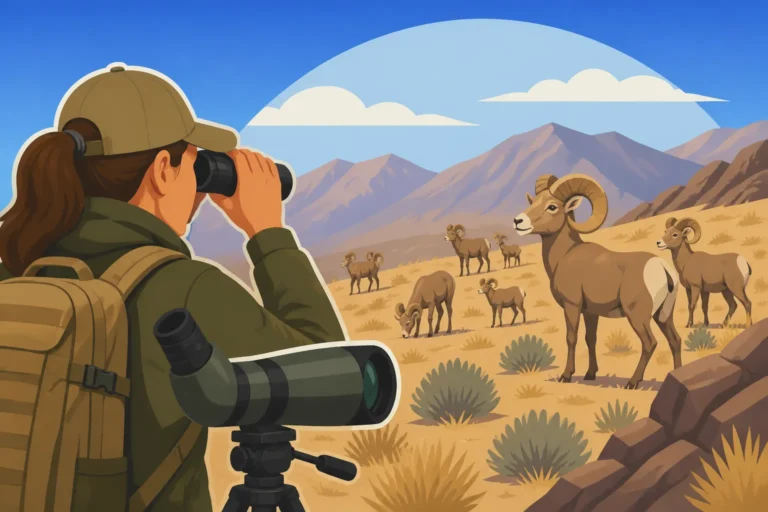
Beyond water, always prioritize areas that offer excellent escape terrain. This means extremely steep, rugged cliffs and rock slides where bighorn can quickly vanish from sight if spooked. They feel safest in terrain where few predators dare to follow. While they might venture into more open, gentle slopes to feed, their bedding and security areas will almost always be in the nastiest, most vertical country available. When considering optics, powerful spotting scopes and steady tripods are your best friends in this vast, open country, allowing you to pick apart distant cliffs and scree fields for a tell-tale patch of white or the curve of a ram's horn. Consider how Spotting Scope Power for Open Country can drastically improve your chances. For detailed unit-specific information, checking Reading a Nevada Hunt Unit Before You Apply can give you insights into terrain, access, and past harvest success.
Conclusion
Chasing California Bighorn sheep in Nevada is an endeavor that demands respect for the animal and its incredible, unforgiving habitat. These majestic animals have reclaimed their place in the state's rugged northern and eastern mountain ranges, offering a unique challenge to those drawn to the high country. By understanding their distinctive traits, focusing your efforts on specific strongholds like the Santa Rosa or Jarbidge, and meticulously scouting their preferred terrain and water sources both from home and in the field, you can significantly improve your chances of locating these elusive monarchs of the peaks. It's a hunt that tests every aspect of a hunter's skill, but the reward of seeing a California Bighorn ram in its element is an experience that truly lasts a lifetime.
Disclaimer
This article is for general informational purposes only and does not constitute professional advice. Laws, prices and regulations vary by location and change over time. Consult a qualified professional for guidance on your specific situation.