Sage Grouse and Nevada’s Sagebrush Sea
The vast, seemingly endless sagebrush sea of Nevada holds a unique magic, but for hunters, it often presents a frustrating puzzle. You're out there, miles from anywhere, scanning horizon after horizon, wondering where on earth those elusive sage grouse could be hiding. This comprehensive guide is here to unravel the mysteries of Nevada's sagebrush country, helping you understand the bird, its habitat, and the strategies for a successful, ethical hunt, all while appreciating the incredible ecosystem you're privileged to explore.
The Vital Role of Nevada's Sagebrush Sea
Nevada is often defined by its expansive sagebrush landscapes, a truly iconic and surprisingly diverse ecosystem that shapes nearly everything about life, both wild and human, in the Great Basin. Understanding this vast habitat is the first step to truly appreciating the sage grouse and the unique challenges of pursuing them.
An Ecosystem Defined by Sagebrush
When you picture Nevada, you're likely imagining endless vistas of sagebrush rolling over hills and valleys, punctuated by distant mountain ranges. This isn't just scenery; it's the foundation of an entire ecosystem. The sagebrush sea, dominated by various species of Artemisia, especially big sagebrush, forms one of the largest ecosystems in North America. It’s a landscape that has co-evolved with its inhabitants over millennia, creating a finely tuned balance where specific plants, insects, and animals depend on each other. Unlike more "traditional" forest or grassland environments, the sagebrush offers a unique blend of cover, forage, and nesting sites that other plants simply cannot replicate. It's a tough environment, characterized by arid conditions, extreme temperature swings, and nutrient-poor soils, yet it supports a rich web of life adapted to these very conditions.
This isn't a monoculture, either; within the broad term "sagebrush," you'll find different species like Wyoming big sagebrush, basin big sagebrush, and mountain big sagebrush, each thriving in slightly different elevations and soil types. These subtle differences create micro-habitats that cater to various wildlife needs throughout the year. For a hunter, recognizing these variations can be critical. A patch of basin big sagebrush in a low-lying valley, for example, might hold different prey species or offer different types of cover than the more sparse Wyoming big sagebrush found on higher, rockier slopes. This diversity means that understanding the nuances of the sagebrush itself is paramount to understanding the animals that call it home.
The Unique Adaptations of Sagebrush Plants
The sagebrush plant itself is a marvel of adaptation. Its silvery-green leaves, covered in tiny hairs, help reflect sunlight and reduce water loss, a crucial survival mechanism in Nevada's harsh, arid climate. The strong, distinctive aroma you often smell while walking through a dense patch of sagebrush comes from volatile oils in the leaves, which serve as a natural defense against herbivores. However, these oils also make sagebrush a specialized food source; not many animals can digest it. Sage grouse, mule deer, and pronghorn are among the few species that have evolved the digestive capabilities to process these tough, aromatic leaves, especially during the lean winter months when other forage is scarce or buried under snow.
Beyond its chemical defenses, sagebrush has a deep, intricate root system that allows it to tap into scarce groundwater resources, helping it survive prolonged droughts that would decimate other vegetation. This deep root system also plays a crucial role in preventing soil erosion, particularly on the steep, exposed slopes common in the Great Basin. The dense, woody structure of mature sagebrush provides vital thermal cover, protecting wildlife from both the scorching summer sun and bitter winter winds. For many species, including the sage grouse, the height and density of the sagebrush canopy are critical for successful nesting and rearing young, offering camouflage from aerial predators and protection from ground-based threats.
Biodiversity Supported by the Sea
While the sage grouse is arguably the most famous resident, the sagebrush sea supports an astonishing array of other wildlife, creating a complex and interdependent community. Mule deer rely heavily on sagebrush during winter, browsing its leaves when other food sources are unavailable. Pronghorn find refuge and forage in its expansive tracts, often blending seamlessly into the silvery landscape. Even smaller game, like cottontail rabbits and various small rodents, depend on sagebrush for cover and food. These species, in turn, become prey for formidable predators such as coyotes, bobcats, and various raptors, which also thrive in this unique environment.
The sheer scale of this ecosystem means that changes in sagebrush health can have ripple effects throughout the entire food web. Healthy, diverse sagebrush stands with a good mix of perennial grasses and forbs are crucial for supporting robust insect populations, which in turn provide essential protein for young sage grouse chicks and other ground-nesting birds. The intricate relationship between sagebrush and the species it supports underscores why conserving this ecosystem is so vital. It’s not just about one bird; it's about preserving an entire natural heritage. Understanding these connections can deepen your appreciation for the landscape every time you step out to go Hunting Water in Nevada's Driest Country or glass a distant ridge for deer.
Understanding Sage Grouse Biology and Behavior
To hunt sage grouse successfully, or even just to observe them, you really need to get inside their heads – or at least understand their seasonal rhythms and behaviors. These birds are fascinating, with a life cycle deeply intertwined with the sagebrush environment.
The Iconic Lekking Display
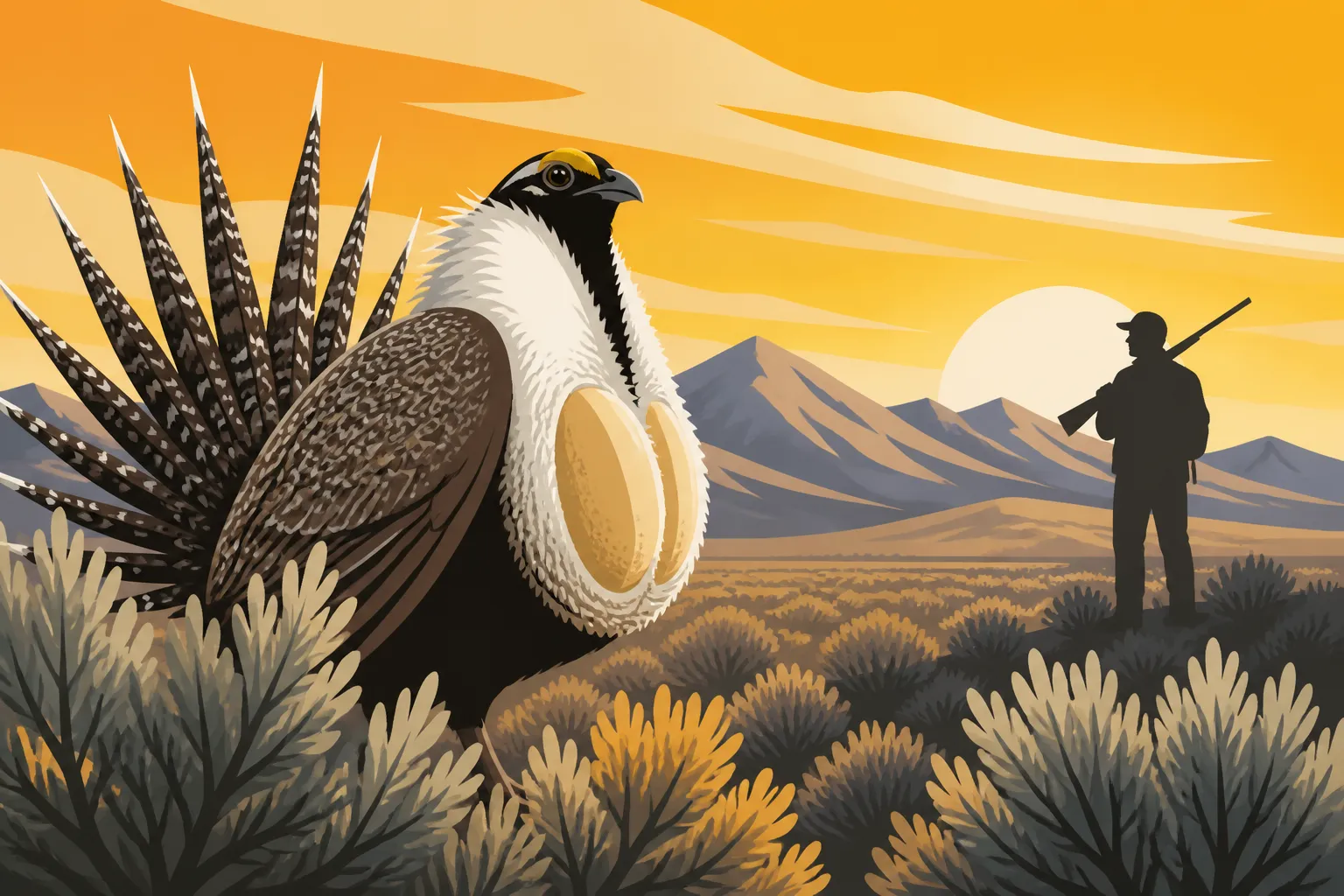
One of the most remarkable spectacles in the natural world is the sage grouse lekking display. A lek is a communal breeding ground, typically a somewhat open area within or adjacent to dense sagebrush, often a slight rise or a flat that offers good visibility. Each spring, usually from late March through May, male sage grouse gather on these ancestral sites before dawn to perform elaborate courtship rituals designed to attract hens. They strut, fan their tail feathers, and inflate large, yellowish air sacs on their chests, which produce a distinct popping and gurgling sound that carries surprisingly far across the quiet desert.
The energy on a lek is palpable. Dominant males establish small territories, often in the center of the lek, and perform almost constantly, fiercely defending their space from challengers. Subordinate males occupy the fringes, hoping for an opportunity to impress a hen if a dominant male falters. Hens visit these leks, observing the displays, and eventually choose a mate, usually one of the few dominant males, underscoring the intense competition and selective nature of their breeding. This concentration of birds on specific, predictable locations for breeding is a crucial aspect for researchers monitoring populations and for hunters understanding their annual cycle. For a truly immersive experience, witnessing a lek is unforgettable, and it helps you understand why Sage Grouse Leks and Nevada Habitat are so important.
Diet, Foraging, and Water Needs
Sage grouse are obligate sagebrush specialists, meaning their diet is overwhelmingly dominated by sagebrush, especially in winter. While other upland birds might switch between seeds, insects, and berries, sage grouse depend on sagebrush leaves for over 60-80% of their diet year-round, and sometimes up to 100% in winter. The high moisture content of sagebrush leaves also means they can often survive without direct access to standing water, deriving much of their hydration from their forage. This is a critical adaptation in an arid state like Nevada.
However, during spring and summer, especially for growing chicks, other food sources become vital. Hens and chicks will actively seek out areas with a diversity of forbs (broad-leafed plants) and insects, which provide essential protein and nutrients for rapid growth. These richer foraging areas are often found in draws, around springs, or in areas with slightly better soil moisture. As a result, the health of the understory – the grasses and forbs that grow between the sagebrush plants – is incredibly important. When planning your hunt, knowing these dietary shifts can guide you to the right type of habitat at the right time of year. If the season is early, look for lush pockets. If it's later, the birds will be back deeper in the sagebrush.
Seasonal Movements and Habitat Use
Sage grouse aren't static; they make distinct seasonal movements, though these movements can vary significantly depending on the specific unit and local conditions. In spring, the birds are heavily concentrated around leks for breeding. Once breeding concludes, hens will move off to nest in dense, tall sagebrush stands, usually within a few miles of the lek. These nesting sites provide critical concealment from predators. After hatching, chicks require a mix of dense cover for protection and open areas with abundant insects and forbs for feeding. Broods will often move to mesic (moist) sites, such as wet meadows, riparian areas, or irrigated pastures, which offer a bounty of insects and succulent plants.
As summer progresses and vegetation dries out, sage grouse typically shift back to more upland sagebrush habitats, often seeking higher elevations where temperatures might be cooler and forage remains greener. In fall, prior to hunting seasons, they tend to gather into larger coveys, often in areas of dense, mature sagebrush that provide good cover and a consistent food source. Winter sees them concentrating on specific winter range areas, usually sheltered slopes with tall, dense sagebrush that offers both food and protection from deep snow and harsh weather. Understanding these patterns is key to locating birds, as their needs change throughout the year. For instance, knowing when Nevada Sage Grouse Season and Permit are, you can then focus your scouting to the appropriate seasonal habitat.
Hunting Sage Grouse in Nevada
Hunting sage grouse in Nevada is a challenge, but a deeply rewarding one. It’s not a hunt for the faint of heart or those unwilling to put in the miles. The vastness of the landscape and the birds' ability to disappear make it unique.
Finding Prime Hunting Units
Nevada's sage grouse populations are not evenly distributed. They thrive in specific areas where the sagebrush ecosystem remains relatively intact and healthy. The northeastern and central parts of the state generally hold the strongest populations, especially units surrounding areas like Elko, Ely, and Winnemucca, where vast tracts of high-quality sagebrush remain. However, even within these general regions, populations can fluctuate dramatically year-to-year based on weather, drought conditions, and brood success. This makes pre-season scouting and research absolutely critical.
You can't just pick a unit on a map and expect to find birds. Savvy hunters often start by pouring over historical harvest data, population survey reports from the Nevada Department of Wildlife (NDOW), and recent weather patterns. A good resource, like GoHunt, can provide valuable insights into specific unit characteristics, past success rates, and even offer mapping layers that highlight prime sage grouse habitat or historical lek locations (though leks themselves are off-limits for hunting). Look for units with a good mix of dense, mature sagebrush, interspersed with healthy perennial grasses and forb-rich draws. Areas that have seen recent wildfires or heavy cheatgrass invasion will likely hold fewer birds. The key is to find robust, diverse sagebrush ecosystems, which are often found in expansive, less fragmented landscapes.
The Physical Demands of the Hunt
Let's be blunt: sage grouse hunting is physically demanding. These birds live in big country, often characterized by rolling hills, steep draws, and rocky, uneven terrain. You'll be covering a lot of ground, often at elevation, and rarely on flat, easy footing. Expect to walk miles each day, often under a relentless sun or in chilly, windy conditions. The air is thin, and the distances are deceiving. Many hunters underestimate the sheer endurance required, especially if they are coming from states with more "walk-in" hunting opportunities.
The challenge is compounded by the sagebrush itself. While beautiful, walking through dense sagebrush can be like slogging through deep snow. The bushes are often waist-high, creating constant resistance and hiding unseen obstacles like rocks, badger holes, and thorny plants. Choosing the right footwear is non-negotiable; sturdy, ankle-supporting boots are essential for navigating the sharp volcanic rock and uneven ground. Furthermore, you'll need to carry ample water, especially during early season hunts when temperatures can still soar. This isn't a quick jaunt; it's an all-day commitment to traversing some of Nevada's most rugged yet beautiful landscapes. Preparing physically for Preparing Physically for Long Glassing Days is good advice that applies equally to sage grouse hunting.
Regulations and Ethical Considerations
Nevada's sage grouse hunting regulations are carefully crafted to ensure sustainable populations, and they can vary year to year based on population trends. It's imperative to consult the current NDOW upland game regulations well before your hunt. Typically, seasons are short, bag limits are conservative, and specific permit requirements are in place. Hunters are usually required to purchase a general upland game stamp, and often a separate sage grouse permit, which may be limited in number. Understanding these requirements, including shooting hours and specific unit boundaries, is crucial. You can find more specific details on How Nevada Manages Sage Grouse Hunting.
Ethical hunting also means knowing your limits and respecting the birds. Sage grouse are large birds, and while they can be challenging to approach, they often hold tight, allowing for close flushes. When a covey flushes, it’s easy to get excited and blast away, but careful, deliberate shooting is paramount to avoid wounding birds. Retrieving downed birds quickly in dense sagebrush can also be difficult, so hunting with a well-trained dog is highly recommended not just for finding birds, but for efficient recovery. Always prioritize a clean shot and ensure you have adequate time to locate and retrieve any downed birds. Beyond the hunt itself, respecting private property, leaving no trace, and being a good ambassador for hunting are vital responsibilities for every sage grouse hunter.
Conservation Challenges and Efforts
The sage grouse is often considered an "umbrella species"—meaning that efforts to conserve the sage grouse and its habitat benefit hundreds of other species that share the sagebrush ecosystem. However, these birds and their habitat face significant challenges.
Threats to Sagebrush Habitat
The health of the sagebrush sea, and thus the future of sage grouse, is under constant threat from multiple angles. Habitat fragmentation is a major concern, as energy development, urban sprawl, and agricultural expansion break up contiguous blocks of sagebrush, isolating populations and reducing connectivity. Wildfire, exacerbated by invasive annual grasses like cheatgrass, is another devastating threat. Cheatgrass, an introduced species, creates a continuous fuel bed that allows fires to spread rapidly and intensely, burning hotter and over larger areas than native vegetation typically would. After a fire, cheatgrass often outcompetes native sagebrush, preventing its reestablishment and permanently altering the ecosystem. Understanding How Wildfire Changes Sagebrush Habitat is crucial.
Other threats include the proliferation of conifer encroachment, where juniper and pinyon pine trees spread into sagebrush habitats, reducing the open spaces sage grouse need and providing perching sites for avian predators. Overgrazing in some areas can degrade the understory, reducing critical forb and insect populations for chicks. Climate change, leading to increased drought frequency and severity, also places immense stress on the entire sagebrush ecosystem, impacting plant growth and water availability. The combination of these factors makes sage grouse conservation a complex and ongoing battle.
Collaborative Conservation Initiatives
Recognizing the severe threats to sage grouse, an unprecedented level of collaborative conservation effort has emerged across the western United States, including Nevada. Federal agencies like the Bureau of Land Management (BLM) and the U.S. Forest Service work closely with state wildlife agencies (like NDOW), private landowners, conservation groups, and even energy companies to implement large-scale habitat restoration projects. These initiatives often focus on key strategies such as removing encroaching conifers, rehabilitating burned areas with native sagebrush and grasses, and controlling invasive species like cheatgrass.
One notable example is the Sage Grouse Initiative (SGI), a partnership-based approach that works voluntarily with ranchers and private landowners to implement conservation practices that benefit both agriculture and sage grouse. These efforts include improving grazing management, restoring wet meadows, and removing fences that can be hazardous to flying grouse. The sheer scale of the sagebrush ecosystem necessitates these broad, collaborative approaches, as no single agency or group could tackle the problem alone. The future of sage grouse literally depends on these diverse stakeholders continuing to work together, sharing resources and expertise for a common goal.
The Role of Hunters in Conservation
Hunters play a crucial, often underestimated, role in sage grouse conservation. First and foremost, license fees and excise taxes on hunting equipment (through the Pittman-Robertson Act) provide significant funding for wildlife management and habitat restoration projects carried out by state agencies. Without hunters buying licenses and gear, many of these vital conservation efforts simply wouldn't happen. By participating in limited sage grouse seasons, hunters also provide valuable data to wildlife biologists, helping them monitor populations and adjust management strategies. Your harvest information, when accurately reported, contributes directly to the science of conservation.
Beyond financial contributions, hunters are often the most passionate advocates for wildlife and wild places. Many hunters actively participate in habitat improvement projects, volunteer for wildlife surveys, and educate others about the importance of sagebrush conservation. Their direct connection to the land gives them a unique perspective and a vested interest in ensuring healthy wildlife populations for future generations. For many of us, it’s not just about the hunt; it’s about the privilege of experiencing these incredible landscapes and doing our part to protect them. Every time you fill out a harvest report or talk about the importance of sagebrush, you're contributing to the species' survival.
Reading the Landscape for Sage Grouse Habitat
Finding sage grouse is truly about reading the subtle language of the landscape. They aren't everywhere; they are tied to specific habitat features within the vast sagebrush sea. Learning to interpret these signs will drastically improve your success.
Identifying Key Habitat Components
When scouting for sage grouse, you’re not just looking for "sagebrush"; you're looking for specific types of sagebrush habitat. Ideal sage grouse habitat typically includes a mosaic of features:
- Tall, dense sagebrush: This is essential for nesting hens and provides critical cover for broods and adult birds from predators and weather extremes. Look for mature stands that are generally 18-30 inches tall, offering good concealment.
- Healthy understory of grasses and forbs: Especially in spring and early summer, this diverse ground cover provides the insects and succulent plants crucial for chick survival and hen nutrition. Areas with good perennial bunchgrasses like Idaho fescue or Sandberg bluegrass are often more productive than those dominated by invasive annuals.
- Proximity to water (mesic areas): While adult sage grouse can derive water from sagebrush, broods thrive near mesic sites – wet meadows, seeps, springs, or riparian corridors. These areas are insect factories and provide lush, nutritious forbs. Even if they are small, these green zones are magnets for broods in late spring and early summer.
- Open areas within sagebrush: Lek sites are found here, as are areas where birds might feed or sun themselves. A varied landscape with some open pockets, but primarily dense sagebrush, is often best.
- Rolling topography: This provides undulations that create sheltered pockets from wind, thermal cover, and escape routes. Birds will often feed on south-facing slopes in the morning sun and seek shade on north-facing slopes during the heat of the day.
Think of it as a neighborhood for sage grouse: they need different "rooms" for different purposes. The more of these components a particular area has, the higher its potential for holding birds.
Using Topography to Your Advantage
The subtle changes in Nevada's basin and range topography play a huge role in where sage grouse choose to live and how they move. Don't overlook these seemingly minor details. In expansive, relatively flat sagebrush flats, even a slight rise or dip can concentrate birds. They'll often feed along gentle contours, using the slight elevation changes for cover or to catch the morning sun. During hot days, they might gravitate towards the shadier, north-facing slopes of hills or even seek the minimal shade offered by a larger sagebrush plant. Conversely, on cold, windy days, south-facing slopes and sheltered draws offer warmth and respite.
Drainages and draws, even if dry for most of the year, can be critical. They often collect more moisture, supporting a greater diversity of forbs and insects, making them prime feeding areas, especially for broods. These natural contours also serve as travel corridors for birds moving between feeding and loafing areas. Learning to read these topographical clues on a map, before you even step foot in the field, can save you countless miles of aimless wandering. Imagine a gentle slope leading into a subtle draw – that's a prime spot to investigate for a feeding covey, especially in the early morning or late afternoon.
E-Scouting for Sage Grouse Hotspots
In a state as vast as Nevada, "e-scouting" (electronic scouting) is not just helpful; it's practically mandatory for sage grouse. You simply cannot physically cover enough ground to scout effectively otherwise. Tools like GoHunt's mapping platform, or similar apps, are invaluable for this. Start by overlaying public land boundaries onto satellite imagery. Then, zoom in and look for the specific habitat components we discussed. Identify large, unbroken expanses of sagebrush. Look for subtle color changes that might indicate greener, forb-rich draws or areas with slightly denser vegetation.
Use topographic map layers to identify those gentle rises, depressions, and drainages that might offer ideal cover and forage. Look for any indications of water – springs, guzzlers, or even seasonal wet areas. History also matters: research past wildfire perimeters, as freshly burned areas often take years to recover their sagebrush component. While actual lek locations are generally kept private to minimize disturbance, you can often infer areas of high historical use based on habitat suitability. GoHunt often includes a "burns" layer and can provide historical harvest data or success rates for specific units, giving you a massive head start. Remember, the goal is to narrow down thousands of acres to a few square miles of high-potential ground before you ever pack your boots. This systematic approach will dramatically increase your chances of finding birds, whether you're looking for sage grouse or just Reading a Nevada Hunt Unit Before You Apply.
Nevada's Sage Grouse Permit System and Seasons
Hunting sage grouse in Nevada isn't a simple over-the-counter affair; it involves a specific permit system designed to carefully manage harvest and ensure the long-term health of the populations. Understanding this system is paramount before you even consider heading afield.
Understanding the Nevada Sage Grouse Permit Requirements
Nevada's sage grouse hunts operate under a limited quota system, meaning that only a certain number of permits are issued each year for specific hunting units or management areas. This approach allows NDOW biologists to precisely manage harvest levels in response to population fluctuations, ensuring that hunting pressure remains sustainable. To even be considered for a sage grouse hunt, you typically need a valid Nevada hunting license and, often, an upland game bird stamp. Beyond that, you must apply for a specific sage grouse permit. These permits are usually allocated through a draw, similar to how big game tags are distributed, though often with much lower application fees and different draw odds.
The number of available permits, the specific units open to hunting, and the application deadlines can change annually based on population surveys, brood success, and habitat conditions. It's not uncommon for some units to be closed to hunting entirely in years of low populations, highlighting the conservative management approach. Therefore, it is absolutely essential to consult the most current Nevada Upland Game Seasons and Regulations document published by NDOW each year. This document will detail all the necessary requirements, application procedures, and specific unit information. For those wondering, Nevada Sage Grouse Permit Requirements are always explicitly laid out there.
Season Dates and Bag Limits
Sage grouse seasons in Nevada are generally very short, often lasting only a few days to a week, and are usually held in September or early October. This brief window is strategically timed to occur after most broods have matured but before the most severe winter weather sets in, minimizing impacts on breeding populations. The exact dates will vary by year and by unit, again emphasizing the need to check the current regulations. Some units may have concurrent seasons with other upland birds, while others might be standalone sage grouse hunts.
Bag limits are also very conservative, typically one or two birds per day, and a possession limit that matches the daily bag. These low limits reflect the species' vulnerability and the careful management approach. Unlike more prolific upland species, sage grouse populations recover slowly, making every bird harvested a significant consideration for population dynamics. Always be aware of whether the bag limit applies to male birds, female birds, or either sex, as some regulations might specify. This precision in management is a hallmark of efforts to ensure the species' long-term viability.
| Feature | Typical Nevada Sage Grouse Season |
|---|---|
| Application Period | Late Spring/Early Summer |
| Permit Allocation | Limited Draw |
| Hunting Season | September – Early October |
| Season Length | A few days to one week |
| Daily Bag Limit | 1-2 birds |
| Possession Limit | 1-2 birds (often matches daily) |
| Required License | Nevada Hunting License + Upland Stamp + Sage Grouse Permit |
| Unit Availability | Varies Annually by population status |
Applying for a Permit and Checking Quotas
The application process for a Nevada sage grouse permit typically follows a similar timeline to other limited entry draws in the state. You'll need to apply online through the NDOW website, usually in late spring or early summer, well in advance of the fall hunting season. It's crucial to pay attention to application deadlines, as missing them means missing out on the opportunity for the year. The application will ask you to select your preferred hunting unit(s) or management areas, and it's wise to research past draw odds and population data before making your choices. Resources like GoHunt can compile draw odds and permit quotas, giving you a better understanding of your chances in different units.
Permit quotas, the total number of permits available for each unit, are released annually by NDOW. These quotas are determined by biologists after extensive field surveys and population modeling. Higher quotas generally indicate healthier populations and better draw odds. However, even in units with relatively high quotas, the number of applicants can still make drawing a permit a challenge. Many hunters will submit their application, hoping for a chance at this unique bird, understanding that it might take several years to draw a coveted tag. Patience, persistent application, and thorough research into unit success rates and permit numbers are your best friends in navigating Nevada's sage grouse draw.
Gear and Tactics for a Nevada Sage Grouse Hunt
Sage grouse hunting demands specific gear and a strategic approach. This isn't your typical pheasant or quail hunt; the environment and the birds themselves call for careful preparation.
Choosing the Right Shotgun and Loads
Given the size of sage grouse, which can be as large as a small chicken, and their often robust flush, choosing the right shotgun and loads is important for clean kills and efficient recovery. Most hunters opt for a 12-gauge or 20-gauge shotgun. While a 12-gauge offers a bit more punch and shot density, a 20-gauge can be lighter to carry for miles across the sagebrush. Whatever gauge you choose, reliability in dusty, rugged conditions is key, so a sturdy pump-action or semi-automatic often serves well. Choke selection typically leans towards modified or improved cylinder, offering a good balance of pattern density at typical flushing distances, which can sometimes be surprisingly close but often further out.
For loads, you'll want something with enough power to bring down a large bird without excessive over-kill or pellet damage to the meat. Many hunters find success with #4, #5, or #6 lead shot (where legal), or equivalent steel shot sizes for non-toxic requirements. The larger pellets of #4 or #5 provide better energy retention and penetration on larger birds. If you're hunting with a dog, you might opt for slightly tighter patterns, as dogs often get you into closer flushing ranges. Always make sure your chosen ammunition is legal for upland game in Nevada and that you've patterned your shotgun with your chosen loads to understand their effective range.
Navigating the Terrain on Foot
As mentioned, sage grouse country is big and often tough on the feet. Effective navigation is crucial, not just for finding birds but for staying safe. A reliable GPS device or a smartphone with a hunting app (like GoHunt) loaded with detailed maps and your planned route is non-negotiable. Mark your vehicle's location, potential water sources, and any significant landmarks. The vastness of the sagebrush can quickly disorient, and getting lost miles from your truck is a serious concern. Consider carrying a physical compass and map as a backup, and know how to use them.
Your pace will likely be slow and methodical. Sage grouse often hold tight, relying on their camouflage, so you need to walk with purpose, covering ground but not rushing. Scan ahead, paying attention to any subtle movements or dark shapes under the sagebrush. Work draws, benches, and the edges of denser cover. Remember that birds will often flush when you least expect it, so be ready. Breaking up your long hikes with short stops to glass distant ridges can also be productive, not only to spot birds but to give yourself a physical and mental break. This type of methodical approach is vastly different than what you might expect for Still Hunting Aspen Pockets for Deer, for example.
Hunting With Dogs for Sage Grouse
Hunting sage grouse with a well-trained bird dog is not just an immense pleasure; it's arguably the most effective and ethical way to pursue these birds. Dogs excel at covering vast amounts of ground, locating birds by scent, and most importantly, retrieving downed birds from dense cover. Pointers (like German Shorthairs, Brittanys, or English Pointers) are particularly effective, as they can "lock up" on scent, allowing the hunter to approach for a flush. Flushers (like English Springer Spaniels or Labs) can also be used, though they might not hold birds for a point.
A dog's ability to scent and locate birds that would be invisible to the human eye saves hunters countless miles and significantly reduces the chance of leaving a wounded bird behind. Given the rough terrain, make sure your dog is in excellent physical condition and has protective gear like boots for their paws, especially on sharp volcanic rock. Carry plenty of water for your dog, too, as they'll be working hard. In some areas, rattlesnakes can be a concern, so consider snake aversion training for your dog. A good dog transforms a challenging slog into an exhilarating team effort, making the entire experience far more enjoyable and productive.
Looking to the Future of Sage Grouse in Nevada
The sage grouse has faced immense challenges, but dedicated conservation efforts offer hope for its future. As hunters and outdoor enthusiasts, our continued engagement is vital to ensuring these iconic birds persist across Nevada's sagebrush sea.
The Importance of Ongoing Monitoring
The dynamic nature of sage grouse populations and their habitat requires constant vigilance. Ongoing monitoring programs are critical to understanding how sage grouse numbers are trending, identifying new threats, and evaluating the effectiveness of conservation efforts. NDOW biologists, often in collaboration with federal agencies and volunteers, conduct annual surveys to count birds on leks each spring. They also conduct brood surveys in summer to assess reproductive success and chick survival. These data points are vital for setting permit quotas, determining season lengths, and allocating conservation resources to the most impactful projects.
Technological advancements, such as the use of GPS transmitters on individual birds, also provide invaluable data on movement patterns, habitat use, and survival rates. Without this rigorous scientific monitoring, management decisions would be based on guesswork rather than empirical evidence. As hunters, respecting survey efforts, submitting accurate harvest reports, and supporting NDOW's work are all ways we contribute to this essential monitoring framework. The more we know, the better we can protect them.
Balancing Human Use and Wildlife Needs
Nevada's sagebrush country is not just wildlife habitat; it's also a landscape that supports various human activities, including ranching, mining, recreation, and energy development. One of the biggest challenges for sage grouse conservation is finding ways to balance these diverse human uses with the needs of wildlife. This often involves careful land use planning, identifying critical habitats (like leks and winter ranges), and implementing mitigation strategies to minimize impacts from human activities. For instance, new development projects might be required to avoid sensitive sage grouse areas, or to restore disturbed habitat elsewhere.
Collaboration with private landowners, particularly ranchers who manage vast tracts of sagebrush, is essential. Incentive-based programs that reward landowners for implementing sage grouse-friendly practices have proven highly effective. The goal isn't to eliminate human activity from the sagebrush sea, but to manage it in a way that allows both humans and wildlife to thrive. It's a complex dance, but one that is crucial for the long-term health of the ecosystem and its inhabitants.
What Every Hunter Can Do to Help
As a sage grouse hunter, you are uniquely positioned to be a powerful advocate for this species. Beyond purchasing licenses and permits, there are several concrete steps you can take:
- Educate Yourself and Others: Learn everything you can about sage grouse biology, habitat needs, and the threats they face. Share this knowledge respectfully with non-hunters and other outdoor enthusiasts. The more people who understand, the more support there will be for conservation.
- Support Conservation Groups: Many non-profit organizations are dedicated to sagebrush and sage grouse conservation. Consider joining or donating to groups like the Nevada Bighorns Unlimited, the Wild Sheep Foundation, or local chapters of the National Wild Turkey Federation who often support broader upland habitat projects, even if their main focus isn't sage grouse.
- Practice Ethical Hunting: Always adhere to regulations, strive for clean kills, and ensure prompt recovery of downed birds. Be a role model for responsible hunting behavior in the field.
- Volunteer for Habitat Projects: Local NDOW offices or conservation groups often organize volunteer days for habitat restoration, such as removing juniper or planting native vegetation. Getting your hands dirty is a powerful way to contribute directly.
- Be a Voice for Sagebrush: Attend public meetings, write letters to elected officials, and participate in public comment periods when land use decisions that might impact sagebrush are being made. Your voice, as someone who cares deeply about this landscape, carries significant weight.
The future of the sage grouse in Nevada is not guaranteed, but with continued effort, collaboration, and the dedication of people who love this unique bird and its wild home, it's a future we can all help secure. Every step you take in the sagebrush, every permit you buy, and every conversation you have about these birds contributes to their legacy.
Disclaimer
The information provided in this guide is for general informational purposes only and does not constitute legal advice. Hunting regulations, season dates, and permit requirements in Nevada are subject to change annually by the Nevada Department of Wildlife (NDOW). Hunters are solely responsible for consulting the most current and official NDOW regulations prior to any hunting activity. Always confirm all rules and requirements directly with NDOW.