Private Ranch Ground Along Nevada Valleys
It's incredibly frustrating, isn't it? You spend hours poring over maps, scouting magnificent Nevada hunting units, only to realize that some of the most promising-looking ground—especially down in those lush, game-rich valleys—is locked up behind private ranch fences. It can feel like an insurmountable barrier, but understanding how private ranch ground along Nevada valleys influences hunting opportunities is the first step. This guide will help you decipher the complexities of private land, learn how to identify it, and explore ethical ways to potentially gain access for your next hunt.
The Lay of the Land: Understanding Nevada's Private Ranch Geography
Nevada is a state defined by its vast public lands, but its valleys tell a different story. While the towering mountain ranges are often under the stewardship of the Bureau of Land Management (BLM) or National Forests, the fertile valley floors, which frequently hold vital water sources and better forage, were often settled and claimed as private property long ago. This creates a distinct geographical challenge for hunters accustomed to boundless public access.
Valleys as Prime Hunting Real Estate
Picture the classic Nevada landscape: sagebrush-covered hillsides leading down to a wide, flat valley. These valleys, often carved by ancient rivers or sustained by modern irrigation, are magnets for wildlife. They provide critical wintering grounds for mule deer and elk, offer essential water sources, and often boast richer browse and agricultural fields that draw animals in. Because of this, private ranches nestled in these valleys often control some of the best habitat, especially when it comes to game movement between higher public ground and lower feeding areas. This isn't just about agriculture; it's about life-sustaining resources in an arid environment.
Think of a mule deer buck in late fall, pushed down from the high country by early snow. Where does he go? Often, he heads to the relatively milder valleys, finding shelter in the riparian zones along a stream or feeding on residual crops in a hay field. These are precisely the areas that often fall under private ownership. Similarly, elk herds, which have really taken hold in Nevada, will often use these valleys for grazing, especially where they find irrigated pastures or a reliable, year-round water source that might be less common higher up. The valleys act as crucial corridors and refuges, making them highly desirable, yet often inaccessible, hunting grounds. Water Sources That Concentrate Desert Game are often found within these valleys.
The Checkerboard: Public vs. Private Ownership
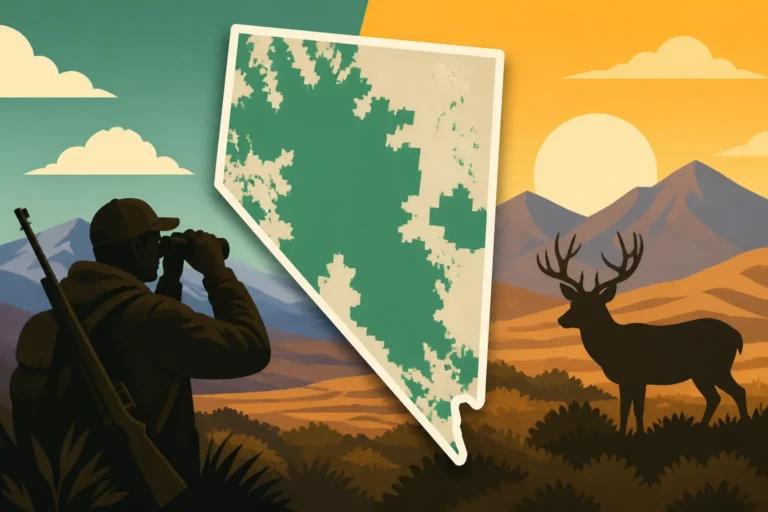
Navigating Nevada's landscape can feel like playing a game of chess on a giant, invisible board. While a massive percentage of Nevada is federally owned, that doesn't mean it's all contiguous. Especially in and around these fertile valleys, land ownership can be a real "checkerboard." You might have a section of BLM land, then a square mile of private ranch, then another sliver of public domain. This fragmented ownership makes it incredibly difficult for hunters to know where they stand without proper tools. What appears to be a vast expanse of open country on a traditional paper map can quickly reveal itself to be a complex mosaic of property lines when you zoom in on a detailed digital map.
This isn't just a nuisance; it's a fundamental challenge to planning a hunt. You might have excellent public access to a ridge, but all the draws and lower benches that hold animals might actually be private. Or, you could find a beautiful piece of public land completely "landlocked" by private holdings, making it practically impossible to reach without landowner permission. Understanding this pattern is key to avoiding accidental trespass and formulating a realistic hunting strategy. It highlights Why Some Nevada Valleys Are Entirely Private often comes down to early settlement patterns and the value of water.
The Impact of Water and Agriculture
In a state as arid as Nevada, water is life, and agriculture follows water. Many of these private ranches in the valleys were established precisely because they had access to springs, rivers, or irrigable land. These areas, whether they're alfalfa fields, flood-irrigated pastures, or simply land surrounding a perennial stream, create an oasis effect that draws wildlife from miles around. A small stream running through a private ranch can become the lifeblood for a significant population of deer or antelope during dry periods.
This concentration of resources means that animals frequently move between public and private land, often bedding on private ground where they feel secure and moving onto adjacent public land to feed, or vice-versa. This dynamic means that even if you're hunting exclusively on public land, the presence of nearby private ranches heavily influences game patterns. Hunting the edges where public meets private, or understanding how animals move through private land to reach public, becomes a crucial skill. However, it also means that without access, you're often left waiting for animals to leave the sanctuary of private property, which can be a slow and frustrating game.
Identifying Private Land and Avoiding Trespass
The number one rule when hunting in Nevada, or anywhere for that matter, is to know where you are and whose land you're on. Accidental trespass isn't just an ethical misstep; it can carry serious legal consequences, damage the reputation of hunters, and make it even harder for future hunters to gain access. Taking the time to properly identify property lines is non-negotiable.
The Critical Role of Mapping Tools
Gone are the days when a hunter relied solely on a faded paper map that offered little detail on land ownership. Modern technology has revolutionized how we approach public and private boundaries, and tools like onX Hunt are absolutely indispensable for Nevada hunters. These apps overlay land ownership data directly onto satellite imagery and topographic maps, clearly delineating public, private, and tribal lands. You can see parcel lines, landowner names, and often even contact information, all on your phone or GPS device.
Before you even leave your living room, you can use these mapping tools to e-scout your chosen unit. You can identify potential access points, see where private ranches create choke points, and pinpoint those elusive public "islands" surrounded by private property. Once in the field, onX Hunt allows you to track your position in real-time relative to these boundaries, giving you peace of mind and preventing accidental trespass. It's a game-changer, allowing you to confidently navigate Reading a Land Ownership Layer Correctly and plan your movements. Without such tools, the "checkerboard" of Nevada's valleys would be far too risky to navigate with any certainty.
Reading Physical Property Markers
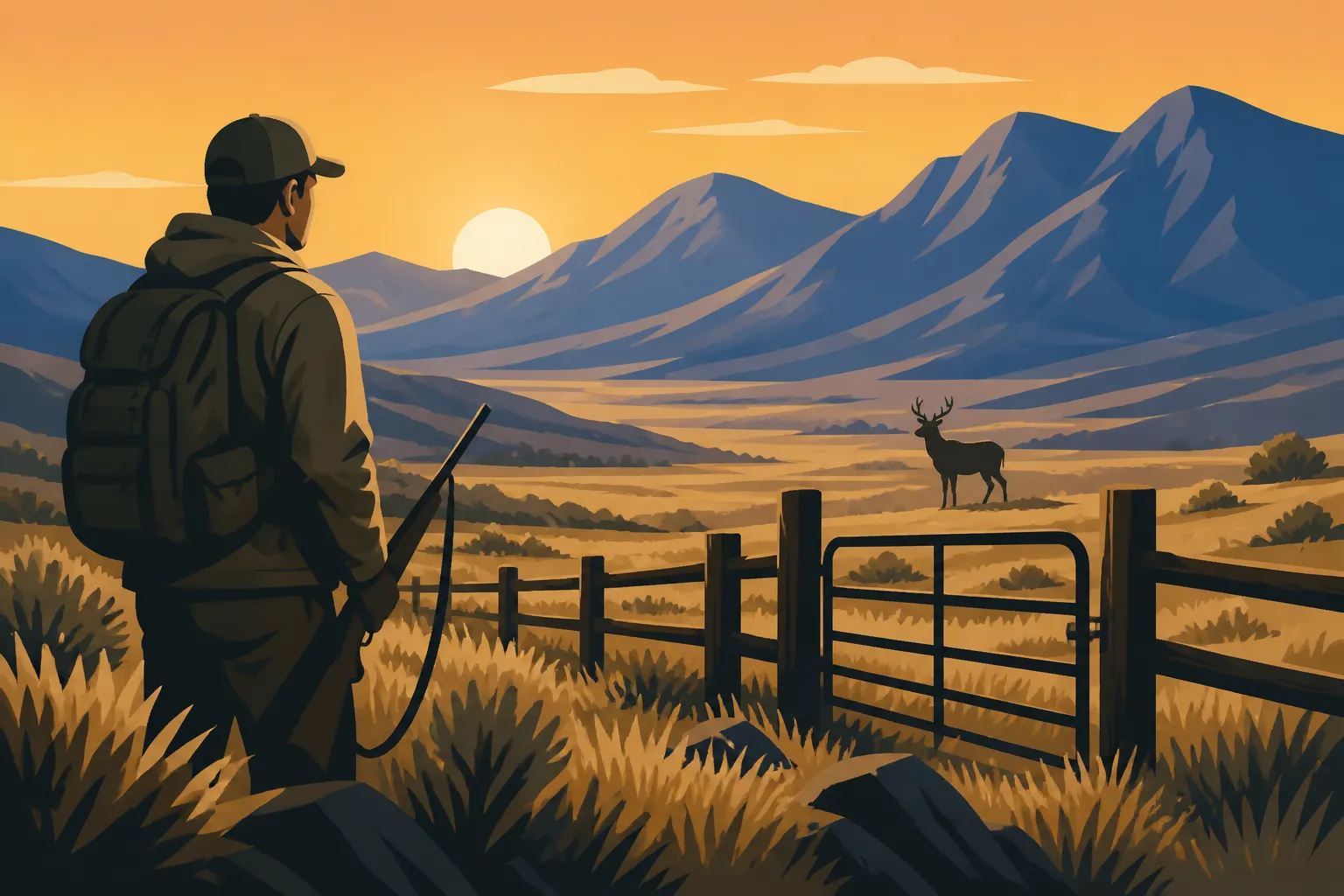
While digital maps are phenomenal, they are just one layer of defense against trespass. Physical property markers on the ground remain absolutely critical. These can include fences, signs, painted fence posts, or even natural barriers. Nevada law generally requires private land to be "posted" to prevent trespass, though the definition of what constitutes adequate posting can sometimes be a gray area. Usually, purple paint on posts or trees, "No Trespassing" signs at reasonable intervals, or clearly marked fence lines are common indicators.
It's your responsibility as a hunter to recognize and respect these physical markers. Even if your digital map shows a blurry line, a clear "No Trespassing" sign trumps everything. Always err on the side of caution. If you're unsure, stay out. Remember, these physical markers are placed by landowners for a reason, and respecting them is fundamental to being an ethical hunter. Sometimes, the subtle change in fencing style, or even the presence of a cattle guard where a public road might transition onto private ranch roads, can be your only clue. This ties into Trespass Law on Posted Property, which every hunter should understand.
Consequences of Accidental Trespass
Let's be clear: accidentally crossing onto private land without permission can have serious repercussions. At the very least, you could be asked to leave by the landowner or their representative. In more severe cases, you could face citations, fines, or even the loss of your hunting privileges. Beyond the legalities, there's the damage to your reputation and, more broadly, to the image of hunters as a whole. Every instance of trespass, accidental or intentional, makes landowners less likely to grant permission to anyone in the future.
Imagine being mid-stalk on a beautiful buck, only to realize you've just stepped onto a rancher's pasture. The distraction, the stress, and the potential confrontation can ruin a hunt and create lingering problems. It's far better to invest in the right mapping tools and take the extra time to plan your route to ensure you're always on legal ground. A solid understanding of property boundaries not only keeps you out of trouble but also ensures a more enjoyable and ethical hunting experience.
Strategies for Gaining Private Land Access
So, you've identified some promising private ground in a Nevada valley. Now what? Simply wishing you were there won't open the gate. Gaining access to private ranches often requires effort, politeness, and sometimes, a financial investment.
Approaching Ranchers Directly
This is often the most straightforward, yet intimidating, method. Many Nevada ranchers are good people, and some are open to allowing responsible hunters on their land, especially if it helps manage game populations or if they simply appreciate a polite request. The key here is respect and timing. Don't show up on opening morning expecting immediate access. Instead, try to make contact weeks or months before the season. Introduce yourself, explain your intentions clearly, and be upfront about what you're hoping to hunt.
Dress presentably, be articulate, and leave them with a good impression. Offer to help with chores, pick up trash, or simply be a good steward of their land. Be prepared for a "no," and accept it graciously. If they say "yes," ask about specific rules: where you can drive, what gates to close, if there are any areas that are off-limits, and how they want you to report your presence or harvest. Some resources, like GoHunt, provide landowner contact information, which can be an excellent starting point for research. Remember, Getting Landowner Permission in Nevada is a privilege, not a right, and maintaining a good relationship is paramount.
Understanding Trespass Fee Arrangements and Leases
Not all private land access is free. In many parts of Nevada, and certainly across the West, ranchers are increasingly charging "trespass fees" for hunting access. This isn't necessarily a bad thing; it provides them with a revenue stream, helps offset their land management costs, and compensates them for the inconvenience of having hunters on their property. These fees can vary widely, from a few hundred dollars for a deer hunt to several thousand for an elk or bighorn sheep hunt. Be prepared for these costs, as they are a reality of hunting some prime private ground.
Beyond one-time trespass fees, some ranchers may offer seasonal leases for hunting rights. These are typically more involved and expensive, often granting exclusive access to a larger parcel of land for an entire season or year. Leases are more common for groups or individuals who hunt the same area year after year. Always get any agreement, whether it's a trespass fee or a lease, in writing. Clarity on dates, species, boundaries, and payment is essential to avoid misunderstandings down the road.
Outfitter-Mediated Access
For many nonresident or time-constrained hunters, booking with a licensed Nevada outfitter is the most reliable way to access private ranch ground. Outfitters often have long-standing relationships with landowners and secure exclusive hunting rights on prime properties. This means they've already done the legwork of negotiating access, and their clients benefit from that established relationship. While significantly more expensive than DIY hunting, an outfitter can provide not only access but also guiding services, food, lodging, and logistical support.
When considering an outfitter, make sure they are properly licensed by the state and have the necessary federal permits if hunting involves public land access. Ask about their private land agreements and what kind of success rates they've had on those properties. Reputable outfitters can offer an incredible experience on ground that would otherwise be impossible to hunt. They navigate the complexities of How an Outfitter Opens Private Nevada Ground and allow you to focus on the hunt itself. Be sure to vet any outfitter thoroughly, check references, and understand their contract terms.
Navigating Access Challenges and Ethical Considerations
Even with mapping tools and landowner permission, private land hunting in Nevada's valleys presents unique challenges. Ethical considerations and adherence to both written and unwritten rules are crucial.
Corner Crossing and Legality
"Corner crossing" refers to the act of stepping from one piece of public land to another at the common corner point where four parcels meet, even if the diagonals are private. This issue has garnered significant attention across the West, and its legality in Nevada, as in other states, can be complex and often debated. Currently, generally accepted legal interpretation suggests that physical trespass onto private property, even momentarily at a corner, is still trespass.
While some argue that air rights or the intent to stay on public land should prevail, the safest and most ethical approach is to assume that corner crossing without explicit landowner permission is a form of trespass. If a corner is surrounded by private land, and you cannot physically access the next public parcel without stepping foot onto private property, then you do not have legal access. Always check Corner Crossing Legality in Nevada for the most current legal interpretations, but prudence dictates avoiding it unless you have direct permission. This is one area where a conservative approach saves a lot of headaches.
The Importance of Respect and Communication
Whether you're negotiating access or hunting on a private ranch, respect and clear communication are your most valuable assets. Always treat the landowner and their property with the utmost respect. Close gates, don't litter, drive only on designated roads, and avoid disturbing livestock. If you encounter any issues or see something amiss, communicate it promptly to the landowner. This builds trust and goodwill, which is essential for maintaining or securing future access.
When you're out hunting, remember that you are a guest. A rancher might have cattle, valuable equipment, or other operations that your presence could inadvertently disrupt. Being mindful of these things—like ensuring you don't spook cattle or leave gates open—is a basic sign of respect. This isn't just about being nice; it's about being a responsible representative of the hunting community. A bad experience with one hunter can sour a landowner on all hunters, making it harder for everyone.
The Role of Good Stewardship
Hunting on private land in Nevada's valleys offers a unique opportunity to directly engage in land stewardship. Many landowners are passionate conservationists who manage their properties not just for profit but also for wildlife. By being a respectful and responsible hunter, you can be part of that stewardship. This might involve helping to identify areas needing fence repair, reporting poaching, or simply being an extra set of eyes on their property.
Leaving the land better than you found it, whether by picking up stray trash (even if it's not yours) or being extra careful about fire safety, demonstrates your commitment to good stewardship. This kind of thoughtful behavior can transform a transactional relationship into a mutually beneficial one, where a landowner views hunters as allies in managing their land and wildlife resources. It's about building a positive legacy for hunting on private ground.
Combining Public and Private Land Strategies
Many successful Nevada hunts involve a hybrid approach, strategically combining public and private land opportunities to maximize your chances. This isn't just about securing permission; it's about understanding how the two interrelate.
Finding Landlocked Public Parcels
Due to the historical patterns of land acquisition, Nevada has numerous "landlocked" public parcels – pieces of BLM or Forest Service land completely surrounded by private property, often within those same valleys. While they're technically public, accessing them requires permission to cross the intervening private land. This is where your mapping tools and direct communication with landowners become paramount. Identifying these parcels during your E-Scouting a Nevada Unit Before the Season can open up entirely new opportunities.
A polite request to a landowner for permission to cross their property to reach a public parcel might be more readily granted than a request to hunt their private land directly. Frame your request clearly: you are not asking to hunt their land, but simply for passage to public land. Again, respect, timing, and a willingness to adhere to their rules are key. If you secure such access, be meticulously careful to stick to the agreed-upon route and boundaries. Reading a Nevada Unit Boundary carefully is critical here.
Using Private Land as a Staging Area
Even if you don't get permission to hunt a private ranch, some landowners might be willing to allow you to simply cross their property or park your vehicle on a corner of their land to access adjacent public land. This can be a huge advantage, especially in areas where public road access is limited or nonexistent. A rancher might have a private road that cuts through rough terrain, allowing you to bypass miles of difficult hiking or driving on public roads.
Always ask specifically for this type of access and respect any conditions they place on it. If they allow you to park, ensure your vehicle is out of the way, not blocking any gates or access points, and that you leave no trace. This kind of arrangement can be a win-win: the landowner gets an extra set of eyes on their property, and you get better access to your hunting grounds. It's all about fostering positive relationships.
Exploiting Edge Habitat
Regardless of whether you gain private land access, understanding the public-private interface is crucial for effective hunting in Nevada's valleys. Animals frequently utilize the "edge habitat" where these different land types meet. They might feed on private agricultural fields at night and then retreat to public sagebrush hillsides or timbered draws to bed during the day. Or, conversely, they might bed on secure private ground and move onto public lands to water or browse.
Hunting these transition zones requires patience and careful observation. Set up to glass an edge where you expect animals to move between properties. Pay attention to how animals react to pressure, as they often retreat to the perceived safety of private land if disturbed on public ground. Knowing these patterns, and having the discipline to stay on your designated legal ground, is essential. With good optics and a careful approach, you can still be successful by hunting the public side of the fence, understanding that the private land is influencing game movement.
| Access Method | Description | Key Considerations |
|---|---|---|
| DIY Public Land | Hunting solely on federal or state-managed lands open to the public. | Requires extensive scouting, good mapping tools, and physical fitness. Most common in Nevada. |
| DIY Private (Permission) | Gaining direct permission from a landowner to hunt their property, often for free or a small fee. | Requires excellent communication skills, respect, and a willingness to follow landowner rules. Often secured months in advance. |
| DIY Private (Trespass Fee) | Paying a fee directly to the landowner for hunting access on their private property. | Costs vary widely. Get agreements in writing. Focus on specific dates/boundaries. |
| Guided Private (Outfitter) | Booking a hunt with a licensed outfitter who has secured exclusive access to private ranch land. | Higher cost, but includes guiding, logistics, and guaranteed access. Essential for some high-demand species/units. Vetting is crucial. |
| Public Land Access via Private | Obtaining permission to cross private land or park on private land solely to reach an adjacent public parcel. | Specific to passage, not hunting private land. Clear communication of intent is vital. Adhere strictly to agreed routes. |
Disclaimer
This article is for general informational purposes only and does not constitute professional advice. Laws, prices and regulations vary by location and change over time. Consult a qualified professional for guidance on your specific situation.