When to Take the Shot Your Guide Calls
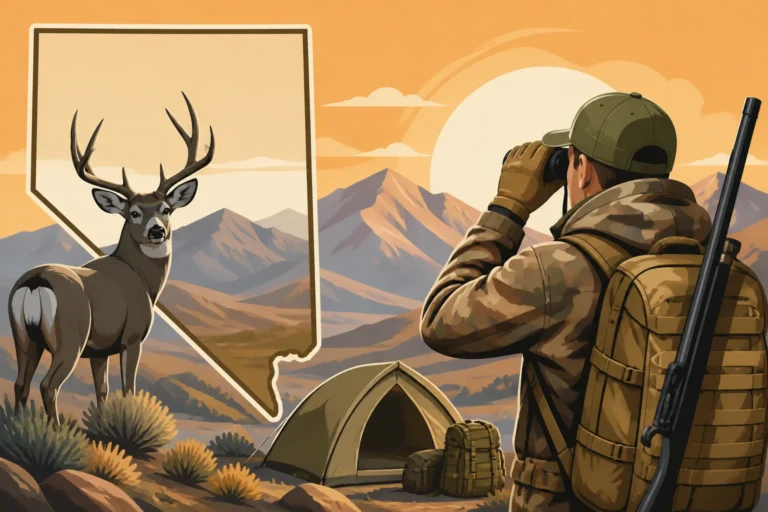
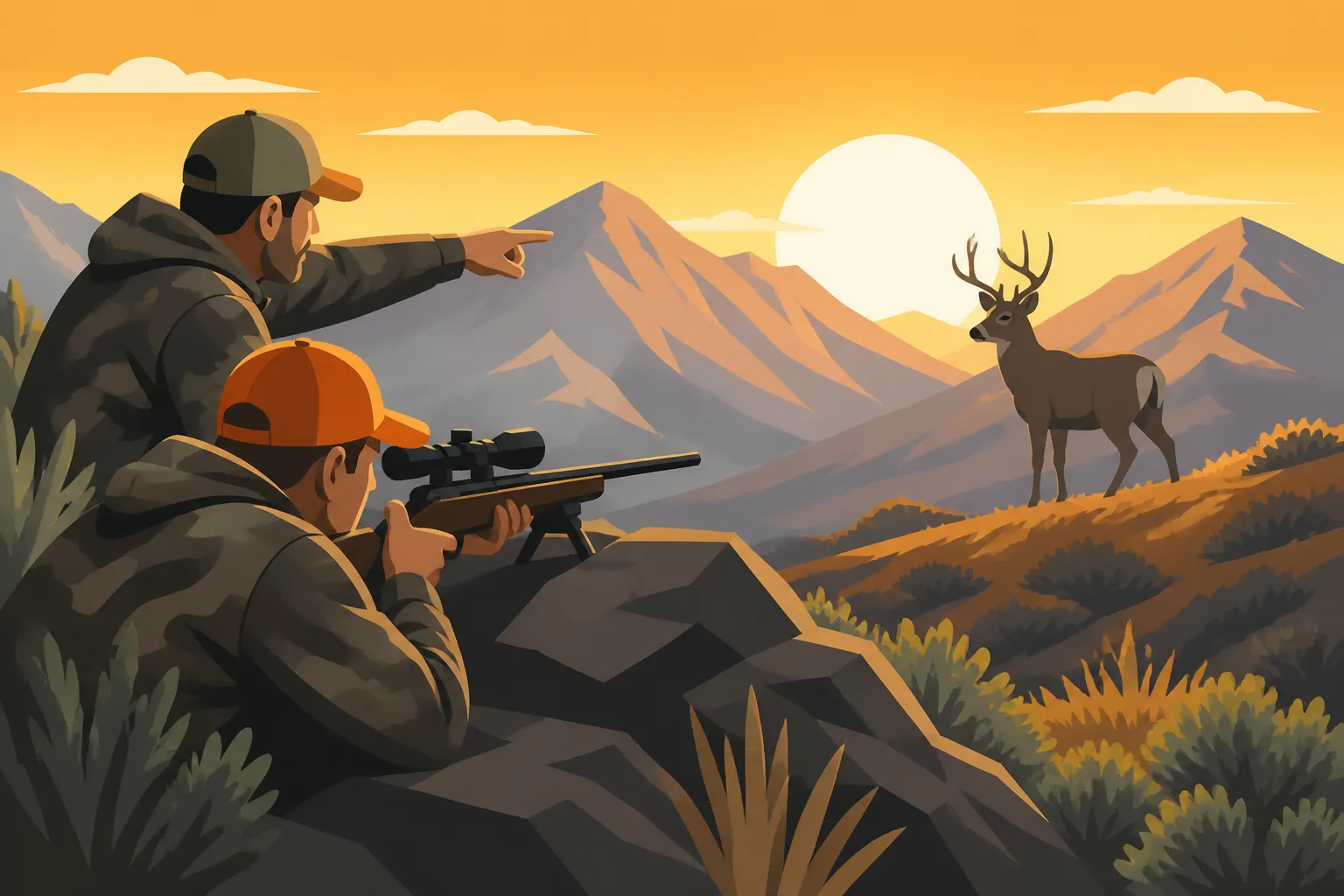
There's a moment on a guided hunt in Nevada where you've spent days, maybe even years, dreaming of this opportunity, and suddenly your guide, with a hushed intensity, gives the command: "Take him!" or "Shoot!" It's a critical moment, fraught with adrenaline, expectation, and the weight of making a clean, ethical shot. But what if you're not ready, or the shot doesn't look right? This guide will walk you through understanding your guide's intentions, trusting your own judgment, and confidently making the call to pull the trigger—or not—when it truly matters.
The Trust Factor: Building Your Relationship with a Nevada Guide
Embarking on a guided hunt in Nevada means placing a significant amount of trust in your outfitter and guide. They are the experts in the local terrain, animal behavior, and the myriad of factors that go into a successful hunt. This relationship isn't just about finding game; it's about a partnership where communication is key, long before you ever set foot in the field.
Pre-Hunt Communication and Expectations
The foundation of a good guide-client relationship is laid long before the hunt begins. This is your chance to discuss everything from your physical capabilities to your shooting proficiency and ethical boundaries. Don't be shy about being upfront and honest. If you're coming for mule deer, for example, talk about what kind of buck you're hoping for versus what's realistic in the unit you drew. Discuss potential shot distances; are you comfortable with a 200-yard shot, or is 400 yards more your typical practice range? Your guide needs to know if your personal Rifle Zero Distance for Long Sage Shots aligns with the typical opportunities in that unit.
It’s also crucial to clarify the dynamics of shot calling. Will the guide be actively looking for a specific size animal and telling you exactly when to shoot, or will they present opportunities and let you decide? Asking about their approach to wounded animals and tracking is vital as well, so you understand the commitment after the shot. Remember, platforms like BookYourHunt often provide initial profiles for guides, but a direct conversation is irreplaceable for setting these expectations.
Reading Your Guide's Cues in the Field
Out in the vastness of Nevada's public lands, verbal communication isn't always possible. Wind, distance, and the need for silence often dictate other methods. Your guide will develop a system of hand signals or subtle movements to communicate crucial information. A raised hand might mean "stop," a sweeping motion might indicate the direction of game, and a pointed finger could mean "there he is!" It's imperative that you understand these signals implicitly.
Beyond signals, listen to the tone and urgency in their voice. A calm, measured "He's at 300, take him when you're ready" is different from a hushed, urgent "RIGHT NOW! He's going to disappear!" Learning to read these non-verbal cues is almost as important as reading the animal itself. They're communicating not just the presence of game, but also the fleeting nature of the opportunity and the critical window to make a move. Discussing these communication methods beforehand ensures you're both on the same page when the pressure is on.
Understanding the Guide's Perspective on the Shot
Your guide isn't just pointing out an animal; they're assessing a complex situation involving the animal, the environment, and your capabilities. When they call the shot, it's usually based on a rapid calculation of multiple factors. They're trying to put you in the best possible position for success, while always prioritizing ethical considerations.
The "Why" Behind the Shot Call: Ethics, Safety, and Recovery
A guide's primary responsibility, beyond helping you find game, is to ensure an ethical hunt. This means advocating for a clean, humane kill and a high probability of recovering the animal. They're looking for broadside or quartering-away shots, clear lanes of fire, and a calm, stationary animal whenever possible. They're also considering the backdrop to ensure safety – are there rocks the bullet could ricochet off? Is there another animal or person behind the target?
In Nevada's vast and often rugged terrain, a lost animal isn't just a lost trophy; it's a wasted resource and a tremendous amount of effort for tracking and potential recovery in challenging conditions. Your guide might call for a shot that seems marginal to you, but they may have seen the animal pause on a rim, knowing it's the last chance before it drops into a canyon where recovery would be nearly impossible. Or they might be watching for a specific tell that only an experienced eye picks up, like a subtle shift in weight indicating the animal is about to bolt. This experience is what you're paying for when you hire a guide. When assessing a buck, they might be Deciding on a Buck Before He Moves based on subtle behavioral cues.
Judging the Animal and Opportunity: Trophy Quality and Logistics
Beyond ethics and safety, guides are constantly judging the animal itself and the overall hunting opportunity. For a trophy hunt, they're assessing the animal's size and quality. For mule deer, this could mean quickly evaluating antler width, mass, and tine length to determine if it meets your agreed-upon criteria for a "shooter" buck. For elk, it's about estimating tine length, beam circumference, and overall symmetry to judge if it's a Boone and Crockett Bulls From Nevada contender or a solid representative bull.
| Factor | Guide's Consideration | Hunter's Consideration |
|---|---|---|
| Animal Position | Broadside, quartering away, stationary for best shot. | Can I place the shot accurately from my current position? |
| Shot Distance | Within hunter's stated comfortable range, trajectory. | Is this within my effective range under pressure? |
| Backdrop/Safety | Clear line of fire, no ricochet risk, no unintended targets. | Am I absolutely sure of my target and what's beyond it? |
| Recovery Path | Terrain, vegetation, potential escape routes for animal. | How confident am I in hitting a vital area for quick kill? |
| Trophy Quality | Meets client's expectations, unit potential. | Do I want to commit my tag to this animal? |
| Environmental | Wind, light, rain, heat affecting visibility/scent. | Can I see clearly? Is my breathing steady? |
| Urgency | Animal about to move, lose cover, or cross boundary. | Can I get steady right now and make the shot? |
They're also weighing all the logistical challenges. Is the wind going to shift and give your scent away? Is the light fading, making a clean shot and subsequent recovery difficult? Is the animal about to cross a fence onto private property or into a non-hunting zone? What's the terrain like between you and the animal, and how might that affect the shot or the recovery? Sometimes, a "now or never" call comes from the guide knowing this is the absolute best chance you'll get, even if it's not a textbook scenario. This is especially true when you're Playing Thermals on a Rimrock Stalk and conditions can change in an instant.
Your Role as the Hunter: Confidence, Skill, and Communication
While your guide is an invaluable asset, remember that it's your hunt and your tag. Ultimately, you are responsible for the shot and your actions. This means being honest about your abilities and having the confidence to make the right decision, even if it goes against an urgent call.
Knowing Your Personal Limits and Communicating Them
Every hunter has a personal effective range and comfort zone. This isn't just about how far you can shoot on a flat range; it's about how far you can shoot accurately under pressure, with a pounding heart, after a strenuous hike, or in swirling winds. You might be able to hit a target at 500 yards at the range, but if a 350-yard shot at a mule deer buck across a sagebrush flat feels shaky, that's your limit for that moment.
Communicate these limits clearly and repeatedly to your guide. "I'm comfortable to 300 yards with this rifle, tops," or "I prefer a standing shot, but prone is fine if it's flat." If you're a bowhunter, you'll need to know How Close a Bowhunter Needs to Get on Mule Deer. There's no shame in knowing your limits; in fact, it shows responsibility and respect for the animal. A good guide will appreciate this honesty and adjust their strategy accordingly. This might involve changing your approach, trying to close distance, or passing on an animal in hopes of a better opportunity. Some hunters even use resources like GoHunt to understand typical shot distances in specific units they apply for, helping them prepare realistically.
When to Question or Decline a Shot Call
This is perhaps the hardest part of a guided hunt: saying "no" when your guide says "yes." But there are legitimate reasons to do so.
- Safety First: If the shot feels unsafe for any reason – too close to another animal, unsure of the backdrop, an obstacle you can't see around – you must not shoot.
- Unsure of Target: If you can't definitively identify the animal (e.g., distinguishing a legal ram from a ewe, or a spike elk from a legal bull) or are struggling to see clearly through your scope, don't pull the trigger. Mistake kills are heartbreaking and have serious consequences.
- Beyond Your Comfort Zone: If the distance, angle, or environmental factors (like heavy wind when you haven't practiced holding for wind across a wide basin) push you beyond your ethical and practical shooting limits, it's better to pass. A wounded animal is a terrible outcome.
- No Clear Shot: Sometimes, despite the guide's best intentions, a branch you can't see is blocking the vitals, or the animal is moving too quickly for you to get a steady aim. If you don't have a clear, unobstructed shot at the vitals, wait.
When you decide to decline, do so clearly and calmly. "I don't have a clear shot," or "I'm not comfortable with that distance right now." A professional guide will respect your decision. They might be frustrated in the moment, especially if it was a hard-earned opportunity, but they will ultimately value your ethical judgment and commitment to a clean kill. In many cases, they'll work with you to find another opportunity.
After the Shot: Confirmation and Follow-Through
Once you've made the decision to take the shot your guide called, the hunt isn't over. The moments immediately following the shot are crucial for ensuring a successful and ethical harvest.
Immediate Reactions and Post-Shot Protocol
After the rifle cracks or the bow twangs, your immediate reaction can significantly impact the outcome.
- Stay on Target: Resist the urge to immediately look up. Keep your eye through the scope or your bow arm up and watch the animal's reaction. Did it kick? Hunch? Run downhill or uphill? Note the direction it went. This information is gold for tracking.
- Cycle Your Action/Nock Another Arrow: Even if you believe it was a perfect shot, always assume you might need a follow-up. Rapidly cycle your bolt-action rifle, reload your lever-action, or nock another arrow. You might get another chance, especially if the animal is only wounded or if a second animal presents itself.
- Listen: If the animal disappears into cover, listen carefully. Can you hear it crashing? A death bellow? Pinpointing the last sound helps immensely in narrowing down the search area for tracking a wounded animal.
Your guide will typically be observing right alongside you, but your input on the animal's reaction is vital. Don't be afraid to describe what you saw and heard.
Tracking and Recovery: A Team Effort
In Nevada's diverse terrain, from open sage flats to dense mountain timber, tracking can be incredibly challenging. Your guide's experience here is invaluable. They'll be looking for blood, broken branches, disturbed earth, and other subtle signs. They understand animal behavior and where a wounded animal might seek cover. Packing an Animal Out of Roadless Country is a significant effort, and knowing where it dropped saves hours.
As the hunter, your role in tracking is to assist, but often, the best help is to let the guide lead. They've likely done this hundreds of times. Point out anything you see, but avoid blindly crashing through the area, which can obliterate tracks and blood sign. Mark the last known position of the animal and the spot where it was hit. Use prominent landmarks if possible. Be prepared for a long search, especially if the shot wasn't immediately fatal. A strong ethical hunter commits to finding the animal, no matter how long it takes. This commitment extends to understanding The Meat Salvage Requirements for Big Game and ensuring the animal is properly cared for.
Disclaimer
This article is for general informational purposes only and does not constitute professional advice. Laws, prices and regulations vary by location and change over time. Consult a qualified professional for guidance on your specific situation.