Where Gambel’s Quail Live in the South
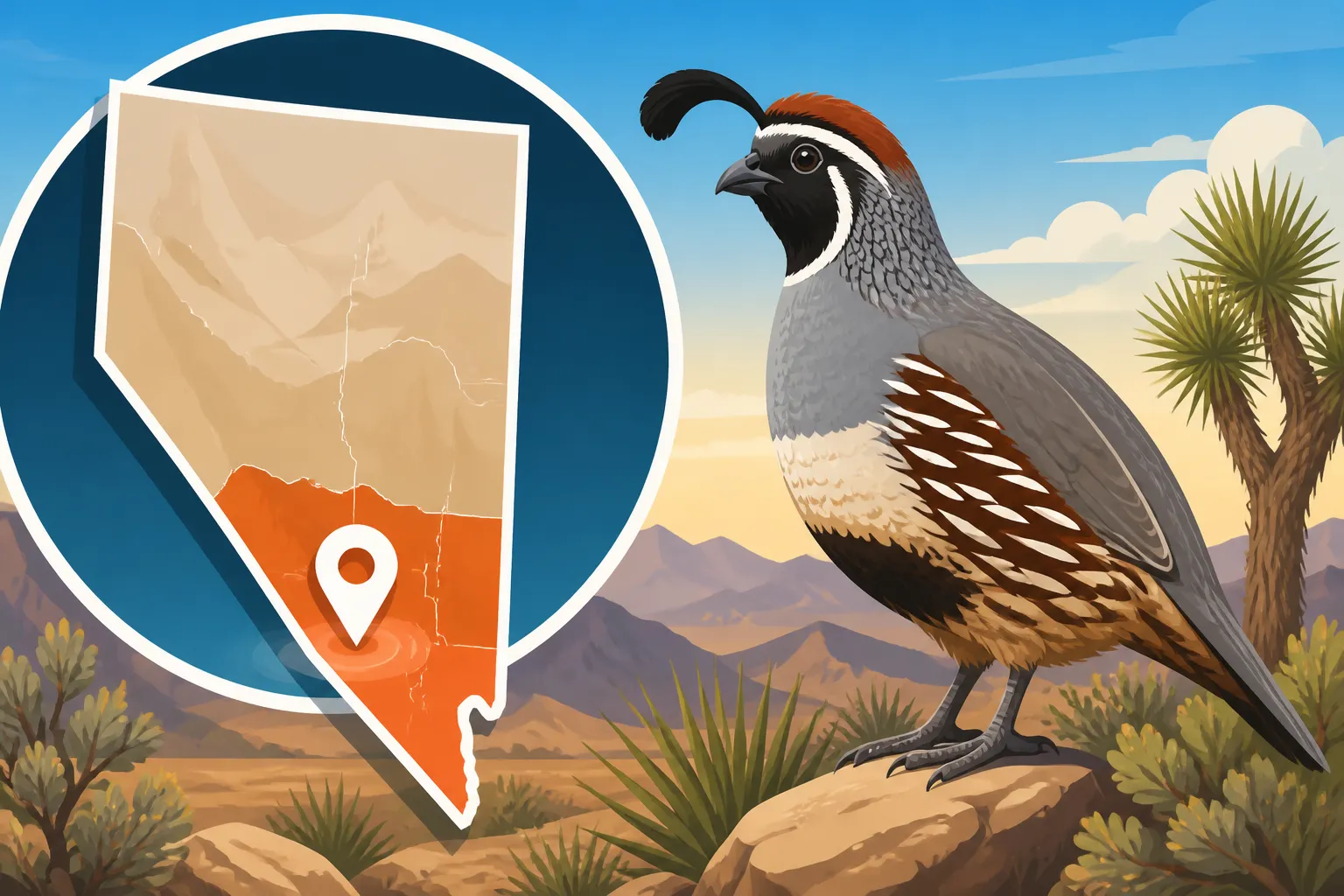
Trying to chase down Gambel's quail in Southern Nevada can feel like a fool's errand if you don't know where to start. These desert rockets love their thorny homes, and finding their specific haunts is often half the battle in the vast, unforgiving landscape. This guide is all about pinpointing exactly where these elusive birds live and thrive in the southern reaches of the Silver State, helping you plan your next desert upland adventure with confidence and realistic expectations.
The Desert Oasis: Understanding Gambel's Quail Habitat
Gambel's quail are iconic residents of the Sonoran and Mojave deserts, and they've carved out a very specific niche for themselves in Southern Nevada. They aren't just anywhere; they need a precise combination of cover, food, and, critically, water. When you're thinking about where to find them, you're essentially looking for pockets of life in an otherwise stark environment. Their survival hinges on these micro-habitats, and understanding them is your first step to success.
Thorny Cover and Riparian Zones
These birds are absolute masters of evasion, and their primary defense mechanism is dense, thorny vegetation. Think mesquite thickets, catclaw acacia, palo verde, desert hackberry, and various other spiny shrubs that would make walking through them a nightmare for anything larger than a quail. This isn't just about hiding from predators like coyotes, bobcats, or raptors; it's also about thermal regulation. The shade these plants provide is crucial during the scorching desert heat, and the dense structure offers protection from chilly winter nights and winds. You'll often find them concentrated in riparian areas – those thin ribbons of green that trace dry washes or where ephemeral water sources might appear after a rain. These areas tend to have richer soil, supporting more robust growth and, consequently, more cover and food for quail. Look for the densest, nastiest tangles of brush you can find; if it looks impenetrable to you, it probably looks like a five-star hotel to a Gambel's quail.
The Critical Role of Water Sources
In the desert, water is life, and for Gambel's quail, it's absolutely non-negotiable. They need to drink daily, especially during the warmer months, which means they are almost always found within a reasonable distance of a water source. This could be a natural spring, a seeping rock face, a livestock tank, or, very commonly in Nevada, an engineered wildlife "guzzler." These guzzlers are designed to collect rainwater and store it, providing a consistent water supply for various desert animals. How Guzzlers Concentrate Desert Game explains just how vital these are. Identifying these water points on a map before you even leave home is paramount. Many hunters rely on mapping tools like GoHunt to pinpoint these crucial spots and build their hunting plans around them. Without reliable water, you simply won't find Gambel's quail in any significant numbers. Pay close attention to any indication of moisture, even if it's just a damp spot in a rocky crevice; these birds are experts at finding even the most subtle sources.
Elevation and Microclimates
While Gambel's quail are desert birds, they aren't necessarily found at the lowest, hottest elevations all the time. You'll primarily find them in the foothills and lower mountain slopes, typically from around 1,500 feet up to about 5,000 feet, sometimes a little higher depending on the specific mountain range and water availability. This elevation band offers a slight reprieve from the most extreme valley floor temperatures and often features more varied terrain, providing additional escape routes and food sources. The microclimates created by canyons, draws, and north-facing slopes can also be important, offering cooler temperatures and slightly more moisture, which in turn supports the plant life Gambel's quail depend on. Don't be afraid to explore these slightly higher, rockier areas where washes dissect the landscape and lead up into the mountains.
Prime Real Estate: Key Regions and Specific Locations for Gambel's Quail
Southern Nevada is a vast area, but not all of it is equally productive for Gambel's quail. Certain regions and specific types of terrain within them consistently hold higher populations. Knowing these general areas can help you narrow down your scouting efforts significantly and focus on ground that actually has the potential to produce birds.
The Virgin and Spring Mountains Areas
When people talk about Gambel's quail in Southern Nevada, the areas around the Virgin Mountains and the Spring Mountains often come up. The Virgin Mountains, located in the very southeastern corner of the state, offer some excellent habitat with numerous washes, diverse desert flora, and critical water sources. Similarly, the eastern and southern foothills of the Spring Mountains (which include Mount Charleston, a popular recreational area) can be prime territory. These ranges often have extensive public land access through BLM (Bureau of Land Management) ground, making them accessible to hunters. The key here is to look at the transition zones where the steeper, rockier slopes meet the flatter valley floors, especially where perennial washes or drainages flow down from the mountains. This convergence often creates the ideal mix of cover and water that quail crave. Tools like GoHunt can really help you visualize the terrain and identify these transition areas and unit boundaries where you're permitted to hunt.
Mojave Desert Valleys and Washes
Beyond the immediate foothills of specific mountain ranges, the broad, sweeping valleys of the Mojave Desert itself, particularly where they are dissected by extensive wash systems, can be highly productive. These aren't the flat, barren salt flats, but rather the gravelly, undulating terrain often characterized by numerous dry riverbeds or arroyos. These washes act like natural highways for wildlife and, crucially, concentrate moisture, even if temporarily. This concentration of moisture allows for denser growth of mesquite, catclaw, and other riparian vegetation that is essential for Gambel's quail.
Consider areas around communities like Searchlight, Laughlin, or even further north towards Tonopah if you're looking at the transition zones where the true Mojave desert plants give way to Great Basin species. It's crucial to remember that these washes can be miles long and finding the "right" section usually means finding a convergence of dense cover and a reliable, often subtle, water source. This is where scouting, both with maps and on the ground, becomes invaluable. Reading Water Sources Before an August Hunt provides excellent strategies for finding these critical spots.
Unit Selection and Habitat Diversity
Nevada's hunt unit system is designed to manage game across diverse landscapes. While I won't list specific unit numbers (as those change and need to be verified with current regulations), understand that you'll be looking for units predominantly in the southern third of the state. It's important to study the unit boundaries and land ownership layers. Most of the prime Gambel's habitat is on BLM land, which is publicly accessible, but always confirm land status. Within any given unit, look for areas with a high density of these habitat features: dense, thorny washes, proximity to known water sources (guzzlers, springs), and lower-to-mid elevation foothills. A unit that appears to have good diversity—from steep, rocky slopes down into wider, brush-filled washes—is generally a better bet than a uniformly flat or uniformly steep unit.
Reading the Desert: Identifying Gambel's Quail Sign and Behavior
Finding Gambel's quail isn't always about seeing them flush. These birds leave plenty of clues, and learning to read the desert floor can significantly increase your success. Their calls, tracks, and dust baths are all indicators that you're in the right neighborhood.
The Distinctive Call of the Gambel's Quail
One of the most exciting and frustrating aspects of hunting Gambel's quail is their unique and often loud vocalizations. Their primary call is a distinctive "chi-ca-go" or "quit-ca-go" sound that can carry a surprising distance in the still desert air. Males will often perch on a prominent bush or rock outcropping and loudly announce their presence, especially in the mornings and evenings. Learning to recognize this call is crucial for locating coveys. They also have a softer, clucking call they use to communicate within the covey. When you hear that "chi-ca-go," freeze, listen carefully, and try to triangulate the sound. It's an instant indicator that you're in active quail country. Don't be fooled by their calls echoing through the canyons; they can sound much closer or farther than they actually are. It takes practice to judge the distance and direction.
Tracks, Droppings, and Dust Baths
Like most ground birds, Gambel's quail leave plenty of physical evidence. Their tracks are small, three-toed imprints, often found in the soft sand of washes or near water sources. Look for areas with multiple tracks indicating a covey has moved through. Their droppings are small, dark, and often tubular, sometimes with a white uric acid cap. While not as obvious as tracks, finding them beneath roosting bushes confirms their presence. Perhaps the most common and visible sign are dust baths. Quail love to take dust baths, especially in sandy or fine-soiled areas. These are small, bowl-shaped depressions in the ground, often under cover, where the birds have ruffled their feathers to remove parasites and clean themselves. If you find fresh dust baths, especially with feathers or droppings nearby, you know you're very close to a covey's preferred hangout. Pay attention to the freshness of the sign; very crisp tracks or damp dust baths mean they've been there very recently.
Flushing Patterns and Escape Routes
Gambel's quail are known for their explosive flushes. When disturbed, a covey will typically erupt all at once, flying low and fast through the brush, often scattering in multiple directions. They are incredibly adept at using the terrain and vegetation to their advantage, disappearing almost instantly behind a mesquite thicket or into a rocky wash. After the initial flush, they will almost always run before flying again, making it incredibly difficult to get a second shot if you're not prepared for their speed. Understanding this behavior is vital for positioning yourself and your hunting partners. Try to anticipate their escape routes – usually, they head for the densest cover or downhill into a wash. This is where strategic planning, perhaps with two hunters working abreast through a wash, can be highly effective. They'll almost always try to put something between you and them, be it a bush, a rock, or a slight rise in the ground.
Tactics for the Desert Dash: Successful Hunting Strategies
Hunting Gambel's quail is not a casual stroll. It's a demanding, fast-paced sport that requires preparation, endurance, and often, the right four-legged companion. The desert is a harsh environment, and you need to be ready for its challenges.
Hunting with Dogs: Your Best Ally
While it's certainly possible to walk up on Gambel's quail, especially if you're stealthy and know their habits, a good bird dog is undeniably your best ally. A well-trained pointing or flushing dog can cover far more ground, penetrate denser cover, and most importantly, find birds that you would never see. Their superior sense of smell allows them to pick up scent trails that are invisible to the human eye, following a running covey until they hold, or flushing them from the deepest brush. Retrievers are also incredibly valuable for finding downed birds in the thick cover, preventing lost game. Be sure your dog is conditioned for the desert heat, has protective booties for sharp rocks and thorns, and has access to plenty of water. Heat Management on an August Archery Hunt offers similar principles that apply to any desert hunt, particularly when working a dog.
Fast Shooting and Anticipating the Flush
When a covey of Gambel's quail erupts, you'll have mere seconds to react. These birds are small, incredibly fast, and disappear into the background instantly. This isn't a slow, deliberate shot; it's a fast, instinctive swing. Practice your wing shooting on clays or dove to get accustomed to quick target acquisition. Always be ready with your gun mounted and safety off when you're in prime habitat. Anticipating where they will flush from – often the densest part of a thicket – and where they're likely to fly – usually low and fast, following the contours of the land or into another thicket – can give you a precious half-second advantage. Once they're in the air, pick one bird and focus. Don't try to shoot into the "blob" of quail.
Hydration and Navigation in Arid Terrain
The Southern Nevada desert is no place to take hydration lightly. Even on cooler days, the dry air and physical exertion can lead to rapid dehydration. Carry far more water than you think you'll need, both for yourself and any dogs. Electrolyte supplements are also a good idea. Plan your route carefully, ideally carrying a GPS device or a smartphone with a reliable mapping app like GoHunt that has offline map capabilities. Cell service is notoriously spotty in many remote areas. Familiarize yourself with the terrain using satellite imagery beforehand, identify key landmarks, and know your egress routes. Preparing Physically for Long Glassing Days covers the physical demands of desert hunting that apply directly to chasing quail. It's not just about the hunt; it's about making it back safely. Remember, roads are often long, and services are far apart. How Far Apart Nevada Fuel Stops Are highlights the importance of being self-sufficient in this vast landscape.
A Typical Day of Quail Hunting
A typical day hunting Gambel's quail might start early, just as the sun begins to warm the desert. The birds will be moving out of their roosts, often calling, and looking for food and water. This is a prime time to intercept them. Work washes and areas near known water sources. As the day heats up, they'll often move into the densest shade and become less active. This is a good time for you and your dog to take a break, hydrate, and maybe relocate to a new area. In the late afternoon, as temperatures start to drop, they'll become active again, feeding and moving towards evening roosts. The hours around dawn and dusk are often the most productive. Always be aware of your surroundings, as the desert is home to rattlesnakes and other hazards. Snake Awareness on an August Archery Hunt is highly relevant reading.
Table: Essential Gear for a Southern Nevada Quail Hunt
| Gear Item | Description | Why You Need It |
|---|---|---|
| Water | At least 1 gallon per person/dog per day; more in extreme heat. | Critical for preventing dehydration in arid conditions. |
| Mapping Device | GPS unit or smartphone with offline maps (e.g., GoHunt). | Navigation, identifying water sources, confirming public land. |
| Protective Footwear | Sturdy, high-ankled boots for rocky, thorny terrain. | Prevents injury from sharp rocks, cactus, and snake bites. |
| Dog Protection | Dog booties, protective vest. | Shields paws from thorns/heat, protects body from sharp brush. |
| First-Aid Kit | Basic supplies for cuts, scrapes, snake bites (for humans and dogs). | Essential for addressing common injuries in remote areas. |
| Game Vest/Bag | Comfortable vest or backpack with ample game pocket. | Carries harvested birds, shells, water, and other essentials. |
| Appropriate Clothing | Layered, breathable, thorn-resistant clothing. | Protection from sun, thorns, and adapting to temperature swings. |
| Shotgun and Ammo | Light, fast-swinging shotgun (20 or 12 gauge) with 7.5 or 8 shot. | Ideal for fast-flushing, small birds. |
| Sun Protection | Hat, sunglasses, sunscreen. | Protects from intense desert sun exposure. |
| Binoculars | Lightweight pair (8×32 or 10×42). | Useful for spotting birds on distant bushes or locating coveys. |
This demanding but incredibly rewarding pursuit offers a unique challenge and a chance to experience the wild beauty of Southern Nevada. With careful preparation and a keen eye for habitat, you'll be well on your way to a successful Gambel's quail hunt.
Disclaimer
This article is for general informational purposes only and does not constitute professional advice. Laws, prices and regulations vary by location and change over time. Consult a qualified professional for guidance on your specific situation.