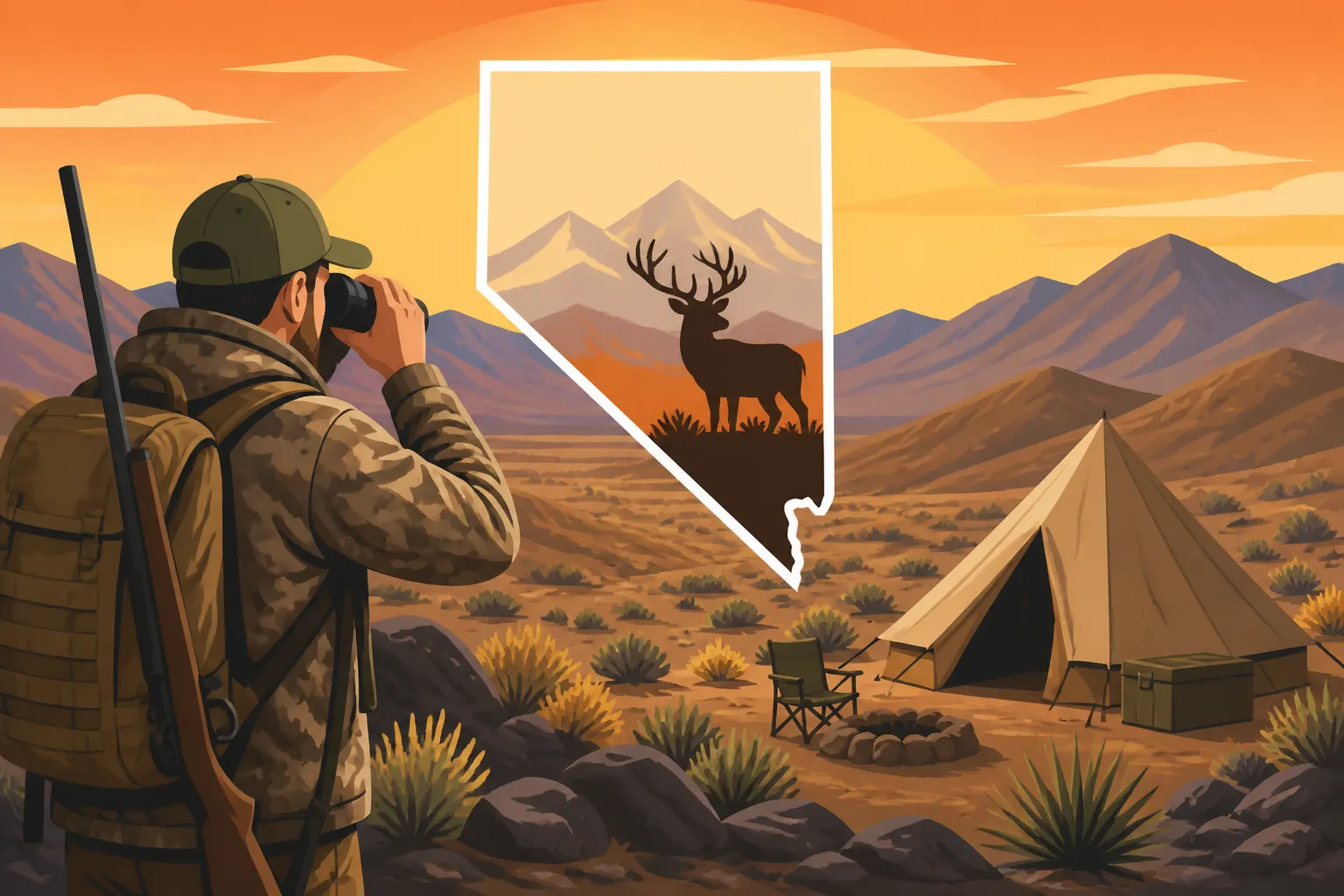
Where Outfitters May Camp on Public Land
Navigating public land in Nevada can feel like stepping into a vast, untamed wilderness – which, in many ways, it is. For those considering a guided hunt, understanding where outfitters can legally set up their camps on this immense public domain is crucial, not just for your peace of mind but for ensuring a responsible and compliant experience. This guide will walk you through the often-confusing landscape of permits, regulations, and ethical considerations that shape where your outfitter can lay out their temporary home base, ensuring you're fully informed before you ever step foot in camp.
The Complexities of Public Land Camping for Outfitters
When you think about camping on public land, many hunters picture pulling off a two-track road, setting up a tent, and enjoying the solitude. And for individual recreational users, that's often exactly how it works. But when it comes to a commercial operation, like a hunting outfitter, the rules shift dramatically. This isn't just about setting up a few tents; it involves running a business on public property, and that brings a whole new layer of responsibility and regulation.
General Rules vs. Commercial Use
The fundamental difference lies in intent and impact. A solo hunter spending a few nights in a tent has a minimal footprint. An outfitter, however, is bringing multiple clients, often for extended periods, requiring more extensive camp setups, food storage, waste management, and potentially even temporary structures. This commercial activity has a greater potential to impact the land, its resources, and other users. Because of this, public land management agencies —primarily the Bureau of Land Management (BLM) and the U.S. Forest Service (USFS) in Nevada— require outfitters to obtain specific permits. These aren't just a formality; they're designed to manage resource use, ensure public safety, and maintain a level playing field for all users. The regulations ensure that these commercial operations are conducted responsibly and don't degrade the very wilderness experience they're selling.
Imagine a situation where an outfitter simply set up shop wherever they pleased without oversight. They might inadvertently camp on sensitive wildlife habitat, block traditional access points for other hunters, or leave a lasting impact that detracts from the wild character of the area. This is why the distinction between individual recreational use and commercial activity is so vital. It's about protecting the land for everyone, and for future generations of hunters and outdoor enthusiasts.
Federal Agencies and Their Jurisdictions
Nevada is famously Nevada Is the Most Federally Owned State in the Lower 48, meaning the vast majority of its hunting grounds fall under federal jurisdiction. This primarily breaks down to two major players: the Bureau of Land Management (BLM) and the U.S. Forest Service. Each agency has its own set of rules, permit structures, and management philosophies, which can make things a bit tricky to navigate.
BLM land, which is where BLM Ground Is Where Most Nevada Hunting Happens, typically offers the most expansive opportunities for dispersed camping, even for individuals. However, for outfitters, this "anything goes" approach is entirely absent. On BLM ground, commercial outfitters almost always require a Special Recreation Permit (SRP). These permits are issued by specific BLM field offices and often cover designated areas or units, outlining where camps can be established, what kind of facilities are allowed, and how long they can remain. It's a structured approach to managing commercial impacts across the vast sagebrush seas and remote mountain ranges that define much of Nevada's hunting.
National Forests, like the Humboldt-Toiyabe, which dot the higher, timbered elevations of Nevada, often have different—and sometimes more restrictive—regulations. While individual dispersed camping is often allowed in many areas, the Forest Service also issues specific Special Use Permits for commercial operations. These permits ensure that outfitter activities align with forest management plans, which might prioritize timber, water quality, or specific recreational experiences. For instance, a Forest Service permit might dictate that camps need to be relocated frequently to prevent site degradation, or that certain sensitive areas are off-limits entirely. Understanding which agency manages the land an outfitter intends to use is the first step in understanding the legitimacy and bounds of their camp.
Special Use Permits: The Key for Commercial Operations
For any outfitter operating on public lands in Nevada, the term "Special Use Permit" is the absolute bedrock of their legal operation. This isn't just a nice-to-have; it's a mandatory authorization that dictates almost every aspect of their commercial activity, especially when it comes to setting up camps. Without it, they're simply not allowed to run a commercial hunt on that federal ground, and any hunter participating in such a hunt could find themselves in a very sticky situation.
Why Outfitters Need Permits
Outfitters need these permits because their business operations are inherently different from a private citizen recreating on public land. When an outfitter brings clients onto public property, they are using federal resources for financial gain, and that comes with a higher level of scrutiny and responsibility. The rationale behind these permits is multi-faceted. Firstly, it's about resource protection. Multiple camps, vehicles, and human activity can leave a significant impact on sensitive ecosystems, water sources, and wildlife habitat. Permits allow the land management agencies to dictate where, when, and how these activities occur, minimizing environmental damage.
Secondly, it's about public safety and ensuring a quality experience for all users. An unregulated commercial operation could lead to overcrowding, conflicts between different user groups, or even unsafe practices. By requiring permits, agencies can ensure outfitters have proper insurance, adhere to safety standards, and operate in a manner that respects the rights and experiences of others. This also plays into fair access; without permits, a few large outfitters could monopolize prime hunting areas, squeezing out individual hunters. Finally, these permits are how federal agencies recover some of the costs associated with managing these vast public lands, ensuring that the services and infrastructure (like roads and trailheads) remain available for everyone. When you're Vetting a Nevada Outfitter Before You Send a Deposit, one of the first Questions Worth Asking Before You Book should always be about their federal land use permits.
The Application Process and Requirements
The application process for a Special Use Permit is rigorous and quite detailed, far from a simple checkbox exercise. Outfitters typically need to submit a comprehensive business plan outlining their services, the number of clients they anticipate, and their proposed operating areas. Crucially, they must provide proof of liability insurance, often with specific coverage limits, to protect both the clients and the federal government in case of an accident. They'll also detail their operating procedures, including how they plan to manage waste, handle food storage to prevent wildlife conflicts, and respond to emergencies.
The specific federal agencies an outfitter applies to depend entirely on where they intend to hunt. If they plan to operate on BLM land, they'll apply to the relevant BLM field office. If their hunts take place in the higher elevations of a National Forest, like portions of the Humboldt-Toiyabe National Forest, they'll work with the Forest Service. It's important to understand that these aren't "blanket" permits covering the entire state. A permit might be for a specific hunt unit, a particular area within a unit, or even a set of unit groups. This localized approach allows agencies to tailor the conditions of the permit to the specific ecological and social conditions of that particular area. An outfitter may hold permits for multiple areas, but each requires separate approval and adherence to distinct stipulations. This ensures responsible land use and proper oversight of commercial hunting activities.
Common Public Land Types and Outfitter Camps
Nevada's public lands are a mosaic, dominated by vast stretches of BLM acreage but also featuring significant National Forest lands, particularly in its mountain ranges. Outfitters planning a hunt across the state must understand the specific regulations for each type of land, as these dictate where and how they can establish their camps. The choice of land type directly impacts the style of hunt and the nature of the camp experience for clients.
BLM Land: The Backbone of Nevada Hunting
For most Nevada hunting, especially for species like mule deer and pronghorn that thrive in open, arid environments, BLM land is king. It's the expansive sagebrush country, the rolling hills, and the lower mountain slopes that define much of the state's hunting opportunities. Consequently, most outfitter base camps and spike camps are established on BLM ground. While individual recreational users often have wide latitude for Camping Rules on Nevada BLM Ground, commercial outfitters operate under a different set of rules, specifically through their Special Recreation Permits.
These permits often designate specific areas where an outfitter can set up a base camp, which might include multiple tents, a cook tent, and possibly even more robust temporary shelters. These designated sites help concentrate impact and ensure that fragile areas are avoided. For spike camps, which are smaller, more mobile camps used for shorter periods closer to the hunting action, the permits might allow for a wider range of locations but still emphasize "Leave No Trace" principles and minimizing disturbance. A typical BLM outfitter camp might consist of heavy-duty canvas wall tents, a dedicated kitchen area, and a fire ring, all designed to be set up and taken down with minimal lasting impact. Outfitters are expected to pack out everything they pack in, leaving no trace behind. This also means adhering to rules about Motorized Travel Rules on Nevada Public Land to access and supply camps.
National Forests: Higher Elevations, Different Rules
Nevada's National Forests, primarily the Humboldt-Toiyabe, offer a stark contrast to the vast sagebrush plains of the BLM. These are the higher-elevation, often timbered or aspen-studded mountains, providing habitat for elk and higher-country mule deer. The environment here is different, and so too are some of the regulations governing outfitter camps. While a National Forest may feel more remote and wild, it's still managed under strict guidelines.
Outfitter permits for National Forest land will often reflect the more sensitive nature of these environments. For instance, in areas designated as Wilderness Study Areas and Vehicle Limits or actual Wilderness, motorized access for camp setup and resupply is severely restricted or entirely prohibited, necessitating pack animals. This significantly changes the logistics of a hunt, often leading to more rustic spike camps or base camps that are accessed solely by horseback or foot. The Forest Service might also have stricter rules regarding camp density, fire restrictions, and waste disposal due to the higher rainfall and different ecological makeup compared to the desert. An outfitter might establish a comfortable base camp near a forest road, accessible by truck, and then utilize lighter, more mobile spike camps deeper in the wilderness areas, accessed via horse or backpack, allowing hunters to penetrate further into prime elk or deer habitat.
Ethical Considerations and Best Practices for Outfitters
Operating as an outfitter on public land in Nevada isn't just about obtaining the right permits; it carries a significant ethical responsibility. These lands belong to all of us, and commercial operators have a heightened obligation to ensure their activities leave minimal impact and respect the experience of every other user. Adhering to best practices isn't just good for business; it's essential for preserving the wild character of Nevada for generations to come.
Leave No Trace Principles for Commercial Camps
The "Leave No Trace" philosophy is paramount for any outdoor activity, but for commercial outfitting operations, it becomes an even more critical mandate. An outfitter's camp, by its nature, has a larger footprint and more prolonged presence than a typical recreational camper. Therefore, every aspect of camp management, from setup to breakdown, must minimize environmental impact. This means meticulously managing trash, ensuring that not even a stray piece of plastic or bullet casing is left behind. Human waste disposal is also critical, with outfitters often employing portable toilet systems or specific cathole digging protocols far from water sources and camp areas.
Fire restrictions are always a major concern in Nevada's arid environment, and outfitters must strictly adhere to all local burn bans and fire safety guidelines. This might mean using propane stoves instead of open fires, or establishing contained fire rings that leave no lasting scorch mark on the ground. Beyond the obvious, it also involves subtle considerations like avoiding damage to sensitive vegetation, camping on durable surfaces, and dispersing activities to prevent "social trails" or over-compacted ground. A responsible outfitter understands that their permit is a privilege, and their adherence to these principles directly reflects on their integrity and the longevity of their operation on public lands.
Respecting Other Users and Wildlife
An outfitter camp, by its very nature, can attract attention. Ethical outfitters recognize their role in the broader public land ecosystem and actively work to minimize their impact on other hunters, hikers, and wildlife. This means setting up camps in locations that don't block access roads or popular trailheads, and maintaining a respectful distance from other established camps or known recreational use areas. The goal is to avoid creating an impression of exclusivity or overcrowding in areas that are intended for all.
Furthermore, outfitter camps must be managed with wildlife in mind. This involves meticulous food storage to prevent attracting bears or other scavengers, which can create dangerous situations for both humans and animals. Understanding and respecting wildlife corridors, watering holes, and sensitive bedding areas is also crucial. A reputable outfitter will carefully select camp locations that minimize disturbance to wildlife, especially during crucial times like migration or rut. This proactive approach ensures that the presence of a commercial camp doesn't displace game animals or negatively impact their behavior, preserving the quality of the hunt for everyone, including future unguided hunters.
Finding and Verifying Outfitter Camp Locations
For hunters looking to book a guided trip in Nevada, verifying an outfitter's credentials and understanding their operational logistics, including camp locations, is a critical step. You're investing significant time and money, and peace of mind comes from knowing your outfitter is legitimate and operates responsibly. The vastness of Nevada’s public land can make this seem daunting, but there are clear avenues for verification.
Researching Outfitter Credentials and Permits
When you’re talking to potential outfitters, don't hesitate to ask direct questions about their federal land use permits. A reputable outfitter will be transparent and proud to share this information. You want to know which specific federal agency (BLM, Forest Service) issued their permits, for which hunt units, and the duration of those permits. Remember that Why Nevada Guides Need Federal Land Permits and How BLM Nevada Issues a Joint Permit. They should be able to tell you the name of the BLM Field Office or Forest Service District Office that issued their Special Use Permit.
Once you have this information, you can take an extra step for reassurance: contact the relevant agency office directly. They can verify if the outfitter holds a valid permit for the area they claim to operate in. While they may not disclose every detail due to privacy, they can generally confirm an outfitter's status. Platforms like BookYourHunt often have vetting processes for outfitters listed on their sites, which can add a layer of confidence. Similarly, resources like GoHunt provide in-depth information on hunt units and regulations, which can help you cross-reference what an outfitter tells you with official state and federal guidelines. This due diligence ensures you're dealing with a legitimate operation, protecting your investment and upholding ethical hunting practices.
Understanding Unit Specifics and Designated Areas
The location of an outfitter's camp isn't just arbitrary; it's often dictated by the specific conditions of their federal permit, which in turn are tied to the characteristics of the hunt unit itself. For example, a permit for a particular unit might specify that a base camp must be located outside of a Wilderness Study Areas and Vehicle Limits boundary, or within a designated camping zone to prevent resource damage. Some units might have higher ecological sensitivity, leading to stricter rules about camp size, duration, or proximity to water sources.
It's also important to remember that Nevada's hunt units can be incredibly diverse in terrain, from low-elevation desert to high alpine peaks. This geographical variation often influences where an outfitter might choose to establish their camp, even within permitted boundaries. For instance, a camp for an early archery deer hunt might need to be close to reliable water sources, whereas a late-season rifle elk camp might be situated for optimal access to winter range. Mapping tools, including those found on platforms like GoHunt, are invaluable for understanding the terrain, land ownership layers, and potential access points within a given unit. This allows you, as the client, to visualize where a camp might realistically be located and to have an informed conversation with your outfitter about the logistics and expectations of your hunt. This attention to detail reflects a truly professional operation, highlighting how What a Nevada Master Guide License Allows is applied on the ground.
| Feature | Individual Recreational Camping (BLM/USFS) | Permitted Outfitter Camp (BLM/USFS) |
|---|---|---|
| Authorization | Generally permitted, no formal approval needed | Requires specific Federal Special Use Permit (SRP) |
| Primary Purpose | Personal recreation, non-commercial | Commercial enterprise, client services |
| Duration of Stay | Typically 14-day limit in one spot | Stipulated by permit, often seasonal or specific dates |
| Site Selection | Dispersed, "Leave No Trace" guidelines | Designated areas or within permit boundaries |
| Impact/Footprint | Low, minimal impact expected | Higher potential, actively mitigated by permit terms |
| Waste Management | Pack it in, pack it out (personal) | Detailed plan required, often structured facilities |
| Vehicle Access | Existing roads/trails, no off-roading | Specified by permit, for camp and client transport |
| Required Docs. | None | Permit, insurance, business plan, operating procedures |
| Enforcement | General public land rules | Permit compliance, regular inspections |
Disclaimer
This article is for general informational purposes only and does not constitute professional advice. Laws, prices and regulations vary by location and change over time. Consult a qualified professional for guidance on your specific situation.