Where Pronghorn Numbers Are Strongest
It can be incredibly frustrating to sift through general hunting regulations and maps, trying to pinpoint exactly where those elusive Nevada pronghorn concentrate. You know they're out there, sprinting across the vast open country, but finding reliable information on their strongest numbers can feel like searching for a needle in a sagebrush haystack. This guide is designed to cut through that clutter, helping you understand the prime habitats and key regions where Nevada's speed goats are most likely to thrive, giving you a clearer direction for your next hunt.
The Pronghorn's Domain: Understanding Nevada's Speed Goats
Nevada is a land of extremes, and while it might seem harsh, it's actually the perfect stage for the American pronghorn. These magnificent animals, often mistakenly called antelope, are true natives of North America's sagebrush steppe and wide-open prairies. They are built for speed and survival in arid environments, and Nevada offers an abundance of the low-growing vegetation and expansive vistas they call home. When you’re thinking about Pronghorn Across Nevada's Open Valleys, you’re really imagining vast stretches of public land, primarily managed by the Bureau of Land Management (BLM), where these animals can roam freely.
Their diet is a big clue to their preferred habitat. Pronghorn are primarily browsers, not grazers, meaning they prefer forbs, shrubs, and especially sagebrush. This might surprise some, but they actually have a digestive system uniquely adapted to handle the terpenes in sagebrush, a plant that many other herbivores find unpalatable. So, when you're looking for strong numbers, you're essentially looking for healthy, expansive sagebrush ecosystems, interspersed with other drought-resistant plants. These are the areas that provide both the nutritional content they need and the cover (albeit low-lying) that helps them feel secure in such exposed environments.
Another critical aspect of their domain is the sheer openness. Pronghorn rely on their incredible eyesight and blistering speed, making them exceptionally difficult to approach in broken terrain. They need long sightlines to detect predators—be it a coyote, a mountain lion, or an approaching hunter—from miles away. This means they generally shun dense timber or deeply incised canyons. Instead, they favor the gentle rolls of valley floors and broad, sweeping basins, where visibility stretches for miles in every direction. Understanding this inherent need for open space is fundamental to locating where Pronghorn on Nevada's Valley Floors will congregate.
Mapping the Hotspots: Regions Known for Strong Pronghorn Numbers
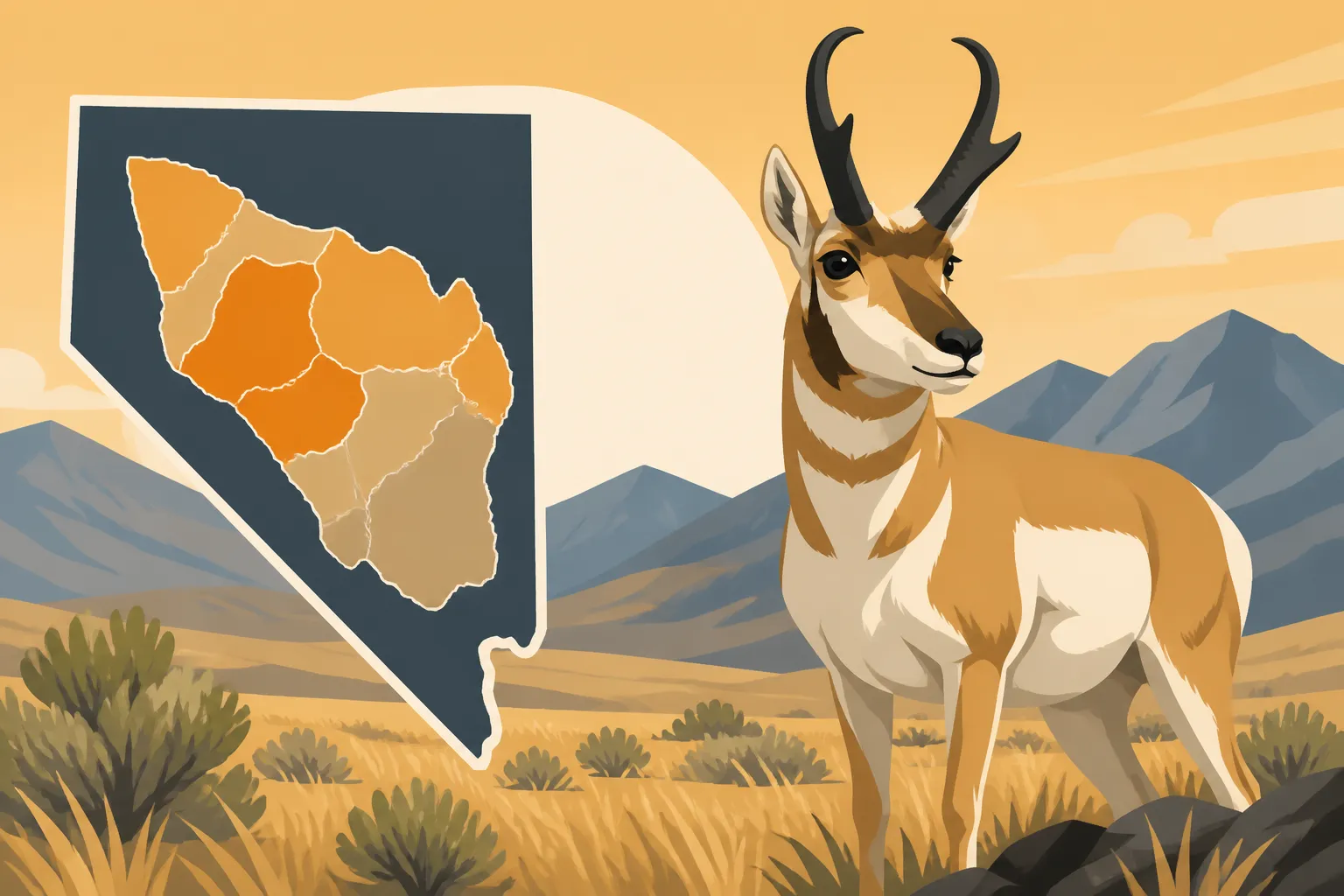
While pronghorn are broadly distributed across much of Nevada, certain regions consistently stand out for their robust populations and the opportunities they present to hunters. These areas typically boast the ideal combination of vast, unbroken sagebrush flats, interspersed with dry lake beds, low hills, and accessible water sources. It's not about finding isolated pockets, but rather extensive stretches of habitat that can support large, free-ranging herds.
One general area where you'll find strong pronghorn numbers is in the central and eastern portions of the state. Think about the broad, sprawling valleys between mountain ranges like the Ruby Mountains, the Independence Range, or the Schell Creek Range. These are often vast basins, sometimes running for dozens of miles, perfect for pronghorn. These regions haven't experienced the same level of habitat fragmentation that might be seen closer to more developed areas in the western part of the state. They still possess that wild, untamed character that pronghorn thrive in.
Another key to understanding where the numbers are strong is to consider water. While pronghorn are incredibly drought-tolerant and can derive much of their moisture from the plants they eat, accessible water sources are still crucial, especially during the hotter months. Areas with natural springs, seasonal seeps, or man-made guzzlers tend to concentrate animals, particularly in a landscape where water is otherwise scarce. Identifying these critical water points, which you can often do from home using mapping tools, can be a game-changer when you're trying to home in on productive areas.
Let's look at some generalized characteristics of high-potential pronghorn country in Nevada:
| Characteristic | Description | Why it's important for Pronghorn |
|---|---|---|
| Habitat Type | Extensive sagebrush steppe, greasewood flats, salt desert scrub, grasslands. | Primary food source and preferred low-lying cover. |
| Terrain | Broad, flat to gently rolling valleys and basins, plateaus, low mesas. | Allows for long sightlines, essential for predator detection and escape through speed. |
| Elevation | Typically lower elevations (below 7,000 feet) compared to higher mountain ranges. | Accessible year-round; fewer obstructions, more consistent sagebrush growth. |
| Water Availability | Scattered natural springs, guzzlers, intermittent streams, reservoirs. | Crucial for hydration, especially in dry periods; concentrates animals. |
| Human Presence | Remote, limited road access, sparse population centers, extensive public land. | Reduces disturbance, allows pronghorn to follow natural movements and patterns. |
| Vegetation Height | Predominantly low-growing vegetation (under 3 feet). | Ensures clear visibility for spotting threats from a distance. |
When you start researching specific hunt units, resources like GoHunt can be immensely helpful in not just understanding draw odds, but also seeing unit maps and reading habitat descriptions. You can often glean insights into the quality and quantity of pronghorn habitat from such platforms. For those looking at Best Units to Draw for Nevada Antelope, these resources become indispensable.
Beyond the Obvious: Factors Shaping Pronghorn Distribution
While ideal habitat is paramount, several other factors subtly, and sometimes dramatically, influence where you'll find strong pronghorn numbers from year to year, or even within a single season. It's never as simple as "they're always here," because wildlife is dynamic, constantly reacting to environmental pressures and changes in the landscape.
Climate and Forage Quality
Nevada's climate, characterized by low annual precipitation and wide temperature swings, directly impacts forage quality and availability. A good moisture year, especially in the spring, can lead to an explosion of forbs and lush sagebrush growth, providing ample, nutritious feed for pronghorn. This can result in healthier herds, higher fawn survival rates, and animals that are more widely distributed across their range. Conversely, prolonged drought can severely limit forage, forcing pronghorn to concentrate around dwindling food and water sources. This is where understanding how Drought Affects Great Basin Deer can inform your understanding of pronghorn, as many of the same ecological principles apply to both.
Winter conditions also play a huge role. While pronghorn are tough, severe winters with heavy snow can push them off higher elevations and out of exposed areas into more protected winter ranges, often at lower elevations. These wintering grounds, even if not prime habitat during the summer, become critical bottlenecks. Identifying these areas is key, though they are usually off-limits to hunting to protect the animals during their most vulnerable period. Knowing about these movements helps you understand why populations might be strong in one area during the summer, but absent during the winter.
Land Use and Fragmentation
Despite Nevada being largely public land, human activity still shapes pronghorn distribution. While large-scale agricultural conversion is less common in the most remote pronghorn country, things like fencing, new roads, and energy development can fragment their habitat. Pronghorn are notoriously reluctant to jump fences, preferring to crawl under them, which can impede their movements, especially during migrations or when seeking new forage. A quick look at a detailed map using something like onX layers can reveal such developments.
Grazing practices can also have an impact. Properly managed livestock grazing can sometimes benefit pronghorn by keeping some vegetation short and promoting forb growth. However, overgrazing can degrade habitat by reducing available forage or altering the plant community composition, pushing pronghorn to seek greener pastures elsewhere. When you're Reading a Nevada Hunt Unit Before You Apply, it's wise to consider the interplay of all these factors on the ground.
Strategic Scouting: Finding Your Nevada Pronghorn Hunt
Finding strong pronghorn numbers isn't just about knowing what regions tend to be good; it's about doing your homework and applying strategic scouting techniques. This involves a combination of digital research and, ideally, some boots-on-the-ground reconnaissance, though the latter can be challenging given Nevada's vastness.
E-Scouting and Data Analysis
Before you ever leave home, your computer and mapping software are your best friends. Start by looking at detailed topographic maps or satellite imagery. Identify those expansive, open valleys and basins I mentioned earlier. Look for changes in vegetation color that might indicate different plant communities, and prioritize areas with extensive sagebrush. Pay close attention to any visible water sources—springs, guzzlers, stock tanks, or even large washes that might hold temporary water after rainfall.
Tools like GoHunt provide valuable unit information, including historical harvest statistics, population trends (where available), and land ownership maps. Analyzing historical harvest data can give you an indication of where success rates are generally higher, suggesting strong populations. While exact numbers change, consistent success in a particular unit over several years is a strong indicator of a healthy pronghorn presence. Use these platforms to delve into Why Nevada Draw Odds Vary So Much by Unit, as units with consistently high pronghorn numbers tend to have tougher draws.
Another crucial step is understanding land ownership. While most prime pronghorn habitat is public, you need to be absolutely sure where boundaries lie. Using onX Layers for Nevada Public Land can clearly delineate public land (BLM, Forest Service) from private property, tribal lands, or military installations. You don't want to accidentally trespass or waste valuable hunting time scouting an area you can't legally access.
Understanding Hunt Unit Details
Each Nevada hunt unit is a unique blend of habitat, access, and animal populations. When you're sifting through the regulations, pay close attention to the unit descriptions and maps. Understand What a Nevada Hunt Number Encodes the Season, as these codes tell you about the species, weapon type, and season dates. Some units might be managed for a higher quality (trophy) hunt, meaning fewer tags and tougher draw odds, but potentially larger animals, while others might offer more general opportunities.
Don't just look at the overall unit; focus on specific geographical features within it. Are there known winter ranges that would be devoid of pronghorn during your season? Are there large swaths of private land that block access to public ground? Is there enough road access to get you into the country, but not so much that it becomes overly pressured? This granular understanding, often gained through extensive e-scouting and cross-referencing information, is what separates a hopeful hunter from a successful one. If you're considering Nevada Antelope Horns-Only Hunts, verifying the regulations for specific units is extra important.
Remember, the goal is not just to find any pronghorn, but to find where their numbers are strongest, indicating a healthy, resilient population that offers a better chance at a successful hunt. By focusing on expansive sagebrush country, understanding the role of water and climate, and leveraging modern scouting tools, you'll be well on your way to narrowing down those vast Nevada landscapes.
Disclaimer
This article is for general informational purposes only and does not constitute professional advice. Laws, prices and regulations vary by location and change over time. Consult a qualified professional for guidance on your specific situation.