Jarbidge Wilderness Access
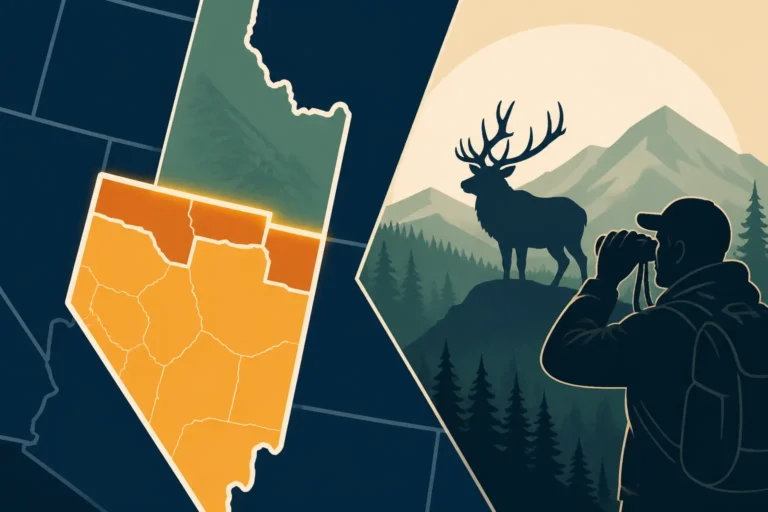
The Jarbidge Wilderness in Nevada represents one of the West's truly wild places, and for many hunters, the thought of accessing such remote, rugged country can feel overwhelming, or even intimidating. It's not like pulling off a paved highway and walking a hundred yards; getting into the Jarbidge takes serious planning and effort. This guide will walk you through everything you need to know about navigating the unique challenges and incredible opportunities that come with hunting in this remarkable wilderness area.
Understanding the Jarbidge Wilderness Designation
When we talk about "wilderness," it's not just a poetic term for a wild place; it carries a specific legal designation in the United States that profoundly impacts how you can access and hunt it. The Jarbidge Wilderness, located in the Humboldt-Toiyabe National Forest, is federally protected, meaning strict rules are in place to preserve its pristine nature. This isn't just about preserving trees and rocks; it's about maintaining an ecosystem where human impact is minimal, and where the land itself dictates the terms.
Wilderness Regulations and Their Impact on Hunters
The primary rule of any designated wilderness area is that it's "motorized and mechanized vehicle free." This means no ATVs, no dirt bikes, no e-bikes, and certainly no trucks once you hit that wilderness boundary sign. For hunters accustomed to using vehicles to reach their glassing knob or haul out a harvested animal, this is a significant shift in strategy. It forces a more traditional, primitive approach to hunting. You're trading convenience for solitude and a truly wild experience. This designation means your boots, or your horse's hooves, are your only modes of transport once inside. This also extends to drones, which are considered mechanized equipment and are prohibited. This is a crucial distinction, as Are Drones Legal for Scouting in Nevada? is a common question, and the answer changes drastically once you're inside a wilderness boundary.
Think about the implications: every ounce of gear, every drop of water, every calorie of food you consume must be packed in and packed out. If you're fortunate enough to harvest an elk or a deer deep in the Jarbidge, the reality of Packing an Animal Out of Roadless Country becomes a monumental task. You can't just drive up to it. This requires pre-planning, often involving pack animals or a robust plan for boning out meat and making multiple trips. The challenges are real, but the rewards—a truly wild hunt, far from the road hunters—are immense.
Terrain and Habitat Overview in the Jarbidge
The Jarbidge Wilderness is a spectacular, rugged landscape, defined by sharp, craggy peaks, deep canyons carved by ancient glaciers, and dense forests of aspen, conifer, and mountain mahogany. Elevations range dramatically, from about 6,000 feet in the valley bottoms to over 10,000 feet at the summits of peaks like Jarbidge Peak. This incredible vertical relief means you'll encounter a wide variety of habitats, from high-alpine meadows to dense timber pockets, and everything in between. This is prime habitat for mule deer, and a strong, growing elk population.
The deep canyons and thick timber can make spotting game incredibly difficult compared to the vast, open sagebrush basins that dominate much of Nevada. While Why Glassing Beats Walking in Sage Country is usually the mantra for Nevada hunting, in parts of the Jarbidge, you'll find yourself still-hunting through cover and relying more on tracks and sounds than long-range glassing. Water is generally more abundant here than in the lower desert units, with numerous perennial streams and springs. However, understanding how game uses these water sources, especially during drier periods, is still key to success, as explored in Hunting Water in Nevada's Driest Country. The ruggedness is not just a challenge; it's what protects these animals and gives them the cover they need to grow old and wise.
Planning Your Approach to the Jarbidge Boundary
Getting to the Jarbidge Wilderness isn't as simple as punching a few coordinates into your GPS and driving straight there. The remote nature of the area means long drives on often-unmaintained dirt roads, and knowing which routes are open and passable is critical. This is where your e-scouting and pre-trip planning really pay off.
Identifying Access Roads and Conditions
The main arteries leading to the Jarbidge Wilderness often involve significant time on gravel and dirt roads, branching off highways like State Route 225 or County Road 746 (Charleston-Jarbidge Road). These roads can be deceptively long, winding, and prone to washouts, especially after heavy rains or snowmelt. You absolutely need a reliable, high-clearance 4×4 vehicle, and often, good all-terrain tires are a must. There's nothing worse than getting within sight of your trailhead only to find an impassable section of road, especially when you're already miles from the nearest paved surface.
It's wise to check with the Humboldt-Toiyabe National Forest office in Elko or the Jarbidge Ranger District directly for current road conditions before you even leave home. Seasonal closures are common, with many higher elevation roads remaining snow-bound well into late spring or even early summer. Knowing When Mountain Roads Reopen After Winter can save you a wasted trip. Even if a road is "open," it might be a rough, slow drive, so factor in plenty of extra time. These aren't routes where you can make up time quickly.
Using Mapping Tools for E-Scouting
Modern mapping tools are absolutely invaluable for planning a Jarbidge hunt. Services like onX Hunt allow you to dive deep into unit boundaries, land ownership, and even topographical features from the comfort of your home. You can identify potential trailheads, trace the wilderness boundary, and pinpoint promising glassing points or water sources before you ever set foot on the ground. E-Scouting a Nevada Unit Before the Season is not just helpful; it's practically mandatory for an area like this.
You can download offline maps to your phone or GPS device, which is crucial because cell service in and around the Jarbidge is virtually nonexistent. Think about tracing potential pack trails, identifying escape routes, and marking natural barriers like cliffs or dense timber. GoHunt, another excellent resource, offers detailed unit statistics and draw odds which can help you understand the potential for drawing a tag in the units surrounding the Jarbidge, and even offer insights into historical harvest data for Elk Harvest Success Broken Down by Unit or Nevada Mule Deer Harvest Success by Unit. These tools allow you to visualize your hunt, from the drive in to the hike out, minimizing surprises.
Navigating Inside the Wilderness Boundary
Once you cross that invisible line into the Jarbidge Wilderness, the rules of engagement change. Your success will depend entirely on your physical conditioning, your navigation skills, and your ability to carry everything you need on your back, or with the help of animals.
Foot Travel and Trail Systems
For most hunters, foot travel will be the primary mode of transportation within the Jarbidge. The wilderness boasts a network of trails, but don't expect perfectly groomed paths. These are often primitive, steep, and can be overgrown or difficult to follow in places, especially after heavy snow seasons or if they haven't seen much traffic. Expect significant elevation gains and losses, often repeatedly throughout the day. Your legs will feel it.
You'll need reliable maps and a GPS device with downloaded offline maps. A compass and the ability to read a topographic map are also non-negotiable backups. It's easy to get disoriented in the thick timber or deep canyons. Planning your routes carefully, identifying potential campsites, and knowing your bailout options are all part of responsible wilderness travel. Remember, Preparing Physically for Long Glassing Days is critical, and in the Jarbidge, it's also about preparing for long hiking days with a heavy pack.
Pack Stock Use and Regulations
For those planning to hunt deep in the wilderness or harvest larger game like elk, pack stock—horses, mules, or llamas—become invaluable. They allow you to carry significantly more gear, water, and ultimately, meat. However, bringing pack stock introduces its own set of challenges and regulations. You need animals that are in excellent physical condition and accustomed to rugged, steep terrain. They must be sure-footed and calm, as a spooked horse in a steep canyon can lead to serious problems.
There are specific rules regarding Pack Stock Rules Inside Wilderness, including requirements for weed-free feed to prevent the introduction of invasive species. You'll need to research designated stock camps or areas where you can safely hobble or picket your animals, ensuring access to water and forage without damaging sensitive ecosystems. Packing out an elk on a mule team is a classic Western experience, but it's one that requires considerable skill, planning, and experience.
Key Access Points and Trailheads
While the Jarbidge Wilderness is vast, certain trailheads serve as primary entry points, each offering different advantages and challenges. Understanding these starting points is key to choosing the right approach for your hunt.
Popular Trailheads and Their Characteristics
There are several recognized trailheads, each feeding into different parts of the wilderness. For instance, the Jarbidge Lake Trailhead, accessible from the east, offers a direct route into some of the higher country and popular fishing areas, which often translates to good hunting for mule deer and elk. The Defiance Trailhead, further north, might provide access to different drainages and potentially less pressure, but could be an even tougher hike.
Each trailhead has its own character, often dictated by the specific canyon it follows or the elevation gain required. Some might be more suitable for day hikes, while others are clearly designed for multi-day pack trips. Pay close attention to the starting elevation, as this directly impacts the effort required on your first day. You'll want to study topographical maps on resources like onX Hunt to understand the immediate terrain once you hit the trail. For example, some trailheads immediately plunge into a canyon, while others climb a ridge, offering early glassing opportunities.
Route Planning from Trailheads
Once you've chosen your trailhead, the real route planning begins. You'll need to determine your intended hunting areas, potential campsites, and how long it will take to reach them. Consider the topography: are you climbing to a high basin, or following a river corridor? Are there any natural features like rock outcroppings or dense timber pockets that might hold game?
When planning, always consider contingency routes. What if the weather turns? What if you encounter a downed tree that blocks your path? Having alternative ways to get to your destination or, more importantly, to get back out, is crucial for safety in such a remote area. Think about game movements as well; where might mule deer be bedding during the day, or When the Elk Rut Peaks in Nevada if you're hunting elk? This information, combined with your topographical knowledge, helps you pick the best travel routes.
Here's a quick comparison of typical Jarbidge Wilderness access considerations:
| Factor | Backpack Hunter | Pack Stock Hunter |
|---|---|---|
| Max Carrying Capacity | Limited to human strength (~50-80 lbs) | Significantly higher (~150-250 lbs per animal) |
| Speed/Distance | Slower, limited to foot pace | Faster on trails, can cover more ground |
| Terrain Suitability | Highly agile, can navigate difficult scrambles | Requires established trails, less agile in extreme terrain |
| Logistics | Simpler: just yourself and gear | Complex: animal care, feed, additional gear |
| Water Needs | Critical, carry or filter | Critical for hunter & animals, requires planning for stock |
| Impact | Low impact | Higher impact (manure, trail wear) |
| Skill Level | Strong hiking, navigation | Advanced horsemanship, wilderness navigation |
Essential Gear and Preparations
Hunting in the Jarbidge Wilderness is not for the unprepared. The ruggedness, remoteness, and unpredictable weather demand meticulous gear selection and thorough physical conditioning. Skimping on either can turn a challenging hunt into a dangerous ordeal.
Clothing, Shelter, and Navigation
Your clothing system needs to be versatile and capable of handling drastic temperature swings. Even an August archery hunt can experience freezing nights and scorching afternoons, as detailed in Heat Management on an August Archery Hunt. Layering is key: good base layers, insulating mid-layers, and a waterproof/windproof outer shell are non-negotiable. Expect to pack for everything from light rain to a sudden snow squall, even outside of the typical winter months.
For shelter, a lightweight, durable tent or bivy system is essential. It needs to withstand strong winds and heavy precipitation. A reliable sleeping bag rated for colder temperatures than you anticipate is also a wise choice, as conditions can change rapidly. For navigation, a robust GPS unit (with extra batteries) and a smartphone with downloaded onX Hunt maps are primary. Always carry a traditional map and compass as backup, and know how to use them. A satellite communication device, like a satellite messenger, is also highly recommended for emergency communication, especially given the complete lack of cell service. Satellite Messenger Use in Remote Country can literally be a lifesaver.
Food, Water, and Emergency Supplies
Planning your food and water is critical. For water, you'll need a reliable filtration system (pump, squeeze, or gravity filter) and iodine tablets as a backup. While there are streams, you can't always rely on finding potable water exactly when you need it, and filtering is always safer. Factor in extra water weight, especially if you're not entirely sure about available sources along your chosen route. Water You Must Carry on a Desert Day Hunt might be about desert, but the principles of self-sufficiency apply in the Jarbidge.
Your food should be high-calorie, lightweight, and non-perishable. Dehydrated meals are popular, supplemented by energy bars, nuts, and jerky. Pack more than you think you'll need in case you're weathered in or delayed. For emergency supplies, a well-stocked first-aid kit, fire-starting tools (multiple methods), a headlamp with extra batteries, an emergency blanket, a multi-tool, and repair kits for your tent and other essential gear are all must-haves. A small, lightweight shovel for digging catholes and fire pits is also a good idea.
Dealing with Remote Conditions and Emergencies
The Jarbidge Wilderness is beautiful, but it's unforgiving. Being prepared for the unexpected isn't just a good idea; it's a necessity for survival and a successful hunt.
Weather Extremes and Contingency Plans
The weather in the Jarbidge Mountains can be notoriously fickle. You might start your day under clear blue skies, only to be caught in a sudden thunderstorm or hailstorm by afternoon. Early and late season hunts can easily see snow, sometimes heavy enough to make travel dangerous or impossible. Being able to read the weather, both from forecasts before you leave and by observing cloud patterns and wind shifts in the field, is crucial.
Have a contingency plan for severe weather. This might mean hunkering down in your tent, seeking natural shelter, or knowing an escape route to lower elevations. If you're on a multi-day hunt, building in an extra "weather day" into your food and fuel supplies is a smart move. Always inform someone reliable of your exact itinerary, including your entry and exit points and expected return date.
Wildlife Encounters and Safety
While hunting, you're obviously hoping for specific wildlife encounters, but the Jarbidge is also home to apex predators like mountain lions and black bears, as covered in Mountain Lion Hunting Across Nevada and Black Bear Returned to Western Nevada. While attacks are rare, knowing how to react defensively can be critical. Carry bear spray and know how to use it. Store food properly in bear-resistant containers or hung from trees away from your camp to avoid attracting animals.
Beyond predators, remember that you're in a wild environment where injuries can happen. Twisting an ankle on loose rock, getting stung by a wasp, or encountering snakes are all possibilities. Snake Awareness on an August Archery Hunt is important, even if the Jarbidge is higher elevation, rattlesnakes can still be present in certain areas. Traveling with a partner is always safer, as two heads are better than one in an emergency.
Respecting the Wilderness Ethic
Hunting in a wilderness area isn't just about pursuing game; it's about engaging with the land on its own terms and upholding a strong wilderness ethic. This means leaving no trace and minimizing your impact on this precious resource.
Leave No Trace Principles
The "Leave No Trace" principles are paramount in any wilderness area, and especially in a place as delicate as the Jarbidge. Pack out everything you pack in, including all trash, food scraps, and even human waste (dig catholes at least 200 feet from water sources, trails, and campsites, or pack it out with a WAG bag). Don't build new fire rings; use existing ones where fires are permitted, and keep fires small. Better yet, use a stove for cooking to minimize fire impact.
Avoid cutting live vegetation for firewood or shelter. Stay on established trails where possible to prevent erosion and trampling of sensitive plants. If you're using pack stock, ensure they are kept away from water sources and sensitive meadows to prevent overgrazing and contamination. The goal is that the next person who comes through won't even know you were there, preserving the wild character for everyone.
Ethical Hunting and Conservation
Hunting in the Jarbidge is a profound experience, and it comes with a deep responsibility. Ensure you know and strictly adhere to all Nevada hunting regulations, including legal shooting hours, blaze orange requirements (if applicable), and tagging protocols. Legal Shooting Hours and Blaze Orange in Nevada are crucial details that every hunter must know. Understand the unit boundaries thoroughly, especially where the wilderness designation begins, using your Reading a Nevada Hunt Unit Before You Apply knowledge.
By hunting ethically, respecting the land, and practicing conservation, you contribute to the continued existence of wild places like the Jarbidge Wilderness and the robust wildlife populations they support. This isn't just about bagging an animal; it's about connecting with a raw, untamed landscape and becoming a steward of its future. It's a privilege to hunt here, and that privilege comes with duties.
Disclaimer
This article is for general informational purposes only and does not constitute professional advice. Laws, prices and regulations vary by location and change over time. Consult a qualified professional for guidance on your specific situation.