Camping Legally on Nevada BLM Ground
One of the biggest anxieties for hunters heading into Nevada's vast public lands, especially if you're traveling a long distance, is figuring out where you can actually pitch a tent for the night without breaking any rules. With millions of acres of BLM ground, the sheer scale can be overwhelming, and understanding the nuances of legal camping is absolutely essential to a stress-free hunt. This guide is all about cutting through that confusion, helping you confidently find and use legal camping spots on Nevada's BLM lands.
Understanding Nevada's Public Lands and the BLM
Nevada is a truly unique state when it comes to land ownership. Unlike many eastern states where private land dominates, a huge percentage of Nevada is publicly owned, managed by various federal agencies. This is incredible news for hunters, as it means vast tracts of open country are accessible. But with that access comes the responsibility to understand and respect the regulations that keep these lands open and healthy for everyone. The Bureau of Land Management (BLM) is the primary steward of much of this open, unfenced sagebrush country and high desert mountain ranges.
Why BLM is King for Nevada Hunters
When you look at a land ownership map of Nevada, it quickly becomes apparent that BLM land is the dominant feature, especially outside of the major cities and agricultural valleys. This isn't just a little bit of land; we're talking about an enormous amount. How Many Acres of BLM Land Nevada Has is truly staggering, making it the backbone of public access for hunting, hiking, and camping. For hunters, this means that most of your adventures, from chasing chukar in the hills to glassing for mule deer across a wide basin, will likely happen on BLM ground. It's often the most accessible, unrestrictive land, especially when compared to designated wilderness areas or national parks where rules can be much stricter, or even outright prohibit hunting. This wide-open nature of BLM is what makes Nevada such a draw for those seeking true backcountry experiences.
This vastness, however, doesn't mean it's a free-for-all. The sheer scale requires land managers to implement rules that ensure sustainability and public safety. Without clear guidelines, these precious resources could quickly be degraded. So, while it's king, it's a kingdom with rules that every good citizen-hunter needs to memorize.
General Rules for Dispersed Camping on BLM
Dispersed camping is what most hunters do on BLM land – no designated campgrounds, no picnic tables, no vault toilets. It's truly "roughing it" and finding your own spot. The general principle for dispersed camping on BLM is "Leave No Trace." This means you pack out everything you pack in, and ideally, leave the site looking like you were never there.
The rules are designed to protect the environment and ensure future access. Typically, you need to be a certain distance from developed areas, water sources, or established roads. This helps prevent overuse of popular spots and protects sensitive riparian areas. For instance, being at least 200 feet from a water source is a common guideline, crucial for preventing contamination and minimizing disturbance to wildlife that relies on those precious desert springs and guzzlers. Being far enough from a main road often ensures privacy and reduces the risk of dust and noise impacting others. The beauty of dispersed camping is the freedom it offers, but that freedom comes with a significant responsibility to be a good steward of the land.
Specific Regulations and Best Practices for Camping on BLM
While the general principles of dispersed camping apply broadly, Nevada's unique environment often necessitates more specific regulations. The dry climate, vast open spaces, and delicate ecosystems mean that every camper's actions can have a magnified impact. Understanding these specific guidelines is not just about staying legal; it's about protecting the very resources that make hunting in Nevada so incredible.
How Long You May Camp in One Spot
One of the most frequently asked questions about dispersed camping is, "How long can I actually stay here?" This is a crucial detail, especially if you're planning an extended hunting trip. Generally, the rule for most BLM lands is that you can stay in one spot for a maximum of 14 days within a 28-day period. This isn't just an arbitrary number; it's designed to prevent long-term residency and minimize environmental impact from continuous use of a single area. Think about it: if everyone could set up camp indefinitely, that prime glassing knob overlooking a basin would quickly become a permanent settlement, and the ground would get pounded flat.
After those 14 days, you need to move at least 25 miles from your original campsite. You can't just move across the road or down the wash; it needs to be a significant relocation to allow the land to recover. This movement restriction is sometimes referred to as Dispersed Camping Limits on BLM Land or the "14-day rule." It ensures that different areas get a chance to rest and regenerate. Planning for this can be part of your overall hunt strategy. Maybe you set up a base camp for the first week, and then move to a spike camp deeper in the unit or relocate to an entirely different part of your hunt unit for the second week. Keeping track of your dates and locations is key, especially if you plan to be out for an extended period.
Fire Restrictions During Hunting Season
Nevada is a tinderbox for much of the hunting season, especially during early archery hunts in August and September. Wildfires are a constant threat, and human-caused ignitions are devastating. Because of this, Fire Restrictions During Hunting Season are a critically important aspect of legal and responsible camping on BLM land. It's not uncommon for open campfires to be completely banned during these dry periods, especially during peak summer and early fall.
Always, and I mean always, check current fire restrictions before you head out. These can change rapidly based on weather, drought conditions, and recent fire activity. You can usually find this information on the local BLM field office website or by calling them directly. Sometimes, even if open fires are banned, you might be allowed to use a contained propane stove for cooking, but never assume. If any restriction says "no open flames," that means no campfires, no charcoal grills, and sometimes even no smoking in dry vegetation. The penalty for violating fire restrictions can be severe, not to mention the potential for starting a catastrophic wildfire. Your hunting trip is absolutely not worth burning down thousands of acres of critical wildlife habitat, and potentially putting lives at risk. Be smart, be safe, and err on the side of caution.
Vehicle and Site Impact Rules
The vastness of Nevada's BLM lands often gives the illusion that you can drive wherever you please, but this is far from the truth. Most BLM lands have regulations regarding where vehicles can operate, primarily to prevent habitat damage and erosion. Generally, motorized vehicles are restricted to existing roads and trails. This means you can't just drive cross-country to your ideal campsite, no matter how tempting it might be. Motorized Travel Rules on Public Land are in place for a reason, protecting delicate soils and vegetation.
When you're choosing a campsite, look for areas that show signs of previous use but are still in good condition. Avoid creating new tracks or disturbing undisturbed ground. Park your vehicle responsibly, not blocking roads or access points. Think about the impact of your camp:
- Waste Management: Pack out all trash, including food scraps, toilet paper, and anything else you brought with you. Bury human waste properly, at least 6-8 inches deep and 200 feet from water sources, camp, and trails.
- Minimizing Disturbance: Keep noise levels reasonable, especially if others are camping nearby. Respect wildlife and give them space. Don't cut live trees or vegetation for firewood or shelter. Use dead and down wood only, and only if fires are permitted.
The goal is to minimize your footprint. These lands are rugged, but their ecosystems are surprisingly fragile. Every hunter wants to return to the same beautiful, wild places next year, and that requires everyone to do their part today.
Finding Legal Camping and Avoiding Trouble
Navigating the nuances of public land can feel like deciphering a secret code sometimes, especially when you're looking for a legal camping spot in unfamiliar territory. The good news is, modern tools and a little preparation go a long way in ensuring you stay on the right side of the rules and have a successful, worry-free hunt. Nobody wants to be rousted by a ranger in the middle of the night, or worse, accidentally trespass.
Using Mapping Tools to Confirm Boundaries and Rules
In today's hunting world, digital mapping applications are your absolute best friends for public land navigation. Forget struggling with faded paper maps – apps like onX Hunt and GoHunt have revolutionized how we interact with the landscape. These tools, often accessible right on your phone, provide incredibly detailed layers showing public and private land boundaries, roads, water sources, and even specific regulatory areas. Reading a Land Ownership Layer Correctly is vital. You can instantly see if the spot you're eyeing is indeed BLM land, or if it's private property or a state park with different rules.
For example, before heading out, I always spend hours on my computer, virtually "scouting" an area. I'll drop pins on potential glassing knobs and then, crucially, on several potential camping spots. With onX Hunt, I can zoom in and see the property lines, check for nearby water, and even verify if there are any seasonal road closures near my intended camp. This pre-planning using digital maps saves countless hours (and headaches) in the field. It’s also invaluable for identifying Using onX Layers for Nevada Public Land to pinpoint legal campsites, helping you avoid designated areas where dispersed camping might be prohibited. GoHunt also offers fantastic mapping resources, often integrated with draw odds and unit information, making it a comprehensive tool for serious western hunters.
| Feature / Consideration | Dispersed BLM Camping (Typical) | Developed Campground (Typical) |
|---|---|---|
| Cost | Free | Fee Required |
| Amenities | None (pack in/out everything) | Toilets, water, picnic tables, fire rings (sometimes) |
| Privacy | High | Low (close to other campers) |
| Reservations | Not applicable | Often required, especially for popular spots |
| Length of Stay | 14 days/28-day period (move 25 miles) | Varies, usually 7-14 days, often shorter |
| Vehicle Access | Existing roads/trails | Paved or well-maintained access roads |
| Fire Rules | Strict, check local conditions | Typically allowed in provided rings (check restrictions) |
| Impact | Low (Leave No Trace) | Managed (but can still degrade if rules aren't followed) |
Respecting Private Property and Special Designations
Nevada is a patchwork. While BLM land is vast, it's often interwoven with private ranch lands, especially in the valleys and along critical water sources. Private Ranch Ground Along Nevada Valleys is common, and you must respect these boundaries. Trespassing is not only illegal but can give all hunters a bad name. Always confirm land ownership before setting up camp or even walking onto a piece of ground. If you're unsure, it's always best to err on the side of caution and find another spot. A good mapping app will clearly show these boundaries, taking away any guesswork.
Beyond private land, there are also various special designations on public land that might affect your camping options. Wilderness Areas, for instance, often have stricter rules regarding vehicle access (no motorized vehicles at all), and sometimes even restrictions on group size or fire use. Wildlife Management Areas (WMAs) might have specific camping zones or prohibit dispersed camping entirely during certain times of the year to protect nesting birds or migrating animals. Always consult the specific regulations for the unit or area you plan to hunt and camp in. A quick call to the local BLM or Nevada Department of Wildlife (NDOW) office can clear up any uncertainties before you hit the road.
Planning for Water, Waste, and Emergency Preparedness
Camping remotely on Nevada's BLM ground means you are entirely self-sufficient. This isn't like car camping at a state park with potable water and dumpsters. You need to plan meticulously for every aspect of your stay.
- Water: Nevada is incredibly dry. You must bring all the water you will need for drinking, cooking, and basic hygiene. Do not rely on finding water sources in the field unless you have thoroughly researched and confirmed their reliability and potability, and even then, plan to filter or purify it. Dehydration is a serious threat in the desert. Water You Must Carry on a Desert Day Hunt becomes even more critical for a multi-day camping trip.
- Waste: This goes beyond just packing out your trash. Human waste needs to be dealt with properly. Catholes are generally the standard, dug at least 6-8 inches deep and 200 feet from water, camps, and trails. Pack out all toilet paper. For longer trips or larger groups, consider a portable toilet system.
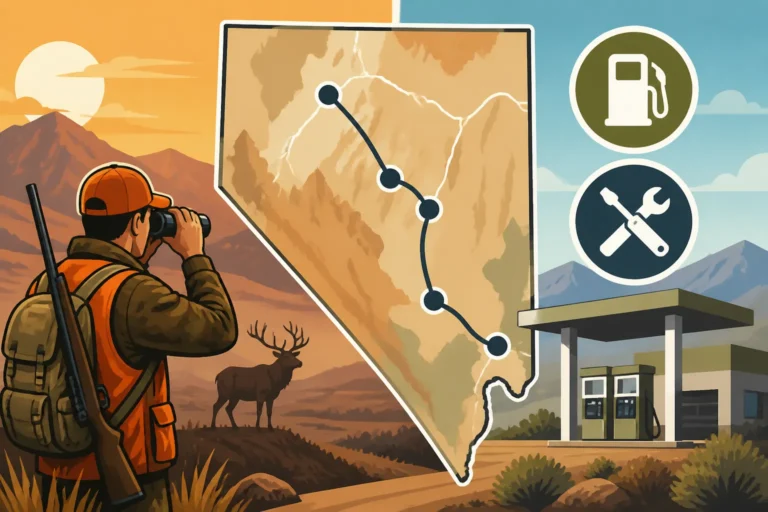
- Emergency Preparedness: Remote camping means you're often far from any help. Cell Coverage Across Nevada Hunt Units is notoriously spotty, if it exists at all. Carry a satellite messenger or a satellite phone for emergencies. Make sure someone knows your itinerary and when you expect to check in. Have a well-stocked first-aid kit, extra food and water, and emergency shelter. How Far Apart Nevada Fuel Stops Are can also be a rude awakening if you don't plan your vehicle's fuel capacity, so always carry extra if you're venturing deep into a unit. Tell someone your plans, where you're going, and when you expect to return. It could be a lifesaver.
By understanding these guidelines and preparing thoroughly, you can enjoy the unparalleled freedom and solitude that comes with camping legally on Nevada's vast and wild BLM lands.
Disclaimer
This article is for general informational purposes only and does not constitute professional advice. Laws, prices and regulations vary by location and change over time. Consult a qualified professional for guidance on your specific situation.