Nevada’s August Archery Deer Season Opens the Year
The Nevada desert in August can feel like a furnace, turning what should be an exciting archery deer season opener into a grueling test of endurance and resolve. Hunters often grapple with sweltering temperatures, dehydrated landscapes, and elusive deer that seem to vanish with the rising sun. This comprehensive guide is here to walk you through the unique challenges and strategies for successfully pursuing mule deer with a bow during Nevada's earliest archery season, helping you prepare for everything the Silver State throws your way.
The Unique Challenges of Nevada's August Archery Deer Season
Stepping into Nevada's sagebrush country in August with a bow in hand is an experience unlike any other. It’s a hunt defined as much by the unforgiving environment as by the pursuit of an animal. Many hunters underestimate just how harsh these conditions can be, leading to uncomfortable—and sometimes dangerous—situations. This isn't your typical crisp, cool fall deer hunt; it's a battle against the elements first, and then against the wits of a mule deer.
Battling the Extreme Desert Heat
The most immediate and profound challenge you'll face during Nevada's August archery deer season is the heat. Daytime temperatures routinely soar into the 90s, often cresting 100 degrees Fahrenheit, especially in the lower elevations of the Great Basin. This isn't just uncomfortable; it's a serious health concern that can lead to heat exhaustion or worse if not managed properly. The sun beats down with relentless intensity, radiating off the light-colored soil and volcanic rock, making every step feel like walking through an oven.
The heat profoundly impacts both you and the deer. For hunters, it means carrying substantially more water than you might think, planning your movements around the coolest parts of the day, and recognizing the signs of dehydration. For the mule deer, it dictates their entire daily routine. They become primarily nocturnal, moving under the cover of darkness when temperatures drop, and seeking dense, shady cover during the day. This drastically alters how you'll scout, stalk, and even just locate animals. Ignoring the heat is not an option; it must be the central consideration for every decision you make in the field. Understanding and implementing sound practices for Heat Management on an August Archery Hunt will be crucial for your safety and success.
The dry, thin air of the Nevada high desert means your body loses moisture quickly, even if you don't feel like you're sweating profusely. It's a deceptive environment where the risk of dehydration is constant. This isn't just about thirst; it's about maintaining physical and cognitive function. Electrolyte balance becomes critical, as plain water alone often isn't enough to counteract the significant mineral loss from constant exertion in extreme heat. You'll find yourself pushing through miles of broken country, often gaining and losing significant elevation, all while your body fights to regulate its core temperature. This relentless physical demand, coupled with the mental focus required for a successful archery hunt, makes proper hydration and heat strategy paramount.
Water Sources Dictate Deer Movement
In an environment defined by its aridity, water is life, and nowhere is this more evident than in Nevada's August deer country. Unlike wetter regions where deer might be found almost anywhere, in Nevada, mule deer are slaves to their thirst. This singular fact becomes your most powerful tool for locating them. Understanding Hunting Water in Nevada's Driest Country is not just a tactic; it's the fundamental principle of your entire hunt plan.
Mule deer in August will be concentrated around any available water source. This includes natural springs, seeps, riparian areas along creeks (however small), and artificial guzzlers installed by wildlife agencies. These spots become magnets for deer, drawing them in from miles around. Your scouting efforts, both pre-season and during the hunt, should heavily focus on identifying and monitoring these crucial locations. Learning how to identify these on a map and understanding their surrounding terrain will give you a significant advantage, often dictating where you spend your limited hunting time.
However, hunting over water sources comes with its own set of challenges. Deer will be wary, especially around popular spots. They often approach cautiously, using terrain to their advantage, and will have an escape route in mind. Patience is key when sitting water, as is being scent-free and absolutely still. Furthermore, other animals will also be using these water holes, from small game to predators, so you’ll need to be alert. Knowing Reading Water Sources Before an August Hunt will allow you to prioritize the most promising locations and understand the nuances of deer traffic patterns. This hyper-focus on water means your chosen unit needs to offer accessible and reliable water, not just general deer numbers, to be successful.
Understanding Nevada's Early Season Deer Behavior
To consistently find and get within bow range of mule deer in August, you need to think like they do. Their behavior is intrinsically linked to the oppressive heat and the limited resources available. It's a different game compared to later seasons when temperatures drop and the rut kicks in. Forget everything you know about deer behavior from your home state if it's not a desert environment; Nevada demands a completely fresh perspective.
Velvet Antlers and Predictable Patterns
August in Nevada is often referred to as "velvet season," as most mature mule deer bucks are still growing their antlers, covered in soft, blood-rich velvet. This physiological state contributes to a noticeable difference in their behavior. Deer in velvet tend to be less cautious, more predictable, and often more concentrated than they will be later in the season. Their primary focus is on feeding to fuel antler growth and staying hydrated, which often leads to established patterns between bedding areas and water sources.
These summer patterns are gold for the early-season archer. Bucks are often found in bachelor groups, which can make them easier to locate, though also more eyes and ears to contend with during a stalk. They haven't been pressured by hunters yet, and their routines are often quite consistent, especially during the last few weeks leading up to the season opener. If you can identify a buck's travel route to and from water, or his preferred bedding areas, you've got a significant leg up. This is where pre-season scouting, or even scouting a week before your hunt, becomes invaluable, allowing you to observe and learn their predictable movements before the first arrow flies.
The downside to velvet is that sometimes bucks will break off a tine or damage their rack while it’s soft, leading to atypical antler shapes. However, for many, the allure of a velvet-clad buck is undeniable. Their predictable nature often means that if you find them once, you can likely find them again, as long as you don't spook them off their pattern. This consistency provides a rare window of opportunity in an otherwise challenging environment, emphasizing the importance of stealth and minimal disturbance when you do encounter them.
Nocturnal Movement and Bedding Strategies
As mentioned, the extreme August heat forces mule deer into a largely nocturnal existence. They'll move and feed predominantly during the cooler hours of the night, from late evening through early morning, retreating to shaded, secure bedding areas well before the sun reaches its full intensity. This means prime hunting time is limited to the first few hours after sunrise and the last few hours before sunset. The middle of the day, while you might be glassing, is typically reserved for the deer to rest in thick cover.
Identifying these bedding areas is crucial. Deer will seek out north-facing slopes, dense stands of juniper or pinyon pine, tall sagebrush thickets, or rocky outcroppings that offer shade and a vantage point. They're looking for thermal cover that can provide some relief from the sun and wind, coupled with security. Often, these bedding sites will be relatively close to water sources, allowing for quick, energy-efficient trips to drink during the night or very early morning. Your goal is to locate these areas through careful glassing at dawn and dusk, then plan an approach that takes advantage of terrain and wind direction to get close without spooking them.
Trying to push deer out of thick bedding cover in the middle of the day is generally an exercise in futility and often results in spooking them out of the unit entirely. Instead, focus on intercepting them as they move from feeding areas to bedding, or vice versa. This requires immense patience and meticulous planning. Understanding the nuances of where deer will bed based on the specific terrain, available shade, and wind direction is a skill that takes time to develop, but it’s absolutely essential for August archery success in Nevada. Remember, a spooked deer in August often means a deer that has left the immediate area, forcing you to start your search all over again in an already vast landscape.
Essential Gear for an August Archery Hunt in Nevada
When preparing for an August archery hunt in Nevada, your gear list needs to be scrutinized with an eye toward extremes. This isn't a "nice-to-have" situation; every item needs to serve a specific purpose in combating heat, maximizing visibility, and ensuring your safety and success. Skimping on critical items can turn a challenging hunt into a dangerous ordeal.
Optics for Long-Range Scouting
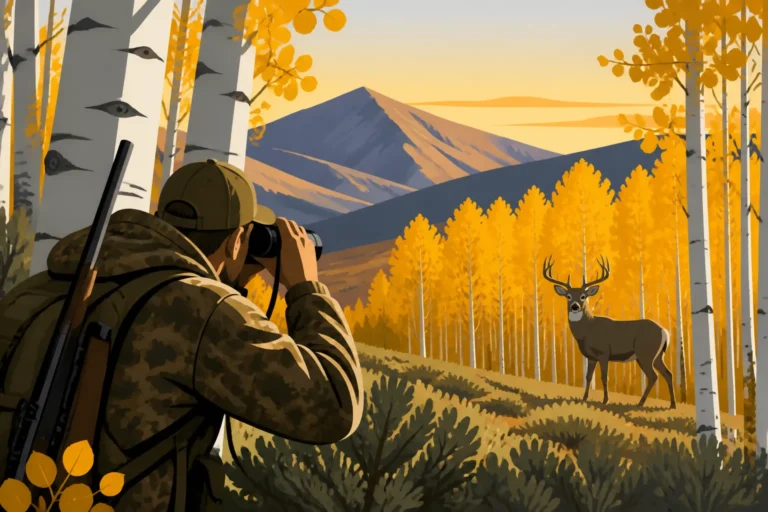
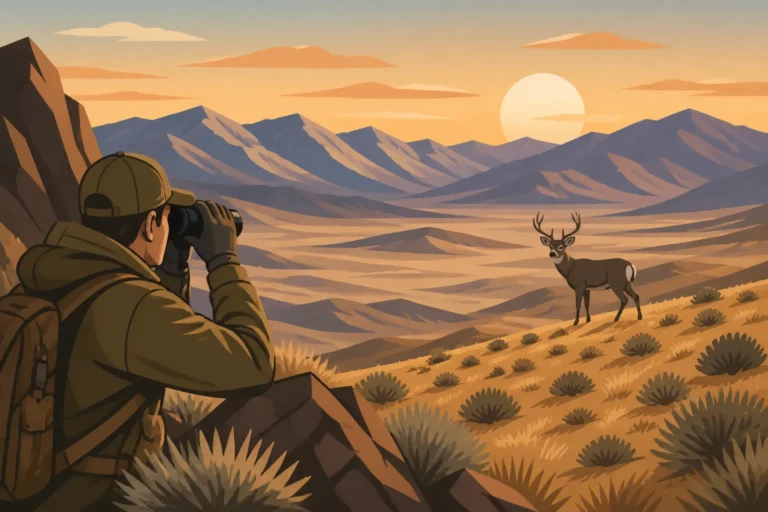
Nevada is a glassing state, plain and simple. Its wide-open, broken terrain, vast sagebrush flats, and expansive mountain ranges demand high-quality optics to efficiently locate game. Hiking endlessly through country where deer densities are low is a recipe for exhaustion and disappointment. Instead, you'll spend hours, often days, behind glass, systematically picking apart distant hillsides and canyon bottoms. For this, a solid pair of binoculars and a quality spotting scope are non-negotiable.
Your binoculars should be comfortable for extended use, offering excellent light transmission and a stable image. Many hunters favor 10×42 or 12×50 models for a good balance of power and field of view. But for serious long-range work, especially when trying to judge a buck or verify a distant dark spot is indeed a deer, a spotting scope is indispensable. Paired with a sturdy tripod, a spotting scope in the 60-80x magnification range allows you to truly pick apart distant terrain and identify animals that are mere specks to the naked eye. This intense glassing strategy is foundational to Glassing Nevada's Basin and Range for Mule Deer and maximizing your effectiveness in this vast landscape.
Choosing the right optics also means understanding the conditions. Mirage can be a huge issue in the desert heat, especially in the middle of the day. You'll want to glass early and late, before the air starts to shimmer. A good tripod is essential for stability, preventing fatigue and allowing you to observe for longer periods. Don't be afraid to invest in the best glass you can afford; it will pay dividends in time saved and animals located. Without it, you're essentially walking blind in a country built for observation. For more details on choosing the right magnification and objective lens size, consider researching Optics Power for Nevada's Long Sightlines.
Hydration and Heat Management Systems
Given the extreme temperatures, your hydration and heat management system is arguably the most critical component of your August gear. It goes far beyond simply packing a water bottle. You need a comprehensive strategy to stay hydrated, cool, and functional throughout long days in the sun. This includes robust water carrying capacity, electrolyte supplements, and clothing designed for arid environments.
Most serious Nevada August archers will carry a minimum of 4-6 liters of water for a day hunt, often more if planning an extended stay away from the vehicle. Hydration bladders, like those from CamelBak or Platypus, are excellent for hands-free drinking on the move, but also carry backup water bottles. Electrolyte packets or tablets (such as Liquid IV or Nuun) are vital to replace salts lost through sweating, preventing cramps and fatigue. You also need to think about cooling. Lightweight, breathable long-sleeved shirts with UPF protection are essential to shield your skin from the sun. Wide-brimmed hats, neck gaiters, and even cooling towels can make a significant difference in regulating your body temperature.
Beyond what you carry, your overall strategy for Water You Must Carry on a Desert Day Hunt involves constant monitoring of your intake and output. You should be drinking before you feel thirsty, and regularly throughout the day. Consider investing in a portable water filter or purification tablets as a backup for emergency situations if you locate an untreated water source, though relying solely on natural, unfiltered water is generally ill-advised. Your vehicle should also be well-stocked with extra water, electrolyte drinks, and even ice chests for personal cooling during breaks. Being prepared for the heat isn't just about comfort; it's about survival.
| Item Type | Specific Gear Examples | Purpose |
|---|---|---|
| Water | 3L Hydration Bladder, 2x 1L Nalgene Bottles, Electrolyte Mix | Primary hydration, backup water, rehydration/cramp prevention |
| Optics | 12×50 Binoculars, 65mm Spotting Scope, Tripod | Long-range glassing, identifying deer, judging antlers |
| Clothing | Lightweight UPF Long-Sleeve Shirt, Convertible Pants, Wide-Brim Hat | Sun protection, moisture-wicking, temperature regulation, versatile for varying conditions |
| Footwear | Lightweight, Breathable Hiking Boots (broken in!), Gaiters | Ankle support, traction on rocky terrain, protection from debris/snakes |
| Navigation | GPS Device (Garmin inReach), Satellite Communicator (Garmin inReach), Paper Maps, Compass, Phone with mapping app (GoHunt) | Staying found, emergency communication, detailed terrain analysis, backup navigation. GoHunt is excellent for detailed terrain and private land boundaries. |
| First Aid | Comprehensive Kit, Snake Bite Kit | Treating injuries, addressing heat-related issues, emergency response |
| Game Care | Game Bags (synthetic), Knife, Headlamp, Cordage, Cooler/Ice | Field dressing, meat cooling/preservation, nighttime work, animal retrieval |
Scouting and Approach Tactics for Early Season Success
Finding success during Nevada's August archery deer season requires more than just good gear; it demands a meticulous approach to scouting and a nuanced understanding of stalking in open country. The sheer scale of Nevada's landscape means you can't just wander around hoping to bump into a deer. You need a strategy, honed before you even set foot in the field.
E-Scouting for Water and Terrain Features
Before you ever leave your couch, e-scouting is your most powerful tool. Utilizing satellite imagery, topographical maps, and public land overlays, you can virtually explore your chosen unit, identifying key features that will be critical to your hunt. Platforms like GoHunt are invaluable for this, offering detailed maps with public/private land boundaries, historical draw odds, and even water source overlays that can save you countless hours in the field. This is how you develop an initial game plan, identifying potential hot spots and access routes long before you pack your bags.
Your primary focus during e-scouting should be on identifying all potential water sources: springs, guzzlers, and riparian zones. Look for areas where these water sources are concentrated, or where a single water source might be the only option for miles around. These are your starting points. Then, layer in terrain features: north-facing slopes for bedding, dense juniper patches for cover, and natural funnels or draws that might serve as travel corridors. Identify potential glassing points that offer expansive views of these key areas. Think about access roads and potential camping spots that minimize driving time to your chosen glassing ridges. Remember, learning How to Locate a Guzzler From Home can be a significant time-saver and enhance your hunting strategy dramatically.
The more detailed your e-scouting, the more efficient your actual boots-on-the-ground scouting will be. You'll arrive with a much clearer picture of where to focus your efforts, rather than aimlessly exploring. This initial virtual reconnaissance is also crucial for understanding Reading a Nevada Hunt Unit Before You Apply, giving you insight into the layout and potential challenges of the terrain. Use waypoints liberally, mark potential stalks, and even plan escape routes. This preparation becomes your roadmap in a vast and often featureless landscape, turning overwhelming generalities into actionable intelligence.
Mastering the Spot and Stalk in Open Country
Once you've located a deer through painstaking glassing, the real challenge begins: the spot and stalk. Nevada's open, often sparse terrain, provides little cover for a close approach, making successful stalks incredibly difficult. This is where patience, acute observation, and a deep understanding of wind, thermals, and topography come into play. A successful stalk in August can take hours, even an entire day, covering significant ground and testing your mental fortitude.
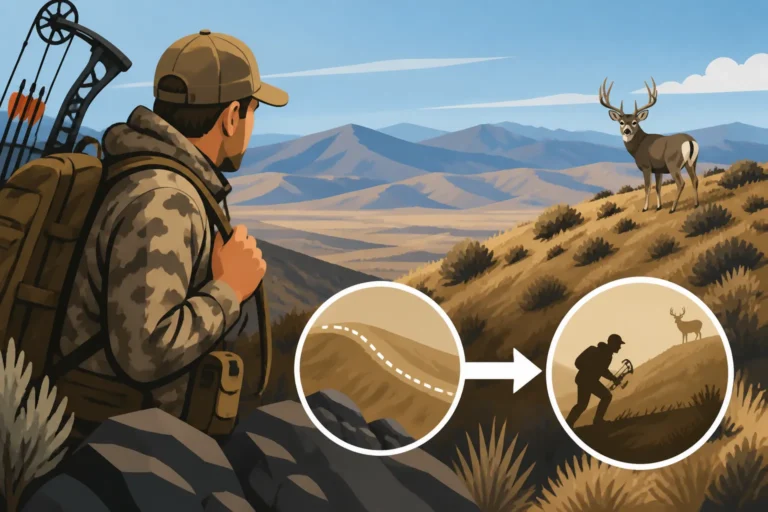
The wind is your absolute master in the open country. Even a slight shift can instantly give away your position. Always approach with the wind in your favor, using wind checkers constantly. Pay close attention to thermals, which tend to rise in the morning as the sun warms the earth and fall in the evening as temperatures drop. This means a morning stalk might require a different approach angle than an evening one. Utilizing every ripple in the terrain – washes, draws, rock outcroppings, and even large sagebrush bushes – to break up your silhouette and hide your movement is crucial. Sometimes, you'll need to crawl hundreds of yards on your hands and knees to get within bow range. This mastery of natural concealment is fundamental to Terrain That Hides an Approach in Open Country.
Furthermore, mule deer in August, especially those in velvet, might be slightly less wary than during the rut, but they still have keen senses. Their eyesight, hearing, and incredible sense of smell are always active. Take your time, move slowly, and constantly reassess your position. If you lose sight of the deer, pause and wait for them to reappear or for a better opportunity. Rushing a stalk almost guarantees failure. And don't forget the challenge of Reading Wind on a Long Sage Stalk, where unpredictable gusts and swirling air currents can make a seemingly simple approach incredibly complex. This level of dedication and meticulous execution is what separates a successful stalk from a blown opportunity in the vastness of Nevada.
Legal Requirements and Ethical Considerations
Every hunter has a responsibility to understand and abide by the regulations set forth by the Nevada Department of Wildlife (NDOW), especially during an archery-specific season. Beyond the written law, ethical considerations are paramount, particularly when dealing with early-season heat and the potential for meat spoilage. Ignorance of the rules is no excuse, and responsible hunting ensures the integrity of the sport for everyone.
Archery-Specific Regulations
Nevada has clear regulations governing archery equipment for big game hunting, and it's imperative that your setup complies. The primary concerns for August archery deer hunters revolve around broadhead type and minimum draw weight. For broadheads, Nevada requires that they have at least two sharpened edges and a minimum cutting width of 7/8 inch. Expandable broadheads are legal as long as they meet these cutting width requirements. Mechanicals have come a long way, but ensure yours deploy reliably and maintain integrity.
Draw weight minimums are also in place to ensure a clean, ethical kill. For big game like mule deer, Nevada mandates a minimum draw weight of 40 pounds. While many modern bows exceed this, it’s vital to confirm your setup meets or exceeds this standard, especially if using an older bow or a youth model. Beyond these, you should review the current year's NDOW hunting regulations for any changes or additional rules, such as those concerning lighted nocks (generally legal) or rangefinders (also legal). Understanding Broadhead Requirements for Bowhunting and Minimum Bow Draw Weight for Big Game is foundational to ensuring your equipment is legal and ethical.
It’s also crucial to distinguish between legal scouting and legal hunting. While many activities are permitted during scouting (like using trail cameras, which have specific regulations regarding public vs. private land), these tools often cannot be used during the actual hunt or to directly aid in taking an animal. Always check the most current regulations for specific language on electronic devices or baiting. The spirit of archery hunting lies in fair chase, and adhering strictly to these rules ensures that experience remains intact.
Post-Harvest Care in Extreme Temperatures
Successfully taking a mule deer with a bow in August is a hard-earned victory, but the work is far from over. In fact, due to the extreme heat, the most critical part of the hunt begins the moment your animal hits the ground: rapid and thorough meat care. Neglecting this step for even a short period can lead to significant meat spoilage, rendering your hard-won harvest inedible and unethical.
The clock starts ticking immediately. You need to field dress the animal as quickly as possible to begin the cooling process. Get the guts out, open the chest cavity, and ideally split the pelvis to allow air circulation. If you can, get the hide off the animal as well; the hide acts as an insulator, holding heat in. High-quality synthetic game bags are essential for protecting the meat from flies and debris while allowing it to breathe. These are not a place to skimp on quality, as cheap cotton bags can tear or allow insects in. Understanding Field Dressing in August Heat is a skill every hunter must master.
Once field dressed and in game bags, your absolute priority is to get the meat cooled down. This often means packing it out to a vehicle equipped with large coolers packed with ice. Bone-in meat will cool slower, so many experienced hunters will quarter the animal, debone some cuts, and pack each piece directly onto ice. The goal is to get the core temperature of the meat below 40 degrees Fahrenheit as quickly as possible. Don't be afraid to use a lot of ice; it's a small price to pay for preserving your valuable harvest. Failing to plan for Getting Meat Cooled on an Early Season Hunt can mean watching your hard work literally rot away.
Physical and Mental Preparation for August Archery
Nevada's August archery season is as much a test of your physical and mental fortitude as it is your hunting skills. The environment itself presents a formidable opponent, and being unprepared can quickly turn an exciting hunt into a miserable or even dangerous experience. Don't underestimate the demands this hunt will place on your body and mind.
Conditioning for Arduous Terrain and Heat
Hunting Nevada's vast, broken country in August demands peak physical conditioning. You'll be covering significant distances, often over uneven, rocky terrain, gaining and losing elevation repeatedly, all while carrying a heavy pack full of water and gear. The heat amplifies every physical challenge, draining your energy reserves and taxing your cardiovascular system. This isn't a hunt you can roll off the couch for; it requires dedicated, intentional preparation.
Your training regimen should focus on endurance, strength, and acclimatization to heat. Long hikes with a weighted pack, simulating the weight of water and a potential harvest, are invaluable. Incorporate incline training, stair climbing, and exercises that build core strength and leg stamina. If possible, do some of your training during the hottest parts of the day to help your body adapt to working in the heat. Staying hydrated during training, just as you would during the hunt, is also crucial. The fitter you are, the more comfortable and effective you'll be in the field, allowing you to focus on the hunt rather than battling your own physical limitations. This proactive approach is vital for Preparing Physically for Long Glassing Days and making the most of your limited time in the field.
Beyond general fitness, think about specific movements you'll be making. Crawling on hands and knees during a stalk, navigating loose scree slopes, or packing out heavy quarters down steep ravines. Incorporate exercises that mimic these movements. Proper stretching and flexibility can also help prevent injuries. Remember, any pre-existing aches or pains will likely be exacerbated by the demands of a Nevada August hunt. Addressing these proactively will ensure you arrive in the field ready to perform, not just survive.
Mental Toughness and Patience
Beyond the physical, the mental game of August archery in Nevada is equally challenging. The vastness of the landscape can be overwhelming, the deer can be incredibly elusive, and the constant battle against the heat can wear down even the most seasoned hunter. Success often hinges on your ability to maintain a positive attitude, stay focused, and remain patient when faced with adversity.
There will be days when you glass for hours without seeing a single animal. There will be stalks that get busted by a sudden wind swirl or an unseen doe. There will be moments when the sun feels like it's actively trying to defeat you. In these moments, mental toughness is what keeps you pushing forward. Learn to break the hunt down into smaller, manageable goals: find a good glassing spot, systematically search a grid, commit to a long stalk. Celebrate small victories, like finding fresh sign or successfully navigating a tricky piece of terrain.
Patience is perhaps the most undervalued virtue in August archery. It takes patience to glass for hours. It takes patience to wait out a thermal shift. It takes immense patience to execute a two-hour stalk that covers 800 yards to get within 40 yards. Don't rush shots, don't give up on stalks prematurely, and don't let frustration dictate your decisions. Maintain a keen sense of observation, trust your instincts, and remember that every setback is a learning opportunity. The hunter who can remain calm, focused, and persistent in the face of these challenges is often the one who ultimately finds success in Nevada's August archery season.
Choosing the Right Unit for August Archery Deer
Selecting the appropriate hunt unit is a foundational decision that can significantly impact your August archery deer season success. Not all Nevada units are created equal, especially when you factor in the unique conditions of an early-season bow hunt. A unit that might be fantastic in a late rifle season could be a completely different animal (pun intended) in the scorching heat of August.
Unit Characteristics for Early Season Success
When evaluating units for August archery, you need to prioritize specific characteristics that play into the deer's behavior and your hunting strategy. First and foremost, look for units with reliable, accessible water sources. These could be perennial springs, developed guzzlers, or even significant riparian areas. The more concentrated and predictable the water, the better your chances of locating deer. Units with a good distribution of such sources offer more options and spread out the deer, potentially reducing pressure on any single spot.
Next, consider the terrain. Units that offer diverse topography, including good glassing vantage points and sufficient cover (like juniper thickets, brushy draws, or rimrock) for deer to bed down and for you to stalk, are ideal. Vast, featureless sage flats, while holding deer, can make stalking nearly impossible. Conversely, overly dense, broken country can make glassing challenging. You're looking for a balance – enough open country for glassing, but enough terrain features to facilitate a stalk. Higher elevation units, while still hot, often offer slightly cooler temperatures and more consistent water sources than the lower desert floors.
Finally, while general deer numbers are important, focus on population trends and buck-to-doe ratios if available. A unit with a decent number of mature bucks is always desirable for a trophy archery hunt. Resources like GoHunt often compile this data, allowing you to make informed decisions. Remember that a unit with historically good draw odds might indicate lower hunting pressure, which can be an advantage during a challenging early season. Taking the time to delve into these characteristics, possibly referencing Reading a Nevada Hunt Unit Before You Apply, is crucial to setting yourself up for success.
Utilizing Draw Odds and Historical Data
Nevada's draw system is complex, but understanding draw odds and historical harvest data is vital for making an informed unit choice, especially for non-residents or those building bonus points. For August archery deer, draw odds can vary wildly between units, reflecting unit quality, deer density, and hunter demand. While a unit with 100% draw odds might seem appealing, it often indicates lower deer numbers or more challenging terrain, or both. Conversely, a unit with very low odds usually signifies a top-tier hunting experience with high success rates and trophy potential.
Platforms like GoHunt provide comprehensive draw statistics, allowing you to analyze past success rates, resident vs. nonresident odds, and bonus point implications. Don't just look at the overall odds; delve into the harvest success rates for archery hunts specifically, and pay attention to what type of bucks are being harvested. This data can give you a realistic expectation of what to expect in a particular unit.
Your strategy here might depend on your goals. Are you looking for any legal deer, or are you chasing a specific quality buck? If you're building points, you might apply for a harder-to-draw unit while still gaining knowledge of its characteristics. If you're trying to draw a tag this year, focus on units with more favorable odds, even if they present a tougher hunt. Balancing your personal hunting goals with the realities of draw statistics and unit quality is the key to selecting the right unit for your August archery deer season. Knowing Why Nevada Draw Odds Vary So Much by Unit can further refine your application strategy.
Dealing with the Aftermath: Meat Care and Logistics
You've done the hard work: battled the heat, made the perfect stalk, and sent an arrow true. Now, with a downed mule deer, the next critical phase begins. In the extreme conditions of August, proper meat care and efficient logistics are not just good practice – they are absolutely essential to prevent spoilage and ensure you honor your harvest.
Rapid Cooling and Preservation Methods
The moment you confirm your deer is down, the race against time and temperature begins. Even with excellent Field Dressing in August Heat, the internal temperature of a large animal can remain high for hours, especially in direct sunlight. Your priority is to initiate rapid cooling. Beyond field dressing and skinning, consider quartering the animal to expose more surface area to the air and facilitate cooling. Each quarter, along with the backstraps and tenderloins, should be placed immediately into clean, breathable game bags. High-quality synthetic game bags are superior to cotton in keeping flies off while allowing air circulation.
Once the meat is bagged, the absolute fastest way to cool it is to get it on ice. This means having coolers pre-staged at your vehicle, filled with block ice or frozen water jugs, not just cubed ice which melts too quickly. Arrange the meat in the coolers so that there's good contact with the ice, but also allow for air circulation if possible. You can even layer ice and meat if you have enough. If you’re far from your vehicle, you’ll need to make multiple trips or have a plan for a temporary cooling solution in the field, such as hanging the quarters in the deepest shade possible, where any breeze can help, or even burying them in cold ground if available. The faster you get that core temperature down, the better the quality of your meat will be. This attention to detail on Getting Meat Cooled on an Early Season Hunt is non-negotiable for an August harvest.
Transporting Your Harvest Out of Remote Areas
Nevada's vast units often mean hunting far from paved roads, making the extraction of a harvested animal a significant logistical challenge. If you've been hiking deep into roadless country, you need a plan for Packing an Animal Out of Roadless Country. This could involve breaking the animal down into packable quarters and carrying them out on frame packs. This is incredibly strenuous work, especially in the heat, and often requires multiple trips or hunting with a partner to share the load. Consider a sturdy external frame pack designed for heavy loads; a daypack simply won't cut it.
If you are hunting in areas with some vehicle access, even via rough two-track roads, having a robust vehicle is crucial. A 4×4 truck or SUV with good clearance and appropriate tires is essential. Consider carrying extra fuel, a spare tire, and recovery gear like a shovel, traction boards, and a tow strap, as breakdowns in remote Nevada can be dangerous. Once the meat is secured in coolers, plan your route home. Long drives in hot weather can still compromise meat if not properly managed. Keep the ice chests shaded and topped off with ice, draining water regularly to prevent the meat from sitting in a watery slush. Your vehicle becomes a mobile butcher shop and cold storage facility, and preparing it adequately is just as important as preparing your hunting gear.
Disclaimer
The information provided in this guide is for general informational and educational purposes only. Hunting regulations, seasons, and local conditions can change rapidly. Always consult the most current Nevada Department of Wildlife (NDOW) regulations and local land management agency rules before planning or engaging in any hunting activities. Hunters are responsible for understanding and adhering to all applicable laws and regulations.