What Percentage of Nevada Is Federal Land
One of the biggest anxieties for any hunter looking at Nevada, especially if you're coming from out of state, is the fear of not finding enough accessible land. You might picture endless stretches of private ranchland or barren, unhuntable desert. But let me tell you, that couldn't be further from the truth. Nevada is an absolute treasure trove of public land, and understanding just how much of it there is, and how it's managed, is the first critical step to planning a successful hunt out here. This guide is going to walk you through the reality of federal land ownership in Nevada, showing you where the opportunities lie and how to navigate this incredible landscape.
The Land of Public Opportunity: Understanding Nevada's Unique Landscape
Nevada is truly a standout when it comes to public land access. While many states struggle with dwindling access and increasing private ownership, the Silver State offers an expansive canvas for hunters. This isn't just a slight edge; it's a fundamental aspect that defines hunting in Nevada.
The Sheer Scale of Federal Ownership
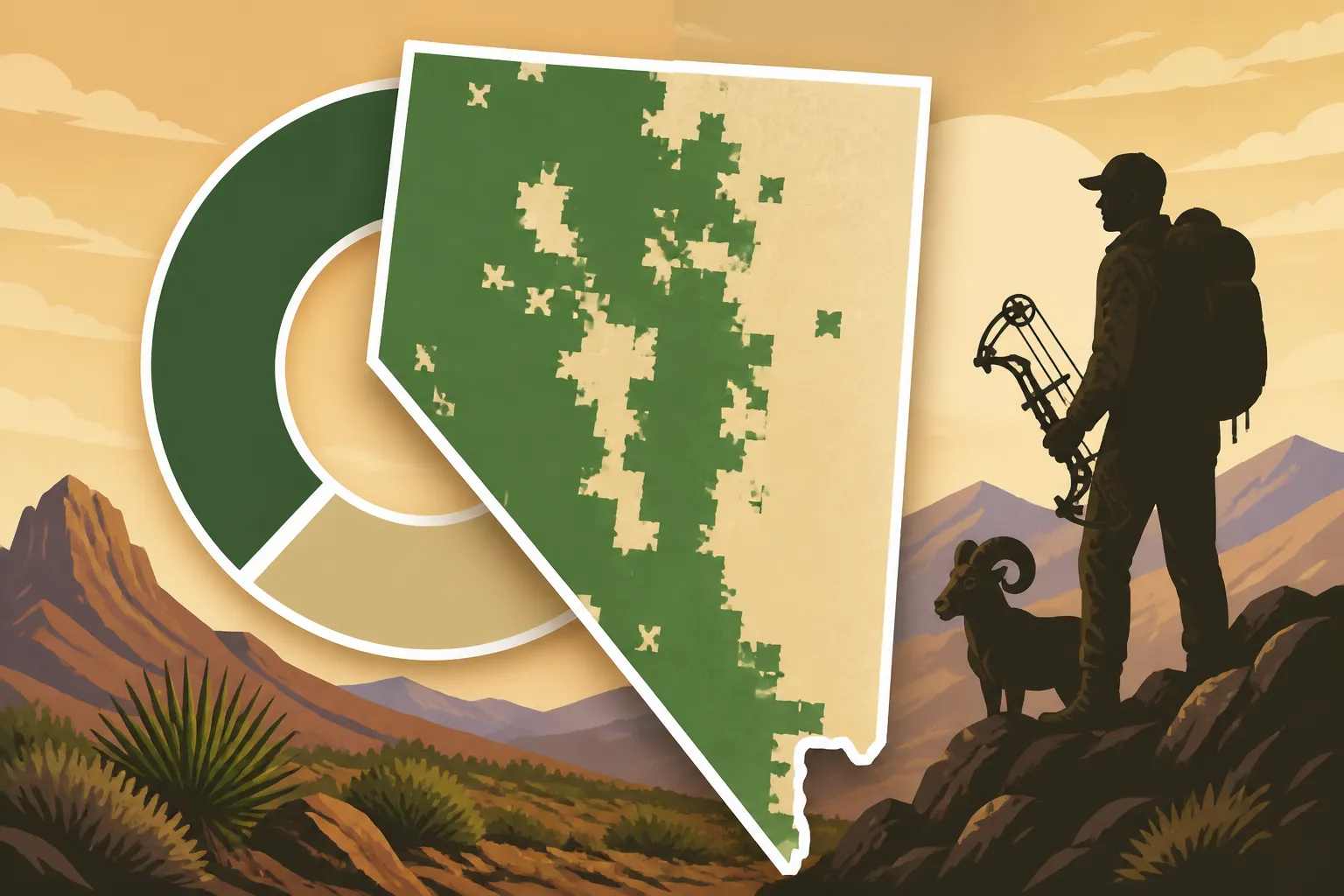
Nevada holds a unique distinction: it's the most federally owned state in the Lower 48. We're talking about an overwhelming majority of the state's landmass being managed by federal agencies. If you're used to hunting states where you're constantly looking for permission slips or sticking to small tracts of state game lands, Nevada will feel like a breath of fresh, wide-open air. This historical reality, largely stemming from the arid nature of the land that wasn't conducive to traditional homesteading, means that vast stretches remain in public hands, waiting for you to explore.
Think about the implications of this. It means that the biggest challenge often isn't finding land to hunt, but rather figuring out how to effectively hunt such enormous, often roadless, landscapes. This isn't small woodlots and farm fields; this is horizon-to-horizon country, where you can literally hunt for days without seeing another soul, let alone a fence line. It's truly a place where you can get lost in the best possible way. This vastness requires a different mindset and different tools, like robust mapping applications, to navigate effectively and ethically.
A Patchwork of Agencies: Who Owns What?
While the overall federal ownership percentage is huge, it's not all managed by a single entity. Various federal agencies oversee different types of land, each with its own mission and, sometimes, specific rules that hunters need to be aware of. Understanding this patchwork is key to knowing what to expect when you're out there.
Bureau of Land Management (BLM)
Without a doubt, the Bureau of Land Management (BLM) is the dominant land manager in Nevada, holding the lion's share of the state's public acreage. If you're planning a big game hunt for mule deer or antelope in Nevada, chances are extremely high that you'll be spending a significant amount of your time on BLM ground. This land is typically characterized by vast expanses of sagebrush steppe, interspersed with juniper-covered hills and rugged, rocky mountain ranges. It's the quintessential Great Basin landscape.
The beauty of BLM land is its generally permissive nature for activities like hunting and dispersed camping. It's truly "multi-use" land, meaning hunters, ranchers, recreationists, and mineral developers often share the same landscape. This also means that roads can be primitive, services are far apart, and you need to be self-sufficient. This is where you'll find those long, open sightlines perfect for glassing, and the kind of solitude that hardcore hunters crave. You'll often be targeting game that lives its entire life within these sage and rock habitats. BLM Ground Is Where Most Nevada Hunting Happens will give you more context on this.
National Forest System (NFS)
While less extensive than BLM land in Nevada, the National Forest System (NFS), primarily managed by the Humboldt-Toiyabe National Forest, offers a completely different hunting experience. These lands generally sit at higher elevations, featuring Ponderosa pine, aspen groves, and denser timber. This is where you might find more elk habitat, as well as deer that prefer the cooler, timbered slopes.
Hunting in a National Forest can feel more like what hunters in the Mountain West might be accustomed to, with more defined trails, thicker cover, and often more distinct changes in elevation. Access can still be remote, especially in designated wilderness areas, and you'll often encounter seasonal road closures due to snow or muddy conditions. Knowing Humboldt-Toiyabe National Forest Hunting is a great step to understanding these specific areas.
Other Federal Lands: National Parks, Wildlife Refuges, and Military
Beyond the BLM and National Forest, there are other federal designations. National Parks, like Great Basin National Park, are generally closed to hunting, though their adjacent lands can offer excellent opportunities. National Wildlife Refuges, such as Sheldon or Desert National Wildlife Refuges, often have very specific, limited hunting seasons and regulations that require careful research and sometimes special permits. Desert National Wildlife Refuge Hunting Rules is a good example of the kind of specific information you'd need.
Then there are the military lands, like the Nellis Test Range or Fallon Range Training Complex. These areas are largely off-limits to public access for safety reasons, though sometimes specific limited access for hunting might be permitted on their fringes or through special draws. It's crucial to be absolutely sure of your location when hunting near any military installation to avoid serious issues.
| Federal Land Type | Primary Characteristics | Hunting Implications |
|---|---|---|
| Bureau of Land Management (BLM) | Vast, open sagebrush, desert mountains, arid. | Most common hunting ground, dispersed camping, primitive roads, extensive glassing needed. |
| National Forest System (NFS) | Higher elevations, timber, aspen, distinct mountain ranges. | Different species habitat (elk, high-country deer), seasonal access, more defined trails. |
| National Wildlife Refuge | Managed for wildlife, often wetlands or specific habitats. | Highly regulated, specific seasons, special permits often required, check local rules rigorously. |
| National Parks | Primarily for conservation and recreation. | Generally no hunting allowed inside park boundaries, hunt adjacent public lands. |
| Military Land | Active training areas, restricted access. | Mostly off-limits, extreme caution and precise navigation needed if hunting nearby. |
Navigating the Vastness: Accessing Nevada's Public Hunting Grounds
Having so much public land is fantastic, but it also presents its own set of challenges. It's not enough to know the land is public; you need to know how to get there, what to expect, and how to operate within its boundaries.
The BLM Dominance: Your Primary Hunting Arena
When people talk about Nevada hunting, they're often implicitly talking about BLM land. It's where the majority of big game hunting occurs, especially for mule deer and pronghorn. The terrain is often defined by long, sweeping valleys punctuated by rugged mountain ranges, creating endless opportunities for glassing. In fact, many successful Nevada deer hunts are primarily glassing affairs, covering miles with your optics before ever taking a step towards an animal. Why Nevada Deer Hunting Is a Glassing Game is a critical read on this very topic.
Accessing this land primarily involves dirt roads, which can range from well-maintained gravel to barely-there two-tracks that require a high-clearance 4×4. Getting deep into these areas means being prepared for anything – flat tires, getting stuck, or simply losing the faint road you were on. Services are incredibly sparse, so you need to carry extra fuel, water, and emergency supplies. Knowing Remote Road Conditions Across Nevada will give you a realistic expectation of what you'll encounter.
This is where digital mapping tools become absolutely indispensable. Apps like onX Hunt have revolutionized how hunters navigate these vast public lands. They clearly delineate public and private boundaries, show roads, trails, and even water sources. Without a tool like onX Hunt, trying to distinguish public from private on the ground can be a nightmare, especially when dealing with often poorly marked property lines or checkerboard ownership patterns. GoHunt is another fantastic resource for e-scouting, helping you pore over topo maps and satellite imagery from your couch, identifying potential access points, glassing knobs, and bedding areas long before you ever set foot in the unit.
National Forests: High Country Sanctuaries
Hunting in Nevada's National Forests, like those found in the Ruby Mountains or the Schell Creek Range, presents a different set of opportunities and challenges. Here, you're often climbing higher, through Ponderosa pines and aspens, chasing different deer patterns or searching for elk. The terrain can be steeper, rockier, and more physically demanding. The Ruby Mountains for Nevada Hunters outlines a prime example of this type of terrain.
Access to these areas is often along forest service roads, which are generally better maintained than many BLM tracks but can still be rough and become impassable with inclement weather. Snow can shut down higher elevation roads for months, sometimes well into the hunting season, pushing animals lower and restricting hunter access. This means researching seasonal road closures is absolutely critical for your hunt planning. You might find yourself needing to pack into these areas on foot or with horses, particularly if you're venturing into designated wilderness areas.
The experience of hunting in these forested areas is a stark contrast to the open sagebrush. Your visibility is reduced, requiring more still-hunting or methodical tracking. Game can be harder to spot but might be more concentrated in specific timber pockets or riparian areas.
Practicalities and Pitfalls: Making the Most of Public Land
Even with the vast amount of public land in Nevada, success hinges on careful preparation and a deep understanding of the rules and the landscape. Don't let the sheer acreage fool you into thinking it's always easy.
Understanding Land Status and Boundaries
The most critical piece of advice for hunting any public land, but especially in Nevada, is to always know exactly where you are. Nevada's public and private land ownership can be incredibly complex, especially in valleys where ranches might own property right up against BLM land, or where "checkerboard" ownership patterns exist due to old railroad land grants.
Using a reliable GPS device or a smartphone app with GPS capabilities, loaded with accurate land ownership maps, is non-negotiable. This is where tools like onX Hunt become an essential piece of gear. With it, you can see not only the public land boundaries but also private property lines, ensuring you don't inadvertently trespass. It's not uncommon to find small, private inholdings surrounded by miles of public land, or public land that's technically "landlocked" by private property without legal access. Knowing Reading a Land Ownership Layer Correctly is vital to avoiding legal trouble and respecting private property rights.
Remember, if you harvest an animal on public land and it runs onto private, you generally need landowner permission to retrieve it. This is why scouting and knowing your boundaries beforehand can save a lot of headaches and potential heartbreak.
Respecting Special Designations and Regulations
Not all public land is created equal when it comes to hunting regulations. Certain areas have special rules that you must be aware of:
Wilderness and Wilderness Study Areas
Nevada has numerous Wilderness Areas and Wilderness Study Areas (WSAs), which are designated to preserve their wild character. This means strict limitations on motorized travel. In a designated Wilderness Area, no motorized vehicles are allowed, period. This includes ATVs, UTVs, and even e-bikes. In WSAs, existing roads may be open, but cross-country travel is often prohibited. This can significantly impact how you plan your hunt, potentially requiring extensive foot travel or even packing in with horses. Wilderness Study Areas and Vehicle Limits details these restrictions. Always verify the rules for any specific area you plan to hunt to avoid fines and damage to critical habitats.
National Wildlife Refuges
As mentioned earlier, National Wildlife Refuges are managed primarily for wildlife and habitat. Hunting might be permitted, but it's typically under very specific conditions, with separate application processes, limited seasons, and often stricter rules regarding weapon types, harvest limits, or even access points. Never assume you can hunt a refuge without first thoroughly checking its specific regulations directly with the refuge management.
Military Installations and Tribal Lands
The rule here is simple: if you're near a military installation, understand its boundaries and stay out unless explicitly permitted. The consequences of accidental trespass can be severe. Similarly, Tribal lands, which exist throughout Nevada, are sovereign nations. Hunting on these lands almost always requires specific tribal permits and adherence to their own regulations, which are separate from state laws. You cannot assume a state tag allows you to hunt on tribal lands. Always verify and respect tribal sovereignty and land use regulations. Knowing Tribal Land Boundaries Nevada Hunters Must Respect is crucial for ethical hunting.
Nevada's vast federal lands offer unparalleled opportunities for hunters willing to put in the effort to understand and respect this unique landscape. From the sage-covered plains of the BLM to the higher, timbered slopes of the National Forests, the Silver State truly is a public land hunter's dream. Just remember to do your homework, pack smart, and always, always know your location.
Disclaimer
This article is for general informational purposes only and does not constitute professional advice. Laws, prices and regulations vary by location and change over time. Consult a qualified professional for guidance on your specific situation.