Best Public Land Units in Northern Nevada
Finding productive public land in Northern Nevada for hunting can feel like trying to find a needle in a haystack, especially when you consider how much open country there is. The sheer vastness of the landscape often leaves hunters scratching their heads, wondering where to even begin their search for a quality experience. This guide aims to demystify the process, offering insights into the best public land units and areas across Northern Nevada, and how to effectively scout and hunt them.
Understanding Northern Nevada's Public Land Dominance
Northern Nevada is a public land hunter's paradise, but with vastness comes unique challenges. Unlike some states where public access is a patchwork or limited to small tracts, the majority of Northern Nevada's landscape is open for all of us to enjoy. However, understanding the different types of public land and what they entail is crucial for a successful hunt.
The Power of BLM and National Forest Lands
The Bureau of Land Management (BLM) administers the lion's share of public land in Nevada. We're talking millions upon millions of acres of sagebrush flats, rolling hills, and isolated mountain ranges. This is the quintessential Nevada landscape that most of us associate with mule deer, antelope, and chukar hunting. Hunting on BLM land often means wide-open spaces, limited infrastructure, and a true backcountry experience. You'll find plenty of roads, but many are primitive and demand a capable vehicle. BLM Ground Is Where Most Nevada Hunting Happens for good reason; it's simply everywhere.
Contrast this with the National Forests, primarily the Humboldt-Toiyabe National Forest in Northern Nevada. These areas tend to be higher in elevation, with more timber, steeper terrain, and often better water sources. Here, you're more likely to find elk, larger mule deer bucks tucked into cover, and even some forest grouse. The access points might be fewer, but the reward of hunting in these mountainous havens can be immense. Nevada National Forests in the North and East are truly special places. Navigating these areas requires a good understanding of topography and, often, a willingness to hike steep grades.
| Public Land Type | Common Terrain | Primary Game Species | Typical Access | Key Considerations |
|---|---|---|---|---|
| BLM Land | Sagebrush flats, rolling hills, desert mountains | Mule Deer, Pronghorn, Chukar, Coyotes | Extensive network of primitive roads | Vastness, limited water, heat in early seasons |
| National Forest | Timbered mountains, deep canyons, higher elevations | Mule Deer, Elk, Mountain Lion, Grouse | Fewer, often steeper roads; some trailheads | Higher density of cover, seasonal snow, tougher climbs |
The Challenge of Undifferentiated Public Ground
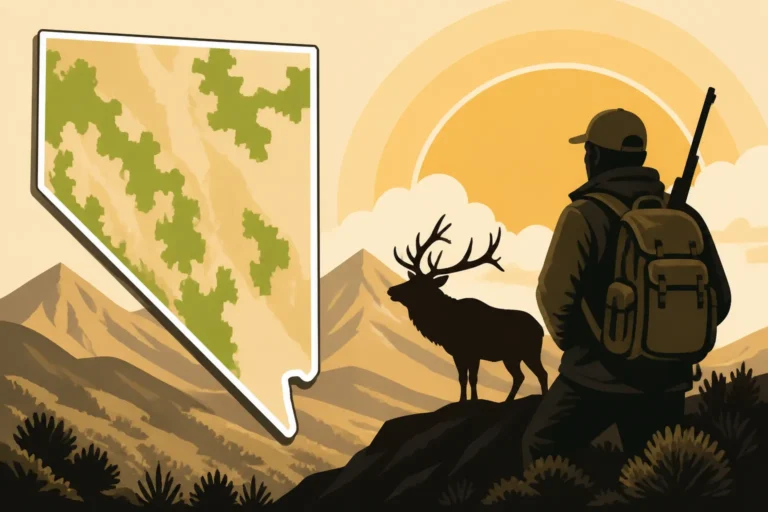
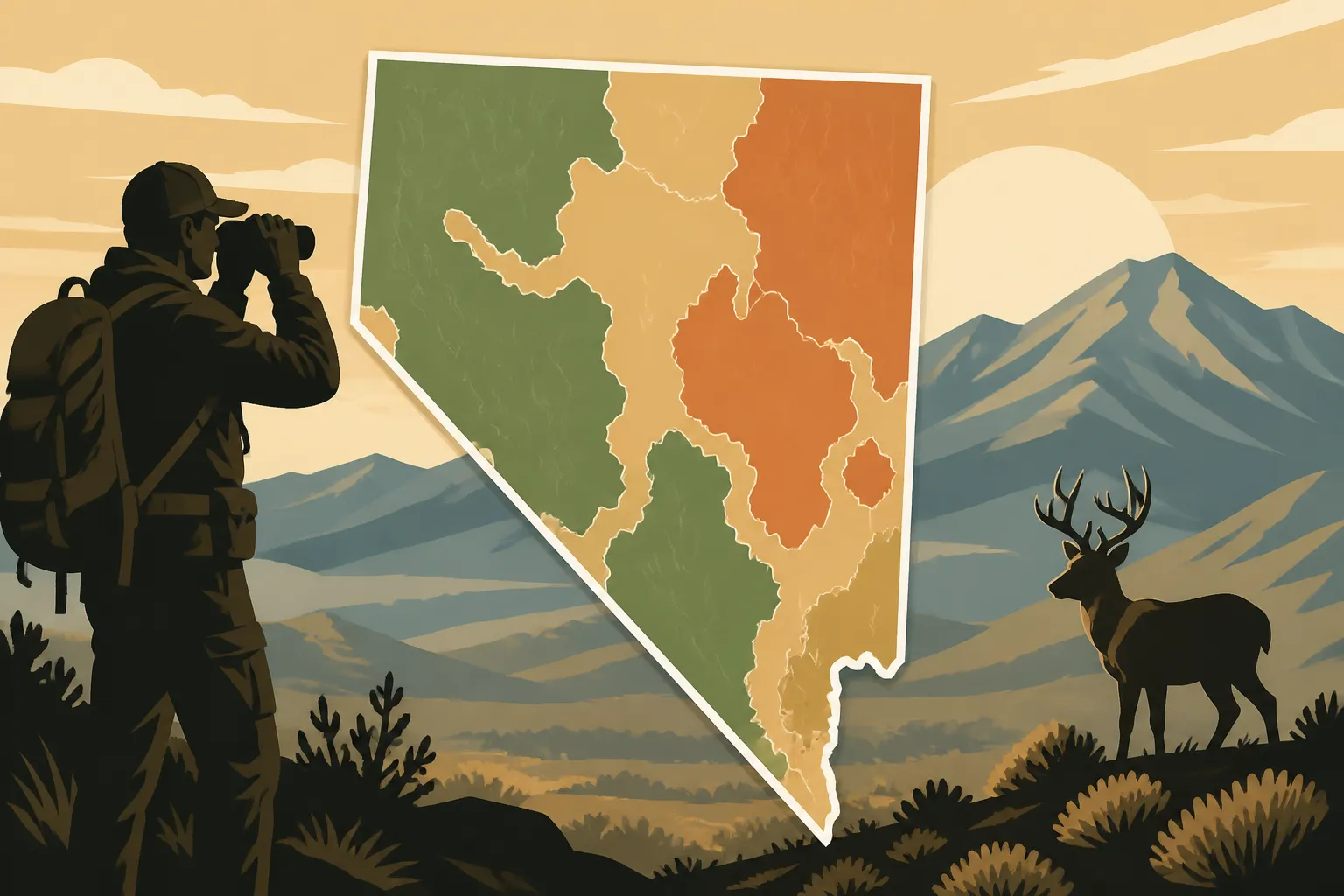
One common frustration hunters face is looking at a map and seeing a sea of green (public land) without any clear indication of where to go. All public land isn't created equal when it comes to game populations or huntability. Some areas are simply vast, barren stretches with little to hold animals, while others are honeycombed with prime habitat. The key is learning to differentiate these areas, often through a combination of e-scouting and on-the-ground exploration. This is where tools like onX Hunt become invaluable, allowing you to layer topography, water sources, and historical data to pinpoint promising locations before you ever leave your couch.
Key Regions and Units for Northern Nevada Hunting
When we talk about "best" units, it's rarely about one magic number. Instead, it's about regions that consistently offer good opportunities based on terrain, habitat, and general game populations. Northern Nevada offers diverse landscapes, each with its own character and species focus.
The Santa Rosa Range and Beyond
The Santa Rosa Range, located in Humboldt County, is a prime example of a Northern Nevada hunting gem. This mountain range rises dramatically from the surrounding sagebrush sea, creating a diverse ecosystem that supports a healthy population of mule deer and some growing elk herds. The higher elevations feature pine and aspen, providing crucial cover and forage, while the lower slopes transition into classic sage and bitterbrush. Hunters here can expect challenging, steep country but often find good numbers of deer, especially during the later rifle seasons when snow starts pushing animals down. Water sources, while present, are still critical, so Hunting Water in Nevada's Driest Country is a tactic worth mastering here.
Further east, areas like the Independence Range and the Jarbidge Wilderness offer similar, rugged mountain hunting experiences. These regions are characterized by high elevations, deep canyons, and a true backcountry feel. Access might be limited to rough forest roads or even horseback, making them ideal for hunters seeking solitude and a challenging physical hunt. Elk populations here are often smaller but can produce some impressive bulls for those willing to put in the effort.
The Vastness of Eastern Nevada's Basins and Ranges
Moving into eastern Northern Nevada, you encounter the classic "basin and range" topography on a grand scale. Think sprawling sagebrush valleys interrupted by steep, isolated mountain ranges. Units in this area, spanning counties like Elko, White Pine, and Eureka, are often known for their mule deer, antelope, and chukar populations. While the specific unit numbers might change, the type of country remains consistent.
Many of these units offer excellent opportunities for glassing. The open nature of the terrain means you can often spot animals from miles away, making quality optics a non-negotiable part of your gear. Glassing Grids Across a Nevada Basin is a technique that pays dividends here. Look for units with a good mix of high, rocky escape cover and sagebrush flats that provide forage. Water sources, whether natural springs or man-made guzzlers, will be magnets for game, especially during early seasons. The sheer size of these units also means that hunting pressure can be diluted, allowing for a more solitary experience if you're willing to hike away from the roads.
Strategies for Identifying Productive Public Land
Don't just drive around hoping to stumble into a honey hole. Modern tools and thoughtful planning are your best friends when tackling Northern Nevada's public lands.
E-Scouting: Your Digital Reconnaissance
Before you ever set foot in a unit, you should be spending hours on your computer or tablet. E-scouting allows you to become intimately familiar with the terrain, access points, and potential game locations. Start with a high-quality mapping application like onX Hunt or even services like GoHunt for unit data. Look for:
- Elevation Changes and Aspect: Deer and elk love transition zones. Steep north-facing slopes often hold timber and shade, perfect bedding areas, while south-facing slopes might offer early season forage.
- Water Sources: In Nevada, water is life. Identify every spring, creek, river, and guzzler you can. These are natural concentration points for all game. Water Sources That Concentrate Nevada Game are crucial.
- Roads and Trails: Plan your approach. Are there vehicle access roads that get you close, or will you need to pack in? Identify potential parking areas and walk-in routes.
- Habitat Diversity: Look for areas where different vegetation types meet, like where sagebrush transitions to pinyon-juniper or higher elevation timber. These edges are often where game can be found feeding and bedding.
- Isolated Pockets of Public Land: Sometimes, small, landlocked parcels of public land surrounded by private ground can offer incredible, low-pressure hunting, provided you can legally access them. Always double-check boundaries and access routes. E-Scouting a Nevada Unit Before the Season is a skill you absolutely must develop.
Reading the Landscape for Game Sign
Once you're on the ground, your e-scouting should guide your physical reconnaissance. Spend time at key vantage points glassing, but also look for actual game sign.
- Fresh Tracks and Trails: Pay attention to game trails, especially those leading to and from water, bedding areas, and feeding grounds. Fresh tracks in the dust or snow are obvious indicators.
- Droppings: The type and freshness of scat will tell you what animals are in the area and how recently they've been there.
- Rubs and Scrapes: Especially important for deer and elk during the rut, rubs on trees and bushes, and scrapes on the ground, indicate an active bull or buck.
- Feeding Areas: Identify areas with preferred forage for your target species. For mule deer, this might be bitterbrush, serviceberry, or various grasses. For elk, it could be aspen groves or lush meadows.
Always be cross-referencing what you see on the ground with your maps. Understanding How Nevada Numbers Its Hunt Units and Unit Groups will also help you pinpoint exactly where you are and what regulations apply.
Practical Advice for Hunting Northern Nevada Public Land
Hunting in Northern Nevada is an adventure, but it requires thorough preparation and a realistic mindset. The landscape itself often presents the biggest challenges.
Vehicle Preparation and Remote Travel
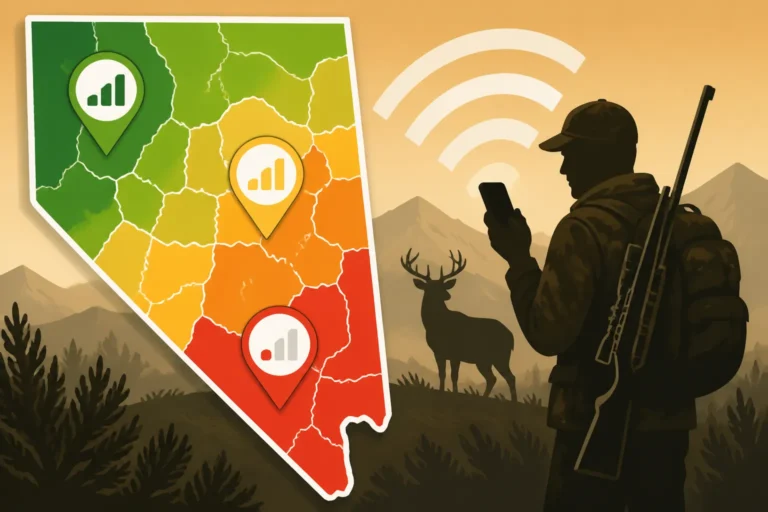
Many of the "best" public land units are deep in the backcountry, accessed by miles of unmaintained dirt roads. Your vehicle needs to be up to the task. We're talking about high clearance, good tires (and spares!), and a full tank of gas. It's not uncommon to drive 50+ miles on dirt to reach your hunting area, and cell service will almost certainly disappear long before you get there. Remote Road Conditions Across Nevada can be brutal on even the toughest trucks. Always carry extra fuel, water, and emergency repair supplies. A satellite communication device is not a luxury; it's a necessity for safety in these remote areas. Remember, Carrying Extra Fuel and Water isn't just a suggestion, it's a critical safety measure.
Physical Demands and Hydration
Northern Nevada hunting is physically demanding. Whether you're hiking steep mountain slopes in the National Forest or covering miles of rolling sagebrush on BLM land, you'll be putting in serious mileage. The dry climate, especially during early seasons, means staying hydrated is a constant battle. Carry more water than you think you'll need, and understand your personal hydration requirements. Preparing Physically for Long Glassing Days is essential; start your conditioning long before opening day. The elevation can also be a factor for those not accustomed to it, so allow yourself time to acclimate if you're coming from sea level.
Respecting Boundaries and Regulations
With so much public land mixed with private holdings, it's absolutely vital to know exactly where you are at all times. Use your mapping application like onX Hunt to ensure you're on public ground and aren't inadvertently trespassing. Reading a Nevada Unit Boundary Before You Apply is a great first step, but confirming your position in the field with GPS is critical. Also, be intimately familiar with the Nevada Department of Wildlife (NDOW) regulations for your specific unit and season. Rules regarding legal shooting hours, blaze orange requirements, and tagging procedures are strictly enforced. Never assume; always verify with the current regulations.
Disclaimer
This article is for general informational purposes only and does not constitute professional advice. Laws, prices and regulations vary by location and change over time. Consult a qualified professional for guidance on your specific situation.