Backcountry Units That Require a Pack Trip
There's a special kind of silence in Nevada's true backcountry, a quiet that whispers of immense effort and incredible reward. For many hunters, the dream of chasing a big mule deer or a record-book elk leads them far beyond the nearest two-track, into places where wheeled vehicles simply cannot go. But that dream comes with a significant logistical challenge: if you plan to hunt these remote areas, you're signing up for a pack trip. This guide is all about helping you identify those demanding backcountry units and understanding the commitment required to successfully hunt them.
Understanding "Backcountry" in Nevada's Context
When we talk about "backcountry" in Nevada, it's a bit different than in some other states. Here, it’s not always about dense timber or endless, unbroken wilderness. Often, it's about sheer distance from any accessible road, incredibly rugged terrain, and the harsh realities of a high desert or mountain environment that simply sheds human infrastructure. These aren't places you can just "day trip" into with a heavy pack and expect to be successful, let alone get an animal out.
What Defines a Backcountry Unit?
A true backcountry unit, or a specific area within a larger unit that demands a pack trip, is characterized by its remoteness and lack of easy access. Think beyond just a mile or two from the truck. We're talking about multiple miles of hiking, often through very difficult terrain, that makes hauling a heavy pack—let alone a quartered animal—an all-day, multi-person, or multi-day ordeal. These areas frequently lie within designated Wilderness Areas, Wilderness Study Areas (WSAs), or vast tracts of Bureau of Land Management (BLM) land that have never seen a maintained road. Motorized Travel Rules on Nevada Public Land
The critical distinction is whether you can or must pack in your camp and supplies, and potentially pack out an animal, solely on foot or with pack stock. If the shortest route to prime hunting ground is five, ten, or even fifteen miles over steep, broken country, and you anticipate being there for several days, you're looking at a pack trip. This isn't just a long hike; it's an expedition that requires a complete shift in how you plan and execute your hunt. Factors like elevation gain and loss, the presence of cliff bands, sparse water sources, and volcanic rock underfoot all contribute to defining these as truly backcountry units.
Identifying Roadless Areas on a Map
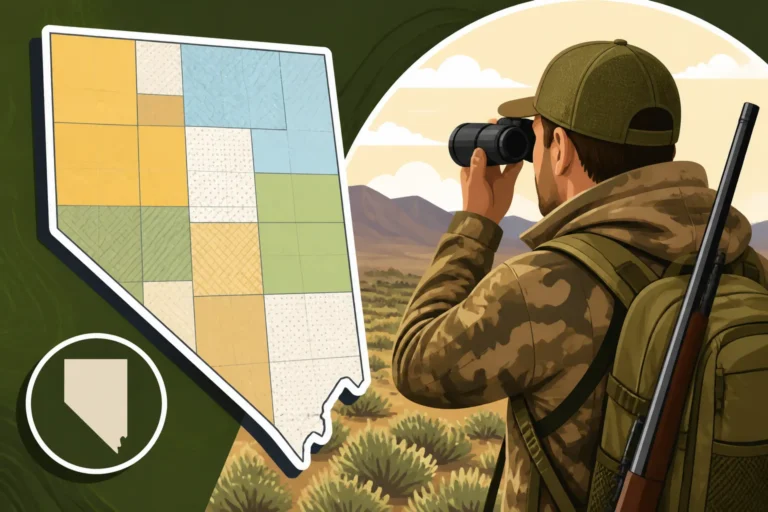
Modern mapping tools are your absolute best friend when trying to pinpoint these elusive backcountry areas. Services like onX Hunt are invaluable for overlaying public land boundaries, roads (or lack thereof), wilderness designations, and topographic features. Start by looking for large swaths of federal land, primarily BLM and National Forest, that show no, or very few, designated vehicle routes. These big, blank spaces on a road map are your first clue.
Next, delve into the topography. Zoom in on areas marked as Wilderness or Wilderness Study Areas. Pay close attention to contour lines: tightly packed lines indicate steep slopes and rugged canyons, while widely spaced lines suggest flatter, more open terrain. Even in flat-looking desert, don't be fooled; large, expansive flats can mean a very long pack out in searing heat if you get an animal down far from the nearest primitive road. You'll also want to look for prominent mountain ranges with limited road systems extending into their core. Reading a BLM Surface Management Map Identifying potential water sources like springs or guzzlers becomes paramount, as these are often key navigation points and crucial for sustaining yourself and any pack animals. When you’re trying to understand the nuances of a unit, remember that what looks like a faint trail on a map might be an impassable washed-out rut in reality. Always consider access from multiple angles and potential exit routes.
Nevada Units Known for Backcountry Demands
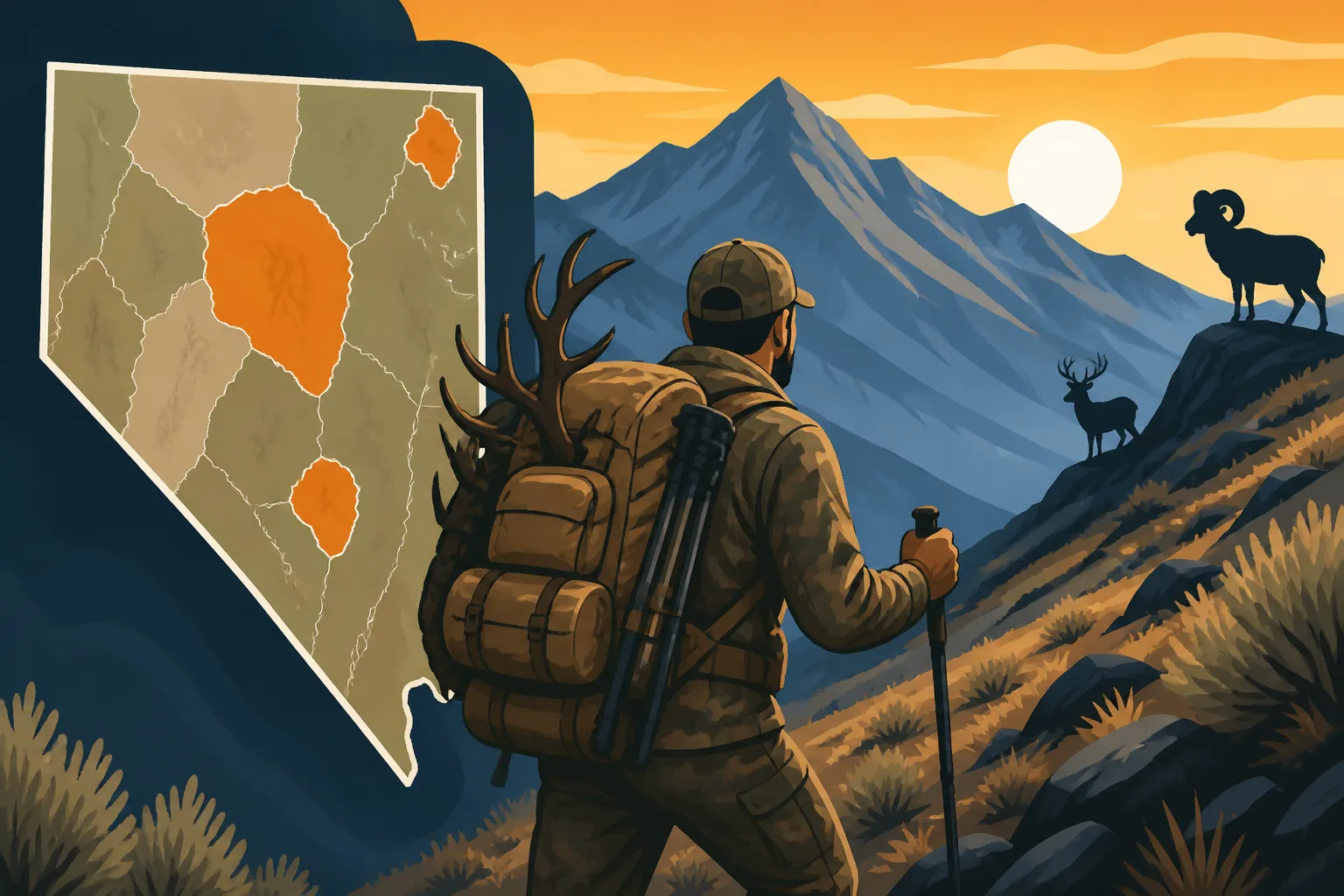
Nevada's diverse landscape means "backcountry" can look very different from one corner of the state to another. From the high, glaciated peaks of the northeast to the arid, broken ranges of the south, many units offer phenomenal hunting for those willing to put in the effort to get truly deep. These are the places where animals often grow older and bigger simply because fewer people bother to reach them.
Northern Nevada Ranges with Remote Access
Head into northeastern Nevada, and you'll find some of the most remote and rugged mountains in the state, offering incredible opportunities for elk and mule deer, and even some bighorn sheep. The Jarbidge Wilderness, for example, is a prime example of an area that absolutely demands a pack trip. Tucked away in the very corner of the state, its deep canyons, steep timbered slopes, and high peaks are largely devoid of roads. Here, a hunt often means packing in for several days, establishing a spike camp, and hunting on foot from there. The terrain is unforgiving, but the rewards can be significant. Jarbidge Wilderness Access
Similarly, portions of the Ruby Mountains, often called "Nevada's Alps," offer incredible beauty and equally intense physical challenges. While some roads provide access to the lower fringes, the high alpine basins and remote drainages quickly become pack-in only country. The Santa Rosa Range in north-central Nevada is another contender, with vast areas of high-elevation sagebrush and timber pockets that hide game from casual observers. Getting into these core areas requires either strong legs and a willingness to suffer under a heavy pack, or the use of reliable pack stock. The solitude and the potential for a truly unpressured animal are what draw hunters to these remote northern strongholds.
Eastern Nevada's Wilderness Gems
Moving south along Nevada's eastern spine, you encounter more dramatic mountain ranges that fit the backcountry bill perfectly. The Schell Creek Range, part of the larger Humboldt-Toiyabe National Forest, boasts towering peaks, deep canyons, and scattered timber that hold elk and mule deer. While some primitive roads skirt the edges, the most productive and least-pressured hunting often lies deep within its designated roadless areas. Access Into the Schell Creek Range Here, you might find yourself navigating through thick aspen groves or climbing steep, rocky faces far from any trail.
The Snake Range, home to Great Basin National Park, also offers units with significant backcountry potential, though hunters must be acutely aware of park boundaries where hunting is prohibited. Outside the park, however, these ranges offer incredible challenges and opportunities. The remoteness and elevation in these units mean planning for rapidly changing weather, from scorching sun to sudden snowstorms, even in early archery seasons. The sheer scale of these ranges, combined with limited human access, means that packing into a strategic location and staying for an extended period is often the only way to effectively hunt them. The reward is often the chance at a mature animal that has rarely seen a human.
Desert Ranges Requiring Serious Commitment
It’s easy to think of "backcountry" as high mountains, but some of Nevada’s most challenging pack-in units are actually in the lower-elevation, arid desert ranges, especially in the central and southern parts of the state. These areas might not have the dramatic elevation of the Ruby Mountains, but they present a different kind of challenge: extreme heat, lack of water, and unbelievably sharp, unforgiving volcanic rock. Imagine packing water for multiple days in 90-degree heat, or hauling a mule deer across miles of rocky, broken country where every step is a test. Hunting Water in Nevada's Driest Country
These units often hold impressive desert mule deer and pronghorn, as well as the elusive desert bighorn sheep. The Monitor Range or parts of the Toiyabe Range, while not strictly wilderness, contain massive roadless blocks that become backcountry by default due to their sheer scale and difficulty of travel. A hunter might hike for hours to reach a water source, only to find it dry, forcing a change of plans. When scouting these areas, using GoHunt data for historic water sources and game concentrations can be really helpful, but nothing beats boots on the ground for current conditions. The commitment here is not just physical, but also a mental game of attrition against the elements. The "backcountry" here means facing the full force of the desert, where preparation is not just important, but absolutely vital for survival and success.
| Factor | Human-Powered Pack Trip | Pack Stock Supported Trip |
|---|---|---|
| Advantages | More agile in dense terrain; less logistical planning for animals; quieter approach; generally lower upfront cost. | Carries significantly more weight (camp, water, meat); reduces physical strain on hunters; covers distance more efficiently with heavy loads. |
| Disadvantages | Severely limited by how much a human can carry (weight, volume); exhausting for long distances/multiple days; meat care becomes critical due to immediate weight concerns. | Higher cost (rental/purchase, feed, vet); requires animal handling skills; less stealthy; can be restricted in certain wilderness areas; more complex logistics (trailer, feed, water for stock). |
| Considerations | Physical fitness: Absolute peak condition is a must. Gear: Ultralight and multi-purpose are key. Duration: Best for shorter trips (1-3 days out). |
Experience: Need knowledge of horses/mules. Regulations: Check rules for pack stock in your unit. Terrain: Some terrain is impassable for stock. Meat hauling: Easiest way to get large game out intact. |
Logistics and Preparation for a Backcountry Pack Trip
Deciding to hunt Nevada's backcountry is one thing; actually executing it successfully is another. The preparation starts long before you ever set foot in the unit, encompassing everything from your physical training to the minutiae of your gear list. It's a holistic approach that leaves little to chance.
Human Power vs. Pack Stock
When contemplating a pack trip, the first major decision is often how you'll pack in. Are you and your hunting partners going to shoulder everything yourselves, or will you employ pack stock like horses or mules? Each option has its distinct advantages and disadvantages. Human-powered packing means you have ultimate flexibility in terrain, able to navigate steep, brushy, or boulder-strewn areas where stock might struggle. It's also often more economical initially, as you're not paying for animal rentals or feed. However, your carrying capacity is severely limited. Every ounce counts, and you'll be constantly agonizing over what to leave behind. Hauling a heavy pack for multiple miles over several days demands exceptional physical conditioning. Preparing Physically for Long Glassing Days Getting an animal out, especially an elk, becomes a multi-person, multi-trip effort that can take days.
Pack stock, on the other hand, dramatically increases your carrying capacity. You can bring more comfortable camp gear, more water, and worry less about the initial weight of packing out an animal. For those targeting elk or hunting deep into rugged country for an extended period, pack stock often makes the difference between success and failure. However, they introduce their own set of logistical challenges: you need experience handling animals, a way to transport them to the trailhead, and knowledge of where they can safely travel and graze. There's also the added cost of rental or ownership, feed, and potential veterinary needs. Carefully weigh these factors against the specific demands of your chosen unit and your group's experience level.
Essential Gear for Extended Backcountry Stays
For any serious backcountry hunt, your gear becomes your lifeline. Lightweight shelter is paramount – a durable, compact tent or tarp system that can withstand high winds and unexpected snow. Water is often the single biggest limiting factor in Nevada, so a robust water filtration system is non-negotiable, along with the capacity to carry several liters. Water You Must Carry on a Desert Day Hunt Navigation is critical, as cell service is rare in these remote units. A reliable GPS device, backup paper maps, a compass, and a satellite messenger or inReach device are absolute must-haves for communication and emergency situations.
First-aid is another area where you cannot cut corners; a comprehensive kit with training on how to use it is essential. Layering clothing is key for Nevada's dramatic temperature swings; you might start a morning hunt in freezing temperatures and be shedding layers by midday. Layering for Basin and Range Temperature Swings Don't forget high-quality optics – binoculars and a spotting scope on a sturdy tripod are indispensable for efficiently covering vast terrain and locating game without expending unnecessary energy. Finally, consider your food: lightweight, high-calorie options are crucial for sustaining energy over multiple strenuous days. Think freeze-dried meals, energy bars, and plenty of snacks. What a Nevada Guide Carries in the Truck]
Planning Your Exit Strategy
Perhaps the most overlooked aspect of a backcountry hunt is the exit strategy. It's exhilarating to get into a remote area, but successfully getting yourself and your harvest out is where the real planning shines. Once you've located and harvested an animal, the clock starts ticking, especially in early season heat. You need a clear plan for processing the animal, cooling the meat, and packing it out. Field Dressing in August Heat Marking the exact kill site with GPS coordinates is crucial, as is having a pre-determined route for extraction. Is there a more gentle slope to descend? A game trail that leads closer to a primitive road?
Consider your physical limits and those of your hunting partners. Will you need to make multiple trips? If so, where will you stash the meat to keep it cool and safe from scavengers? For larger animals like elk, this is often where the benefits of pack stock become undeniable. Have a clear communication plan with someone outside the unit who knows your itinerary and when to expect you back. A satellite communication device like a Garmin inReach or a Zoleo is a non-negotiable for remote areas, allowing you to send check-in messages and, more importantly, signal for help if an emergency arises. Don't underestimate the time and energy required for packing an animal out of roadless country. This phase of the hunt can be more grueling than the stalk itself, and meticulous planning is the key to bringing your hard-won meat home safely and ethically. Packing an Animal Out of Roadless Country
Disclaimer
This article is for general informational purposes only and does not constitute professional advice. Laws, prices and regulations vary by location and change over time. Consult a qualified professional for guidance on your specific situation.