Reading Terrain Before You Pick a Camp
There's nothing quite like rolling into a new hunt unit in Nevada, the sun dipping low, and realizing the "perfect" camp spot you saw on a map is actually a windswept gravel pit or a boggy mess. Trying to set up camp in the dark or battling unexpected elements can really throw a wrench in your hunting plans before you even glass your first basin. This guide is all about giving you the tools to read the terrain like an open book, helping you choose a solid camp location that sets you up for success and comfort, not frustration.
Understanding Nevada's Diverse Terrain Types for Camping
Nevada is a state of incredible contrasts, and its hunting units often span vast, wildly different landscapes. Knowing what kind of terrain you're heading into is the first step in picking a suitable camp, because what works in the high country will absolutely fail you in the desert flats.
High Mountain Basins and Their Challenges
When you're chasing mule deer in the Ruby Mountains or elk in the Jarbidge Wilderness, you're looking at terrain that climbs thousands of feet, with timbered slopes, alpine meadows, and often rocky, exposed peaks. Camping in these high mountain basins offers incredible views and often puts you right in the middle of elk or deer country. However, these areas come with their own set of challenges. Sudden weather changes are common; a sunny afternoon can turn into a hail storm in minutes, and nights can drop below freezing even in early fall. Wind is almost always a factor, howling down canyons and across saddles. You'll often find more natural water sources here, like springs, creeks, and snowmelt, but flat, sheltered ground can be surprisingly scarce. Setting up too high might expose you to the full brunt of the elements, while dropping into a valley bottom could leave you battling cold air sinks and moisture. You need to consider how elevation shapes Nevada hunting seasons.
A common mistake I’ve seen, and made myself, is pitching a tent in a beautiful, open meadow only to wake up soaked from morning dew or shivering because the cold air settled right on top of us. You also have to think about access. Many of these areas are roadless or have very primitive tracks, meaning you might be packing everything in on your back or with horses. Jarbidge Wilderness Access is a great example of a place where a pack-in camp is often the best, or only, option.
Lower Sagebrush Steppe and Desert Camping
Venture into central Nevada or parts of the vast Black Rock Desert, and the landscape shifts dramatically to expansive sagebrush steppe and true desert. This is the classic "Basin and Range" country, characterized by long, wide valleys separated by parallel mountain ranges. While the mountains here might not reach alpine heights, the valleys are often immense, and the sagebrush stretches for miles. The primary challenge here is water; reliable sources are few and far between, often concentrated around guzzlers or intermittent springs. Temperatures can swing wildly, with scorching hot days and surprisingly cold nights, especially once the sun dips. Dust is a constant companion, and strong winds can pick up out of nowhere, making tent stakes and a good rainfly absolutely crucial.
On the flip side, flat ground for pitching a tent is abundant. The trick is finding sheltered flat ground. Dry washes, the lee side of small rises, or even large clumps of sage can offer a surprising amount of protection from the wind. Vehicle access is often easier on the valley floors and lower mountain slopes, but deep sand or washouts can quickly turn a two-track into a recovery nightmare. Knowing What Nevada Backroads Do to a Tire is essential before you head out. When you're out in this type of country, being able to glass from camp can be a huge advantage, letting you watch basins come alive at dawn and dusk.
River Corridors and Riparian Zones
While much of Nevada is arid, there are critical river corridors and riparian zones that create ribbons of life through the desert. Think along the Humboldt River, the Reese River, or some of the larger creeks that flow down from the mountains. These areas offer distinct advantages for camping: readily available water, often some shade from cottonwoods or willows, and generally softer ground for pitching a tent. They're also natural travel corridors for game.
However, these spots aren't without their drawbacks. They can be colder and damper at night, especially in late season. They also tend to concentrate bugs—think mosquitoes and flies—which can be a real nuisance. Accessibility might be limited by private land along some of these waterways, and competition with other hunters for prime spots can be high, particularly in areas like Hunting the Lahontan Valley Wetlands. You'll need to pay close attention to land ownership maps when considering these areas, as private property can checkerboard these green zones.
Key Considerations for Camp Location
Beyond just the general terrain type, several critical factors should weigh heavily on your decision when choosing a specific camp spot. Overlooking any of these can turn a dream hunt into a soggy, uncomfortable endurance test.
Water Sources and Proximity
In Nevada, water isn't just nice to have; it's absolutely non-negotiable for both you and the game you're pursuing. Your camp needs a reliable water source or you need to be prepared to haul in significant quantities. This isn't just for drinking and cooking; it's also about hygiene and potential field dressing needs. Sitting water on a Nevada August Hunt demands careful planning around your water needs.
| Water Source Type | Pros | Cons | Best for |
|---|---|---|---|
| Springs | Often natural, can be reliable, game congregate | May be seasonal, require filtering/treatment | Backcountry, pack-in camps |
| Creeks/Rivers | Abundant (if present), good for larger groups | Can be muddy, require treatment, competition with others | Valley bottoms, established campgrounds |
| Guzzlers | Wildlife concentrate, often mapped | Water for wildlife first, must filter, ethics of camping near | Desert units, remote glassing camps |
| Hauling Water | Complete control over supply, flexible location | Heavy, limited by vehicle capacity, can run out quickly | Any unit without reliable natural sources |
Camping too far from water means daily long hauls, while camping right on a prime water source can disrupt game patterns and be ethically questionable, especially near critical Water Development and Hunting Ethics infrastructure. A good rule of thumb is to be within a reasonable walking distance of a treatable source if you're not hauling it, and always carry more than you think you'll need.
Cover, Concealment, and Wind Protection
You don't want your camp to be visible for miles, both for the sake of stealth and to avoid drawing unwanted attention. Look for natural features that offer concealment, like the base of a ridge, a cluster of junipers, or a bend in a canyon. This also ties into wind protection. Nevada is notoriously windy, and an exposed camp can be a miserable experience. Even a small rise, a patch of thick sage, or a stand of stunted pines can break the wind significantly.
Beyond concealment from other hunters, consider how your camp presence might affect game movement. Setting up directly in a game trail or a known bedding area is a recipe for pushing animals out of your hunting zone. A good camp spot should offer a balance: close enough to your hunting grounds for easy access, but far enough removed and concealed to not disturb game. Think about playing thermals on a Rimrock Stalk and how wind flows through the terrain; these same principles apply to keeping your camp comfortable and hidden.
Access and Escape Routes
Before you even drop your tailgate, think about how you'll get in and out of your potential camp. Is the road reliable? What happens if it rains and that dry wash crossing becomes impassable? Nevada's roads can be brutal, and being stranded miles from anywhere is a serious concern. Evaluate the grade of the road, the surface material, and any potential obstacles. You might be able to get in when it's dry, but will you be able to get out if a storm rolls through? Remote Road Conditions Across Nevada are a real thing, and they can change rapidly.
It's also wise to consider escape routes in case of an emergency. This isn't just about vehicle access, but also about identifying potential trails or routes you could take on foot if a vehicle breaks down or if you need to quickly get out of harm's way (like a fast-moving wildfire, which can be a real concern in Nevada). Knowing your escape options provides an invaluable layer of safety and peace of mind.
Using Mapping Tools to Scout Camp from Home
In today's hunting world, you wouldn't head out without digital mapping tools, and scouting for camp locations is one of their strongest suits. Before you ever put boots on the ground, you can get a phenomenal understanding of the terrain.
Digital Topographic Maps and Satellite Imagery
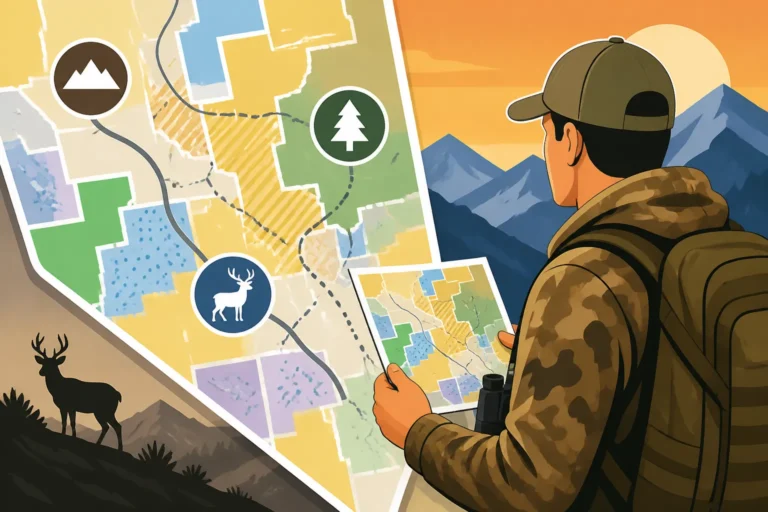
Modern mapping applications are game-changers for identifying camp spots. Tools like onX Hunt and GoHunt allow you to pore over detailed topographic maps and high-resolution satellite imagery from the comfort of your home. Topo maps reveal elevation changes, contours, drainages, and potential flat spots. Look for areas where contour lines spread out, indicating flatter ground, especially on ridge tops or benches rather than valley bottoms where cold air and moisture collect.
Satellite imagery provides a visual confirmation of what those contour lines represent. You can identify patches of timber for shade and wind protection, assess the density of sagebrush, locate potential water sources like ponds or guzzlers, and even spot faint two-tracks that might lead to a secluded spot. Pay attention to vegetation changes, as thicker green areas often indicate water or deeper soil, which can be good or bad depending on the season (think mud). You can even use these tools for E-Scouting a Nevada Unit Before the Season, including potential camp spots.
Identifying Potential Camp Spots Before You Go
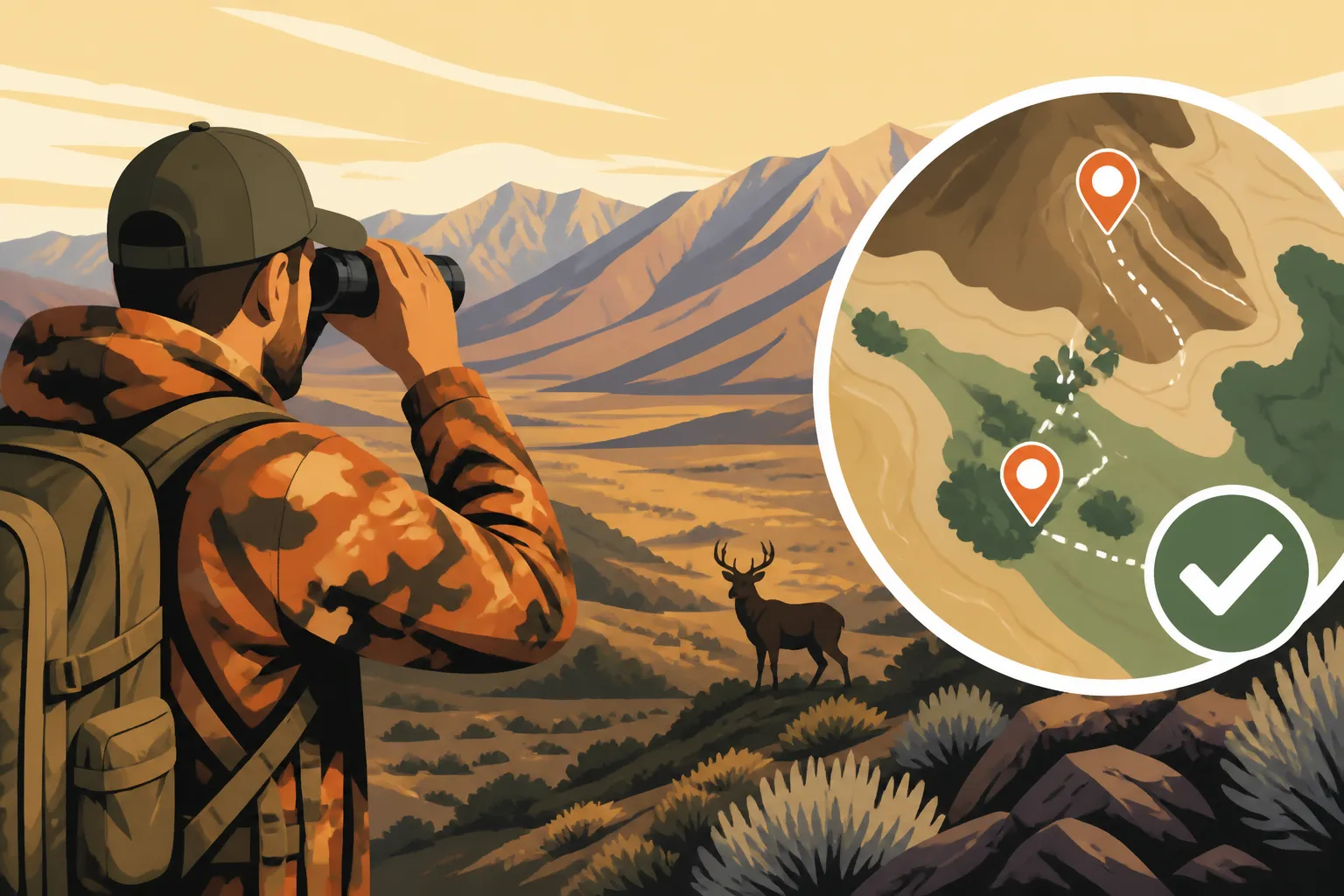
Before you leave, mark several potential camp locations on your digital map. Don't just pick one; have a few backups. Look for:
- Sheltered benches: Often found just below a ridge crest, offering wind protection from above and good visibility.
- Draws with natural cover: A wider draw, especially one with junipers or a slight bend, can offer protection. Avoid narrow, steep-sided washes that could become flash flood hazards.
- Sparse timber patches: In units with trees, look for areas with enough open space for your tent but surrounded by timber for cover and wind breaks.
- Proximity to glassing points: Ideally, your camp allows you to quickly access prime glassing points each morning and evening. Tripod Setup for Glassing From a Ridge is much easier if your camp is nearby.
- Avoid sky-lining: Ensure your camp isn't silhouetted against the skyline, making it visible to game and other hunters.
Remember to consider where you plan to hunt and how your camp location will integrate into your overall strategy. If you're chasing mule deer that move in and out of particular drainages, a camp that gives you good access to those drainages without disturbing them is ideal.
Overlaying Public vs. Private Land Boundaries
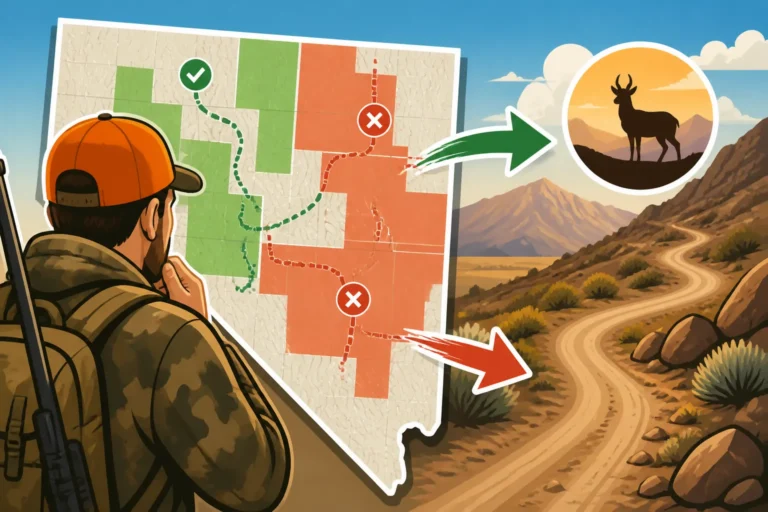
This is where digital mapping truly shines in Nevada. A beautiful, secluded camp spot on satellite imagery can quickly turn into a trespassing nightmare if it's on private land. onX Hunt and GoHunt allow you to overlay public and private land boundaries directly onto your maps. This is absolutely critical for ensuring you're legally camping.
Always double-check these boundaries. Sometimes, private land can stretch surprisingly far into what looks like public access. Be especially careful around agricultural areas, ranchlands, and historical mining claims, many of which remain private. Knowing Reading a Land Ownership Layer Correctly is not just about avoiding trespass, it's about respecting landowners and maintaining a positive image for all hunters. You'll also want to look for Landlocked Public Parcels – fantastic hunting spots, but usually terrible for drive-up camping.
On-the-Ground Reconnaissance and Finalizing Your Spot
Even the best digital scouting can't replace seeing a spot with your own eyes. Once you're in the unit, take the time for a quick visual survey before you commit to unloading your gear.
Assessing Micro-Terrain and Drainage
When you arrive at a promising spot you identified on your map, the first thing to do is walk it. Look for subtle depressions, small rises, and natural drainage paths. Even a gentle slope can funnel water under your tent during a rain shower, or create an uncomfortable sleeping surface. Find the flattest, driest ground available. Consider where water will flow if it rains. Will your tent sit in a puddle? Is there any risk of a flash flood if you're in a wash? Even in dry Nevada, flash floods can be sudden and dangerous.
Look at the ground itself. Is it rocky and difficult to pitch a tent? Is it soft enough for stakes to hold well? Are there sharp objects that could puncture your tent floor? What direction will the morning sun hit your tent? Sometimes, a few yards one way or another can make a huge difference in comfort and dryness.
Considering Game Movement and Hunting Strategy
Your camp isn't just a place to sleep; it's a base of operations. Think about how your camp integrates with your hunting strategy. Is it strategically located to access key areas early in the morning? Does it offer quick access to different drainages or ridges you want to hunt? Is it situated so that you can easily retrieve a downed animal without a massive packing effort? Packing an Animal Out of Roadless Country is a significant consideration, especially for elk or a big mule deer.
Also, consider scent. Even if your camp is concealed, wind can carry your scent far. Try to pick a spot where prevailing winds will carry your scent away from key game areas, especially at first light and last light when animals are most active. You want to be able to exit camp quietly and quickly get into a position to hunt without alerting every animal in the vicinity.
Environmental Impact and Leave No Trace Principles
Finally, always be mindful of your impact on the land. Nevada's wild places are precious, and it's our responsibility to keep them that way. Choose a camp spot that minimizes your footprint. Avoid camping directly on sensitive vegetation, near water sources (give a wide berth to springs and guzzlers especially), or in areas that show signs of previous heavy use.
Pack out everything you pack in, including trash, food scraps, and even micro-trash. Dig catholes for human waste well away from water and trails, and disperse dishwater responsibly. Leave your campsite cleaner than you found it. This isn't just a courtesy; it's essential for preserving access and the health of the ecosystem. Understanding proper Camping Rules on Nevada BLM Ground is crucial for all hunters and outdoor enthusiasts.
Disclaimer
This article is for general informational purposes only and does not constitute professional advice. Laws, prices and regulations vary by location and change over time. Consult a qualified professional for guidance on your specific situation.