Trailhead Parking During Hunting Season
You've spent months e-scouting, poring over draw odds, and finally, you've got that coveted Nevada tag in your pocket. The last thing you want to deal with on opening morning is a frantic search for a parking spot, only to find every pull-off and informal trailhead already overflowing with trucks and trailers. It's a common frustration in the vast but often sparsely accessed public lands of our state, and this guide is here to help you navigate the tricky business of finding a place to stash your rig during hunting season, minimizing stress and maximizing your time chasing game.
The Scramble for a Spot: Why Trailhead Parking is a Real Challenge in Nevada
Nevada might be known for its wide-open spaces and seemingly endless public land, but that doesn't always translate to easy access or abundant parking. Far too often, hunters arrive at what they assume is a "trailhead" only to find a few rutted tracks leading into the sagebrush, or a small gravel pull-off already packed with vehicles. It can be incredibly frustrating and even throw off your entire morning if you're not prepared.
The Popularity Problem and Limited Infrastructure
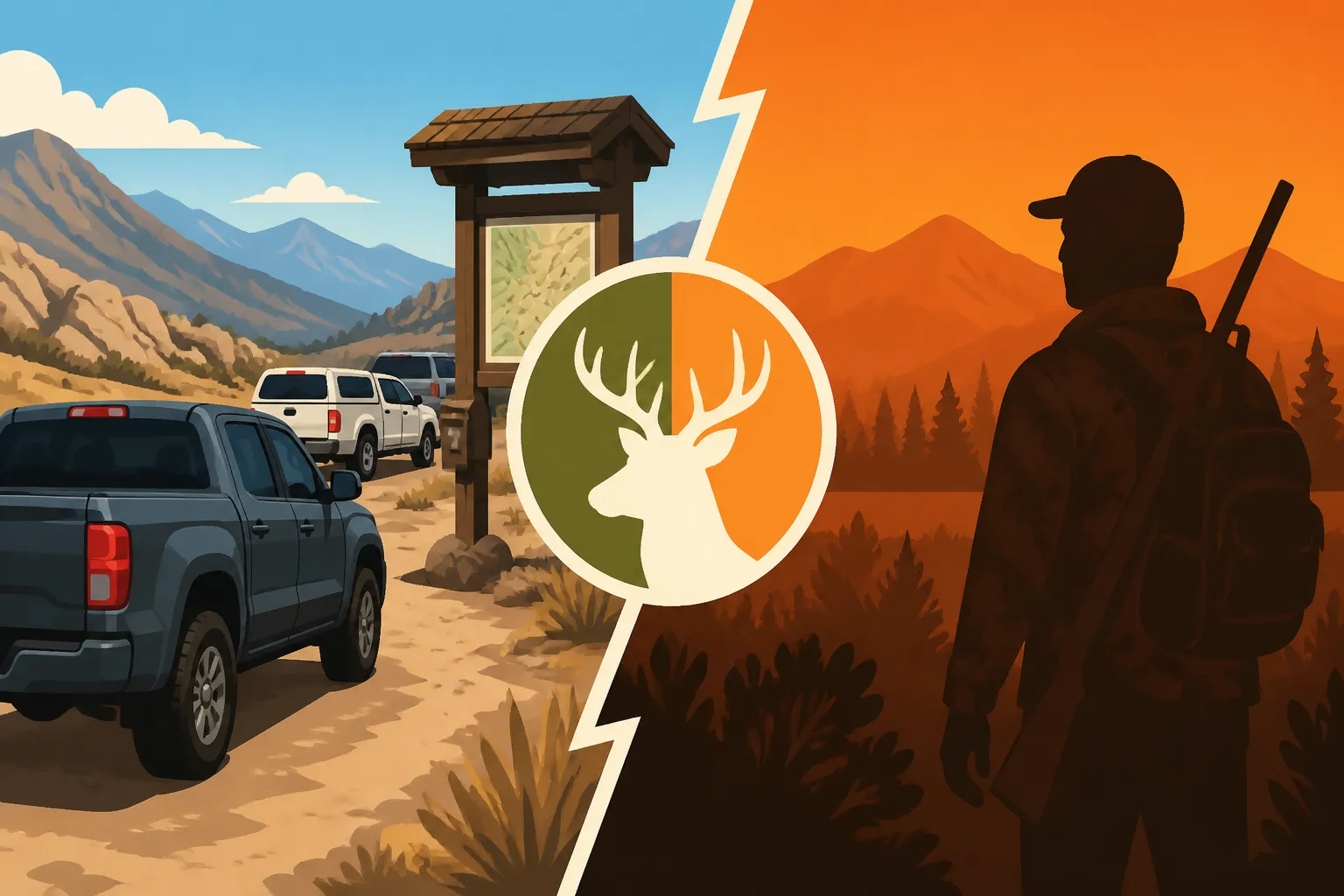
The sheer scale of Nevada's public lands, particularly the immense amount of How Many Acres of BLM Land Nevada Has, means that official, maintained trailheads are few and far between, especially outside of designated recreation areas or wilderness access points. For big game hunting, most "trailheads" are simply wide spots in a dirt road, an old two-track that fades into the brush, or an informal turnout near a cattle guard. When a popular unit opens, especially for a prized species like mule deer or elk, these limited access points become bottlenecks. Everyone has the same idea: get as far into the unit as possible, as quickly as possible. This leads to concentrations of vehicles that can quickly overwhelm the sparse infrastructure.
Imagine you've driven for hours, maybe even all night, to get to a specific ridge line in Unit 111 known for holding big bucks. You arrive in the pre-dawn dark, heart pounding with anticipation, only to see a dozen other rigs already lined up, headlights blazing. Your carefully planned stalk route might now be compromised, or worse, you can't even find a safe, legal place to park without blocking someone in or creating a hazard. It's a rude awakening to the reality of hunting pressure, even in our seemingly empty state.
The Early Bird Gets the Worm… or the Parking Spot
There's an old adage that holds true in Nevada hunting: the early bird gets the worm. When it comes to parking, it often means the earliest bird gets the only spot. Many seasoned Nevada hunters aren't just arriving an hour before legal shooting light; they're pulling in the afternoon or evening before, setting up a camp right at or near their intended access point. This allows them to wake up, grab their gear, and be walking into the darkness while others are still navigating dirt roads.
Consider an archery deer opener in August. You might find trucks already parked near Hunting Water in Nevada's Driest Country locations days before the season even starts. This strategy, while effective for securing a spot, also highlights the competition. If you're planning a day trip and arrive at a popular access point at 4:30 AM, you might be out of luck. Sometimes, the best strategy is to be the first one there, or to identify multiple potential parking locations as backup plans. Camping Legally on Nevada BLM Ground can be a great way to secure your spot and beat the morning rush.
Scouting for Success: Finding Your Parking Before You Go
The best defense against trailhead parking woes is a good offense: thorough pre-season scouting. This doesn't just mean finding game sign or glassing promising ridges; it means actively identifying and planning your parking strategy. Trust me, a little homework now can save you a lot of headache, and precious hunting time, later.
Digital Tools Are Your Best Friend
In today's hunting world, digital mapping applications are absolutely indispensable for Nevada. Tools like onX Hunt or GoHunt aren't just for locating property boundaries or glassing grids; they're incredibly powerful for dissecting potential access and parking. Before you ever leave home, pull up your unit on one of these apps and zoom in.
Look for wide spots in roads, existing pull-offs, or clearings that might accommodate a few vehicles without impeding traffic. Switch between satellite imagery and topo maps to get a full picture. Satellite view can often show faint two-tracks, old logging roads, or even areas where other vehicles have clearly parked in the past. Use the public land layers to confirm you're on accessible ground and not inadvertently encroaching on private property. Pay close attention to unit boundaries, which you can easily confirm by Reading a Nevada Unit Boundary Before You Apply. By digitally "driving" these roads and evaluating potential parking areas, you can identify primary and secondary options, even dropping pins on your map so you know exactly where to aim in the dark. This kind of E-Scouting a Nevada Unit Before the Season is a game-changer.
Physical Reconnaissance and Local Knowledge
While digital tools are amazing, nothing beats boots on the ground. If at all possible, try to make a pre-season scouting trip to your unit. This allows you to physically drive the access roads, assess their condition (which can be a huge factor given Vehicle Prep for Remote Nevada Roads), and visually confirm potential parking areas. What looks like a good pull-off on a satellite image might be impassable due to washouts, or it might be much smaller than anticipated.
During a scouting trip, you can also look for less obvious access points – maybe a faint trail that isn't marked on any map, or a spot where local hunters have clearly been parking for years. While you're there, check out the roads. Are they muddy? Rocky? Are there deep ruts that will challenge your 2WD truck? Understanding Nevada's Roads Are Long and Its Services Are Far Apart and their current state is crucial. Sometimes, striking up a conversation with a local rancher or a seasoned hunter at the general store can also yield invaluable insights into less-used access points or parking strategies for a specific area. These folks often have decades of firsthand experience and know the ins and outs of local access better than any map.
Smart Parking Strategies for Nevada Hunters
Once you've done your homework, it's time to put your parking plan into action. Even with the best preparation, you might encounter unexpected challenges, so having a few strategies up your sleeve is always a good idea.
Respecting the Rules and Avoiding Issues
Proper parking isn't just about finding a spot; it's about doing it responsibly and legally. Nevada's public lands are shared resources, and showing respect for the land, other users, and private landowners is paramount.
| Do's for Trailhead Parking | Don'ts for Trailhead Parking |
|---|---|
| Park completely off the main travel way. | Block gates, private drives, or access routes. |
| Leave ample room for other vehicles to pass. | Create new roads or drive off-road to park. |
| Consider pulling off far enough for a trailer if needed. | Park on private land without explicit permission. |
| Secure your vehicle and hide valuables. | Leave trash or evidence of your presence. |
| Have recovery gear in case of soft ground. | Park in areas clearly marked "No Parking." |
| Inform someone of your parking location. | Leave your vehicle unattended for days without a plan. |
It might seem obvious, but never, ever block a gate, even if it appears unused. That gate might be vital for a rancher's livestock management or emergency access. Similarly, don't park in a way that creates a traffic hazard, especially on narrow dirt roads. Always remember the Motorized Travel Rules on Nevada Public Land which generally require you to stay on existing roads and trails. Creating new tracks to get a "better" parking spot can lead to habitat degradation and fines. If you're parking on the shoulder of a less-traveled road, especially in low light conditions, consider placing reflective triangles or an orange vest on your vehicle to make it more visible to other early-morning drivers.
Alternative Access and Creative Solutions
Sometimes, the best parking spot isn't the closest one. If your primary access point is jammed, or you're simply seeking more solitude, consider alternative strategies:
- Park Further Out and Walk In: This is often the simplest solution. Park a mile or two down the road from the main choke point, or find a less obvious pull-off even further out. Yes, it means a longer walk, but it can also put you deeper into quiet country away from other hunters. This is especially true if you are hunting a unit where Packing an Animal Out of Roadless Country is a strong possibility anyway.
- Utilize Mountain Bikes: For areas with old two-tracks or decent dirt roads that are closed to motorized vehicles, a mountain bike can be a fantastic way to cover ground quickly from a more remote parking spot. You can carry more gear than walking, and it's quiet. Just make sure the trails you plan to use are open to bikes.
- Carpool with Partners: If you're hunting with a buddy, consolidate vehicles. One truck means one parking spot to find, and it saves on fuel and wear-and-tear. You can even use one vehicle to drop off hunters and then park the other further away, picking up the team later.
- Identify Less-Used Access Points: These might not be obvious "trailheads" but simply legal points where a public road meets the boundary of a wilderness study area or an open expanse of BLM land. They might require a longer, harder hike, but they also promise less pressure and more pristine hunting ground. These locations might only be discernible through diligent e-scouting with mapping apps, identifying faint roads or old mining tracks that aren't widely known.
Safety and Security for Your Vehicle
You're out in the Nevada backcountry, likely miles from the nearest town, and cell service is spotty at best. Your vehicle is your lifeline, and protecting it while you're afield is just as important as protecting yourself.
Protecting Your Ride in Remote Nevada
Before you even leave home, give your vehicle a thorough check-up. The brutal, rocky, and often unmaintained dirt roads of Nevada are notorious for causing flats, broken suspension components, and other mechanical nightmares. A spare tire (and the tools to change it), a jack, and ideally, two spares if you're going deep, are non-negotiable. Don't forget recovery gear like a shovel, traction boards, and a tow strap; it’s not if you'll get stuck, but when in some of these remote areas. Read up on general Vehicle Prep for Remote Nevada Roads to ensure you're as ready as possible.
When you park, even if it's in a seemingly empty spot, always lock your doors and hide any valuables. While hunters are generally an honest bunch, opportunistic theft does happen. Don't tempt fate by leaving expensive optics, electronics, or firearms in plain sight. If you have a canopy, make sure it's secure. Also, be mindful of where you park in relation to other vehicles. If you're leaving your truck for a few days, make sure it's not blocking anyone else in or on a slope where the parking brake might fail.
Informing Others and Emergency Plans
This is probably one of the most critical safety measures. Always, always, always tell someone reliable where you are going, where you plan to park, your intended route, and when you expect to return. This "trip plan" is vital for search and rescue if something goes wrong. Be as specific as possible about your parking location – dropping a GPS pin and sharing it with your contact is ideal.
Because Cell Coverage Across Nevada Hunt Units is notoriously unreliable in many prime hunting areas, consider carrying a satellite communication device like an inReach or Zoleo. This allows you to check in, send emergency messages, and share your location even when your phone has no signal. For more information on these devices, check out Satellite Messenger Use in Remote Country. In a pinch, if you're leaving your vehicle for an extended period in an unusual spot, you might consider leaving a note on your dash with your name, contact information for an emergency contact, and your expected return date. This can be helpful if authorities or concerned citizens find your vehicle and are wondering if someone is in distress.
Disclaimer
This article is for general informational purposes only and does not constitute professional advice. Laws, prices and regulations vary by location and change over time. Consult a qualified professional for guidance on your specific situation.