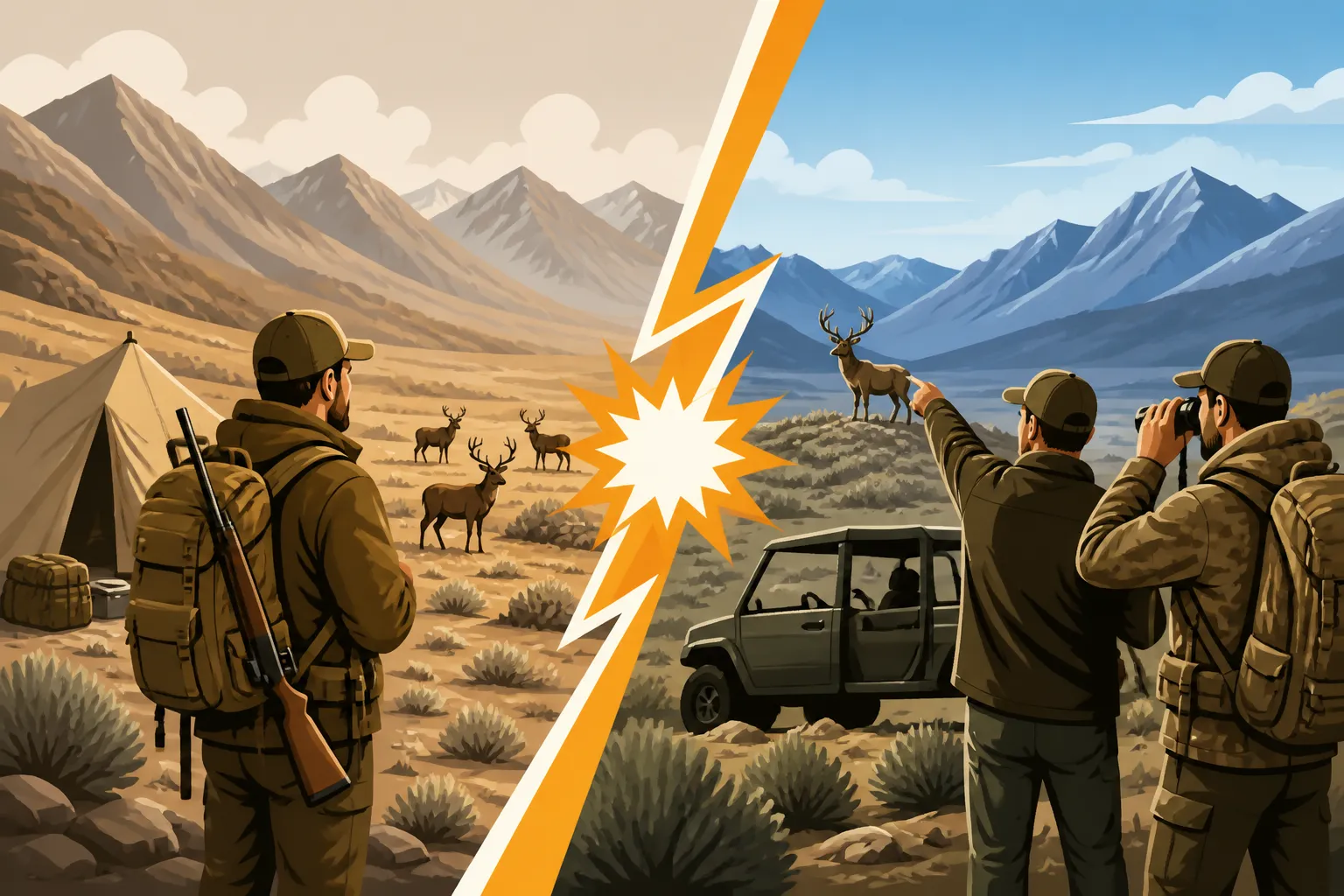
Drop Camp Against Fully Guided
Deciding how to tackle a big game hunt in Nevada can feel like a high-stakes gamble, especially when you're dreaming of vast open country and elusive animals. Many hunters struggle with the fundamental choice: do you go for the full support of a guided hunt, or embrace the independence of a drop camp? This guide will break down the crucial differences between these two popular options, helping you understand what each entails so you can make the best decision for your next Nevada adventure.
Understanding the Fully Guided Nevada Hunt Experience
A fully guided hunt in Nevada is often considered the gold standard for those seeking a comprehensive, hands-off experience. You're essentially buying into an outfitter's expertise, local knowledge, and logistical support, allowing you to focus almost entirely on the hunting itself. It removes many of the stresses associated with planning and executing a hunt in challenging, unfamiliar territory.
The All-Inclusive Nature of Fully Guided Hunts
When you book a fully guided hunt, you're typically signing up for an all-encompassing package. This means the outfitter provides everything from pre-scouted areas and transportation in the field to meals, lodging, and often, assistance with game retrieval and initial processing. They know the terrain, the game movement patterns, and often have private land access or extensive public land permits that would be difficult for an individual hunter to secure. Imagine flying into Elko, getting picked up by your guide, and then heading straight to a comfortable camp where everything is already set up and waiting for you. This level of service is precisely what draws many hunters, especially those traveling long distances or with limited time.
The guides are there to interpret game sign, strategize stalks, call animals, and ensure your safety in potentially remote and rugged conditions. This can be invaluable in Nevada's vast and often unforgiving landscape, where knowing where to find water or how to navigate a particular canyon can make or break a hunt. They have often spent weeks or even months in the field prior to your arrival, patterning animals and monitoring activity. For a deeper dive into what such a package might include, you might want to read What a Fully Guided Nevada Elk Hunt Includes.
What a Typical Day Looks Like
A typical day on a fully guided hunt starts early, often before dawn, with a hearty breakfast prepared by camp staff or the guide themselves. After a quick briefing on the day's plan, you'll head out, usually by truck, ATV, or even horseback, to a strategic glassing point or known game area. The guide will lead the way, constantly scanning the landscape with high-powered optics, looking for your target species. They'll be watching wind direction, thermals, and escape routes, all while helping you stay safe and comfortable.
Once an animal is spotted, the real work begins: the stalk. Your guide will direct your movements, advising on terrain, cover, and how to approach silently. This is where their experience truly shines, as they can often get you into shooting range of animals that would be impossible to approach alone. After a successful harvest, the guide and any assistants will help with field dressing, packing out the animal, and transporting it back to camp or a processing facility. Evenings are spent back at camp, enjoying a good meal, swapping stories, and planning for the next day's adventure.
When a Fully Guided Hunt Makes Sense
A fully guided hunt is often the right choice for hunters who:
- Lack experience in the specific terrain or species: If you're new to hunting desert mule deer or mountain elk in Nevada, a guide's expertise is a massive advantage.
- Have limited time for scouting and planning: Busy schedules often prevent hunters from dedicating the necessary time to e-scouting and on-the-ground preparation. A guide handles all of this.
- Seek a higher probability of success: While no ethical guide can guarantee a kill, their local knowledge and dedication significantly increase your odds.
- Value comfort and convenience: From warm meals to comfortable sleeping arrangements, guided hunts reduce the physical demands beyond the actual hunt.
- Are physically challenged or require assistance: Guides can adapt hunts to various physical abilities, ensuring everyone has a chance to participate safely.
- Are applying for high-value tags: For once-in-a-lifetime tags like bighorn sheep or trophy elk, many hunters opt for a guide to maximize their investment and opportunity. This is especially true given the expense of A Nonresident Nevada Elk Tag Runs $1,200.
Diving into the Nevada Drop Camp Experience
The drop camp, on the other hand, offers a blend of support and independence. It's for hunters who want to experience remote backcountry without the burden of packing in all their gear, but who also prefer to hunt on their own terms, without a guide constantly by their side. It's a fantastic middle ground for those with some hunting experience and a desire for more self-reliance.
The Essentials of a Drop Camp
A drop camp outfitter provides the heavy lifting: transportation, usually by horseback or ATV, into a remote backcountry location, along with essential camp infrastructure. This typically includes a sturdy wall tent, cots, a wood stove, and perhaps some basic cooking gear and water jugs. They "drop" you and your hunting partners off with all your personal gear, food, and weaponry, then pick you up on a predetermined date. The outfitter usually sets up the camp in an area they know holds game or provides good access to prime hunting grounds.
You bring your own food, sleeping bags, optics, firearms, and all personal effects. Once you're dropped off, you are entirely self-sufficient for the duration of your hunt. This means you're responsible for all cooking, cleaning, navigating, and, crucially, making all your own hunting decisions. Think of it as having a backcountry basecamp delivered to you, rather than packing it in on your back. For those interested in this mode of transport, learning about Horseback and Pack String Outfitters is key.
The Level of Independence Required
The defining characteristic of a drop camp is independence. You and your hunting partners are the decision-makers. You choose where to hunt each day, when to wake up, what to eat, and how to conduct your stalks. This requires a significant amount of self-reliance, wilderness skills, and hunting acumen. You'll need solid navigation skills, often using GPS or mapping apps like those found on GoHunt, coupled with traditional map and compass knowledge, as cell service is rare in these remote areas. You're also solely responsible for field dressing, quartering, and potentially packing out your animal back to the drop camp before the outfitter returns.
Emergency preparedness is paramount. While the outfitter provides a camp, you are responsible for first aid, satellite communication devices, and knowing how to handle unexpected situations, from equipment failures to minor injuries. This level of autonomy can be incredibly rewarding, offering a profound sense of accomplishment when you successfully navigate, hunt, and retrieve an animal without direct guidance.
Who Benefits Most from a Drop Camp
Drop camps are an excellent fit for hunters who:
- Have solid hunting and wilderness experience: You should be comfortable navigating, reading sign, and making tactical hunting decisions on your own.
- Possess good physical conditioning: While you don't pack in the camp, you'll be covering rugged terrain daily, often at elevation. The physical demands of Preparing Physically for Long Glassing Days or packing out an animal are significant.
- Seek a more challenging and self-reliant experience: The satisfaction of a self-found and self-executed hunt is a huge draw for drop camp enthusiasts.
- Are looking for a more affordable backcountry option: Generally, drop camps are less expensive than fully guided hunts, as you're not paying for the daily presence of a guide.
- Hunt with a trusted group of partners: A drop camp thrives on teamwork within a group, where responsibilities can be shared.
- Are comfortable with basic camp chores: From tending the fire to cooking meals, you'll be doing it all.
Key Differences: A Side-by-Side Comparison
To truly understand which option is right for you, it helps to put them head-to-head across several critical factors. This isn't about one being "better" than the other, but rather which aligns more closely with your personal hunting style, budget, and experience.
Cost Implications and Value for Money
The financial investment is often the most significant differentiator. Fully guided hunts are, almost without exception, considerably more expensive than drop camps. This is due to the extensive services provided, including the guide's daily wage, camp staff, food, fuel, and the overall logistical complexity. For example, a multi-day guided elk hunt could run into the thousands or tens of thousands of dollars, depending on the species and duration. The value here lies in the convenience, increased success potential, and reduced stress. You're paying for expertise and an all-inclusive experience.
Drop camps, while still an investment, offer a more budget-friendly route into remote areas. You're paying for the transport of gear and establishment of a basic camp, but not for the daily guiding service. The cost typically covers the pack-in/pack-out service and the use of the equipment. This allows hunters to access areas they might not be able to reach on their own, for a fraction of the cost of a fully guided trip. The value here is in affordable access to remote hunting, combined with the freedom to hunt independently. To learn more about specific pricing, you can research various outfitters on platforms like BookYourHunt or directly inquire about their "Drop Camp Against Semi-Guided Hunts" offerings.
Logistics, Gear, and Responsibilities
Logistically, the differences are stark. A fully guided hunt requires minimal personal logistics beyond packing your clothes, rifle, and personal gear. The outfitter handles permits, transportation to the hunting grounds, and all camp needs. Your primary responsibility is to show up ready to hunt, follow your guide's instructions, and ethically harvest an animal. Even things like Packing an Animal Out of Roadless Country are usually managed by the guide.
With a drop camp, you bear much more of the logistical burden. You're responsible for planning all your meals, packing every item of food, cooking fuel, first aid, and ensuring you have reliable navigation tools. While the outfitter packs your gear in, you must organize and pack it for efficient use in camp. You're also fully responsible for field dressing, quartering, and preparing your animal for the return trip, which means you need to be proficient in these skills. This means careful planning, often starting weeks or months before the hunt, to ensure you haven't forgotten anything vital for your self-sufficient stay in the backcountry.
Skill Level and Experience Match
The required skill level varies significantly. A fully guided hunt is suitable for hunters of all experience levels, including novices. The guide's expertise fills any gaps in your knowledge or experience, teaching you on the go. It’s an excellent way to learn about a new type of hunting or a specific species.
A drop camp, however, demands a higher level of existing hunting and backcountry skill. You need to be confident in your ability to track, stalk, field judge animals, navigate, and survive in potentially harsh conditions. It’s ideal for seasoned hunters who enjoy the challenge of figuring things out for themselves but recognize the practical limitations of packing a full camp into remote wilderness. If you're pondering a specific unit, understanding Reading a Nevada Hunt Unit Before You Apply becomes even more critical for a drop camp hunter, as you'll be your own expert.
Here's a quick comparison table:
| Feature | Fully Guided Hunt | Drop Camp Hunt |
|---|---|---|
| Cost | Significantly Higher | Moderately Lower |
| Logistics Handled | All major logistics (transport, camp, food, guide) | Camp setup, heavy gear transport (pack-in/pack-out) |
| Independence | Minimal; guide makes key decisions | High; you make all hunting & camp decisions |
| Required Skills | Low to Moderate (guide leads) | High (navigation, game care, backcountry survival) |
| Comfort Level | High (prepared meals, comfortable camp) | Moderate (self-cooked meals, basic camp amenities) |
| Success Rate | Generally higher (due to guide expertise) | Varies by hunter skill & conditions |
| Game Retrieval | Typically handled by guide/outfitter | Hunter's responsibility to retrieve to camp |
| Pre-Hunt Prep | Minimal for hunter (gear packing, physical prep) | Extensive for hunter (meal planning, gear, navigation) |
Choosing Your Adventure: Factors to Consider
With a clearer picture of each option, how do you decide which one aligns with your hunting aspirations for Nevada? It boils down to a careful assessment of several personal factors.
Assessing Your Budget and Time Commitment
Your budget is undeniably a major player in this decision. As discussed, fully guided hunts represent a substantial financial commitment. If you have the means and prefer to maximize your hunting time by offloading all logistics, this might be your preferred route. Consider not just the base price, but also potential additional costs like license fees, tag fees (which can be considerable for a nonresident; see Nevada Nonresident Tag Pricing by Species), trophy fees, and tips for guides and staff.
Drop camps offer a fantastic way to stretch your hunting dollar further while still getting into primo backcountry. The lower upfront cost means you might be able to afford a longer hunt, or perhaps invest more in quality gear that will serve you on future independent adventures. Time commitment is also a factor. While a guided hunt might be shorter in duration, the time you save on planning and execution can be significant. A drop camp, while offering more flexibility in daily schedule, demands more of your personal time for meticulous pre-hunt preparation and in-the-field duties.
Evaluating Your Hunting Skills and Physical Condition
Be honest with yourself about your current skill set. If you're an experienced hunter who regularly navigates off-trail, can quickly field dress an animal, and is proficient with your weapon of choice in various conditions (e.g., Choosing a Rifle for Basin and Range Country and shooting effectively at distance), a drop camp might be incredibly rewarding. If you're still developing these skills, a guided hunt offers a safer and more educational experience where you can learn from a pro.
Physical conditioning is equally crucial, especially in Nevada's rugged terrain. Both types of hunts will demand stamina, but a drop camp requires consistent effort without a guide there to push you or offer constant encouragement. You'll be climbing steep slopes, navigating uneven ground, and potentially packing heavy loads. If you're not in top physical shape, a fully guided hunt can often be tailored to your abilities, or at least provide more support during physically demanding moments. For general physical readiness, consider tips on Preparing Physically for Long Glassing Days.
Researching Outfitters and Their Offerings
Regardless of whether you choose a fully guided or drop camp experience, thorough research into potential outfitters is non-negotiable. Look for outfitters with a solid track record in Nevada for the species you're pursuing. Check their licensing, insurance, and read client testimonials. Don't be shy about asking for references and actually calling them. A good outfitter will be transparent about their services, costs, and what you can expect. This is where resources like BookYourHunt can be invaluable for finding reputable operations, and forums or online communities on platforms like GoHunt often provide real-world insights into specific outfitters.
When contacting outfitters, ask specific questions about what's included and, just as importantly, what isn't. For drop camps, clarify what equipment they provide versus what you need to bring. For guided hunts, inquire about the guide-to-hunter ratio, typical success rates, and contingency plans for emergencies or inclement weather. Understanding Questions to Ask a Nevada Outfitter before you book can save you a lot of grief down the line. Make sure their booking and cancellation policies align with your expectations, particularly concerning refunds if you fail to draw a tag. Understanding Deposits and Cancellation Terms in Nevada is a crucial step.
Preparing for Your Chosen Nevada Hunt
Once you've made your decision, the real work of preparation begins. Whether it's a guided hunt or a drop camp, Nevada demands respect and preparation.
Physical and Mental Conditioning
Even with a guide doing much of the heavy lifting, hunting in Nevada is physically demanding. You'll be walking, climbing, and spending long hours glassing. Start a fitness regimen months before your hunt that focuses on cardio, strength, and endurance. Practice hiking with your loaded pack over varied terrain. For a drop camp, this is even more critical, as you'll be responsible for all physical tasks yourself. Mental conditioning is also vital. The vastness of Nevada can be intimidating, and hunts often involve long periods of no action, followed by intense, high-pressure moments. Develop patience, perseverance, and the ability to stay focused under stress. Being mentally prepared for the challenges of a multi-day hunt, especially in variable weather, is just as important as physical readiness.
Consider practicing with your chosen firearm or archery equipment regularly and under realistic conditions. If you'll be shooting from odd positions or after exertion, simulate that in practice. For archery hunters, understanding How Close a Bowhunter Needs to Get on Mule Deer highlights the precision and physical demands involved.
Gear, Logistics, and Contingency Planning
Your gear list will vary depending on your choice, but quality is paramount for any Nevada hunt. For both options, invest in good optics (binoculars, spotting scope, rangefinder), appropriate layered clothing for drastic temperature swings, sturdy boots, and a reliable backpack. For a drop camp, your gear list will be far more extensive, including everything from cooking supplies and first aid kits to a satellite communication device and reliable navigation tools. You’ll be your own outfitter, so ensure you have everything needed for self-sufficiency.
Regardless of your choice, a thorough logistical plan is essential. This includes travel arrangements, contact information for emergencies, and a detailed itinerary shared with someone not on the hunt. For those hunting in areas without cell service, a satellite messenger is a must. Contingency planning means thinking through "what if" scenarios: what if the weather turns bad, someone gets injured, or you successfully harvest an animal far from camp? Having a plan for these situations is critical for safety and success. In the heat of an August archery hunt, for instance, proper Heat Management on an August Archery Hunt and game care is a critical contingency.
Understanding Nevada Regulations
Always, always, always be intimately familiar with the current Nevada hunting regulations. These rules cover everything from legal shooting hours and blaze orange requirements to tagging procedures and species-specific rules. Regulations can change, so never rely on outdated information. You can usually find the most current regulations on the Nevada Department of Wildlife (NDOW) website. Your outfitter will be knowledgeable, but ultimately, it's your responsibility as a hunter to ensure compliance.
For drop camp hunters, understanding rules like Baiting and Trail Camera Rules in Nevada or Motorized Travel Rules on Nevada Public Land is vital, as you'll be operating independently. Even on a guided hunt, knowing the rules empowers you to be a responsible participant and ensures you're prepared for proper tagging and reporting post-harvest. It’s important to know the boundaries, species, and season dates for your specific unit and weapon.
Disclaimer
This article is for general informational purposes only and does not constitute professional advice. Laws, prices and regulations vary by location and change over time. Consult a qualified professional for guidance on your specific situation.