Vehicle Support on a Remote Nevada Hunt
Venturing into Nevada's vast, wild landscapes for a hunt is an experience unlike any other, but it comes with a steep learning curve, especially when it comes to your vehicle. Many hunters underestimate the brutal punishment these remote, unmaintained roads dish out, leading to breakdowns miles from anywhere, turning a dream hunt into a desperate survival situation. This guide is all about equipping you with the knowledge and preparation to ensure your vehicle is a reliable partner, not a weak link, in the face of Nevada's unforgiving backcountry.
The Harsh Realities of Nevada's Backcountry Roads
You might have driven plenty of gravel roads in other states, but Nevada's backcountry is in a league of its own. It's not just "rough"; it's a constantly evolving challenge that can quickly turn a well-planned trip into an ordeal. The sheer scale of the state means you're often covering immense distances on roads that see minimal maintenance, if any at all.
Understanding the Terrain and Road Conditions
Imagine driving across miles of exposed volcanic rock, sharp and jagged, just waiting to slice a sidewall. Or traversing long stretches of deep, soft sand where your tires just dig in deeper and deeper with every revolution. Then there are the washouts – sudden, unexpected dips and gullies carved by flash floods that can swallow a wheel and leave you high-centered in a heartbeat. Throw in sections of loose, embedded gravel that feels like marbles under your tires, constantly threatening to throw your vehicle sideways, and you start to get the picture.
These aren't your county-graded dirt roads. These are often old mining tracks, cattle trails, or simply routes that have naturally formed over decades, shaped by erosion, weather, and the occasional rancher's truck. Your vehicle's tires, suspension, and undercarriage will take a beating that most street-driven trucks never experience. It's not a matter of if you'll hit something nasty, but when. Preparing for this reality is the first step toward a successful and safe hunt.
The Isolation Factor: Miles from Help
One of the most beautiful, yet daunting, aspects of hunting in Nevada is the profound isolation. You can drive for hours and not see another soul, not another vehicle. This solitude is part of the allure, but it also amplifies any problem you might encounter. A flat tire in a suburban neighborhood is an inconvenience; a flat tire 50 miles down a remote two-track, with no cell service and sundown approaching, is a serious predicament.
Cell phone signal is a rare luxury once you leave the main highways. Expect large swathes of the state to be dead zones, making calling for help impossible. The distances between towns, even small ones, are vast. Running out of water, getting stuck, or suffering a mechanical failure can mean a long, potentially dangerous walk out, or worse, an overnight stay in conditions you weren't fully prepared for. This extreme isolation means you absolutely must be self-reliant, carrying everything you need to fix common problems and survive an unexpected delay. You might want to brush up on Satellite Messenger Use in Remote Country to keep lines of communication open, even when your phone won't work.
Essential Vehicle Modifications and Preparations
Thinking your stock pickup is good enough for a Nevada hunt is a common mistake. While it might get you to some trailheads, truly accessing the remote, prime hunting grounds often requires some significant upgrades and meticulous preparation. Your vehicle is your lifeline to those distant ridges and secluded canyons.
Tire Choices and Spares: Your First Line of Defense
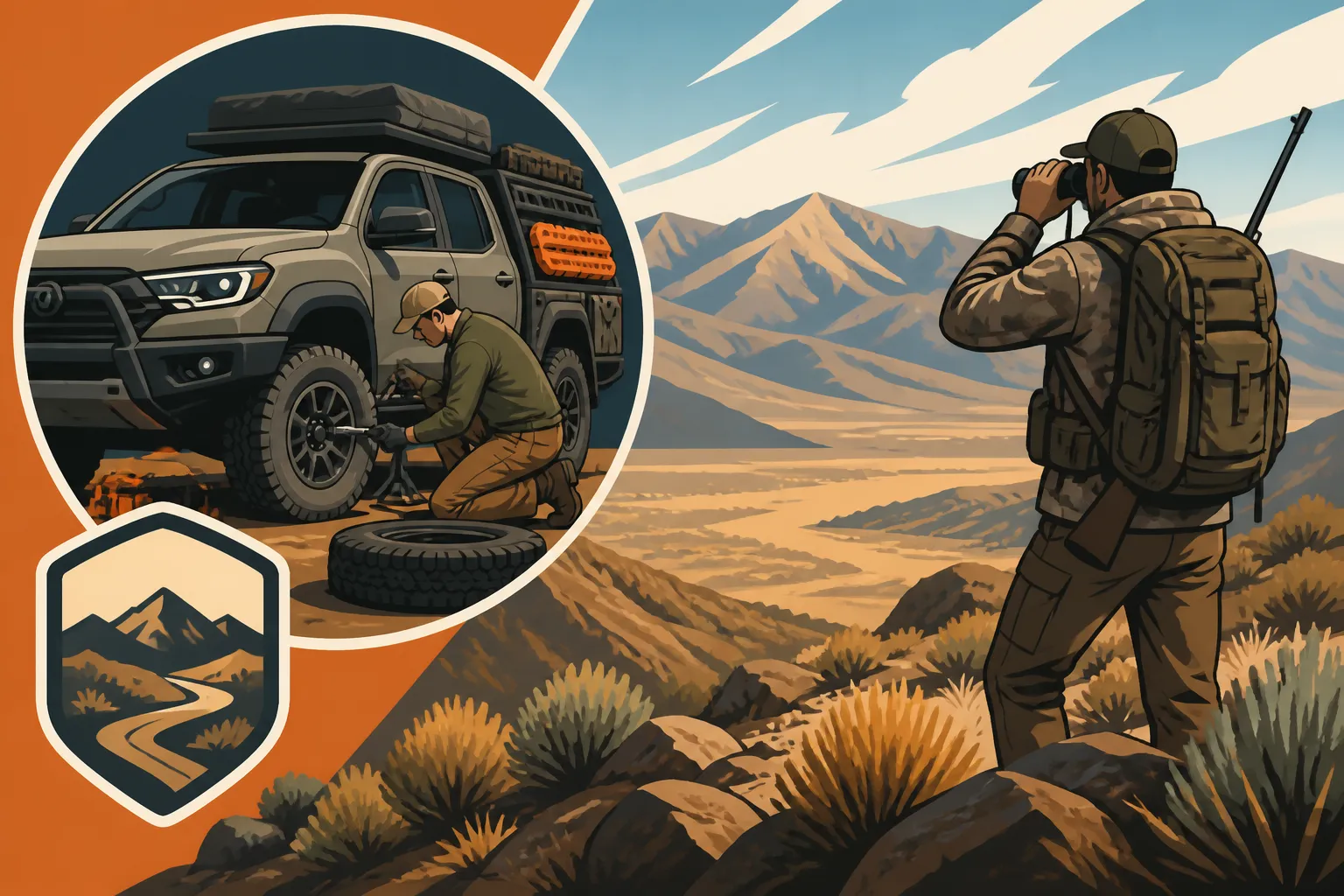
Tires are arguably the most critical component for any remote Nevada hunt. Those highway-tread all-season tires are simply not going to cut it. You need tires designed for abuse. All-terrain (AT) tires with robust, multi-ply sidewalls are a minimum, offering a good balance between off-road traction and on-road manners for the long drives between pavement and dirt. For truly gnarly conditions, mud-terrain (MT) tires offer even more aggressive tread for deep sand, mud, and rock crawling, though they can be noisy and less comfortable on the highway.
Beyond the type of tire, quantity is paramount. A single spare tire is often insufficient. Consider carrying two full-size spare tires, especially if you plan to venture deep into the backcountry for extended periods. A blown sidewall or an unrepairable puncture means your one spare becomes your only option. You also need to run appropriate tire pressure. Lowering your tire pressure on rough roads can increase traction and soften the ride, but also makes them more vulnerable to pinches and punctures. Conversely, over-inflated tires on washboard roads can lead to a very jarring ride and increased risk of damage. Always re-inflate to highway pressure once you're back on pavement.
Suspension Upgrades for the Long Haul
A factory suspension is designed for comfort and light hauling, not for sustained abuse over uneven terrain with a fully loaded hunting rig. Heavy-duty springs and shocks are a wise investment. They not only provide better articulation and ground clearance but also handle the added weight of gear, fuel, water, and eventually, a harvested animal, without sagging or bottoming out. A tired, stock suspension can quickly fail, leaving you with a dangerously unstable vehicle and potential damage to other components.
Consider components like upgraded leaf springs, stronger coil springs, and high-performance shocks that are designed to dissipate heat better and resist fade during long, punishing drives. Protecting vulnerable components like tie rods, CV axles, and brake lines with additional armor or repositioning can prevent catastrophic failures that leave you completely stranded. Remember, a suspension that can flex and absorb impact will keep your tires on the ground, your body happy, and your vehicle moving forward.
Underbody Protection and Recovery Points
When your truck bottoms out on a rock or slides off a washout, your fuel tank, transfer case, oil pan, and differential housing are incredibly vulnerable. Installing robust skid plates made of steel or thick aluminum is non-negotiable for serious backcountry travel. These plates act as a sacrificial layer, absorbing impacts that would otherwise puncture vital components and end your hunt. Rock sliders, which protect your rocker panels, are also a smart addition, especially when navigating narrow trails or driving over larger obstacles.
Equally important are proper recovery points – solid, frame-mounted attachment points at both the front and rear of your vehicle. Factory tow hooks are often sufficient for light duty, but for serious winching or kinetic strap recoveries, dedicated, reinforced recovery points are essential. Never, ever use a hitch ball as a recovery point; they can snap off under load and become lethal projectiles. Having secure points ensures that if you do get stuck, you can safely extract your vehicle without causing further damage to your rig or risking injury to anyone involved.
Critical Gear for Vehicle Self-Recovery
Even with the best preparations and modifications, getting stuck is an inevitable part of remote Nevada hunting. The difference between a minor inconvenience and a full-blown emergency often comes down to the recovery gear you have on hand and your knowledge of how to use it safely.
Winches, Straps, and Jacks: Getting Unstuck
A good winch is the ultimate self-recovery tool. Whether electric or hydraulic, a winch mounted to the front (or rear) of your vehicle, paired with a heavy-duty synthetic rope or steel cable, can pull you out of almost any bind. Make sure it's rated for at least 1.5 times your vehicle's gross weight. But a winch is only as good as its accessories. You'll need tree savers, snatch blocks (for multiplying pulling power and changing direction), and heavy-duty shackles. Always practice safe winching techniques, including using a winch dampener and keeping onlookers clear.
Recovery straps are equally vital. A kinetic recovery strap (often called a "snatch strap") is designed to stretch and then rebound, using the momentum of a second vehicle to smoothly pull a stuck vehicle out. A static recovery strap is non-stretching and used for winching or towing. A high-lift jack can be a lifesaver for lifting a vehicle to get rocks under the tires, change a tire on uneven ground, or even aid in winching. Pair it with a proper jack base to prevent it from sinking into soft ground. It's a heavy, potentially dangerous tool, so learn to use it properly and safely.
Air, Tools, and Fluids: Maintaining Your Rig
The ability to air down your tires for traction and then air them back up is crucial. An onboard air compressor, or at least a portable heavy-duty 12V unit, is essential. Carry a quality tire repair kit with plugs and patch materials for small punctures. Remember, a tire can be perfectly fine one minute and then rapidly losing air the next due to sharp rock. Knowing how to plug a tire can save you hours or even days.
A comprehensive, yet practical, tool kit is your mechanic on the go. This should include a full set of wrenches and sockets (metric and standard for many vehicles), pliers, wire cutters, screwdrivers, a hammer, zip ties, duct tape (always!), and some spare nuts and bolts. Knowing basic vehicle mechanics, like how to change a serpentine belt or bleed brakes, can be invaluable. Don't forget spare fluids: engine oil, transmission fluid, coolant, brake fluid, and even power steering fluid. A minor leak can turn into a major problem if you can't top it off.
Navigation and Communication in the Outback
In areas where cell service is non-existent, reliable navigation and communication become paramount. A dedicated GPS unit or a robust GPS app on your smartphone (like the one offered by GoHunt for offline maps) with pre-downloaded maps is essential. These maps should include topo lines, roads, and land ownership boundaries. A paper map and a compass are not just backups; they are a fundamental part of your kit. Batteries die, electronics fail, and a good old-fashioned map never needs a charge.
For communication, a satellite messenger or a satellite phone is a crucial piece of safety gear. Devices like a Garmin inReach or a Zoleo allow you to send and receive text messages, share your location, and, most importantly, activate an SOS beacon to summon emergency services when you have no cell signal. Consider bringing a two-way radio system if you're hunting with a partner in a separate vehicle, as these can work over several miles depending on terrain, allowing you to coordinate movements or call for minor assistance. Always inform someone of your route and expected return time before heading out, and plan for regular check-ins.
Planning Your Route and Access Points
The success of a remote Nevada hunt hinges not just on your vehicle's capabilities, but on how intelligently you plan your routes and understand the access points to your hunting unit. Winging it in the Great Basin is a recipe for trouble.
E-Scouting for Navigable Roads and Water Crossings
Before you ever turn a key, spend serious time e-scouting your unit. Use high-resolution satellite imagery (available through tools like GoHunt) to identify potential access roads, note their condition (are they deeply rutted? washed out? overgrown?), and scout for challenging features like water crossings or steep climbs. Look for alternative routes in case your primary access is impassable. This kind of advance work, especially when paired with detailed topographic maps, can save you hours of wasted driving and prevent you from getting into situations your vehicle can't handle. Understanding E-Scouting a Nevada Unit Before the Season is critical.
Pay close attention to seasonal changes. A road that looks fine in a summer satellite image might be a muddy mess or covered in deep snow in the fall. Winter storms can create new washouts or blockages. Always look for recent reports or contact local agencies if possible, though in truly remote areas, recent intelligence can be hard to come by. Identifying choke points or potential obstacles beforehand allows you to plan accordingly, either by finding an alternative route or preparing extra recovery gear for that specific challenge.
Understanding Public Land Access and Restrictions
Nevada is mostly public land, but that doesn't mean all of it is open to vehicle traffic. You need to understand the nuances of land designations. BLM roads are generally open, but Wilderness Study Areas (WSAs) and designated Wilderness Areas have strict restrictions on motorized travel. Even on BLM land, some roads might be seasonally closed due to weather or to protect sensitive wildlife habitat. Always consult current land management maps and regulations for your specific hunt unit. Motorized Travel Rules on Nevada Public Land are non-negotiable and strictly enforced.
Respecting private property is also crucial. Many prime hunting areas are surrounded or bisected by private ranch land. Know your boundaries, which are often clearly marked on apps like GoHunt. Never drive on private property without explicit permission, even if it looks like an old, unused track. Trespassing not only creates bad blood between landowners and hunters but can also lead to legal trouble and jeopardize future access for everyone.
Fuel and Resupply Strategies in Remote Nevada
Running out of fuel in the middle of nowhere is a classic Nevada hunting nightmare. The distances between gas stations can be truly staggering. Always start with a full tank and carry extra fuel in approved containers. Calculate your vehicle's fuel consumption for off-road driving, which is often significantly higher than highway mileage, and factor in potential detours or getting stuck. For multi-day hunts, bringing enough fuel to get you to your most remote camp and back to the nearest town is critical. Learn about Carrying Extra Fuel on a Nevada Hunt.
Beyond fuel, consider water, food, and other essential supplies. Pack more water than you think you'll need; hydration is vital in the arid Nevada environment. Non-perishable food, an emergency shelter, and a comprehensive first-aid kit should always be stowed in your vehicle. Resupply opportunities can be few and far between, so plan your logistics carefully, ensuring you have enough to sustain yourself and your hunting party for the entire duration of your trip, plus a buffer for unexpected delays.
Outfitter and Guide Vehicle Support
For many hunters, especially those new to Nevada or without a purpose-built rig, the thought of navigating the remote terrain can be daunting. This is where a reputable outfitter can be a game-changer, providing invaluable vehicle support that transforms a high-stress DIY venture into a more focused and enjoyable hunt.
What Outfitter Support Often Entails
When you book a guided hunt, a significant part of the service includes their vehicle support. This typically means the outfitter provides the capable, well-maintained 4×4 vehicles, often specially outfitted for the terrain. They drive you to and from trailheads, glassing points, and camp. They'll know the best routes, the tricky spots, and how to navigate around obstacles or closures. This takes a massive burden off your shoulders, allowing you to focus on the hunt itself, rather than worrying about getting your truck stuck or broken down.
Outfitter vehicle support often extends to packing in heavy gear and supplies to camp, shuttling hunters between different hunting zones within a unit, and, critically, game retrieval. After you've harvested an animal, getting it out of remote country can be incredibly challenging. Outfitters will have the appropriate equipment and vehicles, whether it's ATVs, pack animals, or specialized trailers, to efficiently and ethically get your animal out. This is a huge benefit, especially on early season hunts where Heat Management on an August Archery Hunt is crucial for meat care. The peace of mind knowing you have expert logistical support can be priceless. You can find many reputable services listed on platforms like BookYourHunt. Understanding What Vehicle Support Means Far From Town helps highlight this value.
Choosing an Outfitter with Robust Vehicle Logistics
Not all outfitters are created equal, and their vehicle logistics can vary widely. When vetting potential outfitters, don't shy away from asking pointed questions about their fleet and recovery capabilities. Inquire about the types of vehicles they use (e.g., specific makes and models of trucks, UTVs), how well-maintained they are, and what kind of modifications or recovery gear they carry (winches, multiple spares, etc.). A professional outfitter will be proud to share this information and demonstrate their preparedness.
Ask about their emergency plans. What happens if their vehicle breaks down? Do they have backup vehicles, mechanics on call, or reliable communication systems to get help? Understanding these details can give you confidence in their ability to handle the unexpected. A good outfitter prioritizes safety and will have robust protocols in place for any vehicle-related incident. After all, you're entrusting your safety and hunting experience to their operational efficiency. Ensure they have the experience and equipment to match the ruggedness of Nevada.
Safety Protocols and Emergency Preparedness
Beyond just having the right gear, having the right mindset and safety protocols in place is paramount. In Nevada's remote hunting grounds, personal responsibility and preparedness are your best allies.
Developing a Comprehensive Emergency Plan
Never head into Nevada's backcountry without telling someone exactly where you're going and when you expect to return. Share your detailed itinerary, including your planned routes, specific hunt units, and potential camping spots. Designate a reliable contact person who knows your plans and has instructions on what to do if they don't hear from you by a certain time. This person should have contact information for local law enforcement or search and rescue.
Your emergency kit should go beyond vehicle-specific items. A well-stocked first-aid kit, a fire starter (multiple methods!), an emergency shelter (even a lightweight tarp or bivy sack), and signaling devices (whistle, signal mirror) are vital. Know basic wilderness first aid and how to treat common injuries or ailments that could occur far from medical help. The goal is to be able to self-sustain and signal for help until assistance arrives, which could take a significant amount of time in these remote areas.
Essential Personal Gear for Vehicle Breakdowns
Imagine your vehicle breaks down at dusk, miles from anywhere, and you can't fix it. Are you prepared to spend a night, or even two, outdoors in potentially harsh conditions? Your personal gear should account for this possibility. Always have extra layers of clothing in your pack, even if the day starts warm. Nevada weather can change rapidly, with freezing temperatures possible at night, even in shoulder seasons.
Carry ample water, and a water filter or purification tablets are a must. High-energy emergency food, a headlamp with spare batteries, and a comfortable, compact sleeping pad or bivy sack can make an unexpected overnight much more tolerable. Remember, your truck isn't a guaranteed shelter if you're stranded. Being able to carry essential survival items with you if you have to walk out or hunker down is a fundamental part of responsible hunting in the remote West.
Essential Vehicle Recovery Gear Checklist
| Item | Description | Purpose |
|---|---|---|
| Winch | Electric or hydraulic, rated 1.5x vehicle weight | Pulling vehicle from mud, sand, or over obstacles |
| Recovery Straps | Kinetic (snatch) for dynamic pulls, Static (tow) for towing/winching | Extracting stuck vehicle, towing |
| Shackles | Heavy-duty, rated for recovery use | Secure attachment points for straps, cables |
| Tree Saver | Wide strap to protect trees during winching | Anchor for winch cable, prevents damage to natural anchors |
| Snatch Block | Pulley system for winches | Doubling winching power, changing pull direction |
| High-Lift Jack | Manual jack for lifting vehicle high | Lifting vehicle for tire changes, placing traction aids, light winching |
| Jack Base | Large base for high-lift or bottle jack | Prevents jack from sinking into soft ground |
| Tire Repair Kit | Plugs, patches, reamer, insertion tools | Fixing punctures in tires |
| Air Compressor | Onboard or portable 12V unit | Inflating tires after airing down, fixing flats |
| Gauge & Deflator | Accurate tire pressure gauge, rapid deflator | Adjusting tire pressure for terrain |
| Basic Tool Kit | Wrenches, sockets, pliers, screwdrivers, hammer | Performing minor vehicle repairs |
| Spare Fluids | Oil, coolant, brake fluid, power steering fluid | Replenishing fluids for leaks or top-offs |
| Gloves | Heavy-duty work gloves | Hand protection during recovery and repairs |
Disclaimer
This article is for general informational purposes only and does not constitute professional advice. Laws, prices and regulations vary by location and change over time. Consult a qualified professional for guidance on your specific situation.