Hunting Chukar Behind a Guide’s Dogs
Chukar hunting in Nevada is, without a doubt, one of the most physically demanding and often frustrating pursuits a hunter can undertake. You’ve heard the tales of "Chukar Chasers" and the "King of Upland Birds," and maybe you’ve even tried to tackle those steep, rocky slopes on your own, only to find yourself winded, frustrated, and birdless. This guide is here to shed light on why so many hunters turn to experienced guides and their specialized dog teams to unlock the secrets of Nevada's chukar country and finally put some birds in the vest.
The Unique Challenge of Chukar Hunting in Nevada
If you've spent any time chasing chukar, you know it's not like strolling through a pheasant field. These birds live in some of the most unforgiving terrain imaginable. It's a vertical world of volcanic rock, scree slopes, and dense sagebrush, often miles from any discernible road. Trying to navigate this landscape alone, let alone find and flush birds, can feel like an exercise in futility.
Why Chukar Demand Specialist Dogs
Chukar are incredibly adept at using their environment to their advantage. They'll run uphill at an astonishing pace, often disappearing over a ridge before you can even get close. They'll hug steep canyon walls, flushing out of shotgun range, or dive into seemingly impenetrable cover. This is where a truly specialized bird dog becomes not just an asset, but an absolute necessity. A good chukar dog isn't just a retriever; it's an intelligent, athletic, and tenacious hunter that understands how these birds behave. They know to range wide, to cut birds off, to follow scent trails across tricky terrain, and most importantly, to hold a point until you can get into position for a shot. Without a dog that understands this game, you're often just hiking, not hunting.
The Terrain and Its Toll
Nevada's chukar habitat is defined by its extreme ruggedness. We're talking about vast expanses of the Great Basin, where mountains rise sharply from desert floors. The slopes are often 30-45 degrees, covered in loose rock that offers precarious footing. It’s physically exhausting work, scrambling up and down these hills, crossing drainages, and navigating dense cheatgrass and sagebrush. Many hunters underestimate the sheer physicality required, and frankly, it can be dangerous if you're not prepared for it. Why Chukar Hunting Is So Punishing isn't just a saying; it's a reality. The altitude, the steepness, and the lack of accessible water take a serious toll on both hunters and dogs. This is why having a guide who knows these specific mountains and can anticipate bird movement based on terrain features is invaluable.
Understanding Chukar Behavior
Chukar are flock animals, and they have a fascinating, frustrating habit of "balling up" on a ridge or slope. They'll feed in groups, and when disturbed, they often run uphill before flushing. When they do flush, it's usually in an explosion of wings and a chorus of their distinctive "chuk-chuk-chuk" call, soaring downhill and often out of sight in a matter of seconds. Knowing where to expect them, how they'll react to pressure, and anticipating their escape routes is a skill developed over years. A guide's experience in reading the land, understanding microclimates, and knowing seasonal patterns for Chukar Country on Nevada's Steep Slopes is crucial. They can predict where birds will feed, water, and loaf, significantly increasing your chances of finding them.
What a Guided Chukar Hunt with Dogs Offers
For many, the dream of a chukar hunt includes the thrill of a dog locked on point and the explosive flush. Making that dream a reality in Nevada often means enlisting the expertise of a seasoned guide and their exceptional canine partners. It's an investment, but one that can transform a grueling hike into a rewarding hunt.
The Role of a Well-Trained Bird Dog
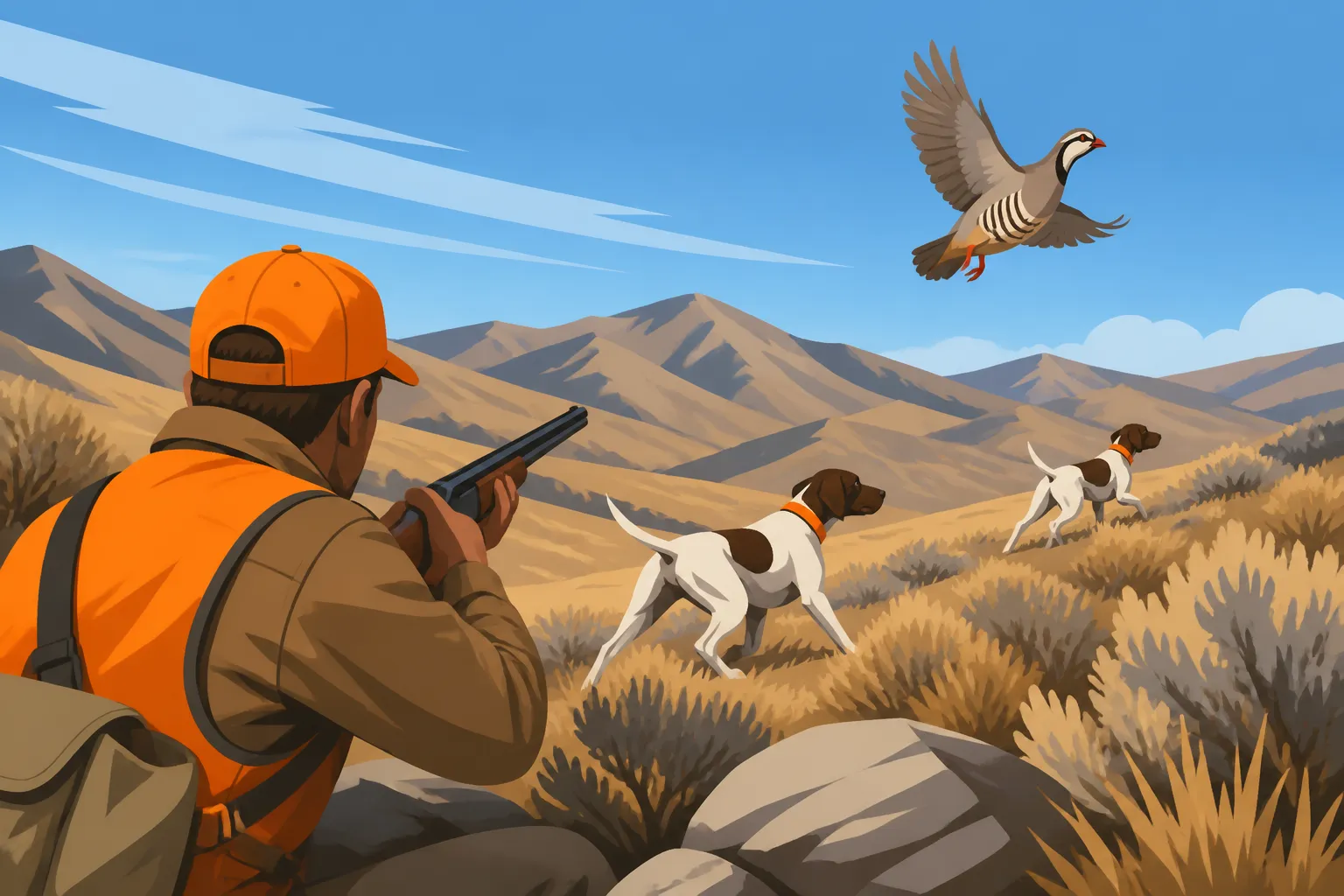
Imagine cresting a ridge, your lungs burning, and suddenly your dog, a tireless English Setter or a powerful German Shorthair, slams to a halt, nose high, tail rigid, locked on point. That's the magic. A guide's dogs are often their most valuable asset, having been specifically trained for the unique challenges of chukar. These aren't just pets; they're finely tuned hunting machines. They understand the nuances of chukar scent, which can be tricky in the wind-swept, dry air of Nevada. They'll navigate the treacherous footing with uncanny agility, conserving energy while covering vast amounts of ground. When the birds flush, they mark the fall meticulously, ensuring that every bird you knock down is recovered, no matter how far it tumbles down the rocky slopes. This kind of dog work is truly a sight to behold and makes all the difference between a successful hunt and a long, exhausting walk.
Navigating Nevada's Rugged Chukar Country
A knowledgeable chukar guide does more than just find birds; they manage the entire hunt, from strategy to safety. They know Where to Find Chukar in Nevada based on years of scouting and experience. They’ll interpret the topography, the wind, and the available cover to devise the best approach. They know where the birds will likely be at different times of the day, whether they're feeding in a draw, watering at a remote spring, or loafing on a sunny, rocky bench. This expertise is invaluable because it minimizes wasted effort and puts you in the prime locations. They also understand the physical demands and will set a pace that allows for both success and enjoyment, often suggesting routes that leverage terrain for easier travel or better shooting angles.
Maximizing Your Shooting Opportunities
Chukar are small, fast, and often present fleeting targets. A guide's primary goal is to get you into a shooting position where you have a genuine chance. This means working with the dogs to hold birds, maneuvering you and your hunting partners into strategic positions before the flush, and communicating clearly. They'll anticipate the bird's flight path, often pointing out key landmarks where a bird might disappear or a second shot might be available. After the shot, the dogs are paramount for retrieval, especially on steep slopes where a downed bird can quickly become lost. This teamwork is what makes the difference. Many guides also offer advice on shotgunning techniques specifically for chukar, helping you refine your lead and swing for these fast-moving targets.
Choosing the Right Chukar Guide and Dog Team
Deciding to go with a guide for chukar is a big step, and choosing the right one is even bigger. You're entrusting your precious hunting time, and often a significant financial investment, to their expertise. It's critical to do your homework.
Vetting a Nevada Chukar Outfitter
Start by researching guides who specialize specifically in chukar. While many outfitters offer a range of hunts, a true chukar specialist will live and breathe these birds and their unique challenges. Check their online presence, look for testimonials, and pay attention to how they present their dog teams. A great place to start looking might be through platforms like BookYourHunt, where you can often find reviews and detailed descriptions of services. You'll want to ask about their experience level, not just in guiding, but specifically in chukar hunting in the units you're interested in. Ask about their dogs – breeds, age, experience, and how many they typically run in a day. You want to hear about dogs that can handle the mileage and the terrain. Also, inquire about safety protocols, especially regarding the rugged terrain and potential for rattlesnakes. Don't be shy about asking for references from past clients, and absolutely call them. A reputable guide will be happy to provide them.
Essential Questions for Your Guide
Once you've narrowed down your choices, prepare a list of questions to ask your potential guide. Beyond the basics, consider:
- What is your philosophy on chukar hunting? Do you prioritize mileage, dog work, or shooting opportunities?
- How do you manage the pace of the hunt, especially on steep terrain?
- What gear do you recommend for hunters? Physical Conditioning for a Chukar Hunt is critical, but what about footwear and clothing?
- What is the typical group size for a chukar hunt?
- What is your policy on bad weather or extreme heat? Heat Management on an August Archery Hunt is important for deer, but even more so for dogs and hunters chasing chukar.
- What does the daily rate include? (e.g., lunch, drinks, bird cleaning). Don't forget to clarify What a Guided Chukar Day Costs and any potential extra fees.
- How do you handle bird limits and game care? Nevada Chukar Bag Limits are important to understand.
A good guide will appreciate your thoroughness and answer openly.
Preparing for Your Hunt
Even with a top-notch guide and dog team, your preparation is crucial. As mentioned, chukar hunting is physically demanding. Start a conditioning program well in advance that focuses on hiking steep inclines with a loaded pack. Practice shooting clays to sharpen your shotgun skills; those chukar are fast! Ensure your footwear is broken in and provides excellent ankle support. Layering is key for the unpredictable mountain weather in Nevada; temperatures can swing dramatically from morning to afternoon. Inform your guide of any physical limitations or health concerns. The more prepared you are, the more enjoyable and successful your hunt will be. Consider platforms like GoHunt for additional resources on gear, physical prep, and even e-scouting some of the potential chukar units your guide might mention.
The Experience: From Sunrise to Sundown
A guided chukar hunt in Nevada is an unforgettable adventure, offering a blend of breathtaking scenery, challenging physical exertion, and the sheer joy of watching well-trained dogs work. It's a full-day commitment to the mountains and the pursuit of these elusive birds.
A Typical Day on the Mountain
Your day will likely begin before sunrise, meeting your guide at a predetermined spot. After a quick coffee and safety briefing, you'll head into the mountains, often driving miles of rough dirt roads to reach the starting point. Once out of the truck, the dogs are unleashed, full of eager energy, and the hunt begins. The morning is typically spent climbing and traversing slopes, following the dogs as they crisscross the terrain, noses to the ground, searching for scent. You'll be amazed at the ground they cover and their ability to navigate seemingly impossible inclines. Your guide will constantly be reading the dogs, the wind, and the terrain, calling out directions and strategizing the next move. Breaks for water and a snack are essential, not just for you, but for the dogs as well.
The Thrill of the Flush
There's nothing quite like the moment a dog goes on point in chukar country. One minute you're trudging, the next there's a sudden stillness, a dog locked up like a statue, indicating birds are near. Your guide will direct you, often using hand signals, to get into the best shooting position. Then comes the explosion: a covey of chukar erupting from the rocks, their calls echoing down the canyon. It’s fast, exhilarating, and often over in a blink. You swing, fire, and hopefully, a bird tumbles. The dogs are instantly on the retrieve, navigating steep ground to bring the bird back to hand. Sometimes, a single bird will hold, offering a more deliberate shot. Other times, the covey will flush wild, forcing you to adjust your strategy and continue the pursuit. It's a constant game of cat and mouse, and the guide and dogs are the key players.
After the Shot: Dog Work and Retrieval
Once a bird is down, the guide's dogs immediately go to work. In the rugged, often rocky and brushy terrain of Nevada, a downed chukar can easily disappear. The dog's keen sense of smell and relentless drive to retrieve are invaluable here. They'll pinpoint the location, often making impressive retrieves from seemingly inaccessible spots. This isn't just about recovering game; it's about respecting the animal and ensuring a clean harvest. The guide will carefully collect the birds, often demonstrating Field Dressing in August Heat techniques to keep the meat fresh if it's an early season hunt, or simply securing them in the game bag. As the day progresses, the dogs, though tired, remain focused, their conditioning allowing them to work hard for hours. It’s a testament to their training and the guide’s dedication to their canine partners. By the end of the day, you'll have an incredible sense of accomplishment, whether your vest is full or not, simply from having experienced the thrill of hunting with such dedicated animals and a knowledgeable human partner.
| Aspect | DIY Chukar Hunting | Guided Chukar Hunt with Dogs |
|---|---|---|
| Success Rate | Highly variable, often low without prior experience | Significantly higher due to guide/dog expertise |
| Physical Demand | Extremely high, can be inefficient without knowledge | Still high, but more efficient and safer |
| Dog Work | Relies on your own dog or no dog, difficult terrain | Expertly trained, specialized chukar dogs provided |
| Navigation | Requires extensive personal scouting, easy to get lost | Guide knows terrain, bird patterns, and access points |
| Safety | Higher risk of injury or getting stranded | Guide provides safety protocols, communications |
| Enjoyment | Rewarding when successful, often frustrating | Enhanced by dog work, camaraderie, and efficiency |
| Learning Curve | Steep and long | Accelerates learning through guide's instruction |
Disclaimer
This article is for general informational purposes only and does not constitute professional advice. Laws, prices and regulations vary by location and change over time. Consult a qualified professional for guidance on your specific situation.