Wilderness First Aid on a Guided Hunt
Venturing deep into Nevada's vast and often unforgiving backcountry for a guided hunt is an incredible experience, but it also means embracing the inherent risks of remote travel. The biggest fear isn't missing a shot, it's having something go wrong when help is hours, not minutes, away. This comprehensive guide will walk you through what wilderness first aid means in the context of a guided hunt, what you should realistically expect from your outfitter, and crucially, how you can personally prepare to enhance safety for yourself and your hunting party.
The Reality of Remote Hunting Injuries in Nevada
Let's face it, hunting in Nevada isn't like a walk in the park. We're talking about expansive sagebrush basins, jagged volcanic rock, steep mountain ascents, and often extreme weather conditions. These elements, combined with physically demanding activity, increase the chances of an accident or medical emergency. It's not about being pessimistic; it's about being realistic and prepared. Even with a seasoned guide, the vastness of the Great Basin means that professional medical help is rarely just around the corner.
Many hunters underestimate the physical toll these hunts take. Days can involve miles of hiking over uneven terrain, sometimes at elevation, carrying heavy packs. A simple stumble on loose rock can turn into a serious sprain or worse. Dehydration can creep up faster than you think, even on cooler days, when you're exerting yourself in dry air. A guided hunt means you have an experienced professional leading the way, but it doesn't eliminate the inherent risks of the environment.
Common Incidents in Nevada's Backcountry
When you're out there, far from paved roads and cell service, even minor issues can escalate quickly. Think about some of the most common things that can happen: twisted ankles from navigating rocky slopes, deep cuts from field dressing, heat exhaustion during an early archery hunt, or hypothermia if an unexpected storm rolls in. A guide can certainly help mitigate some of these risks by planning routes and ensuring proper gear, but accidents can still happen to anyone.
Imagine you're on a multi-day elk hunt, miles from the nearest road, when a member of your party slips on wet shale and takes a nasty fall. It's not just a sprained wrist; it's a potential fracture, and they're in pain. Or maybe, a less dramatic but equally debilitating issue arises, like a severe allergic reaction to a bee sting, or a sudden, excruciating toothache. These aren't just inconveniences; they can turn a dream hunt into a desperate situation if not handled properly. This is where basic wilderness first aid knowledge becomes invaluable, allowing you to stabilize a situation until more advanced help can arrive.
The Time Factor in Remote Locations
In the vast units of Nevada, "remote" isn't just a word; it's a reality measured in hours, not minutes. If you're hunting deep in the Humboldt-Toiyabe National Forest or a far-flung corner of a BLM unit, an emergency response can easily take half a day or more. This isn't a knock on search and rescue teams, but simply the nature of the terrain and distances involved. A guide can get on a satellite messenger to call for help, but that help still has to get there.
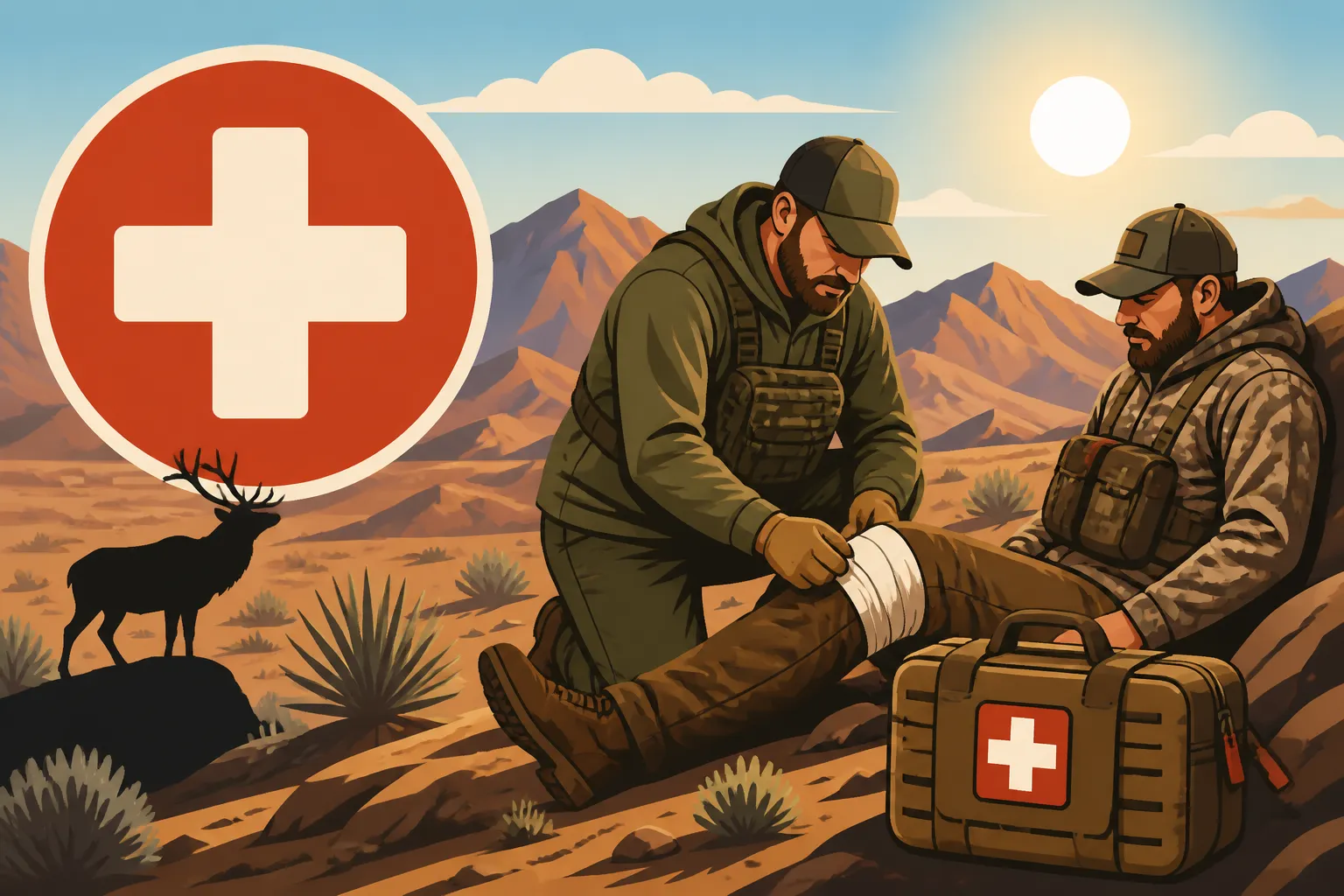
Consider a scenario where you've successfully harvested an animal deep in a canyon. You're jubilant, but during the Packing an Animal Out of Roadless Country process, your partner suffers a deep laceration that won't stop bleeding. In an urban environment, you'd be at an emergency room in minutes. In the Nevada backcountry, your guide will initiate emergency communication, but then it's a waiting game. During that wait, knowing how to apply direct pressure, clean a wound, or even improvise a splint can literally be the difference between a manageable crisis and a life-threatening one. Understanding this time lag is crucial for every hunter heading into Nevada's wild spaces.
What to Expect from Your Guided Hunt Regarding First Aid
When you book a guided hunt, you're paying for expertise, access, and often, peace of mind. A reputable outfitter will have protocols in place for emergencies, but it’s important to understand the extent of their responsibilities and capabilities. Don't assume anything; ask direct questions before you ever step foot in camp. Your guide is there to help you find game and navigate the wilderness, but they are not typically certified medical professionals, even if they have extensive first aid training.
You should always be proactive in your communication with an outfitter. When you're Vetting a Nevada Outfitter Before You Send a Deposit, a key part of that conversation should revolve around emergency preparedness. A good outfitter will be transparent and thorough in explaining their approach. Platforms like BookYourHunt can connect you with guides, but the follow-up questions about safety protocols are entirely up to you.
Guide Training and Certifications
Most reputable guides are required to have at least basic first aid and CPR certifications. Many go a step further, completing Wilderness First Aid (WFA) or even Wilderness First Responder (WFR) courses. These certifications are specifically designed for situations where help is delayed and medical resources are limited. A guide with WFR training, for example, has a much deeper understanding of patient assessment, long-term care in the field, and evacuation procedures than someone with just basic first aid.
It's perfectly acceptable, and even encouraged, to ask your prospective guide about their specific certifications. Do they renew them regularly? Have they ever had to use their skills in the field? Understanding their level of training can give you a better sense of confidence. However, remember that even a WFR-certified guide isn't a doctor. Their role is to stabilize, manage, and facilitate evacuation, not to provide definitive medical treatment that would normally be done in a clinic or hospital.
Outfitter First Aid Kits and Emergency Protocols
Every professional guide will carry a robust first aid kit. This isn't your average home kit; it's typically stocked with supplies for severe bleeding, fractures, burns, allergic reactions, and prolonged care. They'll also have essential communication devices. What a Nevada Guide Carries in the Truck and in their pack will include items like a satellite phone or a satellite messenger device for calling for help when out of cell range. They'll know how to describe your location precisely to emergency services.
Beyond the physical kit, outfitters should have clear emergency protocols. This includes knowing who to call, how to evacuate, and what resources are available in the specific hunting unit. For example, some units might have easier access for ATVs, while others require a horseback extraction or even a helicopter. Don't hesitate to ask Questions Worth Asking Before You Book about their emergency plan for the specific area you'll be hunting. A well-prepared outfitter will have thought through various contingencies, from minor injuries to severe medical emergencies, and will be able to articulate their plan clearly.
Communication Challenges in Remote Camps
One of the biggest hurdles in backcountry emergencies is communication. As mentioned, cell service is often nonexistent in vast stretches of Nevada's public lands. While guides will carry satellite communication devices, these are not always instantaneous, and relaying complex medical information can be challenging. Weather can also interfere with satellite signals.
This is where understanding the limitations comes in. Even with a satellite messenger, the message still needs to be received, understood, and acted upon by emergency services, which then need to mobilize. This process adds time. Knowing that a Satellite Messenger Use in Remote Country is a tool for initiating a response, rather than a direct line to a paramedic, helps set realistic expectations. Also, in a true emergency, every minute counts, so having pre-arranged emergency contacts and clear medical information available to your guide is paramount. You might consider carrying your own personal satellite device as a backup, especially if you plan to venture away from your guide for short stalks.
Your Personal Role in Wilderness First Aid Preparedness
While you're relying on your guide's expertise and preparedness, you can't outsource your personal safety entirely. Every hunter should take some responsibility for their own well-being and be ready to assist themselves or others if needed. This isn't just about carrying a band-aid; it's about having some basic knowledge and the right gear. Being personally prepared actually enhances the safety of the entire group.
Think of it as adding another layer of security. If your guide is busy tending to one person, and another person in the group needs immediate attention for a minor issue, your personal preparedness can prevent a small problem from becoming a distraction or a larger emergency. Resources like GoHunt, while primarily focused on drawing odds and unit information, can also help you visualize the remoteness of your chosen unit, further emphasizing the need for personal readiness.
Assessing Your Own Risk Tolerance and Training Needs
Before you even book a hunt, take an honest look at your physical fitness and your comfort level with risk. Are you prone to accidents? Do you have any existing medical conditions that could flare up under strenuous conditions or in extreme temperatures? Being physically prepared is a huge part of injury prevention. Preparing Physically for Long Glassing Days or long hikes over rough terrain can significantly reduce the risk of strains, sprains, and fatigue-related accidents.
Beyond physical fitness, consider formal training. A basic wilderness first aid course, usually a weekend commitment, can teach you critical skills for assessing injuries, treating common backcountry ailments, and making decisions when professional help is distant. Even if you're going with a guide, having this knowledge empowers you and makes you a more valuable, safer member of the hunting party. It shifts you from being solely a recipient of aid to a potential helper.
Communicating Medical Conditions to Your Guide
This is absolutely non-negotiable. Before your hunt begins, have a frank discussion with your guide about any medical conditions, allergies, or medications you're taking. This isn't about privacy; it's about survival. If you have a severe allergy to bee stings, for example, your guide needs to know and know where your EpiPen is. If you have a heart condition, they need to be aware of the symptoms and what to do.
It's a good idea to write this information down and keep it in a readily accessible, waterproof pouch in your pack, along with a list of emergency contacts. You can even give a copy to your guide. This ensures that even if you're incapacitated, critical medical information is available to those trying to help you. Outfitters like those found through BookYourHunt or researched on GoHunt expect this level of communication from their clients, as it directly impacts their ability to keep you safe.
Building Your Personal First Aid Kit
Even with a guide carrying a comprehensive kit, you should always have a personal first aid kit tailored to your needs and the environment. This kit should be compact, waterproof, and always in your daypack, not back at camp. Think of it as your immediate response tool.
Your personal kit doesn't need to be huge, but it should cover the basics:
- Blister treatment: Moleskin, athletic tape. You'll thank yourself after miles in Choosing Boots for Sharp Volcanic Rock.
- Wound care: Assorted bandages, gauze pads, antiseptic wipes, medical tape.
- Pain relief: Over-the-counter pain relievers, anti-inflammatories.
- Allergy medication: Antihistamines, and your personal EpiPen if needed.
- Medications: Any personal prescription medications you need, with extra doses.
- Minor ailments: Imodium for stomach issues, chapstick, sunscreen.
- Tools: Small knife or multi-tool, tweezers, small mirror.
While your guide will have a more extensive kit, your personal kit is for immediate needs, allowing you to self-treat minor issues without delaying the group or relying solely on your guide for every little scrape or headache.
Essential Wilderness First Aid Skills and Gear
Knowing how to use the gear in your kit, and how to react in a stressful situation, is just as important as having the gear itself. Wilderness first aid isn't about being a doctor; it's about being able to stabilize a situation, prevent further injury, and buy time until professional help can arrive. It's about thinking critically and acting calmly under pressure.
Many outfitters, when explaining What a Fully Guided Nevada Elk Hunt Includes, will touch on their emergency provisions, but they'll also appreciate a client who demonstrates personal initiative in their own preparedness. It shows respect for their efforts and the serious nature of hunting in remote country.
Basic First Aid vs. Wilderness First Aid
There's a significant difference between basic first aid you might learn for an urban setting and wilderness first aid. Basic first aid assumes immediate access to advanced medical care. You treat a wound, call 911, and an ambulance is there in minutes. Wilderness first aid, on the other hand, operates on the assumption that help is hours, or even days, away.
| Feature | Basic First Aid | Wilderness First Aid (WFA/WFR) |
|---|---|---|
| Medical Access | Immediate | Delayed (hours to days) |
| Environment | Urban/Suburban | Remote, austere, often extreme weather |
| Focus | Stabilize, transport | Stabilize, monitor, long-term care, self-evacuation |
| Kit Size | Small, portable | Larger, comprehensive, specialized |
| Training Depth | General knowledge, quick response | In-depth patient assessment, decision-making, improvising |
| Duration of Care | Minutes | Hours to days |
| Improvisation | Minimal | Extensive (using available resources) |
Wilderness first aid focuses heavily on patient assessment over time, vital sign monitoring, preventing worsening conditions, managing environmental factors, and making informed decisions about evacuation. It teaches you to improvise splints with trekking poles and duct tape, to manage hypothermia by building a proper shelter, and to recognize subtle changes in a patient's condition when medical professionals aren't there to take over.
Key Supplies for Your Pack
Beyond your personal first aid kit, there are other items that contribute significantly to your safety and ability to handle an emergency. These are items that your guide will certainly have, but having them personally ensures redundancy and immediate access.
- Headlamp/Flashlight: Essential for any night-time emergency or field dressing.
- Fire Starter: Waterproof matches, lighter, fire steel. The ability to make a fire can be life-saving for warmth or signaling.
- Emergency Shelter: A lightweight space blanket or emergency bivy.
- Water Purification: Tablets or a filter. Dehydration quickly exacerbates any medical issue. Water You Must Carry on a Desert Day Hunt is crucial.
- Signaling Device: Whistle, signal mirror.
- Navigation: A reliable GPS device or app (like those found on GoHunt) with downloaded maps, plus a physical map and compass as backup. Cell Coverage Across Nevada Hunt Units is often spotty at best.
- Extra Layers: Weather in Nevada can change drastically. Having extra insulation can prevent hypothermia. Layering for Basin and Range Temperature Swings is key.
These items, along with your personal first aid kit, are the bedrock of self-reliance in the backcountry. While your guide is equipped, having your own critical gear means you're never left completely dependent if you become separated or if their gear is damaged.
Critical Skills for Hunters
Beyond carrying the right gear, possessing certain skills can dramatically improve outcomes in an emergency. These are skills that every hunter venturing into Nevada's remote country should cultivate.
- Patient Assessment: The ability to systematically check a person for injuries or medical problems, and monitor their condition over time. This includes checking vital signs (pulse, breathing, skin temperature) and looking for changes.
- Wound Management: Knowing how to properly clean, dress, and pack a wound, and how to stop severe bleeding.
- Splinting and Immobilization: Understanding how to stabilize a suspected fracture or sprain using improvised materials to prevent further injury during transport.
- Environmental Injury Management: Recognizing and treating hypothermia, frostbite, heat exhaustion, and heat stroke.
- Navigation: Being able to read a map and compass, and operate a GPS device. If your guide is incapacitated, you might be the one navigating to safety or a rendezvous point.
- Signaling: Knowing how to use various signaling methods to attract attention from search and rescue.
- Shelter Building: Even a basic understanding of how to create an emergency shelter from natural materials or your emergency tarp can be life-saving.
Taking the initiative to learn these skills, perhaps through a WFA course, will not only make you safer but will also allow you to be a more confident and capable hunter in Nevada's vast and wild landscapes. Remember, an ounce of prevention and preparedness is worth a pound of cure, especially when professional help is many miles and hours away.
Disclaimer
This article is for general informational purposes only and does not constitute professional advice. Laws, prices and regulations vary by location and change over time. Consult a qualified professional for guidance on your specific situation.