Locator Bugles for Finding Bulls at Dawn
There's nothing quite like the crushing silence of a cold, grey dawn in the Nevada backcountry when you're convinced elk are just over the ridge, yet they're not making a peep. It's frustrating to know they're there, but you can't pinpoint their exact location. This guide will walk you through how to use locator bugles effectively to cut through that morning quiet, get a bull to give himself away, and set yourself up for a successful early-morning encounter.
The Frustration of Silent Mornings and Why Locator Bugles Work
We've all been there: up before the sun, hiking in the dark, and getting to your chosen glassing knob or ridge just as the first hint of light paints the eastern sky. You're straining your ears, hoping for that tell-tale bugle, a snort, anything that gives away the presence of a bull. But often, especially outside the peak rut, all you get is the whisper of the wind and the distant chirping of birds. It's disheartening, and it leaves you wondering if you're even in the right zip code.
Understanding Elk Behavior at Dawn
Elk, like many wild animals, are creatures of routine, but they're also highly adaptable to pressure and conditions. At dawn, especially during the early archery or muzzleloader seasons, bulls are often moving from their nocturnal feeding areas back to their bedding grounds. They might be alone, or with a small satellite herd, and sometimes they're feeling a little lonely or territorial. The morning offers a small window of opportunity before they settle into thick cover for the day. However, they're often not as vocal as they might be later in the day during the full-blown rut, which typically occurs closer to When the Elk Rut Peaks in Nevada. This makes a well-placed locator bugle all the more critical for breaking their silence and getting a response.
They're trying to conserve energy, too, and draw as little attention to themselves as possible as they transition. But a challenge, or what they perceive as another bull moving into their territory, can often be enough to make them forget their quiet intentions. Knowing these behavioral patterns helps you understand when and where to direct your calls, increasing your odds of getting that crucial return bugle that points you in the right direction. Remember, you're looking for a reaction, not necessarily an immediate charge.
The Science Behind a Locator Bugle
A locator bugle isn't necessarily meant to sound like a lovestruck cow or a challenging, dominant bull. While some might use aggressive bugles, the primary goal is to simply elicit a response. You're essentially saying, "Is anyone out there?" in elk language. The sound waves travel through the cool, dense morning air, which often carries sound farther and clearer than later in the day when thermals are rising. This makes dawn a prime time to use acoustics to your advantage.
When you send out that call, you're tapping into a bull's innate need to assess his surroundings. Is there a rival bull? Is he moving in on my cows? Or perhaps he's just announcing his presence to other bulls in the area. The response might be immediate, or it might take a few minutes. Sometimes it's a full-throated bugle, other times just a soft grunt or chuckle. Every sound is a clue, giving you precious information about his location, his direction of travel, and perhaps even his mood. It's a game of chess, using sound to force your opponent's move.
Mastering the Art of the Locator Bugle
Just owning a bugle tube isn't enough; knowing how to use it effectively is an art form. It's about more than just making noise; it's about making the right noise at the right time. The vast, open country of Nevada, with its deep basins and towering ranges, means sound carries, but it also gets swallowed by the landscape. Your technique needs to be precise and deliberate to cut through the vastness.
Choosing Your Bugle and Pitch
There's a dizzying array of bugle tubes and diaphragms on the market. From simple open-reed calls to more complex diaphragms that require a bit of practice to master, each has its place. For locator bugles, you generally want something that can produce a clear, sharp, high-pitched note that will travel. Think about the sound of a bull letting out a casual "hey, I'm here" rather than a full-on, guttural challenge. The higher pitch tends to carry further and is less likely to be mistaken for a mere grunt.
Brands like Phelps Game Calls, Elite Elk Calls, and Rocky Mountain Hunting Calls all offer excellent options for producing realistic and carrying sounds. Experiment with different calls and diaphragms to find what feels comfortable and produces the most consistent sound for you. Practice in your backyard or even in your truck to get comfortable with the cadence and tone. You're not trying to mimic a specific bull, but rather create a general, inquisitive sound that piques interest without immediately putting a wary bull on high alert.
Strategic Calling and Listening
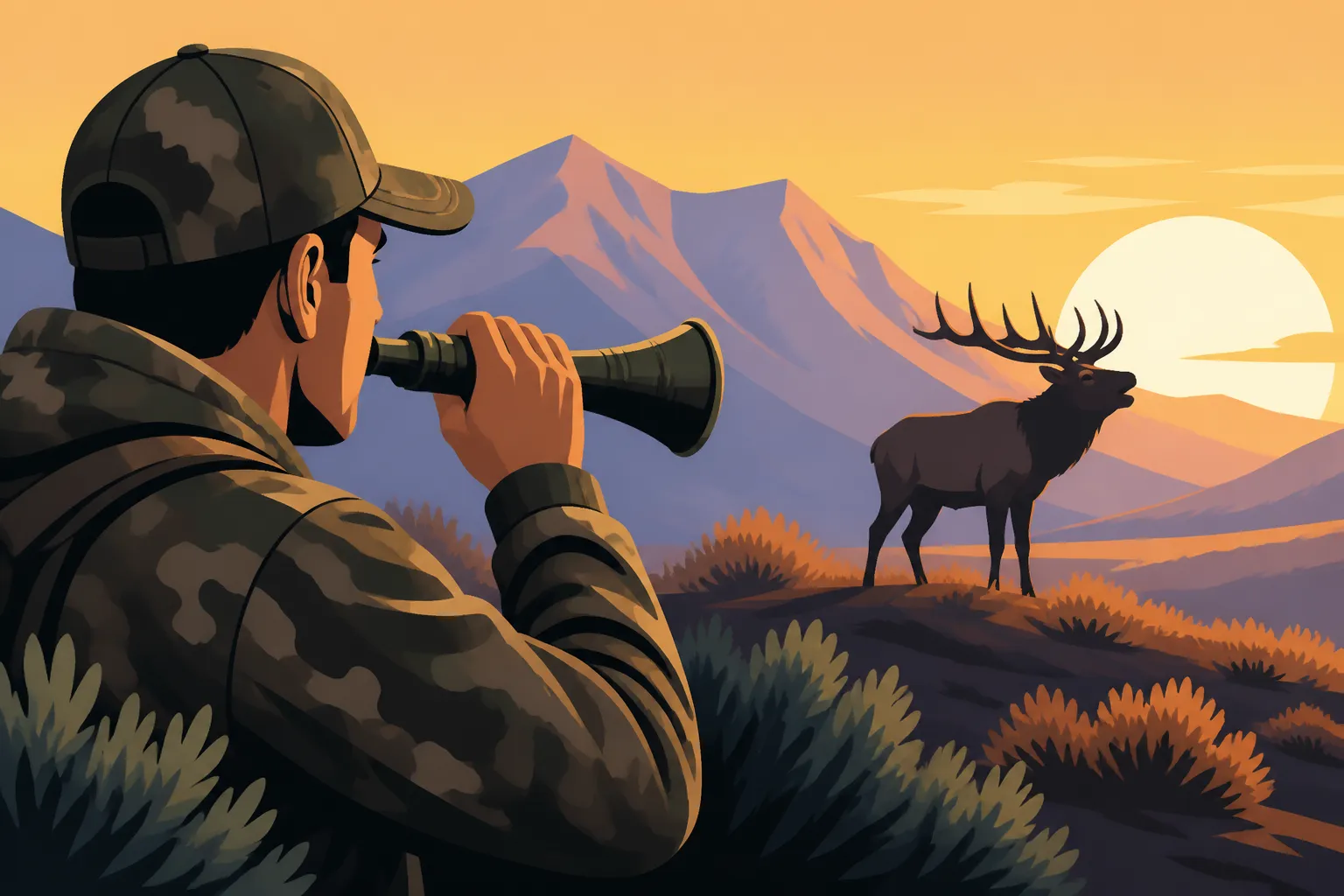
The key to successful locator bugling is knowing when to call and, perhaps even more importantly, when to listen. Don't just blast away every minute. The best approach is often a patient one. Get to your vantage point, let the landscape absorb your presence for a few minutes, and listen intently. Sometimes a bull will give himself away without any prompting from you. After a few minutes of quiet listening, let out your first locator bugle. It should be confident but not overly aggressive.
Then, silence. And I mean real silence. Put your bugle down, hold your breath, and strain your ears. A bull might respond immediately, or it might take him a minute or two to gather his thoughts and decide to talk back. He might just grunt, or send a weak, half-hearted bugle. That's still a response! If you don't hear anything after five minutes, try another bugle, perhaps from a slightly different angle or with a slightly different tone. Repeat this pattern, moving a bit if necessary, but always prioritizing listening. Moving too much or calling too frequently can alert elk to your presence without them giving up their position, which is the exact opposite of what you want.
Putting It All Together: Dawn Tactics and Follow-Up
Executing a locator bugle strategy at dawn requires careful planning, much like preparing for Preparing Physically for Long Glassing Days. You're not just throwing calls out into the wind; you're attempting a calculated move in the vast chess game of elk hunting. Every step, every call, needs to be intentional.
Approaching Your Calling Location
Before the sun even thinks about peeking over the horizon, you should be moving into a good strategic calling location. This isn't necessarily where you plan to hunt, but a spot that offers good sound propagation and excellent listening conditions. Think high points, but not necessarily the very highest peak where wind might be an issue. A saddle, a gentle rise, or the edge of a timber patch can all be excellent choices. Use tools like E-Scouting a Nevada Unit Before the Season to identify these vantage points from home.
Always approach stealthily and quietly. The last thing you want is to spook an elk before you even have a chance to call. Use the darkness and any available cover to your advantage. Once you arrive, get comfortable and settled. Don't call immediately. Give the woods a chance to wake up, and give yourself a chance to catch your breath and attune your ears to the sounds of the morning. Remember, any sounds you make – crunching leaves, a dropped water bottle – can be heard by wary elk.
What to Do When a Bull Responds (and When He Doesn't)
This is the moment of truth! If a bull responds, resist the urge to immediately bugle back aggressively. Your initial goal was location, not a shouting match. Note his direction, estimate the distance, and try to gauge his enthusiasm. A strong, immediate bugle often indicates a bull that's willing to engage, while a softer grunt might mean he's curious but wary. This information is crucial for planning your next move. If you get a positive response, often a quiet move in his general direction, trying to close the distance without being detected, is the best first step. You might consider switching to more subtle cow calls or soft grunts as you get closer, as detailed in Cow Calling Bulls in Thin Timber.
If you don't hear a response after several attempts in one location, don't despair. It doesn't mean there are no elk. It just means they weren't vocal at that moment, or they're not interested in talking back. This is where patience and persistence come in. Move to another location, perhaps a quarter to half-mile away, and repeat the process. Don't be afraid to cover some ground. Sometimes, all it takes is finding that one vocal bull to open up an entire new area. A detailed map, perhaps one you've explored with GoHunt, can help you identify a series of good calling points within your hunt unit.
| Dawn Locator Bugle Sequence | Purpose | Expected Response | Your Next Action |
|---|---|---|---|
| Initial Locator Bugle | Announce presence, gauge interest | Bugle, grunt, chuckle, or silence | Listen intently for 5-10 minutes. Pinpoint direction. |
| Second Locator Bugle | If no response or weak response | Stronger bugle, grunt, or silence | Listen again. Re-evaluate direction. |
| Soft Cow Call (optional) | If bull sounds hesitant or wary | Investigation, movement | Move stealthily, use terrain to close distance. |
| Move to New Location | If no response after 2-3 attempts | N/A | Cover ground, relocate to another vantage. |
Common Pitfalls and Advanced Tips for Nevada Elk
Locator bugling seems simple on the surface, but it's rife with potential errors, especially in Nevada's unique environment. Understanding these can greatly improve your success. The challenges of the Great Basin, from its wide-open spaces to its unpredictable thermals, demand a nuanced approach.
Reading the Wind and Terrain
In Nevada, wind is almost always a factor. Your scent is your biggest enemy. Always, always call with the wind in your favor, blowing your scent away from where you expect the elk to be. This means approaching your calling point and positioning yourself so that the wind carries your scent behind you relative to the potential elk location. Using a small squeeze bottle with unscented powder or a wind checker can be invaluable for constantly monitoring the wind direction, especially as thermals begin to shift with the rising sun. A steady breeze can carry your locator bugle a long distance, but it can also carry your scent just as far.
Terrain also plays a massive role. Sound travels differently over canyons, through thick juniper, or across wide-open sage flats. When you're glassing for elk, remember that your ears are just as important as your optics. Look for draws, ridges, and saddles that might funnel sound, or provide natural sound barriers that an elk might be using for cover. The ability to effectively read a unit, much like the advice given in Reading a Nevada Hunt Unit Before You Apply, is paramount for choosing effective calling locations that maximize sound propagation while minimizing detection.
The Role of E-Scouting and GoHunt
Modern technology has revolutionized how we scout, even for a primitive skill like bugling. Before you even set foot in the unit, tools like GoHunt can be invaluable for identifying potential bedding areas, transition routes, and excellent calling vantage points. You can analyze topography, identify water sources crucial for elk, and mark potential locations where a locator bugle might yield results. This pre-hunt preparation allows you to create a "calling route" – a series of strategic points where you can stop, call, and listen without wasting precious time wandering aimlessly.
Use the satellite imagery and topographical maps within GoHunt to visualize how sound might travel and where elk might respond from. Look for north-facing slopes where elk might bed, or pinch points that funnel movement. Having a few pre-identified spots to hit at dawn can make all the difference, transforming a silent morning into one filled with promising responses. Being able to pinpoint these details from the comfort of your home dramatically increases your efficiency once you're on the ground, saving you energy for the actual stalk.
Disclaimer
Hunting is an inherently dangerous activity. This article provides general information and recommendations. Always consult the official Nevada Department of Wildlife (NDOW) regulations for the current year before engaging in any hunting activities. Stay safe, be ethical, and respect wildlife and the environment.