Building a Practice Routine Before Opener
That feeling hits every hunter, doesn't it? That nagging worry as the Nevada draw results come out or the calendar flips closer to opener: "Am I ready?" It's not just about knowing your rifle is sighted in, it's about whether your body and mind can handle the brutal climbs, the long glassing sessions under a scorching sun, and the adrenaline of the moment of truth. This guide is here to walk you through building a comprehensive practice routine—both physical and shooting-specific—that will have you feeling confident and prepared for whatever the Nevada high desert throws your way this hunting season.
Why a Dedicated Pre-Season Practice Routine is Crucial for Nevada Hunts
Let's be honest, dreaming of hunting from the couch is a lot different than actually doing it. Nevada isn't a place for the faint of heart or the unprepared. The landscape demands a lot from you, and a dedicated practice routine before the season kicks off isn't just a suggestion; it's a necessity for success and, frankly, for enjoying the experience rather than just enduring it.
The Unique Physical Demands of Nevada's Terrain
Forget flat, easy walks. Nevada's hunting units are defined by their "basin and range" topography, which means you're constantly gaining and losing elevation. You'll be climbing steep, rocky hillsides, traversing seemingly endless sagebrush flats, and navigating draws filled with loose scree. This isn't just a physical challenge; it's a test of your mental grit. Carrying a heavy pack, whether it's full of water and optics for a day hunt or the first load of an animal, through this type of country in varying temperatures is exhausting. You'll encounter sharp volcanic rock, often hidden under layers of dust, that demands the right footwear and ankle strength, as detailed in our guide on [Choosing Boots for Sharp Volcanic Rock]. Without specific training, these elements can quickly turn a dream hunt into a grueling suffer-fest, leading to fatigue, poor decision-making, and even injury.
Sharpening Your Shooting Skills Beyond the Bench
Anyone can shoot well from a sandbagged bench rest on a flat range. But when's the last time a trophy mule deer or a bull elk stood perfectly still at a known distance on a flat, even surface, waiting for you to get comfortable? Real hunting scenarios rarely present ideal conditions. You might be shooting uphill, downhill, across a canyon with swirling winds, or after a lung-busting climb that leaves your heart pounding. Your shot might need to happen quickly, from an improvised rest, with shaky muscles. A practice routine that only involves static bench shooting leaves you completely unprepared for these dynamic, high-pressure moments that are the hallmark of hunting in the wide-open spaces of Nevada. It's about building muscle memory and confidence when every variable seems to be working against you.
Mental Toughness and Decision Making Under Pressure
Beyond the physical and technical skills, a robust practice routine builds incredible mental toughness. When you've pushed your body to its limits in training, you learn to quiet the doubt, control your breathing, and focus when fatigue sets in. This translates directly to making better decisions in the field. Imagine you've just spent hours, maybe even days, [Glassing Nevada's Basin and Range for Mule Deer] and finally spotted a buck worth pursuing. You execute a grueling stalk, your legs are burning, and your heart is hammering against your ribs. In that moment, a clear head, born from countless hours of preparation, is what allows you to accurately judge yardage, read the wind, steady your scope, and make a clean shot. Without that preparation, the mental fatigue can lead to rushed decisions, missed opportunities, or worse, a poorly placed shot that results in a lost animal.
Crafting Your Physical Conditioning Plan for Nevada Success
Building a physical foundation for a Nevada hunt isn't about looking good in a mirror; it's about preparing your body for the incredible demands of the backcountry. This means a focus on functional strength, endurance, and mimicking the specific movements you'll make in the field.
Building Foundational Strength and Endurance
Your training should prioritize compound movements that build strength across your entire body, especially your legs, core, and back—all critical for navigating rugged terrain and carrying weight. Incorporate exercises like squats, lunges (both forward and lateral to simulate uneven ground), deadlifts (or good mornings for back strength), step-ups onto a box, and planks for core stability. Hiking, running, or rucking on uneven ground is your best friend for endurance. If you live in a flat area, seek out stairs, stadium steps, or a treadmill on an incline. Aim for at least 3-4 days a week of focused cardio and 2-3 days of strength training, ensuring you're progressively challenging yourself. Remember, consistency is far more important than intensity when you're just starting out. Our article on [Preparing Physically for Long Glassing Days] offers even more insights into endurance building.
Acclimatization to Altitude and Heat
Nevada hunts often mean significant elevation changes, and if you're coming from sea level, altitude sickness can quickly derail your hunt. While you can't magically grow more red blood cells overnight, you can gradually acclimate. If possible, plan a few training hikes at higher elevations in the weeks leading up to your hunt. This allows your body to start adapting. For those August archery hunts or early rifle seasons, heat management is another huge factor. Training in conditions similar to what you'll encounter is vital. That means exercising outdoors during the warmer parts of the day, ensuring proper hydration, and learning your body's limits. Being able to push through the heat while remaining hydrated and alert is a critical skill. Make sure you read up on [Water You Must Carry on a Desert Day Hunt] to understand the minimum requirements.
Integrating Pack Training and Gear Familiarization
One of the biggest mistakes hunters make is not training with their actual gear. Your body moves differently when carrying a full hunting pack versus an empty daypack. Start by wearing your broken-in hunting boots on all your hikes to ensure they don't cause issues later. Gradually add weight to your backpack, working up to what you'd typically carry for a full day hunt – optics, water, emergency gear, snacks, and even a simulated animal load for short bursts. This helps your shoulders, hips, and core adapt to the pressure points and weight distribution. Pay attention to how your pack fits and adjusts as you move. This isn't just about physical conditioning; it's about identifying potential hot spots or discomfort that could turn into debilitating blisters or chafing when you're miles deep in a unit like 014 or 071.
Here's a sample weekly workout routine to get you started:
| Day | Focus | Activities | Notes |
|---|---|---|---|
| Monday | Strength | Full Body Circuit: Squats, Lunges, Deadlifts, Push-ups, Rows, Planks (3 sets of 10-12 reps) | Focus on proper form; add weight progressively. |
| Tuesday | Endurance | Ruck/Hike: 60-90 minutes with 15-25 lbs in your pack on varied terrain (hills/stairs if possible) | Wear your hunting boots; simulate field conditions. |
| Wednesday | Active Recovery | Light walk, stretching, foam rolling, yoga (30-45 minutes) | Listen to your body; aid muscle recovery. |
| Thursday | Strength | Leg/Core Focus: Step-ups, Box Jumps, Bulgarian Split Squats, Russian Twists, Farmer's Carry (3 sets of 10-15 reps) | Build power and stability; incorporate weighted carries. |
| Friday | Endurance | Interval Training: 30 minutes of alternating high-intensity bursts (e.g., uphill sprint) with recovery periods | Improves cardiovascular fitness for quick bursts during a stalk. |
| Saturday | Long Ruck/Hike | 2-4 hours with 25-45 lbs in your pack on challenging terrain (major elevation changes) | Mimic a full day's hunting effort; practice navigation skills. |
| Sunday | Rest or Light Activity | Complete rest, or gentle walk/stretch | Allow muscles to rebuild and recover fully. |
Always consult with a healthcare professional before starting any new exercise program.
Honing Your Shooting Prowess for Real-World Scenarios
Physical conditioning gets you to the animal, but accurate shooting seals the deal. Your shooting practice needs to go far beyond just putting holes in paper from a comfortable position. It's about developing the versatility and calm required when everything is on the line.
Practicing Positional Shooting and Field Rests
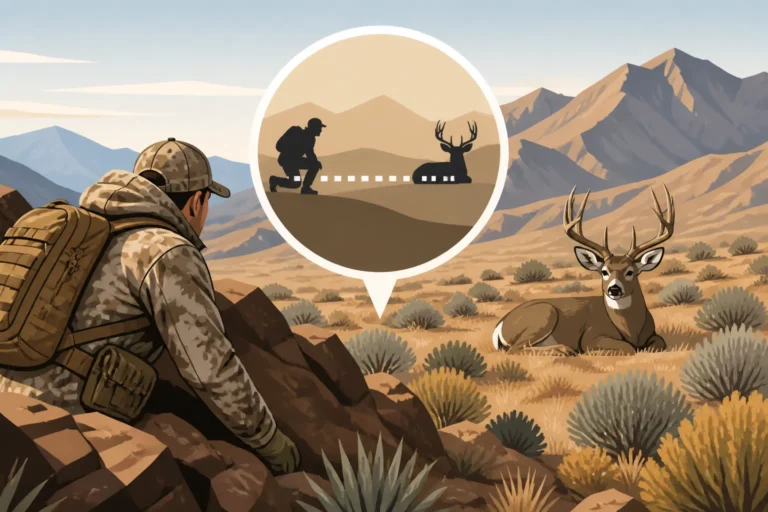
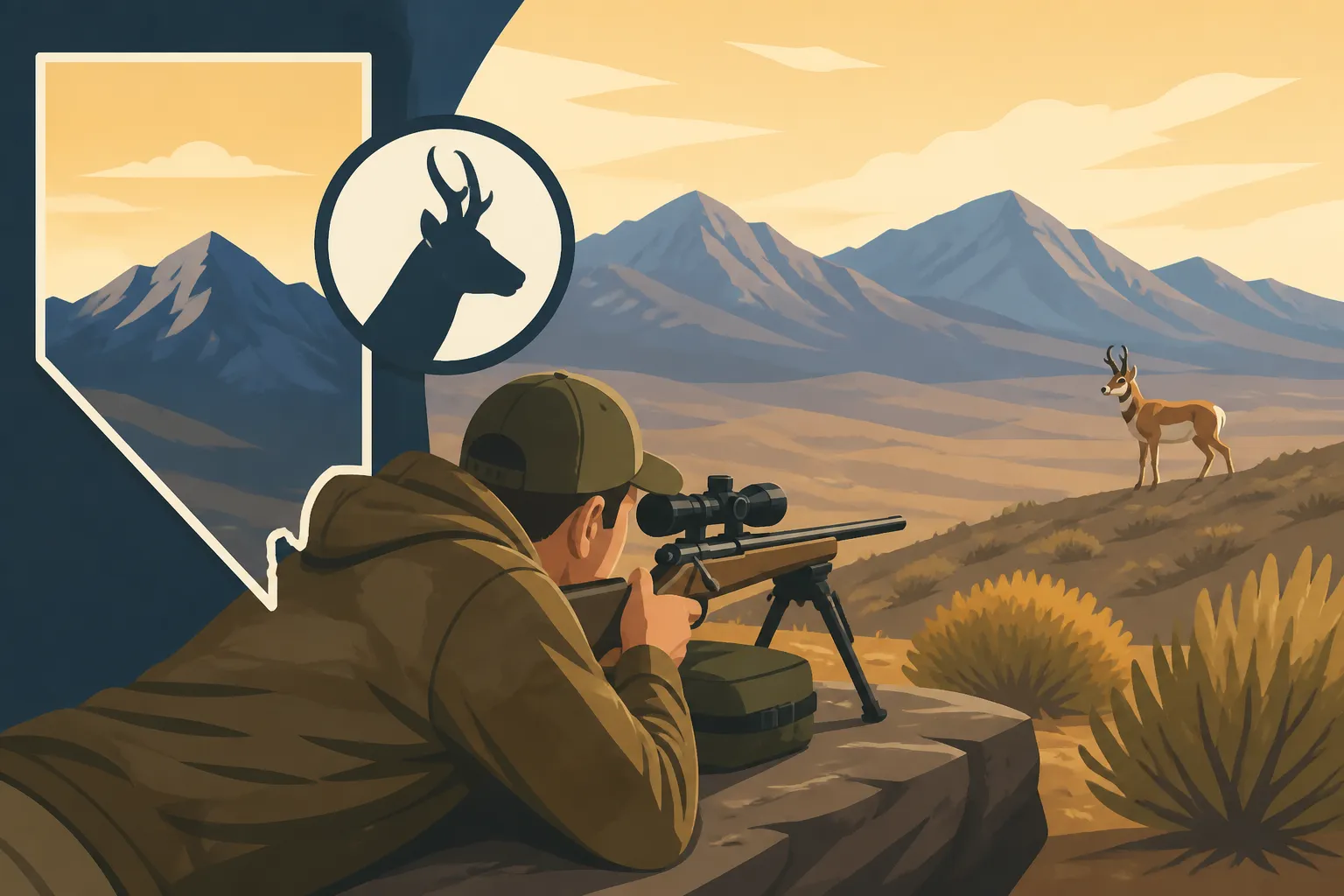
The range is a great place to confirm your zero, but it's not where you'll be shooting your buck or bull. Dedicate time to practicing shooting from various field positions: prone, kneeling, sitting, and standing. Use a backpack, shooting sticks, or a bipod as your rest, just as you would in the field. Our guide on [Shooting Sticks or Bipod on Rocky Ground] offers great tips here. Practice quick transitions between positions. Can you quickly get steady from a kneeling position if a buck steps out unexpectedly? Can you use the rim of a draw or a boulder as a natural rest? These are the skills that convert opportunity into success. Don't forget to practice shooting from an elevated heart rate, too. Do 20 burpees, then immediately get into a shooting position and take a shot. See how your breathing and focus are affected, and learn to control them.
Mastering Distance Estimation and Wind Reading
In Nevada's vast, open country, animals can appear at surprising distances, and the wind can be a constant, unpredictable factor. Invest in a quality rangefinder and practice using it constantly. Don't just rely on it; train your eyes to estimate distances, then verify with the rangefinder. This builds your natural judgment. For rifle hunters, understanding your bullet's trajectory at different ranges is critical. [Rifle Zero Distance for Long Sage Shots] is usually further than you might think. Practice shooting at varying distances, not just 100 or 200 yards. Set up targets at 300, 400, and even 500 yards if your range allows, to truly understand your bullet drop and wind drift. When it comes to wind, try to identify subtle signs like swaying sagebrush or dust movement. [Holding for Wind Across a Wide Basin] requires constant practice and understanding how wind affects your shot at different distances.
Archery-Specific Drills for Close Encounters
For bowhunters, the challenge is even more intimate. You need to get much closer, and that means even more focus on drawing smoothly and holding steady from awkward positions. Practice shooting from your knees, from behind a bush, or from an unstable footing. Draw your bow and hold it at full draw for 30-60 seconds, simulating waiting for an animal to clear an obstruction. Practice drawing without unnecessary movement, even with a backpack on. Focus on consistent anchor points and follow-through. And just like rifle hunters, practice at varying distances, especially those odd, in-between ranges you might encounter in the sage. Our article on [How Close a Bowhunter Needs to Get on Mule Deer] emphasizes the importance of these close-range skills. Remember, archery is a game of precision, and every movement matters.
Integrating E-Scouting and Gear Prep into Your Routine
A solid practice routine isn't just about physical exertion and shooting; it's also about leveraging modern tools and ensuring your equipment is up to snuff. Think of it as intellectual and logistical training alongside the physical.
Utilizing Digital Tools for Pre-Season Strategy
Gone are the days when a paper map and a compass were your only tools. Modern hunting apps like GoHunt have revolutionized pre-season scouting. Take the time to master these platforms. Spend evenings "e-scouting" your chosen unit. Look for potential bedding areas, water sources, natural travel corridors, and escape routes. Identify glassing points, approach routes, and retrieve game trails. You can even check things like public versus private land ownership to avoid any issues. Learning to effectively use these tools before you hit the field means you're not wasting valuable hunting time figuring out terrain; you're already familiar with the lay of the land. [E-Scouting a Nevada Unit Before the Season] can save you days of walking and help you focus your efforts where game is most likely to be.
Field Testing Your Gear Under Realistic Conditions
Your gear is an extension of you in the field, and it needs to perform. Don't wait until opening morning to discover that your new boots give you blisters, your rain gear leaks, or your headlamp battery is dead. As mentioned before, break in your boots on your training hikes. Wear your actual hunting clothes during some of your workouts to ensure they're comfortable, breathable, and quiet. Test your optics in varying light conditions, just like you would during an actual hunt. Make sure your backpack is adjusted correctly and that you can access essential items easily. Charge all your electronics, replace old batteries, and check that your stove, water filter, and other critical items are functioning properly. This kind of systematic gear check, performed under realistic conditions, prevents those frustrating and potentially hunt-ending surprises in the field.
Mental Rehearsal and Scenario Planning
Finally, don't underestimate the power of mental rehearsal. While you're on a long hike or even relaxing at home, visualize different hunting scenarios. Picture yourself spotting an animal, planning your stalk, encountering unexpected obstacles, and taking the shot. How do you react? What decisions do you make? This mental practice builds confidence and helps you create a mental playbook for various situations. Consider potential challenges specific to Nevada: extreme [Heat Management on an August Archery Hunt], navigating complex terrain, or dealing with wind shifts. Think through how you'd handle retrieving an animal far from the road or a sudden change in weather. The more you mentally prepare for these possibilities, the less likely you are to be caught off guard when they happen in real life. It also allows you to refine your strategy, perhaps even before you've finished [Reading a Nevada Hunt Unit Before You Apply].
Disclaimer
The information provided in this guide is for general informational purposes only and does not constitute professional advice. Hunting regulations and safety practices can change, and it is the hunter's responsibility to consult the latest official Nevada Department of Wildlife (NDOW) regulations and seek professional guidance for any specific health or safety concerns.