Do Shooting Hours Shift Through the Season?
One of the most common head-scratchers for hunters in Nevada is trying to keep track of legal shooting hours. It feels like every time you head afield, especially as the season progresses, you're wondering if the legal window has shifted. This confusion can lead to anxiety, making you second-guess that perfect shot opportunity or worry about being out too early or too late. This guide will clarify exactly how Nevada's shooting hours work, dispelling myths and providing practical advice to keep you on the right side of the law and maximize your time in the field.
Nevada's Standard Shooting Hour Framework
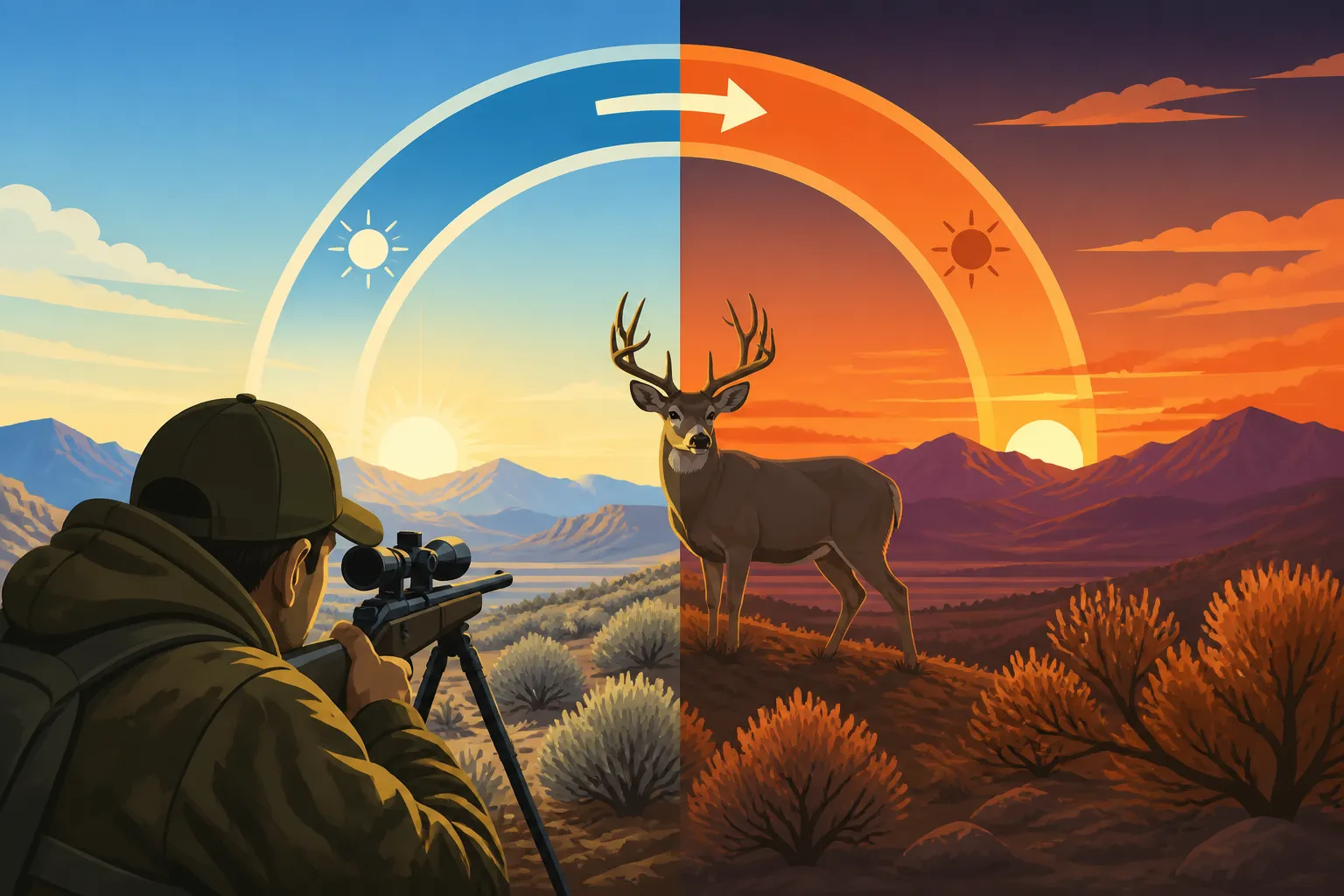
Let's cut right to it: Nevada's legal shooting hours for big game animals don't "shift" in the way some hunters might imagine. The core rule remains constant throughout the year, regardless of the species or season. You are legally allowed to hunt from one half hour before sunrise to one half hour after sunset. That's the bedrock principle, and it applies to everything from big bull elk to mule deer. The times themselves certainly change day by day, but the rule defining the window around sunrise and sunset does not.
Understanding "One Half Hour Before Sunrise to One Half Hour After Sunset"
This phrase is fundamental to all big game hunting regulations in Nevada. It's not about the moment the sun crests the horizon or dips below it, but rather a specific window of ambient light. "Sunrise" and "sunset" in this context refer to the official times published by astronomical observatories, not necessarily when you personally see the sun appear or disappear over a mountain ridge. In Nevada's rugged, varied terrain, your local visual experience can be vastly different from the official calculations for your specific hunt unit. This is a critical distinction that can cause confusion. Imagine you're hunting in the deep shadows of a canyon in the Ruby Mountains; the sun might not hit your location until an hour after official sunrise, but your legal hunting time still began a half-hour before that official time. Conversely, if you're on a high, open ridge, you might see the sun long before the official sunrise time. The legal window is anchored to those official times, not your personal line of sight.
The Legal Basis for These Times
These established shooting hours are rooted in both ethical hunting practices and safety. The intent is to provide hunters with a reasonable amount of natural light to clearly identify their target, ensure a safe backdrop, and make an ethical shot. Low light conditions increase the risk of misidentification, wounding an animal, or compromising safety by not clearly seeing what lies beyond your target. The Nevada Department of Wildlife (NDOW) enforces these rules strictly to uphold fair chase principles and public safety. These regulations are laid out in the official Nevada Big Game Seasons and Regulations guide, which every hunter should review thoroughly before heading out. It's an essential resource, much like Legal Shooting Hours and Blaze Orange in Nevada, that ensures you're up-to-date on all the rules. Understanding this framework is the first step to avoiding any potential issues in the field.
Why Perceived Shifts Happen and What They Actually Are
So, if the rule doesn't change, why does it feel like shooting hours are constantly shifting? The answer lies in the dynamic nature of our planet's rotation and orbit. The duration of daylight, and thus the timing of sunrise and sunset, is in constant flux throughout the year. This isn't a regulatory "shift" but a natural astronomical one. Your perception of the legal window changing is entirely correct; the times you can hunt legally do indeed change every single day.
The Role of Sunrise/Sunset Data
Every day brings a slightly different sunrise and sunset time. These times are meticulously calculated based on your geographical location (latitude and longitude) and the date. Websites, phone apps, and even some hunting GPS units utilize this astronomical data to provide accurate daily times. For example, the official sunrise in Las Vegas on September 1st will be different from the official sunrise in Elko on the same day, and both will be different on September 15th. This is why relying on a general "6 AM to 7 PM" rule of thumb is a recipe for trouble. You absolutely need to know the specific, official sunrise and sunset times for your particular hunt unit and the exact date you're hunting. Many hunters use apps like GoHunt, which can often integrate this data directly, or consult the National Weather Service, which publishes detailed almanac information. Tools like these are invaluable for E-Scouting a Nevada Unit Before the Season and for staying legal during your hunt.
Seasonal Changes in Day Length
The most significant factor influencing these daily changes is the progression of the seasons. In Nevada, like much of the Northern Hemisphere, days are longest around the summer solstice (June) and shortest around the winter solstice (December). This means that during early archery seasons in August, like the Nevada's August Archery Deer Window, your shooting light window will be much longer, with earlier sunrises and later sunsets, compared to late rifle seasons in November or December, such as Hunting the Post-Rut Migration for Big Bucks.
Consider a hypothetical comparison:
| Date | Location (Approx.) | Official Sunrise (Approx.) | Official Sunset (Approx.) | Legal Start (30 min before SR) | Legal End (30 min after SS) |
|---|---|---|---|---|---|
| August 15 | Elko, NV | 6:15 AM | 7:45 PM | 5:45 AM | 8:15 PM |
| November 15 | Elko, NV | 6:30 AM | 4:45 PM | 6:00 AM | 5:15 PM |
| December 20 | Elko, NV | 7:00 AM | 4:30 PM | 6:30 AM | 5:00 PM |
Note: These are approximate times and will vary by exact location and year. Always verify current times.
As you can see from the table, the actual clock times for legal hunting change dramatically from August to December. This phenomenon is why the "shift" feels so pronounced. It's not the regulations changing, but the sun's position relative to the Earth, dictating when that half-hour window opens and closes. For hunters planning Late Rifle Deer Seasons in Nevada, this means significantly shorter days and a much tighter window to hunt legally, which can have a big impact on strategy.
Practical Application for Hunters and Avoiding Mistakes
Given that the actual clock times for legal shooting hours change daily, it's paramount for hunters to be proactive and informed. You can't just rely on memory or what it felt like last week. Getting this right is about responsibility, ethics, and ensuring your hunt doesn't end prematurely due to a citation.
Tools and Resources for Accurate Times
Thankfully, modern technology makes it incredibly easy to pinpoint the exact legal shooting hours for your specific location. Here are some of the best ways:
- Smartphone Apps: Numerous hunting and weather apps offer sunrise/sunset calculators. Apps like GoHunt often include this feature as part of their robust mapping and scouting tools, allowing you to quickly pull up the information for your specific coordinates. Other popular options like OnX Hunt, HuntStand, and even general weather apps usually provide this data. Just make sure the app is set to the correct date and location (or is using your device's GPS for real-time location).
- Government Websites: The National Oceanic and Atmospheric Administration (NOAA) and the U.S. Naval Observatory websites provide precise astronomical data. You can input your specific latitude and longitude (easily found on a mapping app) and the date to get accurate times.
- Local Newspapers/Almanacs: Many smaller, local Nevada papers still publish daily sunrise/sunset times. While perhaps less precise for a remote hunt unit than a GPS-enabled app, they can offer a good general reference if you're in an area with cell service.
- NDOW Resources: While the NDOW regulations specify the "half-hour" rule, they generally don't publish daily tables. However, understanding Nevada Legal Shooting Hours for Big Game is always paramount, and their website is the ultimate source for all regulations.
When using any tool, always double-check that it's set for the correct time zone for your hunt unit. Nevada observes Pacific Time, but if you're right on a border, or traveling from a different time zone, it's an easy mistake to make.
The Importance of Personal Verification
Even with the best apps and data, a hunter's personal verification remains crucial. Before you head out each morning and before you settle in for the evening, take a moment to confirm the exact legal shooting times for that day and your location. Don't assume. A quick check on your phone, even if cell service is spotty (many apps will download almanac data for offline use), can save you a lot of grief.
Furthermore, develop a habit of carrying a reliable watch and checking it against your determined legal times. It’s too easy to lose track of time when you’re focused on the hunt, especially when you are engaged in Glassing Grids Across a Nevada Basin or trying to locate animals in the expansive terrain. Having a clear understanding of your start and stop times, and sticking to them, is a mark of a responsible and ethical hunter. Remember, game wardens are well-versed in these rules and have their own tools to verify times in the field. They won't accept "I thought the sun was down" as an excuse if you're outside the legal window.
Common Misconceptions and Best Practices
The dynamic nature of sunrise and sunset, combined with specific season structures, often leads to misunderstandings about legal shooting hours. Let's clarify some of these and offer some best practices.
Archery and Muzzleloader Season Nuances
Some hunters mistakenly believe that archery or muzzleloader seasons might have different shooting hour rules than general rifle seasons. This is generally not the case for big game in Nevada. The "one half hour before sunrise to one half hour after sunset" rule applies universally to big game for all weapon types. So, whether you're chasing mule deer during Nevada's August Archery Deer Season Opens the Year or pursuing elk during Nevada Elk Muzzleloader Timing by Unit, the definition of legal light remains the same.
The nuance often comes from the nature of these hunts. Archery and muzzleloader hunters often seek closer encounters, and the low light periods at dawn and dusk are prime times for animal movement. This can make the temptation to push the envelope on legal light even stronger. However, it’s during these critical low-light moments that positive target identification becomes most challenging. Ethical archery requires absolute certainty of shot placement and animal identification. Shooting at an animal that is poorly lit significantly increases the risk of a non-lethal hit, which is something every responsible hunter wants to avoid.
How Technology Helps (and Sometimes Hurts)
Modern technology is a double-edged sword when it comes to legal shooting hours. On one hand, the proliferation of smartphone apps, GPS devices, and online resources has made accessing precise sunrise/sunset data easier than ever before. You can know the exact legal window for your specific location down to the minute. This level of accuracy is a massive benefit for planning your hunt. For instance, when you're Reading a Nevada Hunt Unit Before You Apply, you can even start to anticipate daylight hours.
However, technology can also create complacency or confusion. Relying on an app that isn't updated, or incorrectly set to the wrong time zone or location, can lead you astray. Batteries die, signals drop, and sometimes the default settings aren't quite right. Furthermore, the sheer volume of information can be overwhelming. Some hunters might consult general weather apps that only show sunrise/sunset, forgetting to apply the crucial "half-hour" rule. The best practice is to understand the core regulation, then use technology as a tool to apply that rule accurately. Don't let the tech think for you; use it to inform your own judgment and planning. It’s also wise to have a backup, like a printed-out almanac for your hunt dates and location, especially when you're deep in the backcountry where cell service is non-existent and you're far from any town.
Disclaimer
This article is for general informational purposes only and does not constitute professional advice. Laws, prices and regulations vary by location and change over time. Consult a qualified professional for guidance on your specific situation.