Hunting the Post-Rut Migration for Big Bucks
The main rut has come and gone, and for many hunters, it feels like the big opportunities for mature bucks have dried up. But if you’re pulling your gear and packing it away now, you might be missing one of the most underrated and rewarding periods to tag a truly large mule deer in Nevada: the post-rut migration. This guide will help you understand the dynamics of this often-overlooked phase and equip you with the knowledge to capitalize on it, turning late-season frustration into success.
Understanding the Post-Rut Movement of Mule Deer
The post-rut period is a fascinating and often challenging time to hunt mule deer, but it’s precisely these challenges that can lead to incredible rewards. After weeks of intense breeding activity, often starting in mid-November and peaking in early December across much of Nevada, bucks are utterly exhausted. They've spent their energy reserves chasing does, fighting rivals, and barely eating. This depletion drives a critical behavioral shift: a focused effort to recover and find secure winter range.
The Bucks' Exhaustion and Recovery Needs
Imagine running a marathon, then fighting several wrestling matches, all while barely eating. That’s pretty much what a mature buck goes through during the rut. Their body condition plummets, their fat reserves are depleted, and they’re vulnerable. Their primary goal immediately after the rut is simple: eat, rest, and get to safe ground. This survival instinct often overrides their usual wary nature, making them, paradoxically, a bit more predictable if you know what to look for. They’re not as interested in hiding as they are in finding sustenance and thermal cover.
Migration to Winter Range
Once the does are bred and the intensity of the rut subsides, bucks will start to move. This isn't a random wander; it's a calculated shift from their rutting grounds, which might be higher elevation pockets or specific basins, down to their established winter ranges. These winter ranges are typically at lower elevations, offering easier access to forage, less snow, and more thermal cover like sagebrush thickets or south-facing slopes. This migration can happen quickly or in stages, depending on the severity of the weather, snow depth, and the distance between their rutting and wintering areas. Understanding When Nevada Rifle Deer Seasons Fall and anticipating this movement is key to intercepting them.
Locating Bucks During the Post-Rut Period
Finding these post-rut giants requires a combination of detailed e-scouting, thorough glassing, and a deep understanding of mule deer habitat and behavior during this specific time of year. It’s less about chasing fresh sign in timber and more about spotting subtle movements across vast, open landscapes.
E-Scouting and Topographical Analysis
Before you even hit the field, spend significant time E-Scouting a Nevada Unit Before the Season. Utilize online mapping tools to identify potential wintering grounds. Look for south-facing slopes, areas with dense sagebrush cover that offer both thermal protection and forage, and lower-elevation benches adjacent to deeper canyons. Pay close attention to transition zones – the areas where different habitat types meet, or where elevations begin to drop. These are often funnel points for migrating deer. GoHunt's mapping overlays, for example, can be invaluable for identifying these subtle topographical shifts and understanding public land access. Cross-reference historical weather patterns, especially snowfall, for your chosen unit. Heavy snow earlier in the season will push deer down sooner and further.
Glassing Strategies for Late Season
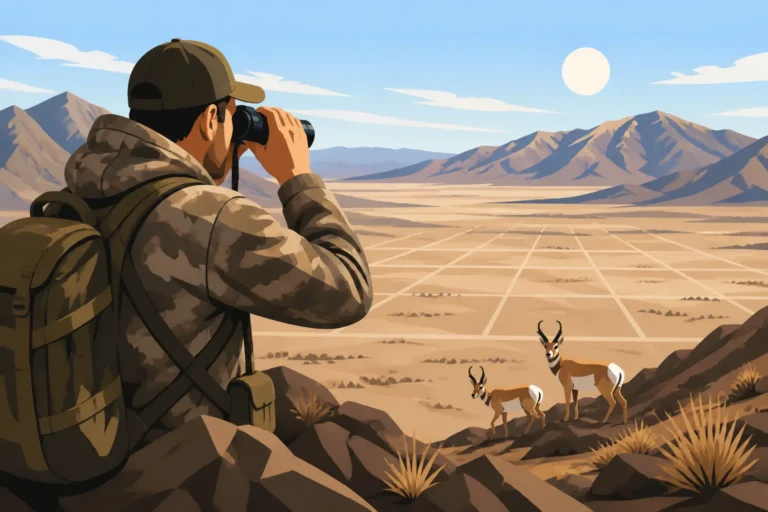
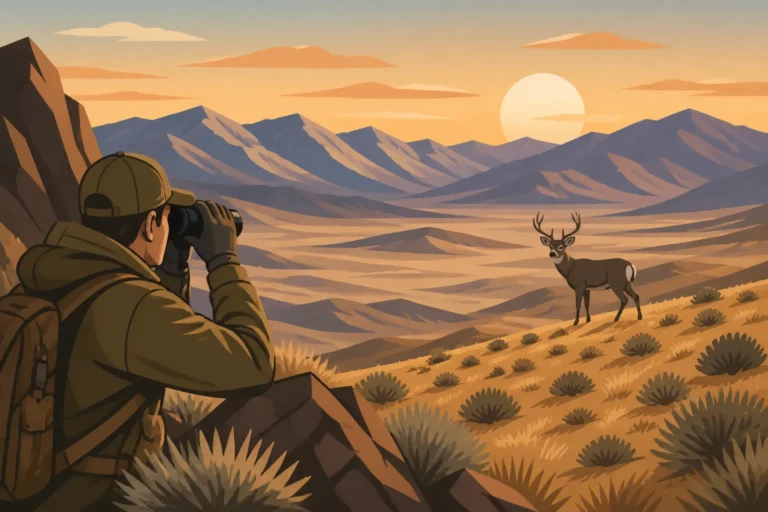
Nevada deer hunting is inherently a glassing game, and this is never truer than during the post-rut. Bucks are trying to be efficient with their energy, so they’ll often feed in open areas during daylight hours and bed down in cover nearby. You need to be patient and systematic. Set up on high points overlooking vast expanses of potential winter range. Use quality optics – a good pair of binoculars (10x or 12x) and a powerful spotting scope (20-60x or 25-75x) are non-negotiable. Learn to employ The Grid Glassing Method, Step by Step to methodically scan terrain, picking apart every patch of sage, every shadowed draw, and every rock outcrop. Bucks will often bed down in surprisingly exposed areas if they feel secure, relying on their camouflage, so look for abnormal shapes, horizontal lines, or the flicker of an ear. Remember, Why Nevada Deer Hunting Is a Glassing Game isn't just a saying; it's the core strategy for success.
Effective Hunting Strategies for Post-Rut Bucks
Once you've located a buck, the real work begins. Late-season hunting demands extreme patience, a meticulous approach to stalking, and an awareness of the deer's current needs.
Stalking Exhausted Bucks
The good news is that these bucks are often less skittish than their pre-rut or rutting counterparts. They're focused on recovery, and sometimes, you can capitalize on that. The bad news is they're still mule deer in open country. A successful stalk relies on several factors: wind direction, terrain features, and understanding the buck's line of sight. Use every dip, draw, and ridge to your advantage, keeping your silhouette low. If a buck is bedded, be prepared for a long, slow approach. They might be bedded in thick sage, making visibility tricky, so be ready for a quick shot once you get a clear line. Don't rush; these deer have survived this long by being careful, even when tired. This is where mastering How Far to Stalk a Bedded Mule Deer becomes absolutely critical.
Focusing on Feed and Cover
During the post-rut, bucks will prioritize areas that offer the best bang for their caloric buck. This means good quality forage, often browse species like bitterbrush, serviceberry, or various forbs that might still be accessible. Combine this with thermal cover – dense stands of sagebrush, junipers, or even canyon bottoms that offer protection from bitter winds and cold temperatures. South-facing slopes are gold because they catch the most sun, melting snow faster and exposing forage. These areas are also warmer, helping bucks conserve precious body heat. Consider Why Late Seasons Produce Bigger Bucks often; these animals are concentrated, making them more targetable once found.
Gear and Preparation for Late Season Nevada Hunts
Hunting the post-rut means facing the elements at their harshest. Nevada's winter can be brutal, with freezing temperatures, biting winds, and sudden snowstorms. Being unprepared is not just uncomfortable; it can be dangerous.
Essential Cold Weather Gear
Layering is paramount. Start with a good moisture-wicking base layer, add insulating mid-layers like fleece or synthetic puffies, and top it with a waterproof, windproof outer shell. Don't forget quality insulated gloves or mittens, a warm hat that covers your ears, and a neck gaiter. Layering for Basin and Range Temperature Swings is more than just comfort; it's survival. Your footwear needs to be robust: insulated, waterproof boots with good ankle support are essential for navigating potential snow and uneven terrain. Choosing Boots for Sharp Volcanic Rock is also a consideration in many Nevada units, even in winter, as rocky slopes can still be exposed.
Optics and Scouting Tools
As mentioned, high-quality optics are non-negotiable. Invest in the best binoculars and spotting scope you can afford. A sturdy tripod for your spotting scope is also crucial; trying to freehand a scope on a cold, windy day is an exercise in futility. A good rangefinder is also vital for making accurate shots on potentially distant animals. For digital scouting, a reliable GPS device or a smartphone app with offline maps (like GoHunt's app) will keep you oriented in vast, featureless landscapes and allow you to mark observations. It's also wise to carry a satellite communication device like a Garmin inReach or a Zoleo, as cell service is nonexistent in much of Nevada's remote hunting country.
Physical and Mental Toughness
Late-season hunting is physically demanding. You’ll be hiking through snow, battling cold, and spending long hours glassing. Preparing Physically for Long Glassing Days months in advance will pay dividends. This isn't a stroll; it's an expedition. Mentally, you need to be prepared for the grind. Days are shorter, temperatures are colder, and deer can be elusive. Patience, persistence, and the ability to stay positive despite setbacks are crucial. Remember that success often comes to those who stick it out when others have given up.
Table: Post-Rut Hunting Checklist
| Category | Item | Notes |
|---|---|---|
| Optics | Binoculars (10-12x) | High-quality, good in low light |
| Spotting Scope (20-60x or more) | Essential for long-range identification | |
| Tripod (for spotting scope) | Stable and lightweight | |
| Rangefinder | Accurate distance measurement is critical | |
| Clothing | Base Layers (wicking) | Merino wool or synthetic |
| Mid Layers (insulating) | Fleece or synthetic down | |
| Outer Shell (waterproof/windproof) | Protects from elements | |
| Insulated Hat & Neck Gaiter | Crucial for heat retention | |
| Insulated Gloves/Mittens | Keep hands functional in the cold | |
| Insulated, Waterproof Boots | Good traction, ankle support, warm | |
| Navigation | GPS Device/Offline Map App | Know your location, mark spots |
| Satellite Communicator | For emergencies, no cell service | |
| Compass & Paper Map | Backup for electronics | |
| Survival/Misc. | Water (insulated bottle) | Hydration is still key, prevent freezing |
| High-Energy Snacks | Nuts, jerky, energy bars | |
| First Aid Kit | Prepared for cold-related injuries | |
| Headlamp/Extra Batteries | Short days mean likely hiking in dark | |
| Quality Hunting Pack | Haul gear and potential meat out |
The post-rut migration offers a unique chance at a trophy mule deer in Nevada. It demands resilience, smart scouting, and keen observation, but the rewards—a hard-earned buck and a deep connection with the wild winter landscape—are truly unforgettable.
Disclaimer
Hunting is an inherently dangerous activity. Always prioritize safety, understand and follow all Nevada Department of Wildlife (NDOW) regulations, and be aware of current weather conditions and land access rules. This guide provides general information and should not replace professional safety training or official regulations.