Late Rifle Deer Seasons in Nevada
That crisp, cold air, the promise of snow on the peaks, and the dream of a heavy-antlered buck migrating down from the high country – it's what draws so many of us to the thought of late rifle deer seasons in Nevada. But getting one of those coveted tags, and then successfully hunting in those challenging conditions, is a whole different ballgame. This guide dives deep into everything you need to know to pursue those late-season opportunities, from understanding the draw to mastering the tactics for success.
The Allure of Late Season Mule Deer in Nevada
There's something undeniably magical about hunting mule deer as winter really starts to set in. The landscape transforms, often cloaked in a fresh blanket of snow, and the deer behavior shifts dramatically. This isn't just about colder weather; it's about a critical biological phase that often presents hunters with unique opportunities to encounter mature bucks.
Why Late Seasons Produce Bigger Bucks
The primary draw for many hunters eyeing Nevada's late rifle seasons is the increased potential for encountering a trophy-class buck. Why is this? It largely boils down to two main factors: the rut and migration. As autumn gives way to early winter, mule deer bucks enter the peak of their breeding season, commonly known as the rut. During this time, the normally reclusive mature bucks become far more active and less cautious, driven by the urge to find receptive does. They'll cover more ground, often venturing into areas they might avoid during other parts of the year, making them more visible and vulnerable. This heightened activity, coupled with their single-minded focus on breeding, can lead to incredible encounters that simply don't happen in early or mid-season hunts. We talk more about this phenomenon in depth in our article, Why Late Seasons Produce Bigger Bucks.
Beyond the rut, many late seasons coincide with the beginning of the post-rut migration. As heavy snows begin to fall in the higher elevations, mule deer are forced to abandon their summer ranges and move down to lower, more accessible wintering grounds. This mass movement can funnel deer through predictable corridors, concentrating animals and creating opportunities for hunters positioned in these transition zones. A buck that spent its summer hidden deep in a remote, high-elevation basin might suddenly find itself moving through more open country, making it available to hunters who understand these patterns. This migratory behavior is a key element of Hunting the Post-Rut Migration for Big Bucks.
The Challenge and Reward of Colder Weather Hunting
While the prospect of bigger bucks is enticing, it's crucial to understand that late season hunting in Nevada is inherently more challenging. The weather can be brutal, with freezing temperatures, strong winds, and heavy snowfall becoming common occurrences. These conditions test a hunter's physical endurance, mental fortitude, and gear choices. Field dressing an animal in sub-zero temperatures, packing out meat through deep snow, or simply spending hours glassing from a windswept ridge requires a different level of preparation than an early season archery hunt.
However, the rewards often far outweigh these difficulties. A late-season mule deer hunt often feels like a true wilderness experience, with fewer hunters in the field and a quiet, stark beauty to the landscape. The success earned in these conditions is incredibly satisfying. It's not just about the antlers; it's about the entire demanding journey, the breathtaking scenery, and the knowledge that you overcame significant obstacles to achieve your goal. The solitude and raw beauty of Nevada's high desert and mountain ranges in winter offer an experience unlike any other, making a late-season tag one of the most sought-after in the state.
Understanding Nevada's Late Season Units and Dates
Nevada's Department of Wildlife (NDOW) carefully structures its hunting seasons to manage herd health and provide quality hunting opportunities. Late rifle deer seasons are often among the most limited and highly coveted, precisely because of the potential for large bucks and challenging, yet rewarding, conditions. Understanding the specific units that offer these hunts and their associated dates is the first critical step for any aspiring late-season hunter.
Typical Season Timing and Unit Variations
Nevada's late rifle deer seasons generally kick off in late October and can stretch into mid-November, with some specialized hunts extending even later. These dates are designed to coincide with the peak of the rut and the onset of winter migrations, as discussed earlier. However, it's vital to remember that not all units offer late rifle hunts, and the exact timing can vary significantly from unit to unit. Some units might have a single, short window, while others, particularly those with diverse terrain and elevation changes, might offer staggered hunts.
For instance, a unit primarily consisting of high mountain ranges might have a later season to align with deer moving down into lower, sagebrush-dominated winter ranges. Conversely, a unit that’s mostly lower elevation and desert might have a slightly earlier late season if their rut peaks sooner or if they don’t experience the same dramatic migratory patterns. Staying on top of the most current regulations, which are published annually by NDOW, is non-negotiable. These documents will clearly list all hunt codes, unit numbers, species, and specific dates. Paying close attention to how Nevada numbers its hunt units and the descriptions in these regulations is key for any successful draw strategy.
Identifying Key Late Season Units
While specific units change annually based on quotas and herd management objectives, some areas in Nevada have historically offered excellent late rifle deer opportunities. These are often units known for their rugged, high-elevation terrain that forces deer into predictable drainages and transition areas as winter arrives. Units in Eastern Nevada, especially those encompassing mountain ranges like the Ruby Mountains, Schell Creek Range, and Snake Range, are often prime candidates. These areas frequently hold good numbers of mature mule deer that move down from timbered slopes into sagebrush flats and lower canyons.
Units in Central Nevada, such as those in the Monitor Range or Toiyabe Range, can also offer exceptional late-season hunting, particularly as deer transition out of the pinyon-juniper belts. Even some of the more expansive, lower-elevation units can have late hunts designed to target bucks that have moved out of private agricultural lands or have dispersed from higher ranges into less pressured public ground. Using tools like GoHunt's Insider service can be incredibly beneficial here, as they often compile past draw odds, harvest success rates, and unit data that help you identify these historically productive areas. Analyzing these historical trends, as detailed in Reading Nevada Hunt Draw Statistics, can give you a significant advantage when applying.
Here's a simplified table illustrating potential late rifle season characteristics for different unit types. Please note, specific units and dates always require consulting current NDOW regulations.
| Unit Type / Characteristic | Typical Season Start | Focus Area | Common Tactics | Challenges |
|---|---|---|---|---|
| High Mountain Units | Late October | Migration Corridors, Lower Slopes | Glassing, Long-Range Shooting | Deep Snow, Extreme Cold, Steep Terrain |
| Transition Zone Units | Early November | Pinyon-Juniper, Major Drainages | Spot & Stalk, Still Hunting | Variable Snow, High Winds |
| Lower Elevation/Desert Units | Mid-November | Sagebrush Flats, Water Sources | Glassing, Water-Sitting (if legal/applicable) | Less Snow, But Can Be Very Cold |
Strategic Scouting and Preparation for Late Seasons
Successfully hunting late rifle deer in Nevada isn't just about drawing a tag; it's about being prepared for the unique demands of the season. The physical and mental toll of cold weather, combined with the often vast and rugged terrain, means that thorough scouting and preparation are absolutely non-negotiable. This pre-hunt work can dramatically increase your odds of success.
E-Scouting a Nevada Unit Before the Season
Gone are the days when scouting was exclusively boots-on-the-ground. Modern technology has revolutionized the way we prepare for a hunt, especially in a state like Nevada where units can span hundreds of thousands of acres. E-scouting, or electronic scouting, allows you to meticulously study a unit from the comfort of your home, identifying potential hotspots, travel corridors, and access points. Platforms like onX Hunt, BaseMap, and even GoHunt's mapping tools are invaluable for this. You'll want to layer satellite imagery, topographic maps, land ownership data, and even historical weather patterns. Look for north-facing slopes that might hold snow longer, south-facing slopes that melt out first offering forage, or natural funnels created by saddles, canyons, or rims that migrating deer might use.
Pay particular attention to elevation changes and how they might influence deer movement as temperatures drop and snow accumulates. What looks like a great bedding area in August might be completely buried in snow by November, forcing deer lower. Identify potential water sources, even if frozen, as they often indicate drainages that deer will follow. Mark potential glassing points that offer expansive views of these key areas. E-Scouting a Nevada Unit Before the Season is more than just looking at a map; it's about creating a comprehensive plan that guides your boots on the ground. Also, be sure to check historical snow depth maps and even fire history, as recent burns can create new forage opportunities that attract deer.
Physical and Mental Conditioning for Cold Hunts
Hunting in Nevada during the late rifle season demands a high level of physical fitness. You'll likely be hiking through snow, often at elevation, carrying heavy gear, and potentially packing out an animal in challenging conditions. Don't underestimate the energy drain of simply staying warm while active. Start a rigorous training regimen well in advance. Focus on cardiovascular endurance, leg strength, and core stability. Incorporate weighted hikes, stair climbing, and exercises that mimic the movements you'll make in the field.
Beyond the physical, mental conditioning is equally important. Late season hunts can be grueling. Days are shorter, temperatures are colder, and success isn't guaranteed. You'll face discomfort, frustration, and moments of self-doubt. Training your mind to push through these challenges, to remain positive and focused when the going gets tough, is crucial. Visualize successful stalks, practice making difficult decisions under pressure, and cultivate a resilient attitude. Being prepared for long days in open terrain also involves understanding the unique challenges of the Basin and Range topography. Think about the stark beauty but also the exposure to elements.
Effective Hunting Tactics for Cold Weather
Once you've drawn your coveted late rifle deer tag and prepared your body and mind, it's time to focus on the tactics that will put you in a position to harvest a buck in Nevada's challenging late season. The strategies employed during these colder months differ significantly from those used in warmer, earlier seasons.
Glassing and Spotting in Snowy Conditions
Nevada is, first and foremost, a glassing state, and this holds even truer during late rifle season. The vast, open landscapes of the Basin and Range country lend themselves perfectly to patiently scanning vast expanses with high-quality optics. The advantage of snow on the ground cannot be overstated; deer stand out dramatically against a white backdrop, making them easier to spot from a distance. However, snow can also obscure tracks and make judging distance more difficult.
Set yourself up on high vantage points that offer commanding views of potential winter range, migration corridors, and south-facing slopes where deer might be feeding. Use a sturdy tripod for your binoculars and spotting scope to eliminate shake and reduce eye fatigue. Systematically grid glass the terrain, moving your optics slowly across sections, paying close attention to shadows, changes in texture, or anything that looks "out of place." Bucks often bed in sheltered spots, just below a ridge, or in the broken country of a pinyon-juniper forest, so look for patches of brown against the white. Patience is your most potent weapon here; expect to spend hours, even days, behind the glass. Our article on Glassing Nevada's Basin and Range for Mule Deer provides more detailed strategies for this essential skill.
Reading Winter Sign and Migration Patterns
Snow acts as a giant ledger, recording every movement of wildlife. Fresh tracks in the snow are invaluable indicators of deer presence and recent activity. Learn to differentiate between deer, elk, and other animal tracks. Pay attention to the size and depth of the tracks – larger, deeper tracks often indicate a bigger animal. Look for patterns: are the tracks headed towards a bedding area, a feeding ground, or a water source? Parallel tracks might indicate a buck trailing a doe during the rut.
Beyond tracks, look for rub lines (where bucks rub their antlers on trees or brush), fresh droppings, and feeding areas where snow has been pawed away to reveal forage. During a migratory hunt, understanding the flow of deer is critical. Deer will typically move along the path of least resistance, following contours, drainages, or benches. Identify these natural travel routes on your map during e-scouting, and then confirm them with fresh sign on the ground. They will also often use draws and rims to close distance during their travels, and understanding these patterns is key. Observing how deer respond to pressure, and adapting your approach, is crucial. If you jump deer from one area, where are they likely to go? Often, they'll move to the next patch of thick cover or over the next ridge, allowing for a strategic repositioning.
Stalking and Shooting in Cold, Open Country
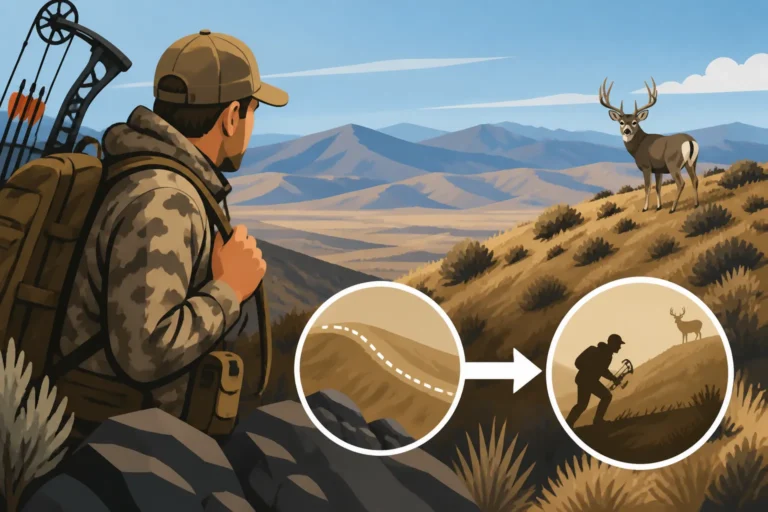
Nevada's open terrain means that most stalks will be long and require exceptional stealth. The goal is to close the distance undetected, often over several hundred yards, using terrain features like ridges, draws, and dense sagebrush to break up your silhouette. Cold weather can work both for and against you. Frozen ground can be noisy, crunching underfoot, but fresh snow can muffle your steps. Use the wind to your advantage, always approaching from downwind to keep your scent from spooking game. Take your time, move slowly, and constantly reassess the situation.
When the shot opportunity arises, it's often at longer ranges due to the open country. This makes practicing with your rifle at extended distances, ideally in cold conditions, absolutely vital. Invest in a quality rangefinder and practice estimating distances accurately. A solid shooting rest, whether it's a bipod, shooting sticks, or a backpack, is essential for stability. The cold can affect your fine motor skills, so practice deploying your shooting aids and getting into a stable position while wearing gloves. Choose a rifle caliber well-suited for open country shots, and understand your rifle's zero distance for long sage shots. Remember, ethical shot placement is paramount, especially when conditions are challenging and tracking a wounded animal through deep snow is a daunting prospect.
Essential Gear for Winter Deer Hunting
Successfully tackling Nevada's late rifle deer seasons demands more than just skill and strategy; it requires the right gear. The harsh reality of winter weather in the high desert and mountains means that your equipment choices can be the difference between a successful, safe hunt and a miserable, potentially dangerous experience. Don't skimp on essentials when the mercury drops.
Layering Systems for Extreme Cold
The most critical aspect of winter hunting clothing is a proper layering system. Nevada's weather can be notoriously unpredictable, with significant temperature swings from dawn to midday, and sudden blizzards. A good layering system allows you to adapt to changing conditions by adding or shedding layers, regulating your body temperature to prevent both overheating and hypothermia. Start with a moisture-wicking base layer (merino wool or synthetic, never cotton) to pull sweat away from your skin. Next, add an insulating mid-layer, such as a fleece or puffy jacket, to trap warm air. Finally, an outer shell that is waterproof, windproof, and breathable is essential to protect against snow, rain, and cutting winds.
Don't forget the extremities. A warm hat that covers your ears is critical, as a significant amount of body heat is lost through the head. Insulated, waterproof gloves or mittens are a must, ideally with an overmitt option for extreme cold. High-quality, insulated, waterproof boots are non-negotiable for keeping your feet warm and dry. Look for boots with good traction for icy or snowy terrain. Remember, once your feet get cold and wet, your entire body temperature can drop rapidly, making for a truly miserable experience. Our guide to Layering for Basin and Range Temperature Swings offers more insights into this critical aspect of preparation.
Optics and Navigation for Winter Conditions
Your optics, already vital for Nevada hunting, become even more crucial in winter. High-quality binoculars (10×42 or 12×50 are popular choices) and a powerful spotting scope (20-60x or higher) on a sturdy tripod are essential for picking apart vast, snow-covered landscapes. Choose optics with good low-light performance, as daylight hours are shorter, and you'll often be glassing at dawn and dusk. Consider lens covers to protect against snow and moisture.
Navigation tools are also paramount. A reliable GPS device or a smartphone with a hunting app like onX Hunt, loaded with offline maps of your unit, is critical. Batteries drain faster in the cold, so carry spare batteries and keep them warm (e.g., in an inside pocket). A traditional compass and paper map are excellent backups in case of electronic failure. Remember that landmarks can look very different under a blanket of snow, so being able to pinpoint your location accurately is crucial for safety and effective hunting. Consider a satellite messenger for emergency communication in areas with no cell service.
Vehicle Preparedness and Emergency Gear
Remote Nevada roads, often already rugged, become treacherous in winter. Snow, ice, and mud can easily strand a vehicle miles from any assistance. A capable 4×4 vehicle with good ground clearance and aggressive tires is a must. Carry tire chains, a full-size spare tire, and a comprehensive vehicle recovery kit including a shovel, tow strap, and jumper cables. Make sure your vehicle is in top mechanical condition before heading out, with a full tank of gas, and consider carrying extra fuel on a Nevada hunt, as services are far apart.
Beyond vehicle-specific gear, an extensive emergency kit is vital. This should include extra food and water (enough for several days), a first-aid kit, a headlamp with spare batteries, a fire starter, an emergency shelter (e.g., a space blanket or bivy sack), and warm survival clothing. A satellite messenger or two-way radio can be a lifeline in areas without cell service. Inform someone of your hunt plan, including your intended route and return time. Preparing physically for long glassing days also means preparing for potential emergencies that require self-reliance.
Navigating the Draw for a Late Season Tag
Drawing a late rifle deer tag in Nevada can feel like winning the lottery. These hunts are often among the hardest to secure due to high demand and limited quotas. Understanding the draw system, including how bonus points work, is fundamental to developing a successful long-term application strategy.
Nevada's Bonus Point System for Deer
Nevada uses a bonus point system that squares your accumulated points to increase your odds of drawing. This means the more years you apply and are unsuccessful, the more chances you get in subsequent draws. For example, if you have 4 bonus points, your application is entered into the draw 4×4 + 1 = 17 times. This system heavily favors those who have been consistently applying over many years, making it challenging for new applicants to draw premier late-season tags quickly. Our article, Nevada Squares Your Bonus Points Into Draw Chances, explains this in detail.
To participate in the draw, you must first purchase a Nevada Combination License, which allows you to apply for big game tags. The application period typically runs from late March to early May. During this window, you'll select your hunt choices, ranking them in order of preference. Many hunters, especially non-residents, will prioritize accumulating points for several years before seriously attempting to draw a premium late-season tag. This strategy requires patience but significantly improves your long-term prospects for these highly sought-after hunts. You can also buy a point-only application if you don't plan to hunt that year but want to continue building points.
Strategic Application and Draw Odds
When applying for late rifle deer, strategic unit selection is crucial. While everyone dreams of drawing a legendary unit, the reality is that the most popular late-season units can require many years, even decades, of accumulating points for a non-resident. It's often beneficial to research units that might have slightly lower draw odds but still offer good quality hunting. Resources like GoHunt, NDOW's harvest statistics, and forums can provide insights into these units. Look for units that might have moderate draw odds but still show a history of mature buck harvests.
Consider your hunt choices carefully. While you might list your dream unit as your first choice, having realistic second and third choices can increase your chances of drawing a tag, rather than going home empty-handed year after year. Some hunters might also apply as a group, though it's important to understand how Nevada averages points across a group, which can impact your overall odds. The goal is to maximize your draw potential while balancing your desire for a specific hunt with the reality of Nevada's competitive draw system. The all-in cost of a Nevada mule deer hunt can be significant, so careful planning is essential before you even apply.
Challenges and Ethical Considerations
Hunting Nevada's late rifle deer seasons comes with its own set of unique challenges, from adapting to the harsh environment to ensuring ethical practices are upheld in potentially difficult situations. Being prepared for these aspects is just as important as knowing your unit or having the right gear.
Adapting to Extreme Weather and Remote Conditions
The Nevada winter is not for the faint of heart. Extreme cold, sudden snowstorms, and high winds are common, and these conditions can change rapidly. This environment significantly impacts both the hunter and the hunted. You must be prepared to make sound decisions under duress, prioritizing safety above all else. Is it worth pushing into that canyon with a blizzard rolling in? Do you have enough daylight to pack out an animal before nightfall? These are questions you'll face. The state's vastness means that services are often far apart, and cell service can be non-existent. This requires a strong sense of self-reliance and thorough planning for every contingency, as discussed in Vehicle Prep for Remote Nevada Roads.
The remote nature of many late-season units also means you'll encounter fewer other hunters, but also fewer opportunities for assistance if something goes wrong. Carrying extra food, water, and emergency shelter is non-negotiable. Always let someone know your detailed hunt plan and check in regularly. Understand that weather can dictate your hunt more than any other factor; be flexible and prepared to adjust your plans, or even abort the hunt, if conditions become too dangerous.
Ethical Considerations in Late Season Hunts
Ethical hunting practices are paramount, especially in challenging late-season scenarios. When deer are stressed by cold, snow, and diminished food sources, minimizing their suffering and ensuring quick, clean harvests becomes even more critical. This means only taking shots within your effective range, even if it means passing on an animal. Tracking a wounded deer through deep snow can be incredibly difficult and can lead to undue suffering for the animal.
Furthermore, always adhere strictly to Nevada's legal shooting hours and blaze orange requirements, even if it feels like you're the only one in the unit. The rules are there for a reason, primarily safety. During the rut, bucks can be highly focused on does, making them seem easier to approach. While this is an opportunity, it does not mean taking unethical shortcuts. Respect the animal, the land, and the regulations. Field dressing in August heat is one thing, but getting meat cooled on an early season hunt or field dressing in freezing conditions requires its own set of skills and preparation to ensure the meat is properly cared for. Always carry proof of your hunter education certification, as required by Anyone Born After 1959 Needs Nevada Hunter Education.
Disclaimer
Please note: Hunting regulations and season dates are subject to change annually. Always consult the most current Nevada Department of Wildlife (NDOW) regulations and proclamations before planning any hunting trip.