Water You Must Carry on a Desert Day Hunt
Heading out into Nevada's vast, unforgiving high desert can be an exhilarating experience for any hunter, but it also presents a very real, life-threatening challenge: staying hydrated. The dry air and relentless sun can wick moisture from your body faster than you realize, turning a successful hunt into a dangerous ordeal if you haven't planned your water needs meticulously. This guide is here to walk you through the critical considerations for carrying enough water on a desert day hunt, ensuring you come home safe, successful, and hydrated.
Understanding the Nevada Desert's Thirst
Nevada's landscape is famously beautiful but equally brutal when it comes to the elements. What looks like a mild day from camp can quickly turn into a significant physical challenge under the intense desert sun and dry air. Every hunter, from the seasoned veteran to the eager newcomer, needs to respect the unique demands this environment places on the body, especially concerning hydration. It's not just about feeling thirsty; it's about understanding the constant, subtle drain on your internal reserves.
The Relentless Aridity and Extreme Temperatures
The most striking feature of Nevada's desert is its incredible aridity. The air is often so dry that sweat evaporates almost instantly, giving a false sense of not sweating much at all. This rapid evaporation means your body is losing critical fluids at an accelerated rate, even when you're simply sitting still, glassing a distant ridge. Unlike more humid environments where sweat visibly beads and drips, here in the Great Basin, your body is working overtime to cool itself through this invisible evaporation. You might not feel drenched, but you are absolutely losing water.
Adding to this challenge are the extreme temperature swings. Even in what might be considered "cooler" hunting seasons like late fall, daytime temperatures can soar, especially in exposed areas. During early seasons, like Nevada's August Archery Deer Window, it's common to start your hike in cool, pre-dawn air only to find yourself baking in 90-degree-plus heat by midday. This dramatic change amplifies your body's need for water as it struggles to maintain a stable core temperature. Whether you're in the vast expanses of the Black Rock Desert or the rugged southern units around Las Vegas, the sun's intensity and the dry air are constant factors you cannot afford to underestimate.
Physical Demands of Desert Hunting
Hunting in Nevada is rarely a casual stroll. It almost always involves significant physical exertion, regardless of the species you're pursuing. Whether you're climbing a steep, rocky mountain side in pursuit of mule deer, or covering miles of sandy, sagebrush-dotted flats for antelope, your body is burning calories and generating heat. This increased metabolic activity directly translates to a higher demand for water. Your muscles need water to function efficiently, and your circulatory system relies on proper hydration to transport oxygen and nutrients, all while working to dissipate the heat your body produces.
Even seemingly less strenuous activities, like hours spent patiently glassing from a ridgeline, contribute significantly to fluid loss. While you might not be actively hiking, you're often exposed to direct sunlight, with little shade available in the open country of Nevada. Your eyes are constantly scanning, your brain is engaged, and your body is subtly tensing. All these factors, combined with the dry, often breezy conditions, lead to a steady depletion of your hydration reserves. Ignoring this cumulative effect can quickly lead to fatigue, impaired judgment, and even serious heat illness. It’s a marathon, not a sprint, and your body needs consistent fuel and hydration to maintain performance throughout the long days.
Calculating Your Daily Water Needs
When it comes to water in the desert, there's no such thing as "too much." The old adage "rather have it and not need it, than need it and not have it" rings especially true here. Underestimating your water requirements is one of the quickest ways to get into trouble, and it's a mistake that can have severe consequences far from any paved road.
The General Rule of Thumb for Desert Conditions
For anyone venturing into the Nevada desert, the absolute baseline recommendation for water consumption is a minimum of 1 gallon (approximately 3.7 liters) per person per day. This isn't just for active hiking; this is your minimum for simply being in a desert environment, even if you're largely stationary in camp. Your body uses water for countless physiological processes, and the dry air constantly pulls moisture from your breath and skin. Think of this gallon as the non-negotiable floor, not a ceiling.
However, this "rule of thumb" is just a starting point. It doesn't account for the added demands of strenuous activity, high temperatures, or individual differences in metabolism and sweat rates. A larger person, or someone with a naturally higher metabolic rate, will inherently require more water. It's crucial to understand that even on a "cool" day, the desert is still pulling moisture from you. Ignoring this baseline is a recipe for trouble, and once you start feeling significantly thirsty, you're already behind the curve.
Adjusting for Activity, Temperature, and Duration
Your actual water needs will fluctuate dramatically based on the conditions and the intensity of your hunt. Let's break down how you might scale up from that 1-gallon baseline:
- Light Activity / Cooler Temps (e.g., easy morning stroll, overcast 60s/70s): Stick to the 1-gallon minimum. You might not feel like you're sweating much, but the dry air is still at work.
- Moderate Activity / Warm Temps (e.g., typical September elk hunt, a full day of Glassing Nevada's Basin and Range for Mule Deer in 80s): You should be looking at 1.5 to 2 gallons. This is where most early to mid-season hunts fall. You're covering ground, exerting yourself, and the sun is making its presence known. During Nevada Elk Muzzleloader Timing by Unit, for instance, daytime temperatures can still be quite warm, especially if you're moving through draws and up slopes.
- Strenuous Activity / Hot Temps (e.g., climbing steep slopes with a pack in 90-degree-plus heat, a full day during Heat Management on an August Archery Hunt): This is where you need to seriously ramp up your intake, aiming for 2 to 3 gallons, or even more. A 6-8 hour strenuous hike, especially if you're climbing significant elevation in direct sunlight, can easily demand 3-4 liters of water just for that period, in addition to your baseline needs. If you're planning a multi-day backpack hunt, you'll need to multiply these daily figures, and seriously consider how you'll resupply or if the unit can even support your water needs.
To help visualize this, here's a rough guide for a typical 8-10 hour day hunt in Nevada:
| Activity Level & Temperature | Recommended Water per Hunter (8-10 hr day) | Equivalent Volume (approx.) |
|---|---|---|
| Low (Mild temps, minimal hiking) | 1 gallon | 3.7 liters |
| Moderate (Warm temps, steady hiking) | 1.5 – 2 gallons | 5.7 – 7.6 liters |
| High (Hot temps, strenuous climbing) | 2.5 – 3+ gallons | 9.5 – 11.4+ liters |
Remember, these are active consumption amounts. You'll also want to carry extra for emergencies.
The "Emergency Reserve" Philosophy
Beyond your planned daily intake, it is absolutely non-negotiable to carry a separate, untouched emergency water supply. This isn't just a good idea; it's a critical safety measure that could literally save your life. Imagine a scenario: you twist an ankle miles from your vehicle, or your ATV breaks down on a remote two-track, a situation far from uncommon given the nature of Vehicle Prep for Remote Nevada Roads. What if you misread your map, or an unexpected rim forces a long detour? These are all very real possibilities in the vastness of Nevada.
Your emergency reserve should be distinct from your primary drinking water. Many hunters use a dedicated 1-liter or 2-liter bottle, clearly marked as "Emergency Only," stored deep in their pack. This water should only be touched if your planned return is unexpectedly delayed, or you encounter an urgent, unforeseen need. It's peace of mind in liquid form. While some hunters carry water purification tablets or a portable filter, these should always be considered a last-ditch effort, not a primary hydration strategy. Natural water sources in the Nevada desert are often scarce, unreliable, and potentially contaminated, as you'd discover if you were attempting to Hunting Water in Nevada's Driest Country. Relying on them is a gamble you cannot afford to take with your life.
Practical Water Management Strategies for the Field
Knowing how much water you need is only half the battle; successfully carrying and managing it throughout your hunt is the other. The best water in the world does you no good if it's back in the truck, or if your carrying system fails. A well-thought-out plan for carrying and consuming your water is just as important as the quantity itself.
Choosing Your Carry System and Containers
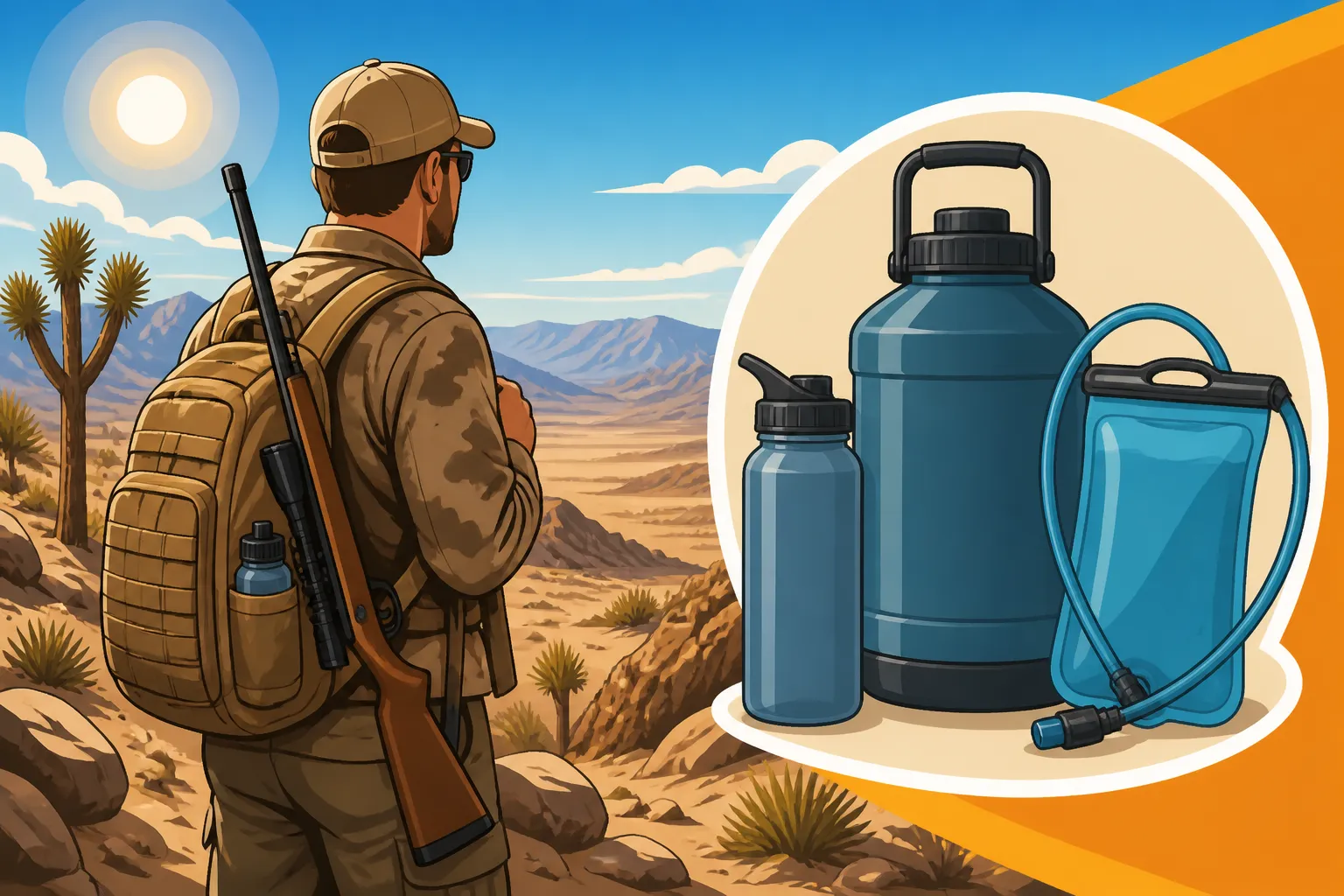
There are several effective ways to carry water, and often, the best solution involves a combination of methods. Hydration bladders, like those from CamelBak or Platypus, are popular for good reason: they allow for hands-free sipping throughout the day, making consistent hydration easier. However, they have drawbacks. It can be hard to gauge how much water you have left without removing the bladder from your pack, and a puncture or leak can be catastrophic. Always inspect your bladder thoroughly before each hunt, and consider carrying a patch kit if you're particularly fond of this system.
Traditional Nalgene bottles or other durable water bottles are excellent for backup and for your emergency supply. They're robust, you can easily see your water level, and they're less prone to catastrophic failure. The downside is they can be bulky in a pack and require you to stop and reach for them. Many hunters opt for a combination: a large hydration bladder (2-3 liters) for primary use, plus one or two 1-liter Nalgene bottles as backup or emergency reserves. Another consideration is keeping your water cool. In the desert heat, water can quickly become unappealingly warm. Insulated sleeves for bladders or bottles can make a surprising difference in keeping your water palatable, encouraging you to drink more consistently. For the drive out to the trailhead, a larger cooler with ice-cold water is a must-have, allowing you to top off and pre-hydrate effectively.
Hydration Before, During, and After the Hunt
Effective hydration is a continuous process that begins long before you even leave home. Pre-hydration is crucial: start drinking plenty of water the day before your hunt, and make sure you're well-hydrated before you even leave camp in the morning. Don't wait until you're thirsty; that's your body already telling you it's low on fluids. Think of your body like a sponge – it needs to be saturated before it can withstand the drying effects of the desert.
During the hunt, aim for consistent, small sips of water throughout the day, rather than chugging large amounts when you finally feel parched. This allows your body to absorb the water more efficiently. Set a timer on your watch or phone to remind yourself to drink every 15-20 minutes, even if you don't feel thirsty. In addition to plain water, consider incorporating electrolyte replacement. Sports drinks or electrolyte tablets (like those from Nuun, Liquid IV, or Gatorade powder) can help replenish essential salts lost through sweating, which is particularly important on those high-exertion days. You can easily add these to a water bottle, but keep your bladder for plain water to avoid residue buildup.
Post-hunt rehydration is equally important for recovery. As soon as you're back at the vehicle or camp, continue to drink fluids steadily. This helps your body recover from the day's exertion, minimizes muscle cramps, and prepares you for the next day's adventure. A good post-hunt hydration strategy can significantly improve your comfort and performance over a multi-day trip.
Leveraging External Resources and E-Scouting
While you should never rely on natural water sources in Nevada, it's wise to be aware of their potential locations. Tools like GoHunt's mapping features can be invaluable for E-Scouting a Nevada Unit Before the Season, allowing you to identify potential springs, seeps, or man-made guzzlers. These can appear on detailed topographic maps or specialized layers. Knowing where these might be could provide a mental fallback in an absolute emergency, but they should never factor into your primary water planning.
Even if you locate a potential water source on a map, assume it's dry, unreliable, or inaccessible until you can verify it in person. Many springs are seasonal, and guzzlers, though designed to collect water for wildlife, can be empty or difficult to reach. For example, understanding How Guzzlers Concentrate Desert Game is key for hunting strategy, but not for your personal survival if you're counting on them for water. Always pack a filtration system or purification tablets if you intend to even consider using such a source, as wild water can carry bacteria, viruses, and other contaminants. Remember, the golden rule of Nevada hunting remains: carry all the water you need, plus an emergency reserve. Treat any discovered water source as a bonus for wildlife, not a guarantee for your survival. Respecting these vital, often scarce, water sources by leaving them undisturbed is also a critical ethical consideration for every hunter.
The Dangers of Dehydration and Heat Illness
Ignoring your body's need for water in the desert isn't just uncomfortable; it's a dangerous gamble that can quickly escalate into a medical emergency. Understanding the signs and symptoms of dehydration and heat-related illnesses is vital for your safety and the safety of anyone hunting with you. The vast, remote nature of many Nevada hunt units means help can be hours away, making prevention and early recognition paramount.
Recognizing the Signs of Dehydration
Dehydration is a progressive condition, meaning its symptoms worsen over time as your body loses more fluids. The earliest sign is often simply thirst, but by the time you feel parched, your body is already starting to enter a state of dehydration. Other early warning signs include a dry mouth, infrequent urination, and dark-colored urine. These are your body's subtle cries for help. If you notice any of these, it's time to increase your fluid intake immediately and take a rest in the shade if possible.
As dehydration progresses, symptoms become more pronounced and concerning. You might experience fatigue, dizziness, headaches, or muscle cramps, particularly in your legs or abdomen. Your skin might feel clammy or cool, despite the heat. These are signs of moderate dehydration, indicating that your body is struggling to perform its basic functions. At this stage, your judgment can become impaired, which is extremely dangerous when navigating complex terrain or making critical decisions about a stalk or shot. If you reach this point, you need to stop all activity, find shade, and rehydrate slowly and steadily with water and electrolytes.
Severe dehydration is a medical emergency. Symptoms include extreme weakness, confusion, disorientation, a rapid heart rate, a rapid but shallow breathing rate, and eventually, loss of consciousness. At this point, the body's cooling mechanisms are failing, and it can quickly lead to heat stroke. It's crucial to remember that symptoms of dehydration can sometimes mimic other issues or be exacerbated by factors like altitude, common in many Nevada hunting areas. Staying vigilant and proactively hydrating is the only way to ensure these symptoms don't take hold.
Preventing and Treating Heat-Related Illnesses
Dehydration is a primary precursor to heat-related illnesses, which range from heat cramps to the life-threatening heat stroke. Being able to distinguish between them and knowing how to respond can make all the difference.
- Heat Cramps: These are often the first sign of trouble, presenting as painful muscle spasms, usually in the legs, arms, or abdomen. They are caused by the loss of salts and fluids through excessive sweating. To treat, move to a cool place, gently stretch and massage affected muscles, and rehydrate with water or an electrolyte solution.
- Heat Exhaustion: This is a more serious condition. Symptoms include heavy sweating, cold, clammy skin, nausea or vomiting, dizziness, headache, weakness, and a fast, weak pulse. If you suspect heat exhaustion, immediately get the person into a cool, shaded area. Have them lie down with their feet slightly elevated, loosen their clothing, and apply cool, wet cloths to their skin. Have them sip water or an electrolyte drink slowly. If symptoms worsen or don't improve within an hour, seek immediate medical attention.
- Heat Stroke: This is the most severe heat-related illness and is a life-threatening emergency. Heat stroke occurs when the body's core temperature rises rapidly, and its natural cooling system fails. Symptoms include a body temperature of 104°F (40°C) or higher, hot, red, dry or moist skin (sweating may have stopped), confusion, slurred speech, seizures, and loss of consciousness. Call 911 immediately. While waiting for help, try to cool the person aggressively by moving them to a cooler area, immersing them in cool water (if available), or applying ice packs to the armpits, neck, and groin.
The best defense against all heat-related illnesses is meticulous hydration. Consistent water intake, especially when combined with electrolyte replenishment, is your first and most effective line of defense. Additionally, wear appropriate, light-colored clothing that breathes well, take frequent breaks in the shade, and adjust your hunting intensity to the conditions. Understanding Layering for Basin and Range Temperature Swings is important, but often the solution to heat is simply less layering. Always be aware of your surroundings, and don't push yourself beyond your limits, especially in the intense Nevada desert. Even a minor issue, like needing to deal with Snake Awareness on an August Archery Hunt, can unexpectedly extend your time in the field, making your water reserves even more crucial. Having some form of communication, even if it's just a satellite messenger for when Cell Coverage Across Nevada Hunt Units is absent, is also an important safety measure.
Disclaimer
The information provided in this guide is for general informational purposes only and does not constitute professional advice. Hunting in Nevada's desert can be dangerous, and conditions can change rapidly. Always consult official Nevada Department of Wildlife (NDOW) regulations and consider consulting with experienced local guides or outfitters before your hunt. Your safety is your responsibility.